












Complex electrical installations call for power management
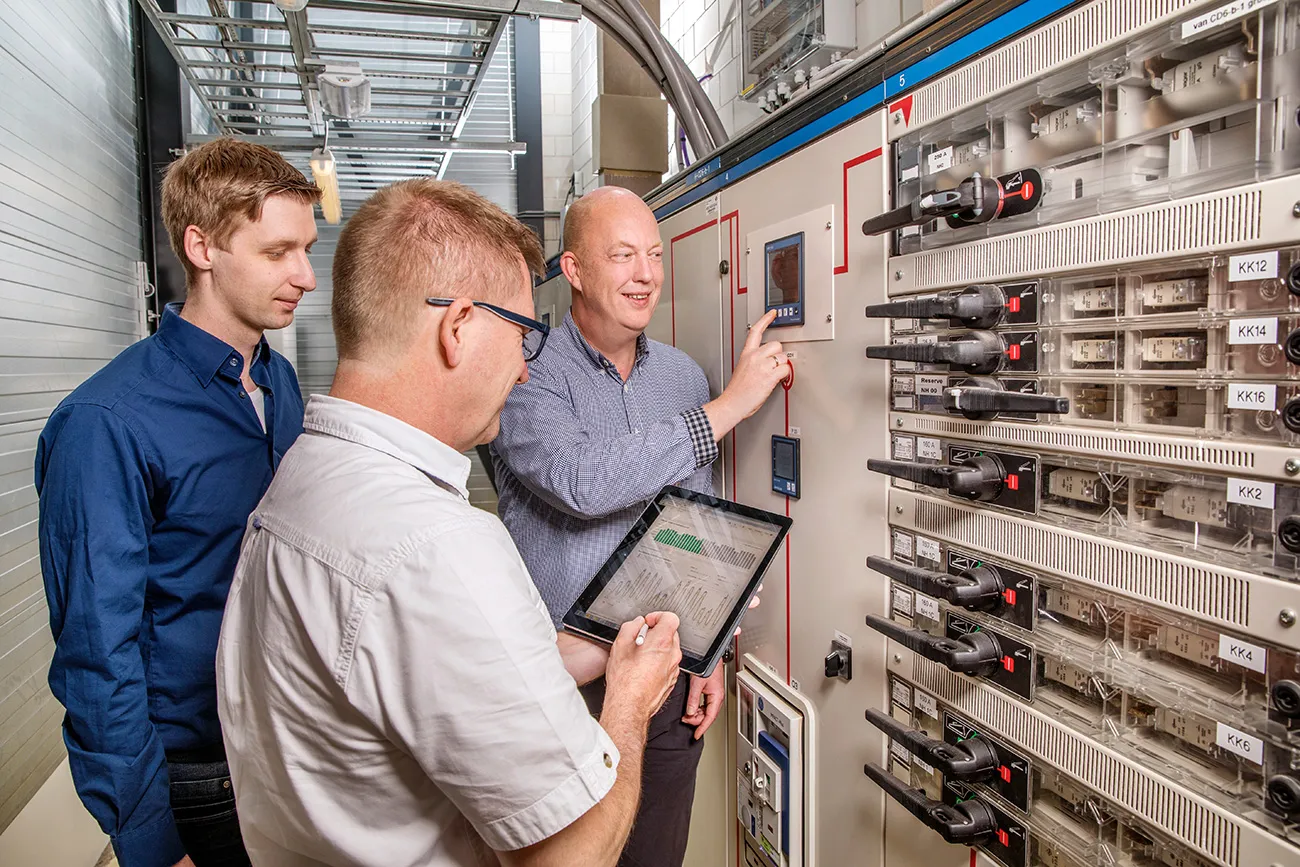
The harmful effects of grid pollution on the stability of the electricity supply are well known. Networks with clusters of complex equipment, such as those in hospitals, are particularly vulnerable. Combining this with energy-saving initiatives often makes the problem worse.
Hospitals are a prime example of collective grid pollution. Medical equipment such as scanners, along with solar panels, LED lighting and variable-speed drives, all contribute to pollution on the electricity network, adversely affecting the quality of the voltage and current. As a result, this same equipment becomes increasingly sensitive to the pollution it has caused.
What does this mean in practice?
• A greater risk of outages due to voltage dips and/or current peaks.
• Failure of emergency power systems due to a capacitive network, harmonic pollution and unbalanced phases.
• More faults and higher maintenance costs as a result of increasing grid pollution caused by medical equipment,
LED lighting, solar panels and various other installations.
• A more heavily loaded neutral conductor as a result of unbalanced phases and grid pollution.
• More heavily loaded transformers for the same reasons.
• Increasingly stringent legal frameworks for determining responsibility for the quality of electrical power.
Voltage and current quality in energy management systems
Energy management systems are often linked to building management systems and focus primarily on energy consumption. This is a purely quantitative approach that overlooks the health of the current and voltage, and the quality of the network. Power Management systems, such as those offered by specialist Fortop, provide an effective solution.
Fortop
Fortop automation & energy control draws on its experience in critical applications such as data centres and hospitals to improve the availability of voltage and current under all conditions. The company can rely on a unique chain of expertise in measurement, monitoring and improvement.

The four aspects of power management
Power management is a continuous improvement process focused on four aspects.
1. Energy
Making energy visible immediately identifies energy losses, standby consumption and any meter connection errors.
2. Load
Understanding the available capacity is essential to supplying the connected equipment. Harmonic pollution, a low power factor and unbalanced phases place additional strain on transformers and generators. In addition, the dynamic behaviour of the load makes it difficult to make predictions. Insight into daily, weekly and annual profiles is therefore desirable.
3. Power Quality
‘Healthy’ voltage leads to lower maintenance costs, helps prevent outages and saves electrical energy. It also provides insight and enables a clear allocation of responsibilities. This is important in liability cases following equipment failure.
4. Events
Events such as voltage dips and current peaks can cause all or part of an electrical installation to fail. Recording at a resolution of 50µs enables timely alerts and therefore faster fault diagnosis.
Three steps to continuous improvement, lower consumption, reduced maintenance costs and fewer outages
Step 1: Continuous, installation-wide measurement with Power Analysers
The most suitable measuring instrument is assigned to each level of the electrical installation. Fortop uses measuring instruments from Janitza, which sample current and voltage at a resolution of 50µs .
We distinguish four measurement levels:
• Level 1: Incoming medium-voltage switchgear, Power Quality Analysers
• Level 2: Transformer low-voltage side, Power Analysers
• Level 3: Outgoing feeders in main distribution boards, universal meters
• Level 4: Sub-distribution boards and end users, DIN-rail energy meters or multichannel meters.
Step 2: Continuous monitoring with DCEM
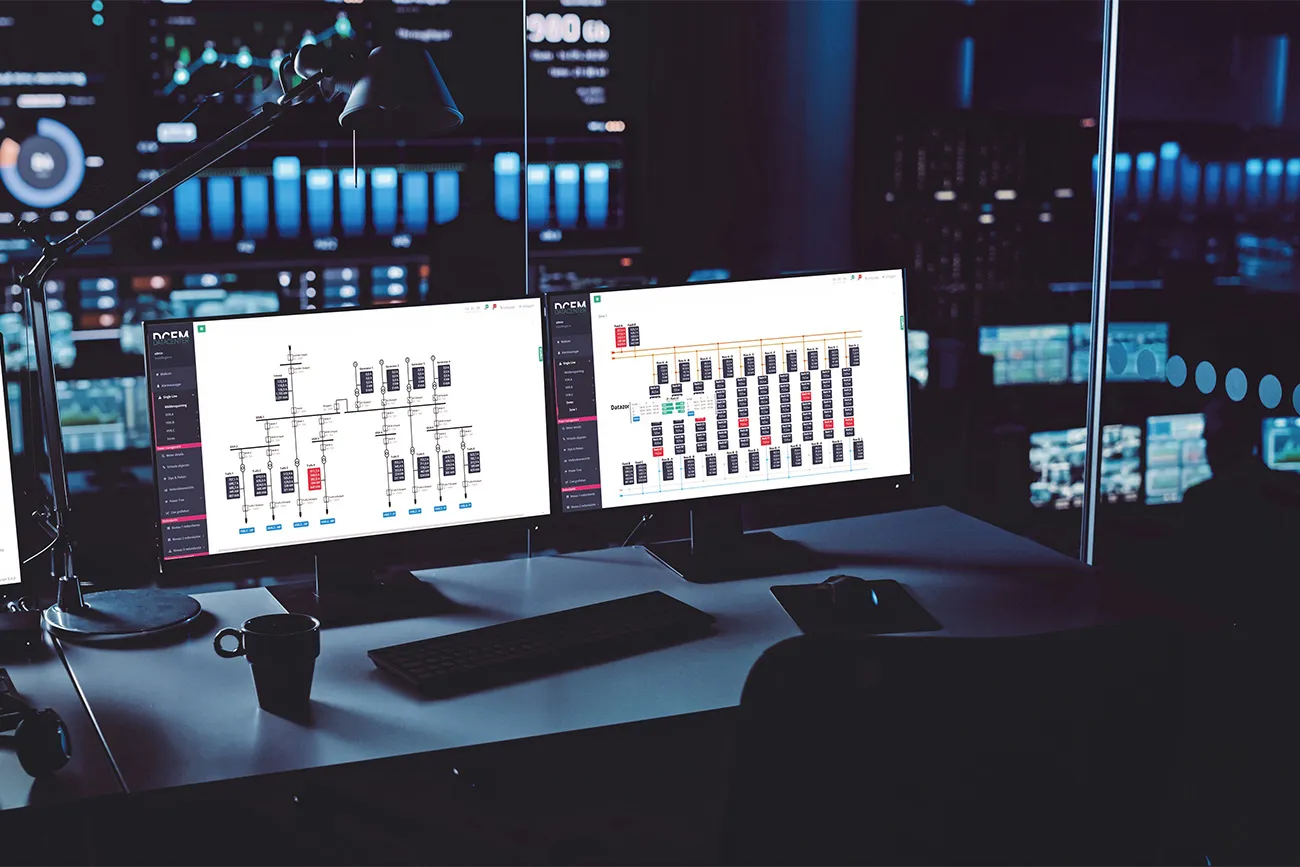
DCEM Healthcare Edition is a software package developed by Fortop that collects all measurement data for electrical installations in healthcare facilities and other organisations. DCEM provides millisecond-level insight into real-time and historical measurement data for the entire installation. Data from measuring instruments, switches, generators and UPSs are converted into real-time alarms, visualisations and reports. The single-line visualisation provides an at-a-glance view of the current status of
the installation.
Every Power Management system also includes an alarm manager that flags all serious anomalies with a timestamp and sends active alarms to the user by SMS, email and other means.
The Power Tree function provides real-time insight into energy flows, making excess capacity particularly easy to identify.
Step 3: Improving voltage and current
Electronic equipment generates current harmonics, which cause cables, transformers and generators to heat up further. Current harmonics also pollute the voltage. Active filters are an effective solution. They inject a current that filters out current harmonics and brings the power factor back to 1. Voltage stabilisation systems can be used to compensate for voltage dips.
Een zakelijke vraag aan fortop automation & energy control? Get in touch
Companies in this story

Keep following this
Get an email when a new story is published. No account needed.
- SubjectServices & solutions
- Companyfortop automation & energy control







