Buy a standard machine or have one custom-built?
Text Valérie CouplezImage VINTIV
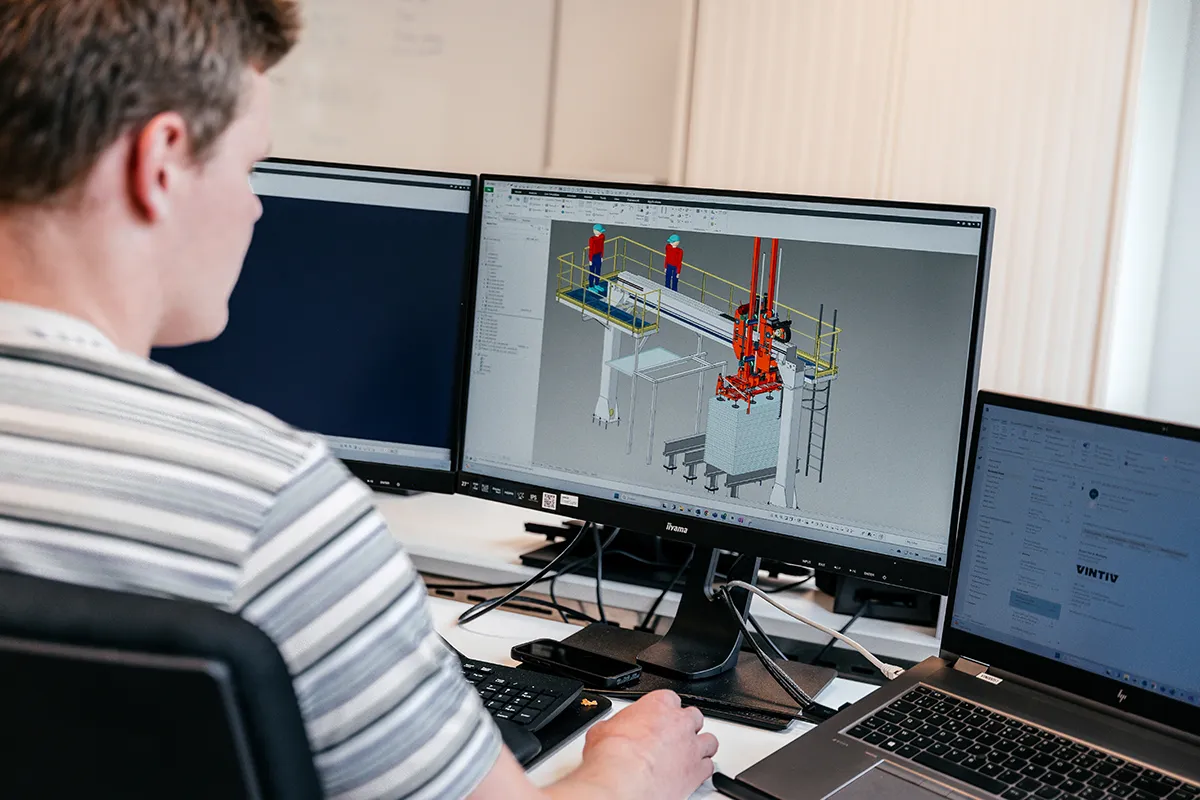
Which machine does your production process and product need to outperform the competition in speed, flexibility and safety? As a business owner, you are really the only person who can give a meaningful answer to that question. But VINTIV offers companies a framework for making the right decision. “Even though we at VINTIV are prototype builders, we still help customers assess the options fairly. There is no point choosing a custom solution if there is no business case for it. The extra cost has to deliver added value, otherwise you will not build a long-term relationship,” says VINTIV Director Joris Ceyssens.
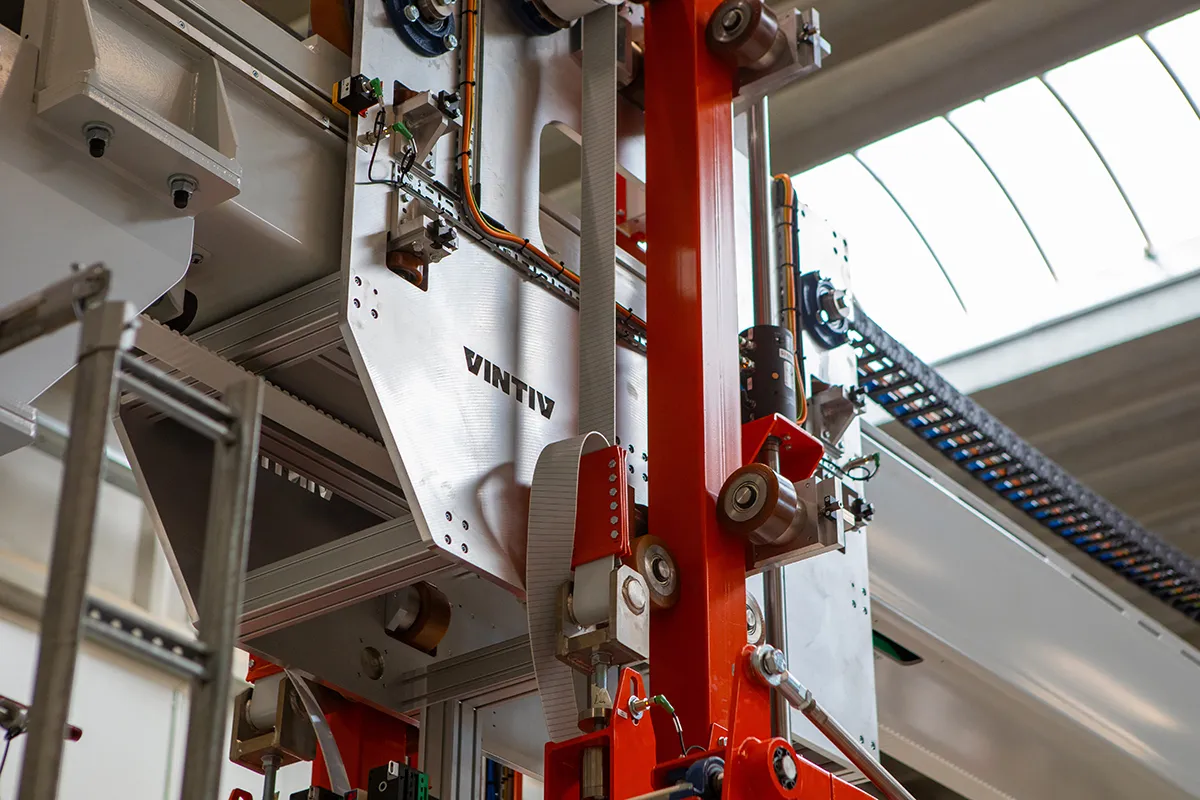
VINTIV assesses the options against four criteria: lead time, price, risk and competitive advantage. Ceyssens: “With a standard machine, the design is already 100% complete and the technology has usually been proven. A custom solution starts from scratch. That means we still have to engineer and build everything. It is a longer process. Our experts first need to understand the customer’s process and learn how the product behaves. Only then can the iterations begin, with the mechanics, electronics and software progressively refined. Even so, we try to keep lead times as short as possible, thanks both to our production experience and to the wealth of expertise we have built up in-house.”
Look at the TCO
In terms of price, too, a custom-built machine will struggle to compete with series-produced machines. “We always advise customers with an idea for improving their production performance to start with thorough market research. If a standard machine can do the job, it will always be the cheaper option. Building a first prototype takes a lot of hours, and engineering will account for the biggest cost. It becomes more attractive if the machine developed can also be used at other sites. In addition, the higher investment will pay for itself through higher-quality products and less need for overhauls and updates. So when comparing prices, it is best to look at the full TCO,” says Ceyssens.
Reduce risk with a proof of concept
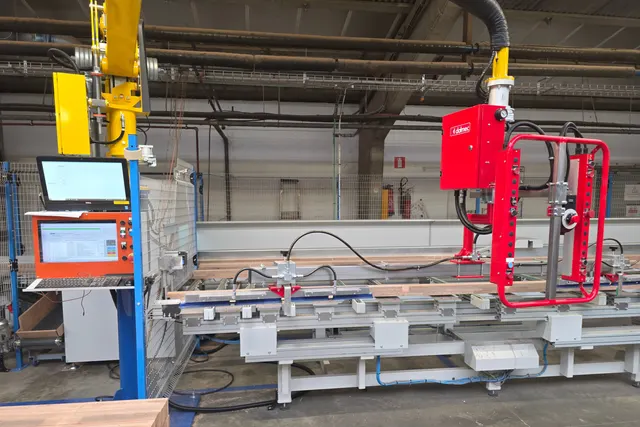
Standard machines involve little risk. They have already been validated, so the outcome is known. “In other words, you can assess the return on your investment accurately in advance.” Custom solutions cannot offer the same certainty. “Every machine we build is unique and, by definition, has not yet been validated,” says Ceyssens. “The aim is precisely to give users more functionality than they would find in standard machines, but that entails greater risk. If we feel there are too many unknowns, we first carry out a limited proof of concept to test feasibility. This can be done virtually, but you need a model to work from. In practice, a simple test set-up can already give you a lot of reassurance. And our workshop has the machines, people and capacity to do that.”
Protect your IP and strengthen your position
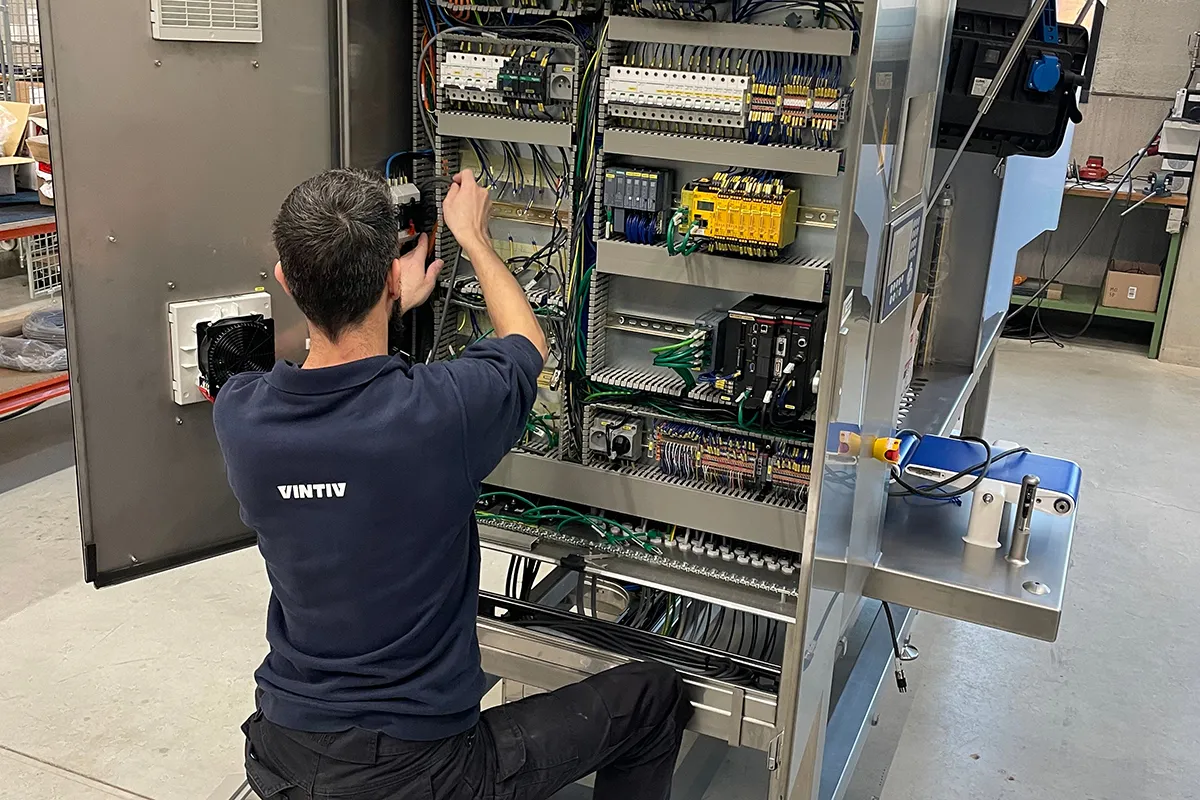
The strongest argument in favour of a custom solution is the competitive advantage it can deliver. Ceyssens: “With an off-the-shelf machine, your competitors have access to exactly the same solutions. So you create neither a competitive advantage nor a unique market position. And if you approach those manufacturers for minor modifications, you will never be able to claim that IP. With a custom solution, on the other hand, you get a unique production system designed and built entirely to your specifications. As the developer, we provide the complete technical construction file for the machine. That way, you can be 100% sure that the machine, and all the advantages it gives you over your competitors, really is yours.” The best custom solutions require a substantial sharing of knowledge. “Custom engineering is co-creation. You also need a team at the customer’s end to provide process input and help assess and steer the iterations. These are innovative machines that often incorporate a lot of complex technology. You need to be able to support that.”
The best of both worlds
“It does not have to be an either-or situation,” Ceyssens adds. “A custom solution can also start from an existing machine or involve partial automation.” He gives the example of auto-injectors, pre-filled syringes used in the event of a severe allergic reaction. “The assembly of these emergency pens is usually designed for a single product. With a custom solution, we were able to build in the flexibility to assemble them differently each time. But labelling could be handled by a standard solution. That gives you the best of both worlds.”
Een zakelijke vraag aan VINTIV? Get in touch
Companies in this story
Keep following this
Get an email when a new story is published. No account needed.
- SubjectServices & solutions
- CompanyVINTIV