Automating the propagation of rose plants with the VTUX valve terminal
Text and images Festo
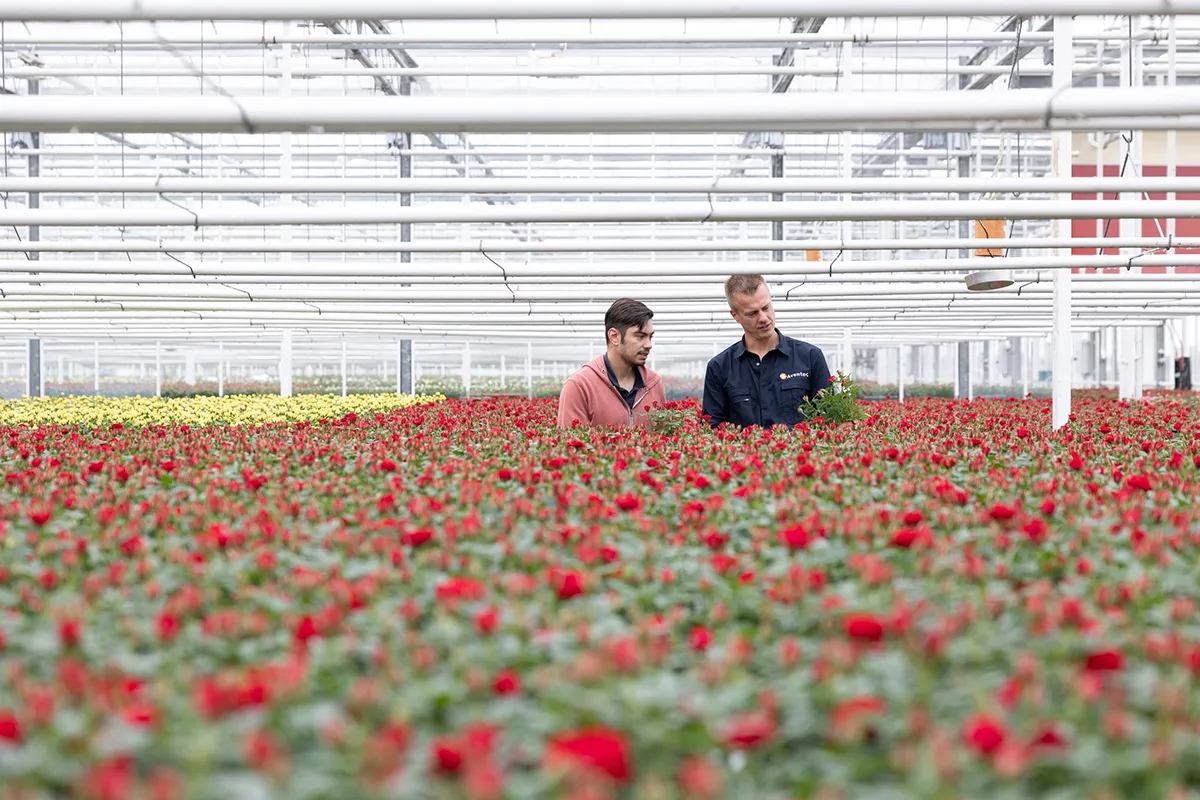
Using a robot to take rose cuttings is nothing new, but John van de Ven, founder of Aventec, is taking things a step further. With Festo as his partner, he is putting the latest technologies and innovations into practice. The VTUX valve terminal plays a key role.
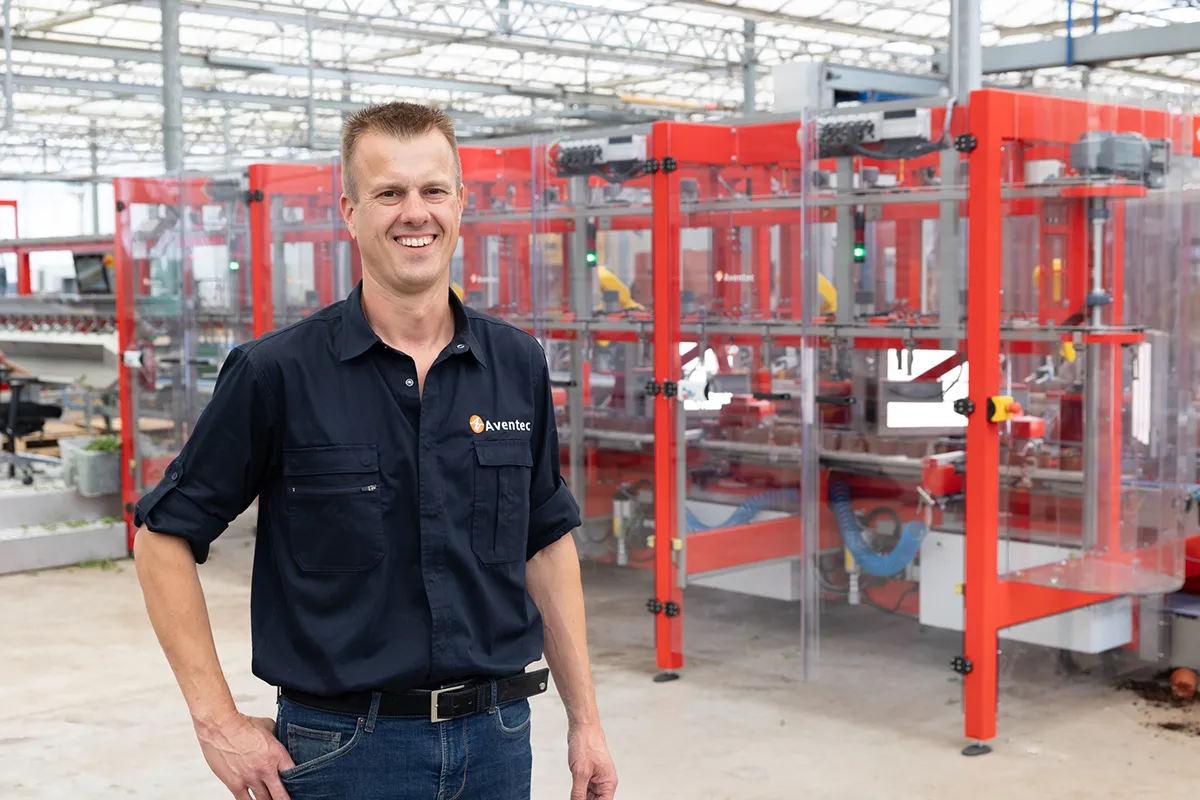
As an electrical engineer, John knows the world of robotics and image processing inside out. With Aventec, he automates a wide range of processes. In the company’s early days, around 2013, his focus was mainly on interim project management. Today, he is increasingly focused on innovation in greenhouse horticulture.
His breakthrough came when former customers of his previous employer, a company that no longer existed, approached him. They had a machine for taking cuttings from potted roses, but it urgently needed maintenance. What began as a maintenance job soon grew into a larger development project. An initial assessment showed that more work was needed. John saw the potential and set about making improvements.
“To guarantee the continuity of these cutting machines, they needed to be upgraded with new components. A significant number of the parts in use had reached the end of their service life. We decided to redesign the machine using modern servo technology controlled by the Festo CPX-E PLC platform, together with a modern vision system.” Many components had to be reprogrammed from scratch, with the aim of creating a fast, reliable machine that customers could count on for years to come.
Greater speed and precision through new technology
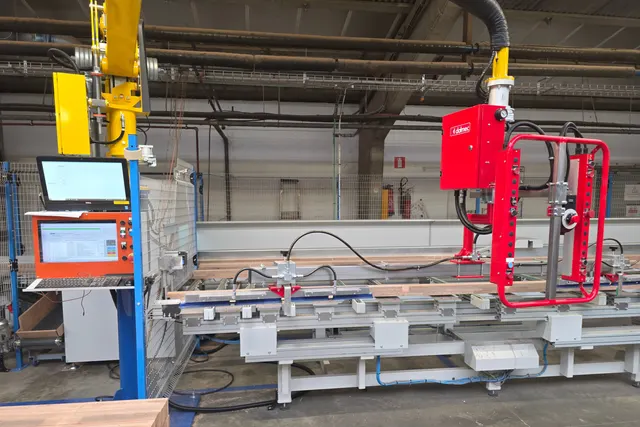
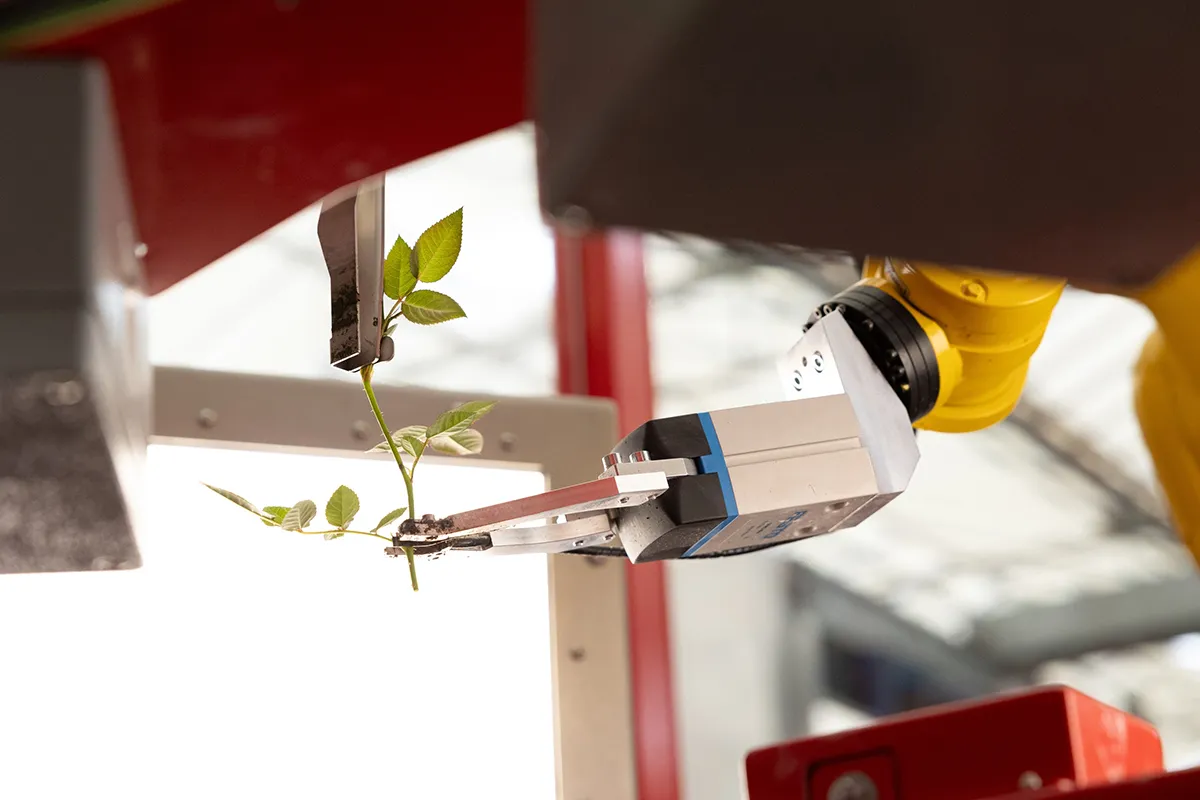
To gain more control over deliveries and the reliability of his machines, he decided to build them entirely in-house. But just how complex is such a machine? The process starts with rose stems being hung manually on a conveyor system. Each cutting is placed in a holder and taken to a processing cell. There, the vision system rotates the cuttings through 180° for a 3D scan, allowing the best ones to be selected. A robot then cuts them to size and plants them directly in a new pot. This is done at high speed and with extreme precision. With four cutting stations, the machine achieves impressive output: up to 5200 cuttings are cut and planted per hour.
While developing the machine, John got in touch with Festo. “From the outset, they helped me choose and integrate components from different disciplines. The turning and cutting operations were particularly challenging. To see how we could achieve this with Festo components, we sent rose stems with holders to their development centre in Delft. A week later, I received a video update. I was amazed at how quickly they had made progress! We then built a test module using Festo components and invited our customer to see the results for themselves.”
“Where possible, I use Festo”
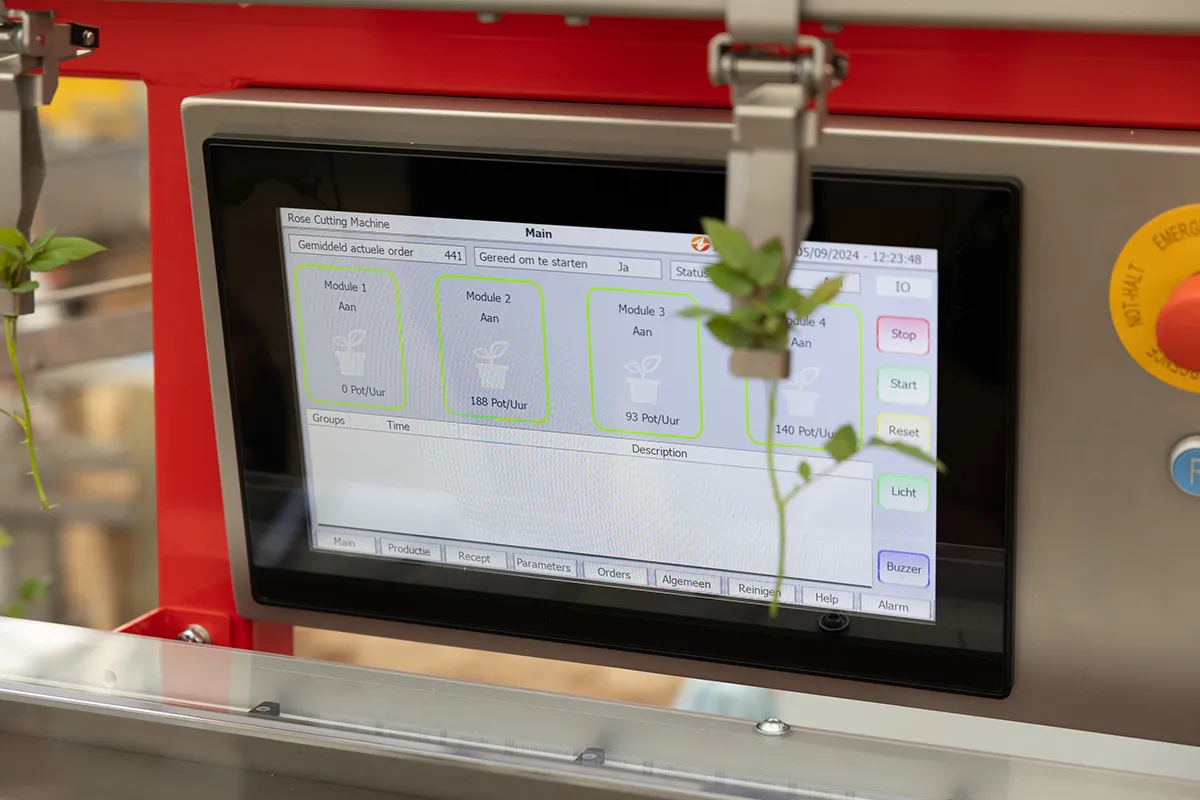
John wants to source as many components as possible from a single supplier. “Where I can, I choose Festo. Otherwise, you risk suppliers blaming each other when something does not work, and the end customer is the one who suffers. The modules now include Festo linear guides, pneumatic components, PLCs, an HMI and valve terminals. The first fully upgraded machine with the newly developed modules is now running. Each module has its own PLC to provide the processing power needed for image processing. For the main control system, we use an HMI and new valve terminals. Festo continued to improve its products during development, which meant we could switch smoothly to its latest HMI. Converting from the previous generation proved surprisingly straightforward. The work we had already done transferred easily. The platform is now faster and more efficient, and we have retained the structure.” John greatly appreciates Festo’s support. “They help us find the right solution for the job. Why use a stepper motor when pneumatics can do the same thing?
Key design benefits
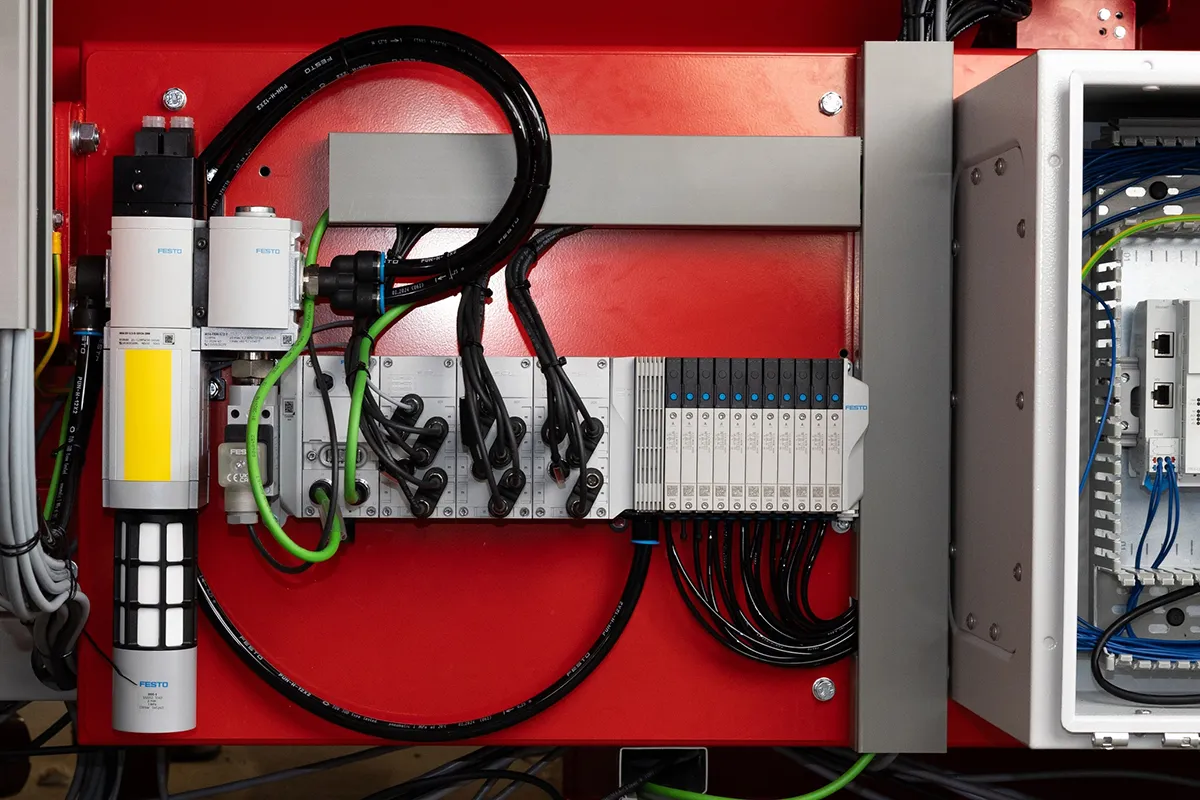
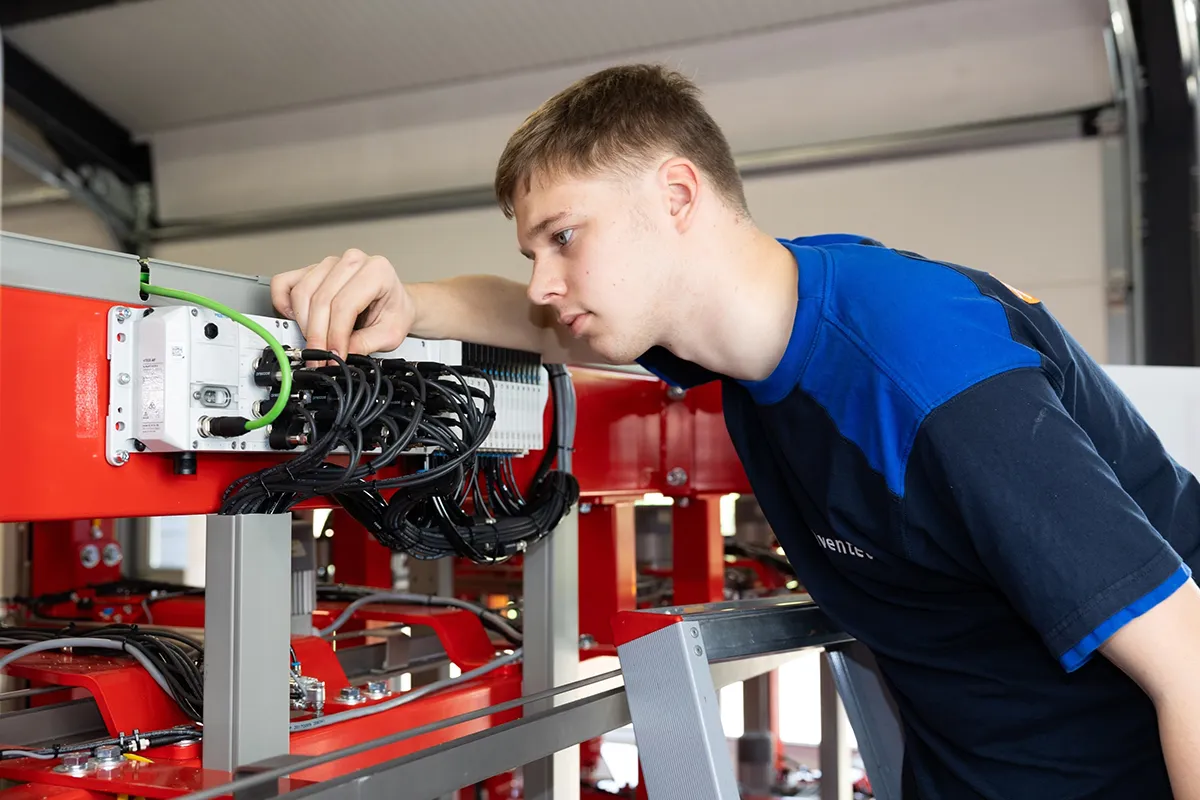
One of the most notable components in the rose-cutting machine is Festo’s new VTUX valve terminal. Jeroen Holt of Festo explains what makes this technology so special. “One major advantage of this valve terminal is that it is ideal for both decentralised and centralised machine layouts. In this case, the control system is decentralised, so the terminal does not need to be housed in a separate control cabinet. Thanks in part to its IP protection rating, it can be installed in the open. It is also more compact, with a much smaller installation footprint than its predecessors, which brings significant design benefits.”
John deliberately opted for decentralised control to reduce the machine’s cabling. “You can position the connection points closer to the sensors, which means you need fewer I/O points in the control cabinet. That saves space and work. And if a cable needs replacing, you don’t have to reach into the cabinet through a clevis, you can go straight to the VTUX valve terminal.”
John began developing the machine with the VTUX’s predecessor, the VTUG. “It had an aluminium base plate and could be dismantled section by section. The VTUX is a major step forward and the future of the valve terminal,” he says with a nod. “It is more versatile and lighter.”
Thanks to the internal serial connection, up to 128 valve functions can now be assigned. “We no longer have to wire each valve and sensor separately. One connection for air, power and communication is enough. Where we used to need two control cabinets, one is now sufficient. Decentralised control makes it possible to operate everything individually. That’s
really handy.”
Time savings are the biggest added value
John says the biggest benefit is the time saved. “We save hours of work, so the investment pays for itself very quickly.” Alongside efficiency, Jeroen and John also highlight the benefits of data communication. The new Festo CPX-AP-A automation platform offers several communication options for fast, error-free I/O between components, as well as advanced diagnostic functions. Jeroen explains: “If a cable breaks somewhere, for example at a sensor, you can immediately see where the problem is.”
The system is also easy to use. “All the tags are read into the VTUX automatically, so all you need to do is assign them,” says Jeroen. John uses nine of these valve terminals in each machine: one on the main unit, and one above and one below each rose-cutting module.
Speed often determines the required force and stroke, but contamination also plays a part. In a dusty working environment, a cylinder needs to withstand contamination. With its IP67 rating, the VTUX provides exactly this protection, an important distinguishing factor in this application’s operating conditions.
John was one of the first customers to start working with the VTUX in November 2023. “When Festo develops something new, I don’t hesitate to use it straight away. I have visited its factory in Esslingen and seen how thoroughly everything is tested. That gives me complete confidence in the Festo team.”
Working with Jeroen is just as straightforward. “I explain what I need, and Jeroen shows me what’s possible. We have reviewed the whole machine together, agreed what we want, and he comes back with the answers and additional information. The machine must still be maintainable in ten years’ time, so service life is an important consideration. Jeroen actively contributes ideas about future developments.” Jeroen nods in agreement. “The discussions are genuinely technical. I know the whole process, and we start with a basic idea and open questions. I enjoy doing that.”
John is clearly satisfied. “We have developed our own algorithm to speed up the process. We needed more processing power than the old system could provide, and we have more than achieved that. We also wanted two unique processes to run simultaneously without affecting each other. We solved that with two separate queues, each with its own core in the PLC. Cycle time remains the key. We are now at four milliseconds, but are aiming for two.”
A business enquiry for Festo? Get in touch
Companies in this story

Keep following this
Get an email when a new story is published. No account needed.
- ThemeRobots on the shop floor
- SubjectServices & solutions
- CompanyFesto