Automated loading and unloading of precision components in a press application
Text Valérie CouplezImage Vintiv
Ensuring quality through manual operations is no easy task. A manufacturer of precision components therefore turned to Vintiv to automate the infeed and outfeed of its press system. The aim was not only to automate but also to optimise: quality had to improve, and production volumes could do with a boost too.
Innovation is about more than just coming up with a great new product: you also need to be able to support it with the right production equipment. A company in the Antwerp region already had the manual press needed to make its innovation, provided the metal raw materials could be positioned and oriented with extreme precision, to within tenths of a millimetre. Fortunately, after years of working together, the company knew where to turn: it quickly found its way to Vintiv and a solution to its challenge. Managing director Joris Ceyssens: “We were asked to convert a manual press into an automatic one that could press a new product. The key requirements were accuracy and flexibility, so that different types could be produced on the same machine.”
Solution built around the existing machine
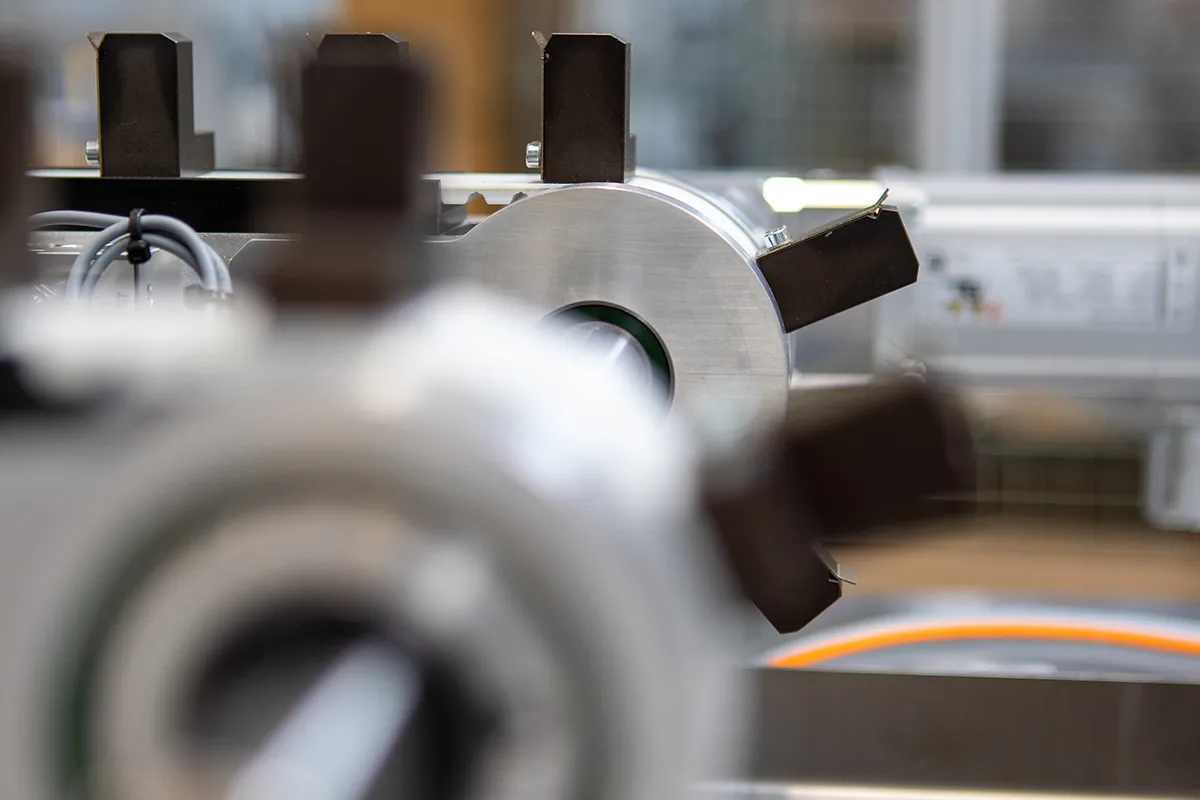
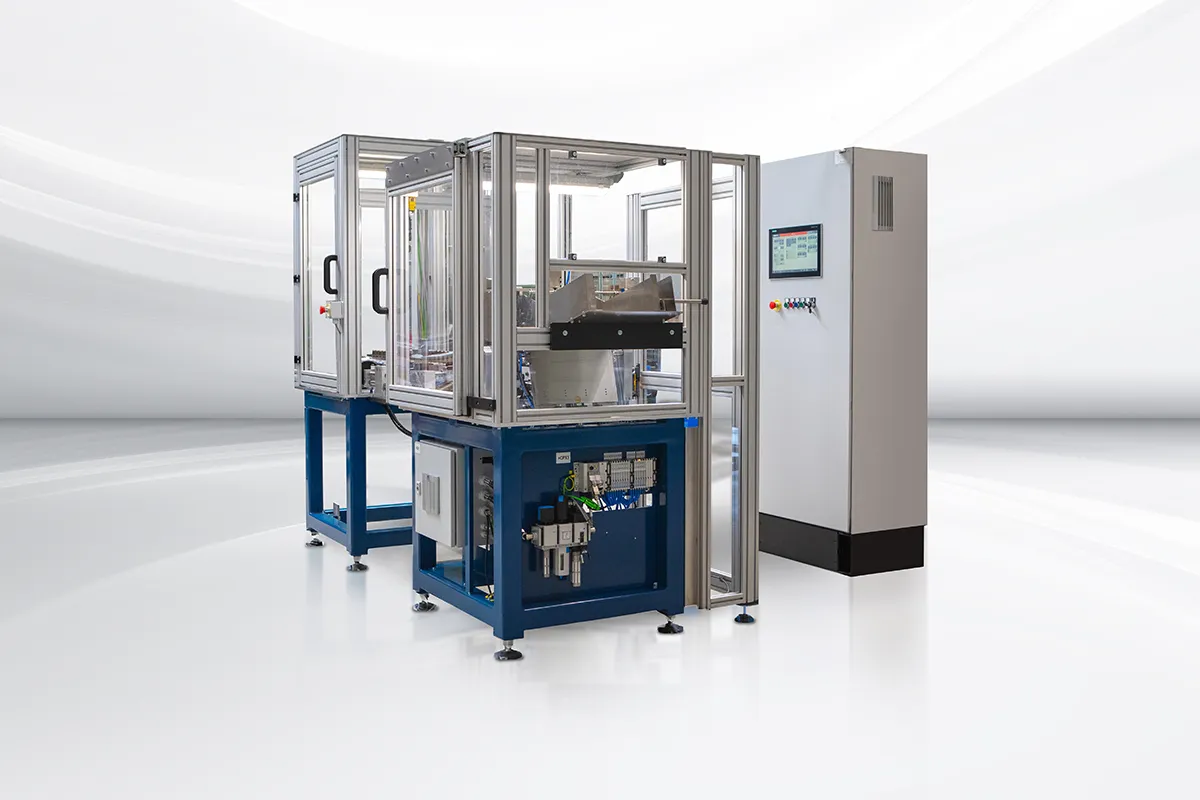
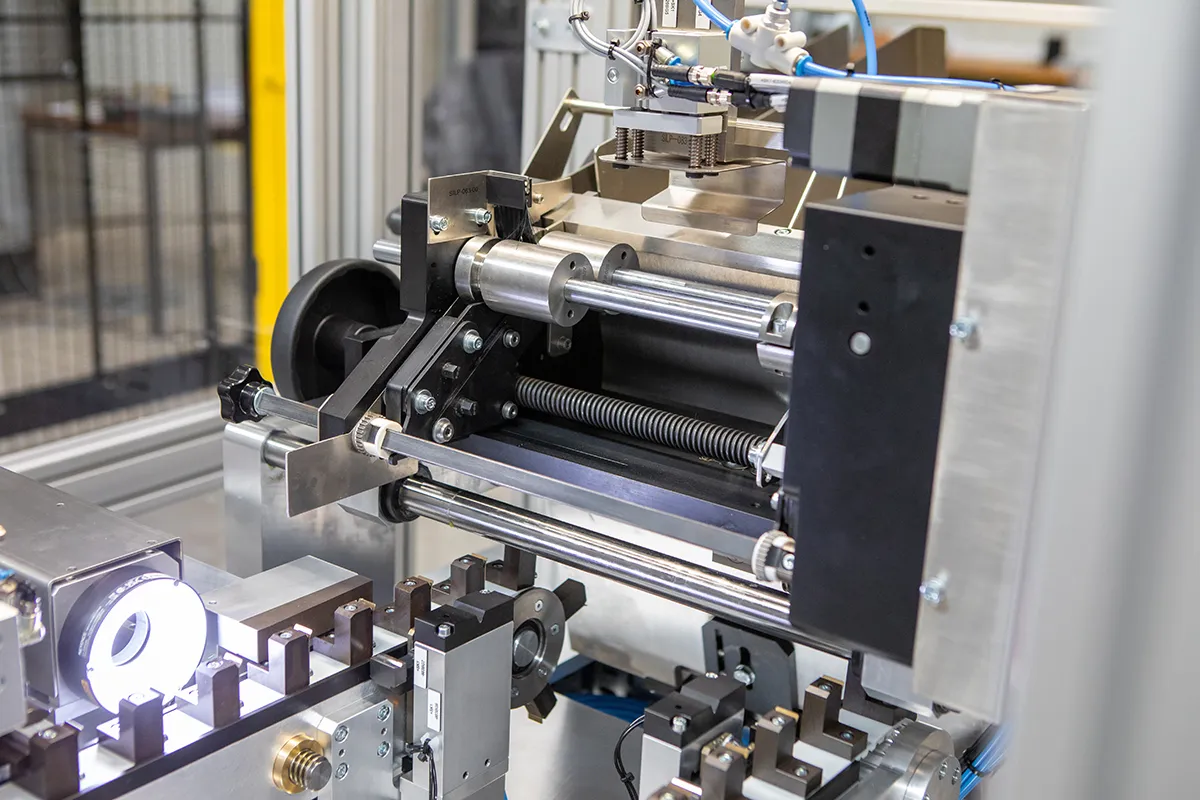
Vintiv built its system around the existing press, adding a new infeed section. “Given the level of positioning accuracy required, this product simply cannot be made manually,” Ceyssens continues. “The automation was therefore designed to position the product perfectly, ensuring the required quality.” There was no need to reinvent the wheel. Vintiv had previously developed an automation solution for this customer that fed products one by one from a bin onto the machine’s conveyor belt. This was also an ideal fit for the infeed station to the press. From that point on, the project entered new territory. “We opted for a vision system. A camera, provided with sufficient lighting, looks for a specific orientation point on each product. This would be difficult for operators to see with the naked eye. The camera can detect it to within one degree and tells the gripper how far to rotate the product to position it perfectly.”
Quality control at the outfeed
Once this dynamic positioning system has done its job, the grippers remove the product from the spindle and place it in the die of the automatic press. The machine then does what it has always done. “A final check takes place at the outfeed station. We check the straightness of the product, as laboratory tests showed that this parameter gives an indication of product quality,” Ceyssens explains. Products that pass inspection remain clamped and are taken to a dedicated outfeed station beneath the conveyor belt. Products that fail to meet the specified quality requirements drop straight into a reject bin.
Greater flexibility and improved quality
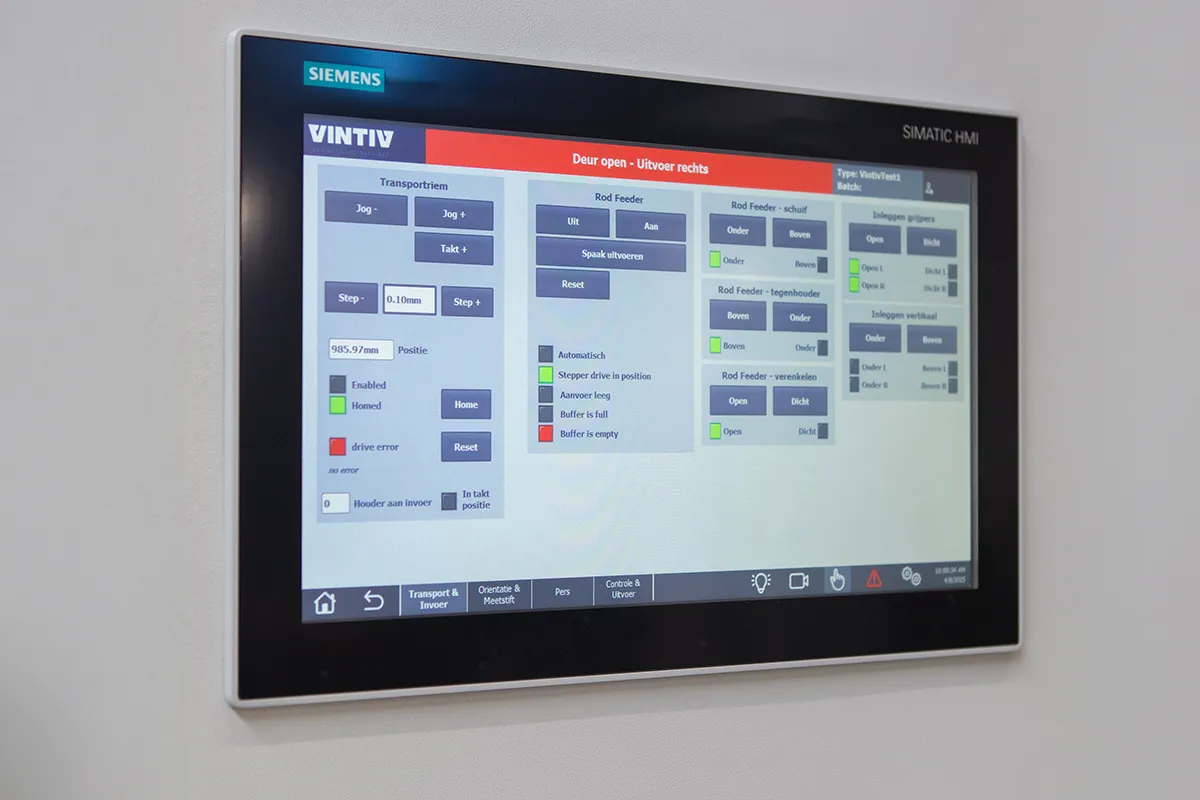
Vintiv’s custom solution enabled the customer to optimise its production process. “First, in terms of flexibility. We can adjust the width of the conveyor at the infeed to produce shorter or longer precision components as well. The customer specified in advance the range this needed to cover.” The speed of the process was naturally another factor. “Quality was the priority, of course, but this is still industrial production. The process needs to run fast enough to keep up with demand.” In this case, Vintiv’s automation delivers twenty products per minute, comfortably meeting the customer’s requirements. A final consideration was access to the existing press. “Our solution had to allow the die to be changed and maintenance work to be carried out without obstruction. Naturally, we also conducted a thorough risk analysis to ensure machine safety,” Ceyssens concludes.
Een zakelijke vraag aan VINTIV? Get in touch
Companies in this story

Keep following this
Get an email when a new story is published. No account needed.
- SubjectServices & solutions
- CompanyVINTIV