












Advanced access control keeps high-voltage testing safe at NMBS

Ensuring safe working conditions is not just a matter of technical measures. It also depends on training, knowledge and authorisation. To manage this, the new power converter test zones at NMBS’s Central Workshop in Mechelen have been equipped with RFID readers that enable advanced access control. Turck Multiprox supplied the hardware, while Dymotec developed the solution.
NMBS’s Central Workshop in Mechelen maintains, modifies and overhauls trainsets. It is a hub of technical expertise, bringing together a wide range of disciplines to keep rolling stock in good condition. During overhauls, trainsets are stripped down to the metal chassis and rebuilt from scratch. The Central Workshop also supports regional workshops, including by repairing and supplying components. Electronics is playing an increasingly important role in its range of technical expertise, as trains are equipped with more and more electronic and digital features. To build on this trend, the team responsible for electronics recently moved into a new building equipped with modern laboratories. One particularly specialised lab is used to test train power converters. To simulate real-world conditions on trainsets, test rigs capable of generating up to 3,000 V are used.
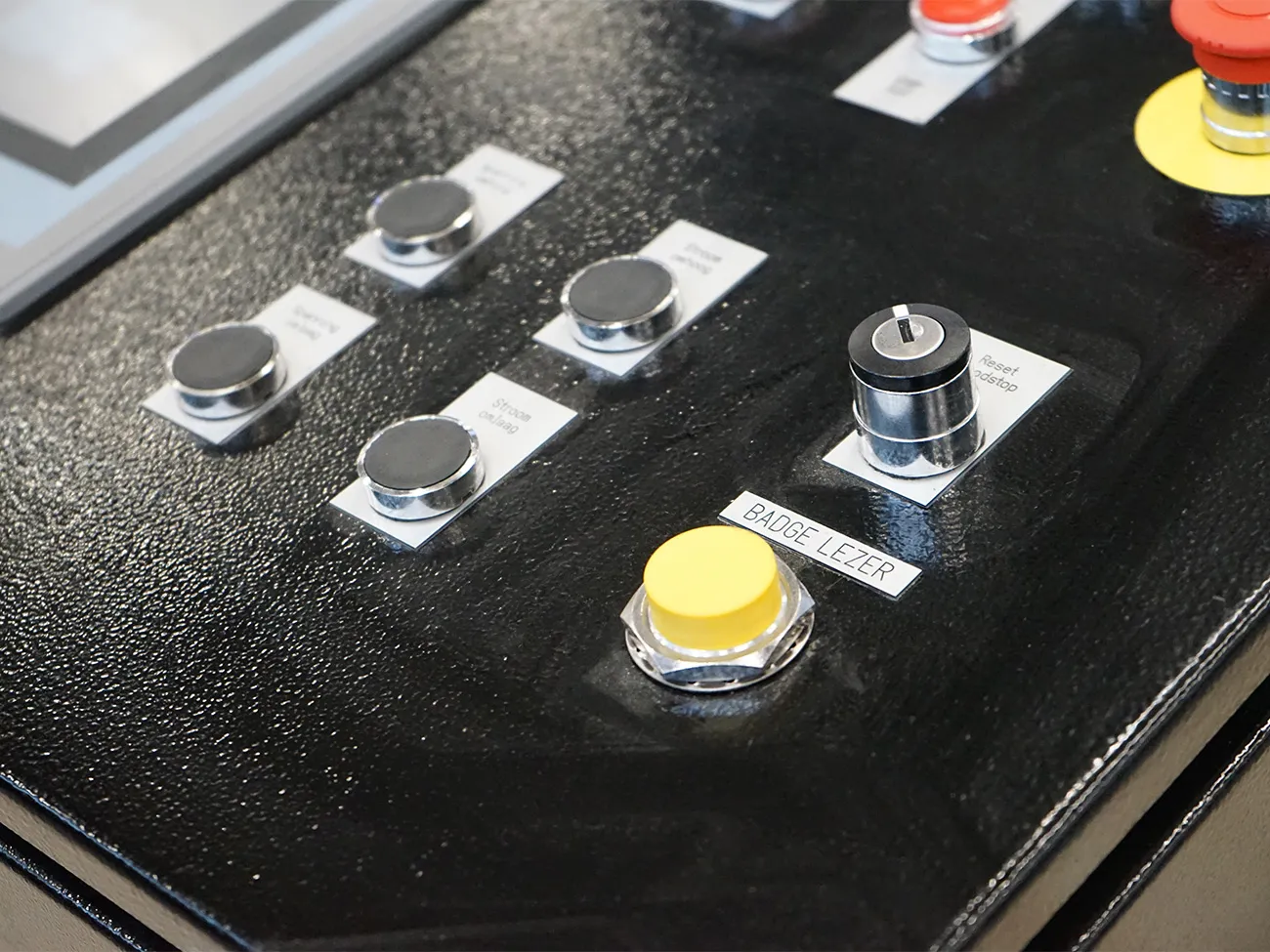
Laboratory power supply delivers 3,000 V
“The power converters are enclosures located on top of or underneath the trainsets,” says Kristof Honee, head of the Electronics department at the Central Workshop. “In Belgium, the overhead line carries 3,000 V DC. The enclosures convert this voltage to lower voltages to power the traction motors, the HVAC system and all the other equipment. Trainsets also have onboard batteries that serve as an emergency power supply and a buffer when the train is between two sections of overhead line. In the new lab, we have three test zones for testing the enclosures after an overhaul or repair. Many components can be checked at lower voltages, but for the final test of an enclosure we use a laboratory power supply that, like the overhead line, can deliver 3,000 V.” Testing the enclosures must follow strict procedures, with close attention to safety risks. NMBS called on Dymotec, a company specialising in industrial electrical installations and automation, to build a system for managing and monitoring test procedures and safety aspects. A crucial element is managing authorisations and tracking who has done what.
Safety requirements
The test zones in the lab look very modern, with plexiglass enclosures and K50L2RGBKALSQ LED lights at the access doors that change colour according to the status of each zone. Each door, as well as the operator desks, is fitted with an RFID reader that operators must scan their badges at to gain access. “Our staff receive training covering all the safety aspects of a particular type of enclosure. They then have to take a test to demonstrate that they understand the hazards,” says Honee. “Dymotec’s system ensures that all safety requirements are met at every stage of the test procedures.” Niels Jansen, Sales & Marketing Manager at Dymotec, adds: “The RFID readers check who is logging in. The PLC checks whether that person is authorised to gain access in a given situation or start the next step in a procedure. Some operations in the test zone require two operators to be present. Their badges are also checked for this. The PLC ultimately controls the laboratory power supply and ensures that the test rig is only energised when it is safe to do so. Operators must also confirm each action they have performed, so that nothing is overlooked.”
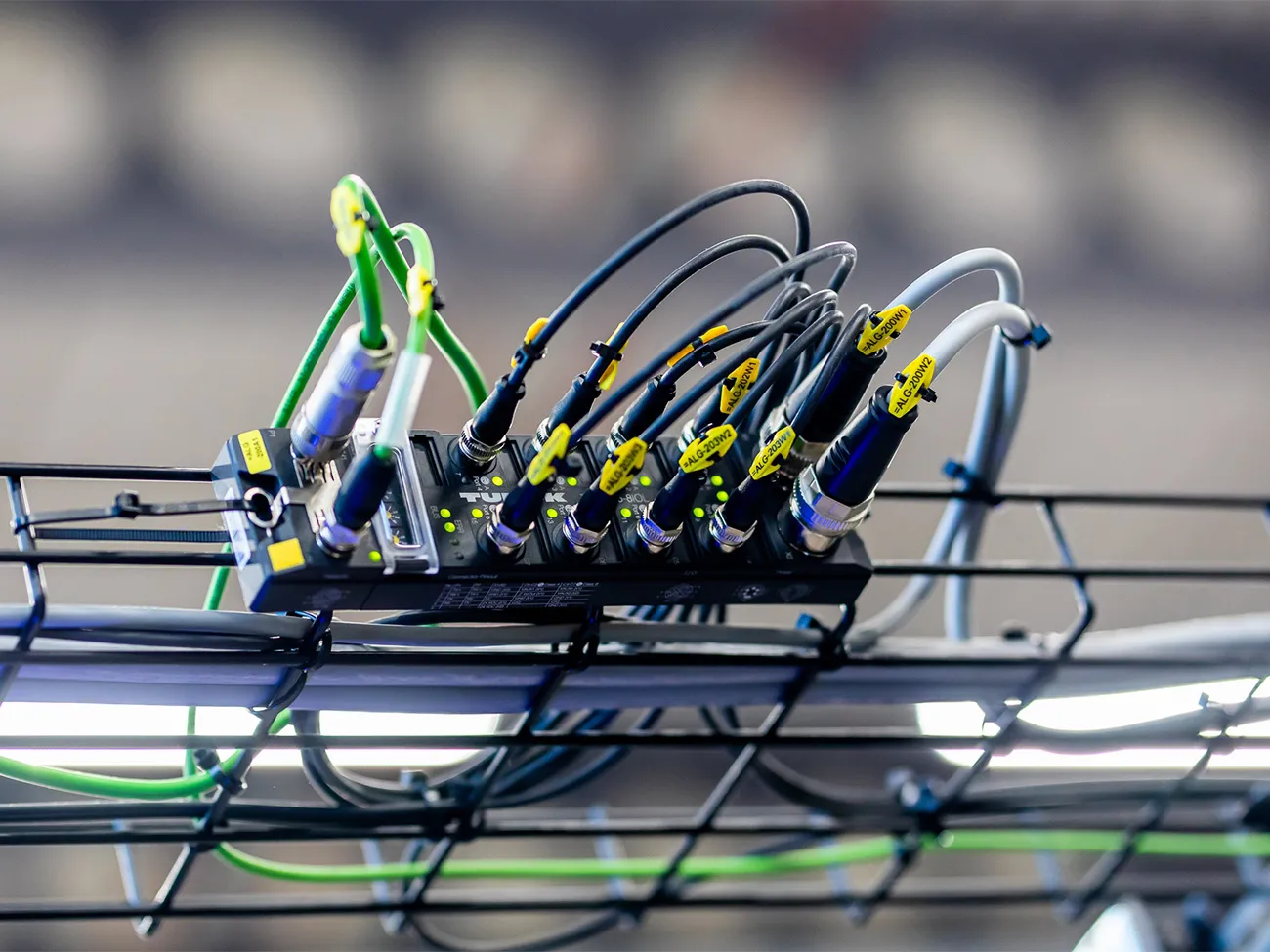
RFID readers and signal lights
Turck Multiprox was called on to supply the RFID readers and signal lights. Turck’s RFID read/write heads are IO-Link devices that send an ID to the PLC when a badge is scanned. “It is a flexible system that is relatively easy to implement,” says Jimmy Volders, project manager at Dymotec. “The RFID antennas and signal lights are connected via IO-Link to IO-Link masters. These also supply the power, so little wiring is needed.” The TBEN-L5-8IOL IO-Link masters are Turck I/O modules, connected in this case to a PROFINET network for communication with the PLC. The modules have a built-in Ethernet switch, allowing multiple I/O modules to be connected in a line topology. This means that only one PROFINET cable is needed from one access door to the next, further reducing the amount of wiring. Each module provides four or eight IO-Link master channels for connecting intelligent devices. In the test zones, these include not only the RFID readers but also the LED indicator lights. These are signal lights from Banner Engineering that the PLC can control to change colour. So, unlike conventional coloured signal lights on a tower, there is now just one light at each access door. Programming is not limited to selecting a colour, either. The LEDs in the light can be controlled individually, making it possible to create animations that provide additional information about the status. Signal lights with an audible function were chosen for the control cabinets, so the system can also issue warning signals.
An invisible hazard
By automating the test rig with badge readers and signalling, the safety procedures laid down by NMBS could be implemented effectively. The system also provides a complete record of who has done what, further encouraging staff not to take shortcuts when it comes to safety. “The risks posed by a 3,000 V installation should not be underestimated,” says Honee. “Even when the power is off, coils and capacitors can still hold a charge. That is why work must always be carried out systematically, in accordance with established procedures, by people who are aware of the risks. Electricity is an invisible hazard, and handling it safely requires the right knowledge and care.”
Question about this story? Ask your question
Companies in this story
Keep following this
Get an email when a new story is published. No account needed.
- SubjectServices & solutions
- CompanyTURCK MULTIPROX nv







