Vision seamlessly integrated into machines
Text Valérie CouplezImage Beckhoff Automation
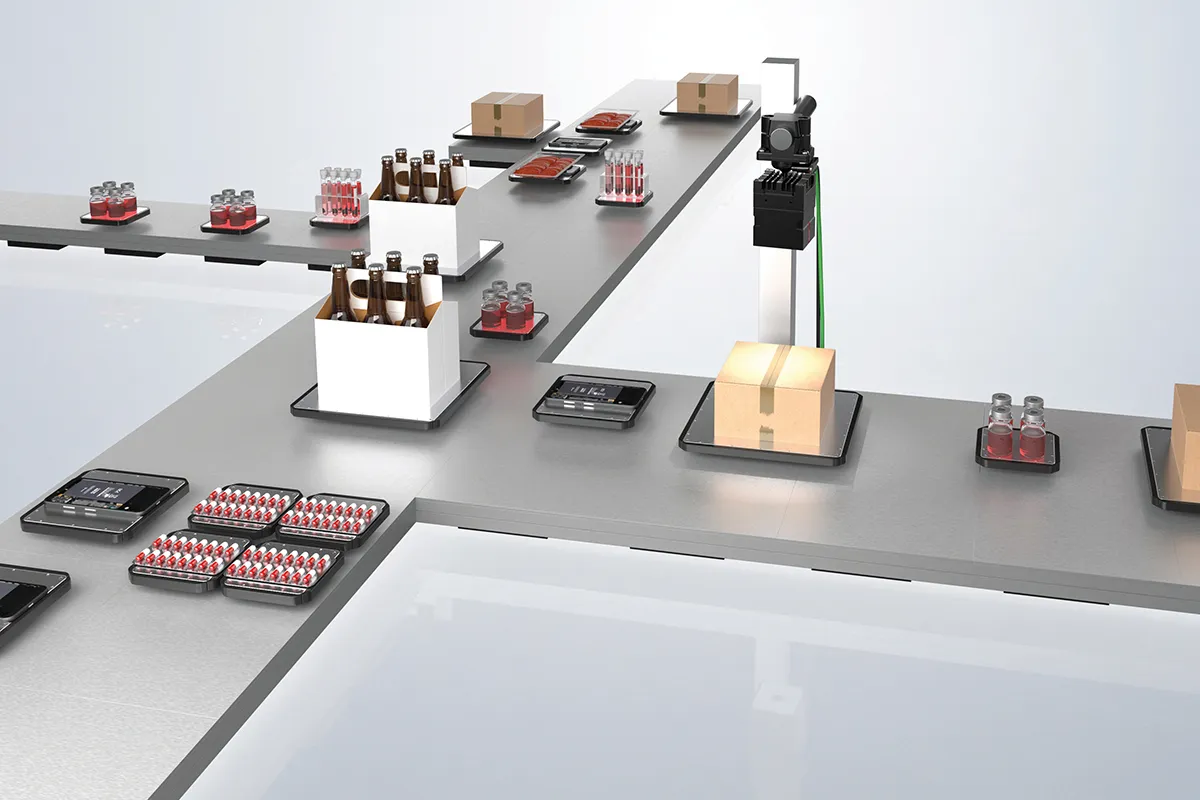
At last. Many machine builders have been waiting for this: after the summer, Beckhoff will launch the rest of its hardware for vision applications. The lower-resolution cameras (up to 5 MP) were already in stock, and now the high-resolution models are following, together with the lighting and vision units. This is a major advantage for anyone already working with Beckhoff technology. They can now control their vision applications from the same programming environment and with the same controller as the machine, ensuring perfect real-time synchronisation. Vision has never been so accessible and efficient.
Beckhoff entered the machine vision market in 2019 with TwinCAT Vision, a software module specifically for real-time vision tasks. “Until now, we haven’t had a complete solution, which often presented a barrier,” explains Julia Otero Jiménez, Support Engineer at Beckhoff Belgium. The automation specialist therefore set to work behind the scenes on its own hardware solutions. Beckhoff cameras were unveiled to the public for the first time at Vision 2022, the biennial vision technology trade fair at Messe Stuttgart.
No more separate system
Since its launch, the technology has attracted considerable interest. “Vision no longer needs to be a separate system. TwinCAT Vision has been perfectly integrated into the TwinCAT 3 ecosystem, just like Beckhoff vision hardware in the EtherCAT configuration. It is an additional function we can add to the machine. The machine can control the camera perfectly without the need for an extra controller or interfaces. That saves time and money,” says Otero. Integration within EtherCAT also means that vision applications can benefit from Distributed Clocks functionality. “This allows us to synchronise the vision hardware perfectly in real time, even on extremely fast production lines.”
Focusing during runtime
Another notable feature is the use of liquid lens technology. Otero explains: “With conventional lenses, you have to adjust the focus according to the working distance to get a clear image of the objects. This works well if the same object always passes in the same orientation, but anyone wanting to process a wider variety of objects will have to adjust the focus manually each time. With a liquid lens, by contrast, the focus is set electronically, allowing us to make precise adjustments on the fly without manual intervention.”
Compact units
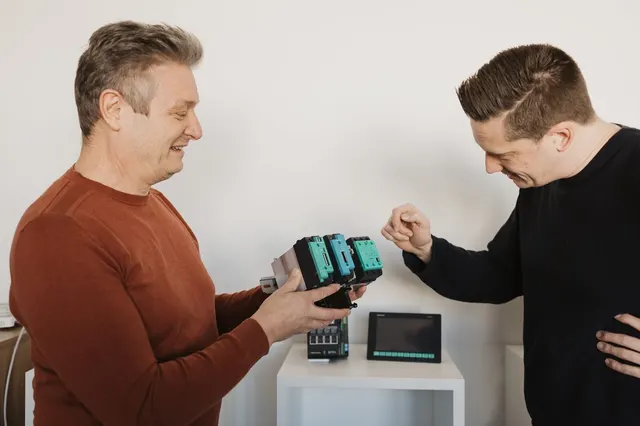
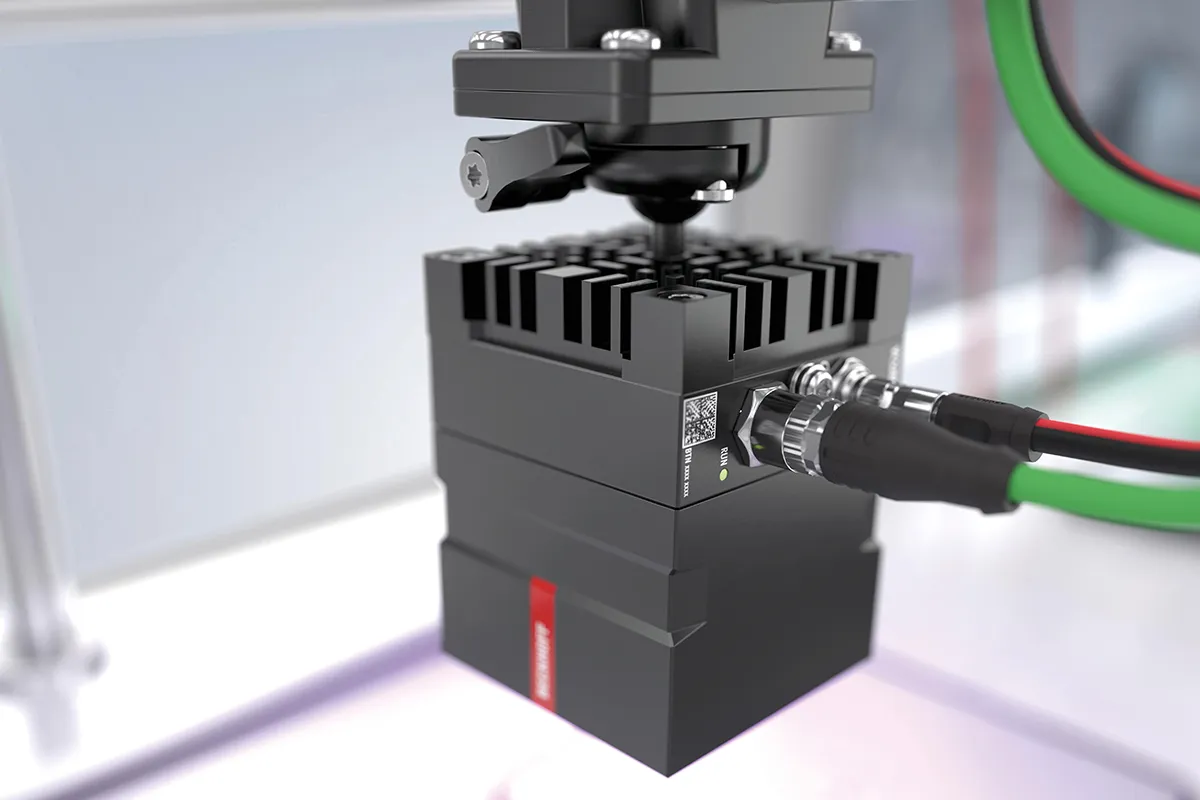
Liquid lens technology is also incorporated into the complete vision units Beckhoff is now launching. “They consist of a camera, lighting and optics in a compact anodised aluminium housing (IP65/67). Their compact size also makes them particularly suitable for retrofitting to existing installations, where finding space is often a challenge. And they can save you time on installation and cabling,” says Otero. This VUI series is available with camera sensors from 2.3 to 5 MP, in colour or monochrome. The focus can be reliably adjusted from 10 to 2,000 millimetres.
Vision and AI
But Beckhoff has also been making progress on the software front. “Vision applications, whether using our own cameras or those from competitors, could already be perfectly integrated into TwinCAT 3. A new feature is the option to add artificial intelligence, which is ideally suited to vision applications.” Otero gives the example of defect detection, where a good product has to be distinguished from an anomaly. “This is where conventional machine vision often reaches its limits. You then need the human eye to detect the defect. If you want to use AI for this, you can implement it easily with TwinCAT 3 Vision Neural Network.”
Een zakelijke vraag aan Beckhoff Automation? Get in touch
Companies in this story

Keep following this
Get an email when a new story is published. No account needed.
- ThemeProcess measurement and control
- SubjectSensors & vision
- CompanyBeckhoff Automation