The nervous system of IoT applications
Text Valérie CouplezImage iStock
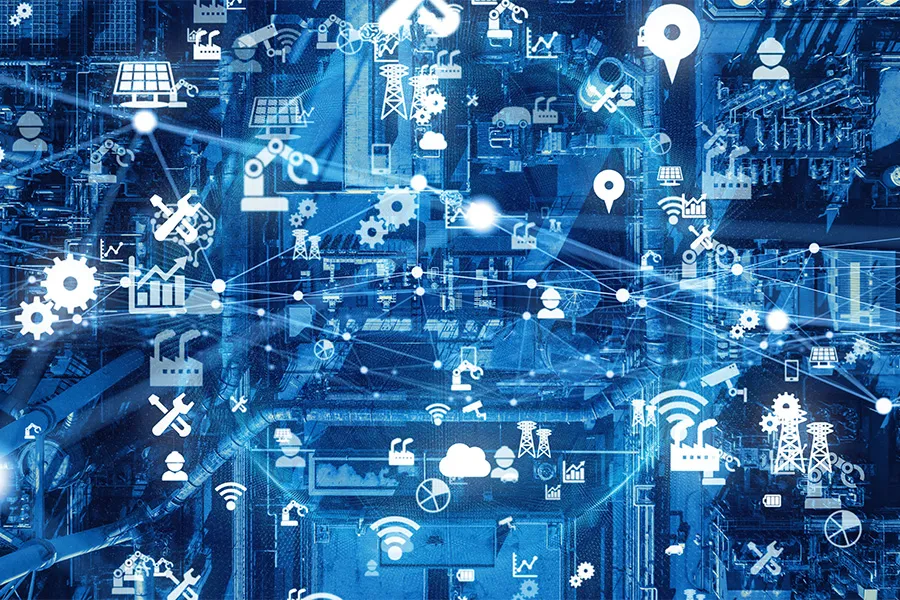
Standard sensors detect all kinds of values in industrial environments, such as temperature and pressure, as well as the presence or absence of objects or people, for example. They also respond to changes in those values. So what more can an IoT sensor do? Not only can it send the data it captures digitally to a controller or another device, it can even send it directly to the cloud for applications such as remote monitoring.
A temperature sensor in a freezer room detects every change in temperature and sends a signal to the compressor. It switches on when the temperature is at risk of exceeding a certain value, and switches off when it falls below a certain value. All this happens without any connection to the outside world. The difference with a smart freezer room is that it uses IoT sensors which operate in a similar way. But they can also send these temperature readings or other relevant data over the internet. Anyone with a smartphone, tablet or computer and the correct access rights can monitor this data and potentially control the application remotely.
IoT or IoT-enabled?
IoT sensors are generally divided into two categories: true IoT sensors and IoT-enabled sensors. The latter category has an integrated protocol that enables data to be exchanged over the internet. This differs from traditional sensors, which are typically connected to local I/O that feeds a PLC for control and monitoring.
Let’s return to the example of our freezer room. In this case, it is usually the room itself that is IoT-enabled, rather than the individual sensors. These are connected to a controller that can be accessed over the internet, making all the data available remotely. A true IoT sensor, on the other hand, sends its information directly to the cloud for further monitoring. One example is a humidity sensor in an agricultural application, where there is often no controller.
Bringing it all together on an IoT platform
Those looking to implement a remote monitoring application often turn to a system integrator for help with choosing the right hardware and software, and identifying any other assets needed to build an IoT platform. This offers several benefits. For example, IoT sensors can help identify mechanical and electronic problems. In addition, IoT sensors worn by employees can connect them with management via mobile communications, helping to create efficient and safe workflows. Other key drivers for integrating IoT platforms include lower costs, opportunities to customise mass production, longer uptime and less waste.
Choosing the right sensor for your application
But which sensors should you choose to build your system? These questions can help you find the answer:
- Should the sensor be battery-powered or connected to a power source?
- How much data does the sensor need to capture, and how often does it need to send it?
- Is the sensor connected to I/O via a cable or wirelessly?
- Does the data need to be processed first in a local controller alongside other data, so that only insights are sent on?
- How will the data be presented?
- What are the investment and installation costs?
- What maintenance costs should be taken into account?
Promising prospects
Advances in IoT sensor technology have made sensors much more compact and energy-efficient, with even more connectivity options, enabling them to capture more data than ever before. This data can then be analysed in real time to provide valuable insights and support informed decisions. However, make sure there is adequate (cyber)security in place so that IoT sensors can operate reliably. The future also looks promising. 5G and artificial intelligence are expected to enable new applications and use cases, together with greater computing power. ■
Question about this story? Ask your question
Keep following this
Get an email when a new story is published. No account needed.
- ThemeData from shop floor to decision
- SubjectSensors & vision