Safe collaboration between humans and machines
Text Marjolein de Wit-BlokImage TR-Electronic
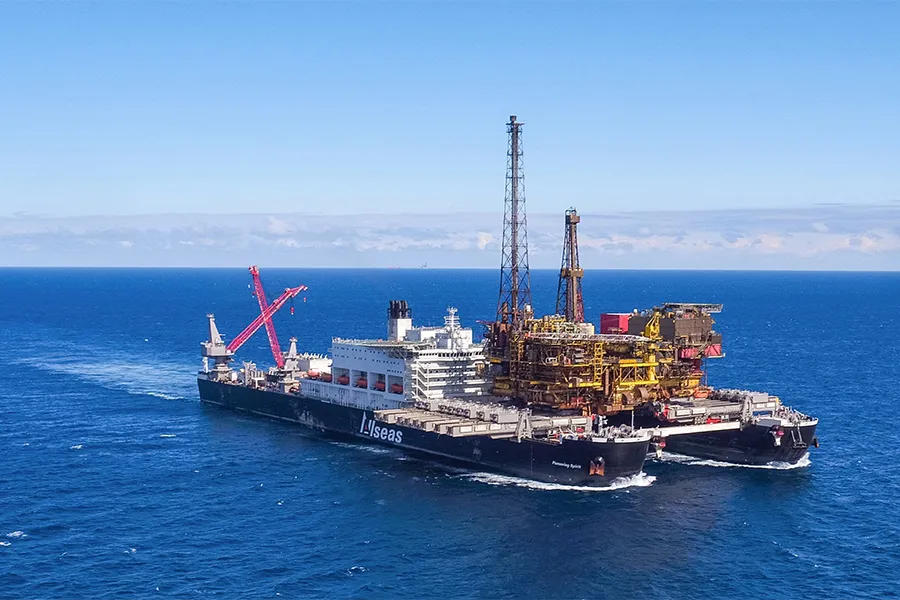
Working safely, in any sector, always requires the right combination of hardware and software, together with the right company culture. The range of technical safety solutions continues to grow. TR-Electronic, for example, has developed a safety encoder that can solve a wide range of safety problems by measuring speed and position alone, enabling humans and machines to work together as safely as possible.
People work alongside machines and equipment in almost every sector. One of the main risks is the possibility of collisions, with consequences for people, machines and their surroundings. There are plenty of examples: the jibs of two cranes colliding, a person and a robot, a container and a lorry, or a bridge deck and a support point.
Safety encoders: reliability assured
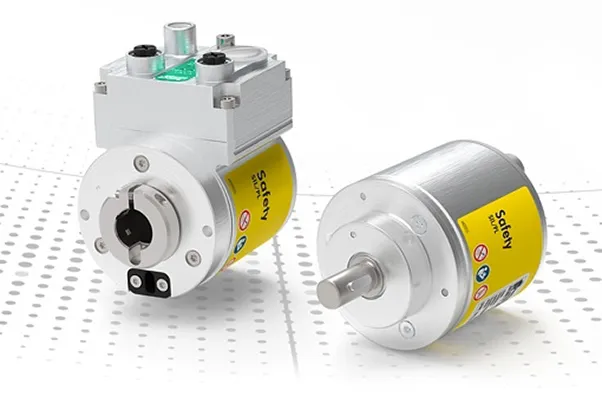
These hazardous situations can be made safer by using so-called safety encoders. These encoders can determine speed or position with a high degree of accuracy. Safety encoders that measure speed alone are incremental encoders. Absolute encoders can also determine position.
Depending on the application, TR-Electronic develops them to customer specifications and subjects them to thorough testing in advance. During final production and assembly, the functionality of the encoders is tested after every process step to ensure quality. Various assembly and test rigs are available for both rotary and linear encoders. The reliability of the safety encoders is ensured, among other things, by housing two encoders in each enclosure, with their readings continuously compared internally. Small measurement differences are permitted, but if the deviation becomes too large, the encoder goes into ‘error’ mode, which is detected by the safety PLC. Depending on the situation, the machine is then stopped in a controlled manner or not.
Applications
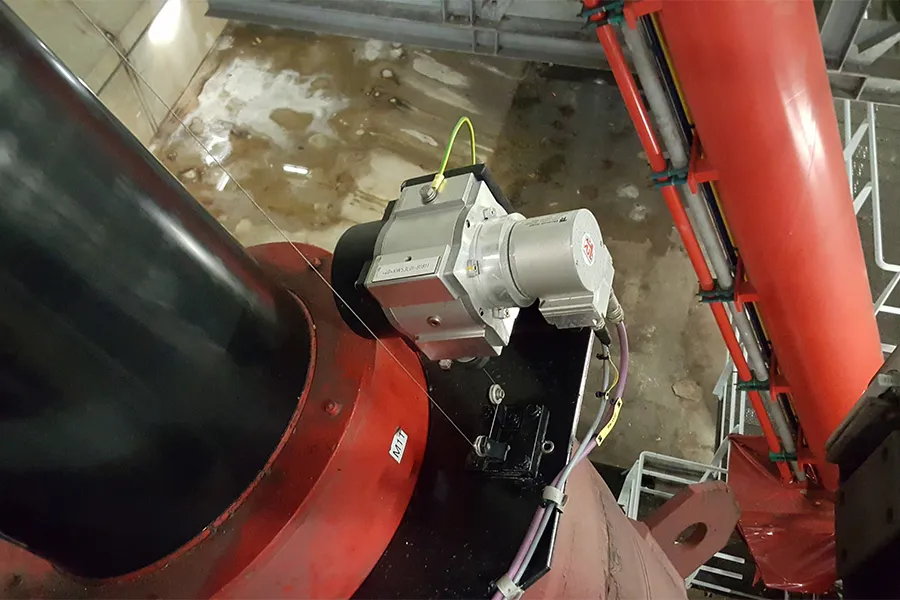
TR-Electronic safety encoders have a wide range of applications. For example, during the renovation of seven bridges in Rotterdam, the hydraulic cylinders that move the deck of the Erasmus Bridge were fitted with so-called draw-wire encoders. These measure the position of the cylinders accurately, providing precise information about the position of the bridge deck. Among other things, the encoder data provide the control system with the input it needs to regulate the opening and closing speed. This allows the final centimetres of the closing process to be completed slowly and in a controlled manner. The encoder data also reliably confirm that the bridge deck is fully closed.
Another application, with even more stringent accuracy requirements, is a medical device used to irradiate tumours. Safety encoders monitor the movements of the device to ensure that the energy, in the form of a proton beam, is delivered precisely into the tumour.
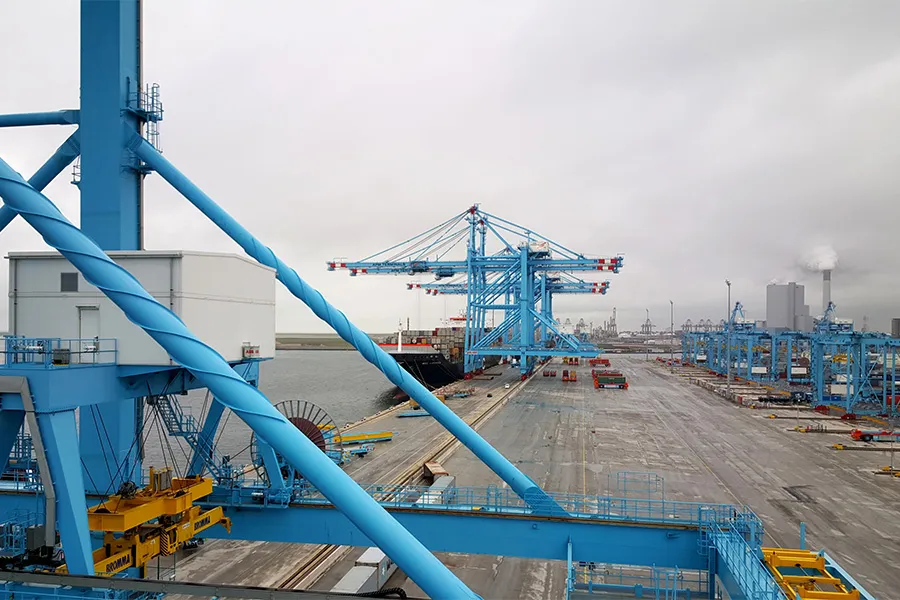
Finally, an example of safety encoders in use at the port. In Rotterdam, they monitor the speed and position of containers as large port cranes place them on AGVs and later onto lorries. If preset limits are exceeded, the safety PLC ensures that the equipment slows down or stops in a controlled manner in good time.
Service
The customer, usually the machine or equipment builder, determines the safety level required for a specific application. TR-Electronic then provides advice on the right encoder based on these requirements. This covers not only the measuring range and accuracy, but also factors such as the enclosure’s protection rating and material, ensuring that the encoder can take measurements optimally under the given conditions. ■
Question about this story? Ask your question
Keep following this
Get an email when a new story is published. No account needed.
- SubjectSensors & vision