Radar beats ultrasound!
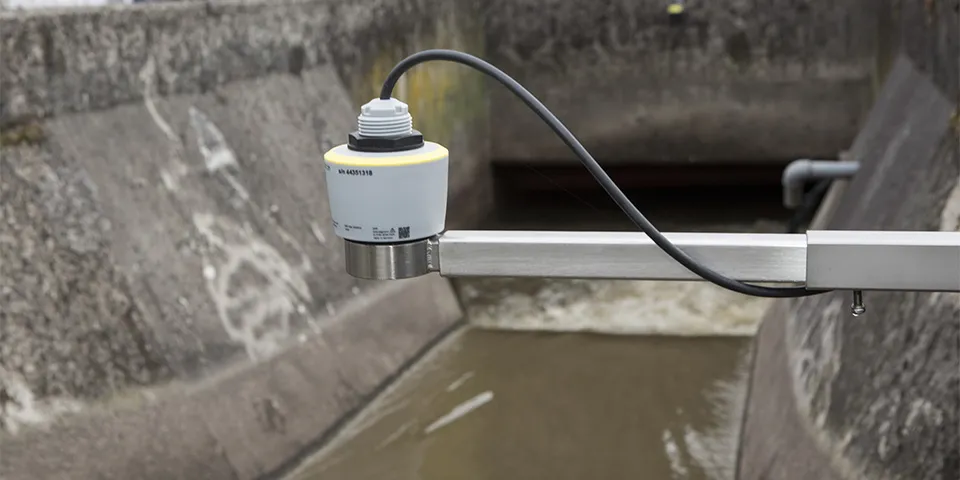
For five years, radar sensors using 80 GHz technology have been opening up new level measurement applications every day. Now another innovation is on the way: VEGA has developed a new series of 80 GHz instruments for straightforward applications, offering a genuine alternative to ultrasonic technology.
Radar technology has taken a huge leap forward in industrial level measurement. The German company VEGA has played a key role in this development, having spent 30 years developing radar level sensors. The launch of the VEGAPULS sensors based on 80 GHz technology ushered in a new era. The more highly focused transmission signal makes it easier to distinguish measurement signals from interference. Measurements are much more reliable and straightforward. This provided a solution for many measurement applications that had previously been considered impossible to solve. VEGA radar sensors are now in use in more than 750,000 applications worldwide. One of the main advantages of the VEGAPULS series is undoubtedly its independence from external conditions. Temperature fluctuations, vacuum, high pressures or severe contamination … radar sensors are unfazed. The level sensors are also virtually wear-free and maintenance-free, and can operate continuously for years.
At the heart of the new instrument series: a new microchip
VEGA is now expanding its portfolio with a new series of compact instruments. This series is particularly suited to more price-sensitive applications. To achieve this, VEGA developed a new radar microchip distinguished by its very small size and low energy consumption. These microchips are considerably more affordable, allowing the sensors to compete with ultrasonic measurement technology on price. The new VEGAPULS instruments are suitable for level measurement of liquids and bulk solids. The sensors are available both as a compact version with a cable connection socket and with a fixed cable (IP68). The series is complemented by the optional VEGAMET signal conditioning instruments. These feature a large graphic display showing all measured values, with status indicated by the background colour.
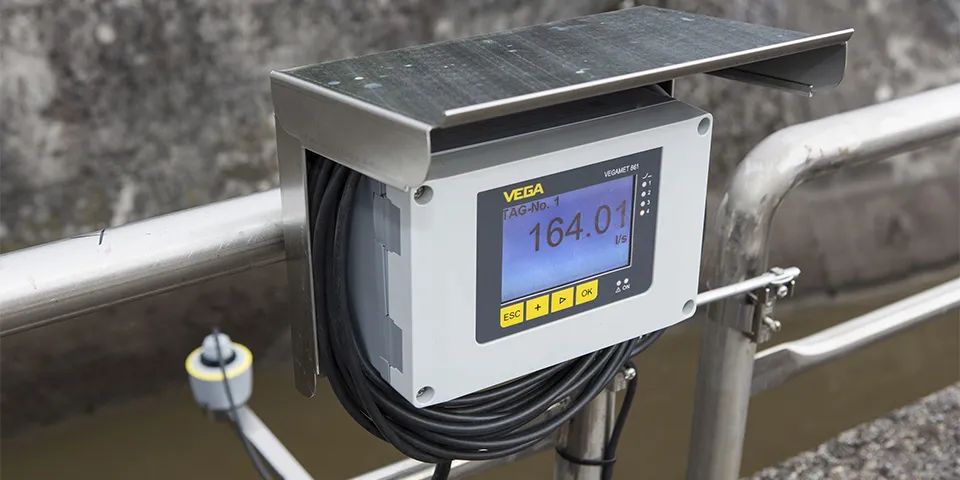
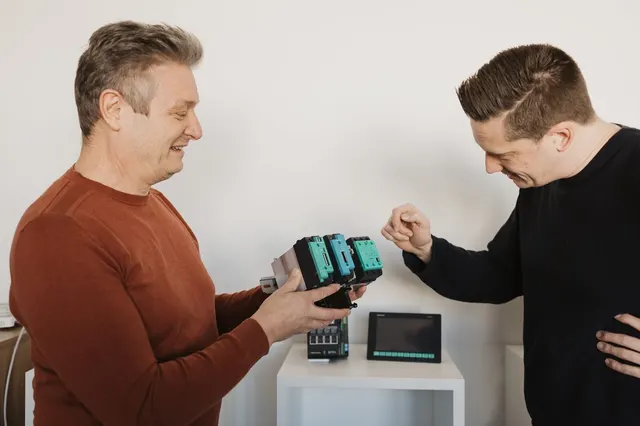
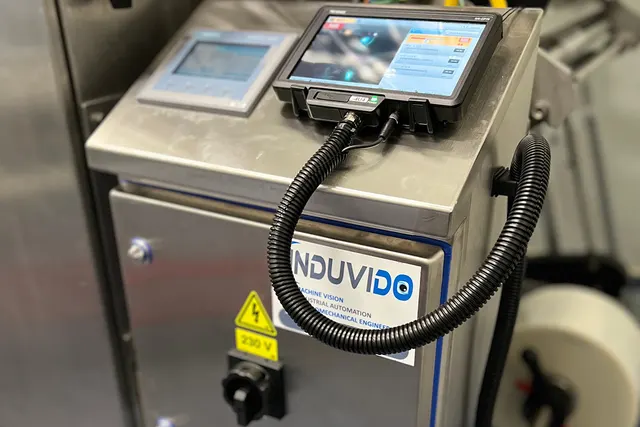
VEGAMET 861 signal conditioning instrument in action.
Unaffected by environmental conditions
The new instrument series’ ability to withstand external conditions is particularly beneficial in the water and wastewater sector. Ultrasonic sensors are affected by the weather. This is because sound travel time changes with temperature, for example as a result of solar radiation. This leads to an inaccurate measured value. Heavy mist, wind and rain also cause greater attenuation of sound waves, further restricting the measuring range. The new VEGAPULS instrument series behaves very differently. The high accuracy of the radar sensors, regardless of solar radiation and temperature fluctuations, enables precise measurements.
Stable measured values despite contamination
In other applications, level sensors often have to contend with build-up and contamination. In ultrasonic sensors, this affects the reliability of the measurement signal and increases the dead band. Thanks to optimised signal processing, radar sensors suppress interference caused by build-up on the antenna system. Radar sensors are also unaffected by contamination and do not need cleaning. Depending on the process, sensors in some applications may also be submerged. Radar sensors do not require protective sleeves that are prone to failure.
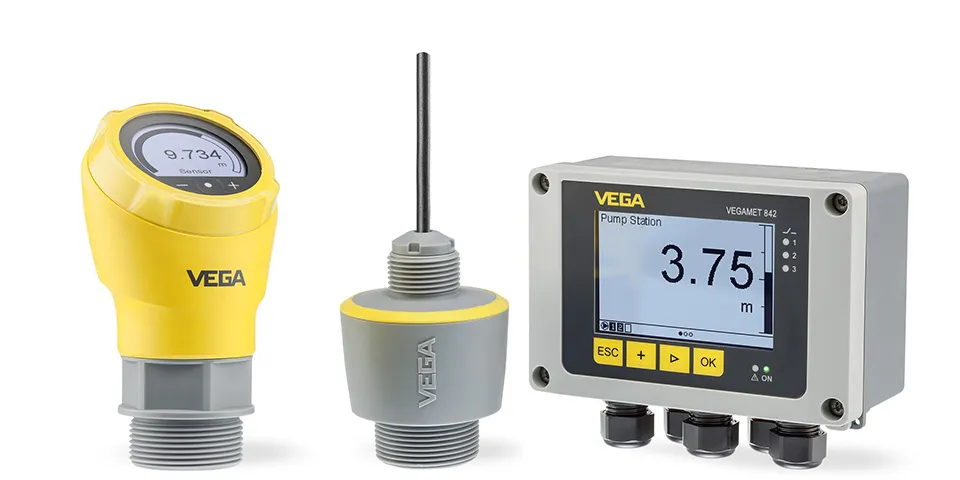
The new instrument series’ ability to withstand external conditions is particularly beneficial in the water and wastewater sector.
Reliable supply
Radar sensors also enable reliable measurement right up to the sensor antenna. Compact radar sensors can play to their strengths, fitting even where installation space is limited and process connections are small. With no dead band, the sensors measure reliably right up to the tank rim. Even when the medium releases gas, the sensors deliver reliable results, regardless of the medium and process conditions. Since many of the new sensors have Ex certification, they can also be used with explosion-sensitive media.
Highly accurate measurement
The highly focused 80 GHz signal can be aimed at the medium being measured with virtually millimetre-level accuracy. This prevents interference signals caused by internal obstructions, narrow shafts or build-up on walls. There are also many practical reasons why radar measurement is increasingly replacing ultrasonic measurement. Radar technology is straightforward to install and configure, as well as easy to operate. Thanks to the proven VEGA Tools app, any user can quickly configure and operate the instruments wirelessly via Bluetooth, from a safe distance if necessary. The instruments are also suitable for a wide range of applications, allowing stock levels to be kept to a minimum.
Question about this story? Ask your question
Companies in this story

Keep following this
Get an email when a new story is published. No account needed.
- ThemeProcess measurement and control
- SubjectSensors & vision
- CompanyVEGA N.V.