Optimal safety with PSENradar
Text and images Pilz
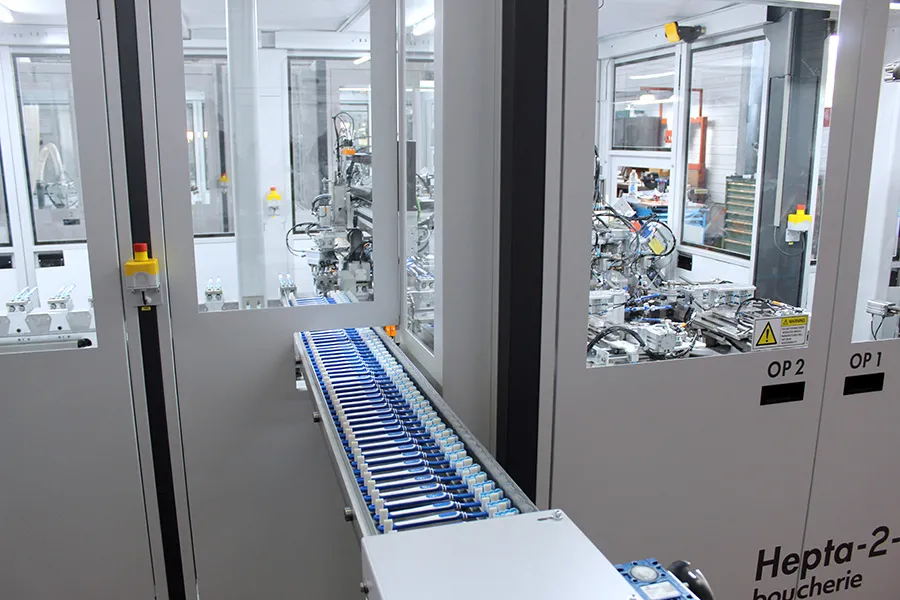
Have you ever wondered where your toothbrush comes from? There is a good chance the answer is closer to home than you think. In Izegem, West Flanders, machine builder Boucherie produces automated systems for making toothbrushes, among other things. Pilz’s PSENradar plays a crucial role in the machine’s safety.
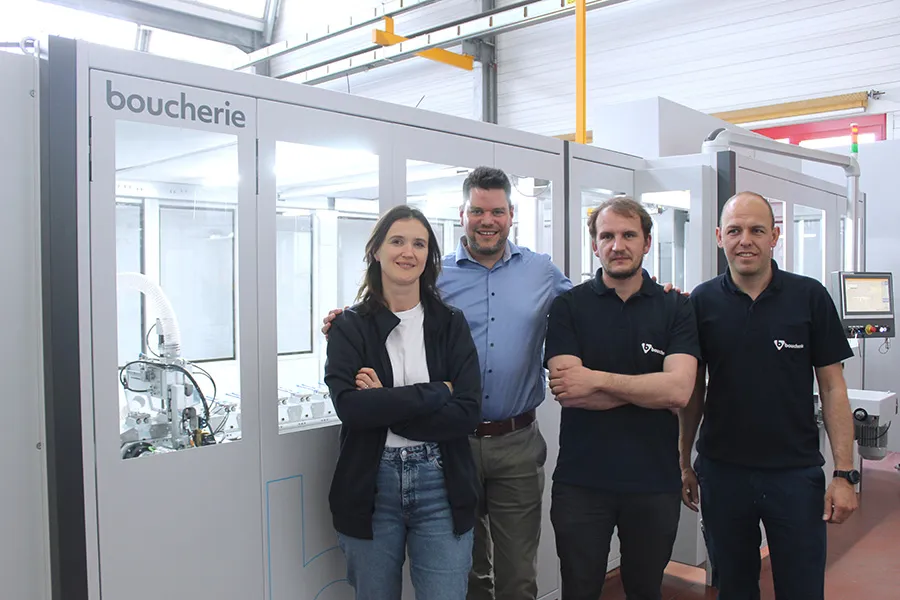
The region around Izegem has a long tradition of making brushes and shoes. The move into toothbrushes was a natural next step, and that is what happened at Boucherie. The company is now in the hands of the fourth generation. Lisa Boucherie explains: “The company was founded by my great-grandfather Gerard Boucherie in 1928. He initially worked in a household brush factory, but had a few ideas for automating the production process. Our first machines were therefore designed for household brush production. It was not until 1978 that we took our first steps into toothbrush machinery. That proved a great success, and since then the balance has shifted steadily towards oral care. Today, this product group accounts for roughly 70% of our turnover, with household brush machines making up the remaining 30%.”
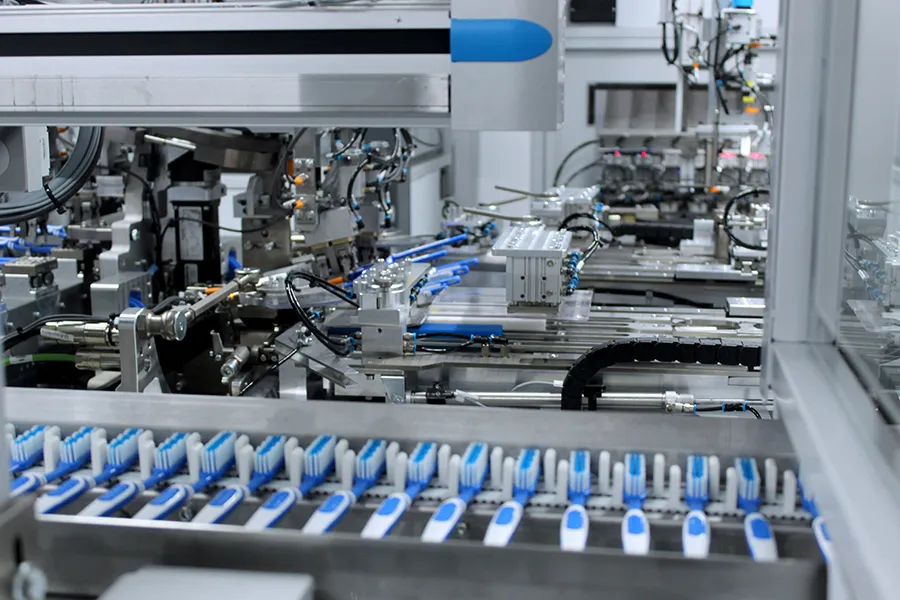
Tufting at the heart of the production process
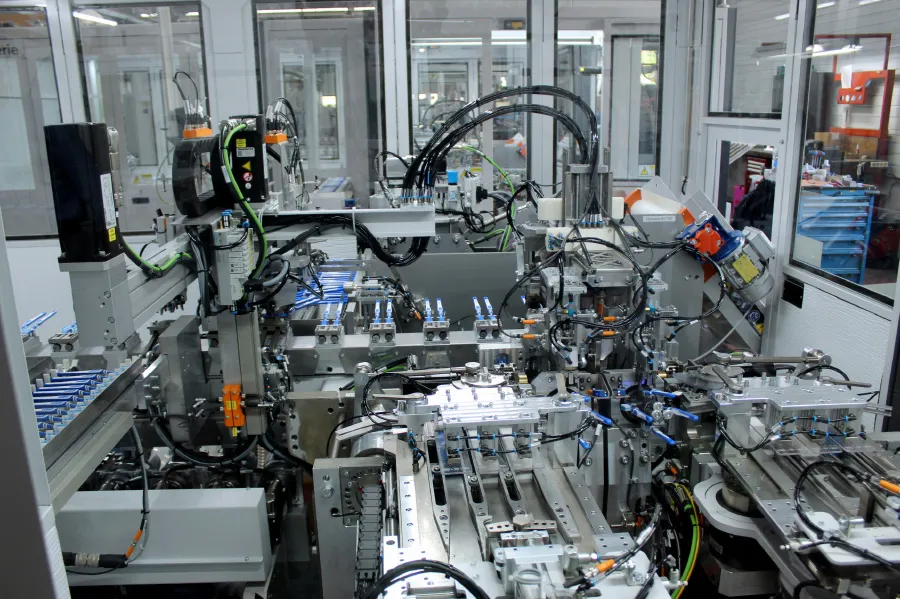
“Automated toothbrush production is a niche area of machine building. The core process is comparable to the tufting principle widely used in the textile industry. Only three key components are needed to make a toothbrush: a handle, the fibres and a small piece of wire. A bundle of fibres is picked up and, after being folded in half, pushed onto the wire. This assembly is then inserted into the head of the handle, with the ends embedded in the hole. In other words, it is a purely mechanical process. Finishing can then begin: milling a pattern, rounding off the fibres, engraving a date or logo, and so on.”
“We supply machines to a broad range of customers. They include well-known Western companies as well as lesser-known brands from far-flung markets. Customers come to us with a toothbrush design, and we provide the machine with the functionality needed to turn it into a product. Requirements such as the degree of automation, visual inspection and safety vary according to the customer’s needs. This diversity also means that our machines are available with a wide range of options, depending on local standards, labour costs and specific customer requirements.”
Absolute certainty
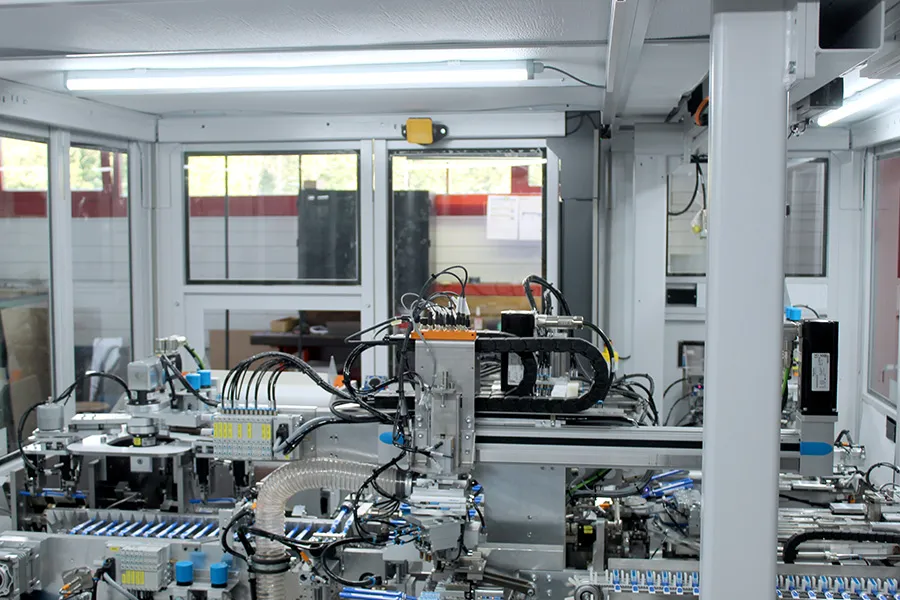
“We can also adapt the safety level to suit the customer’s requirements. For some customers, CE marking is sufficient, while others have additional procedures and specific requirements. The production process takes place inside an enclosed cabin, which can be protected using various solutions: door interlocks, safety mats, LOTO, optical laser scanners and so on. In this case, however, the end customer wanted a better solution, ensuring that no one could be inside the cabin. With door interlocks, someone can always get locked inside to, say, clean up while the machine is still running. With LOTO, too, you depend on users’ willingness and knowledge. Safety mats are another option, but they were harder to integrate into the overall setup here. Laser scanners, meanwhile, perform less well in dusty environments, which is the case here because the fibres are milled off. They also operate only in a 2D pattern and are harder to use in spaces with blind spots.”
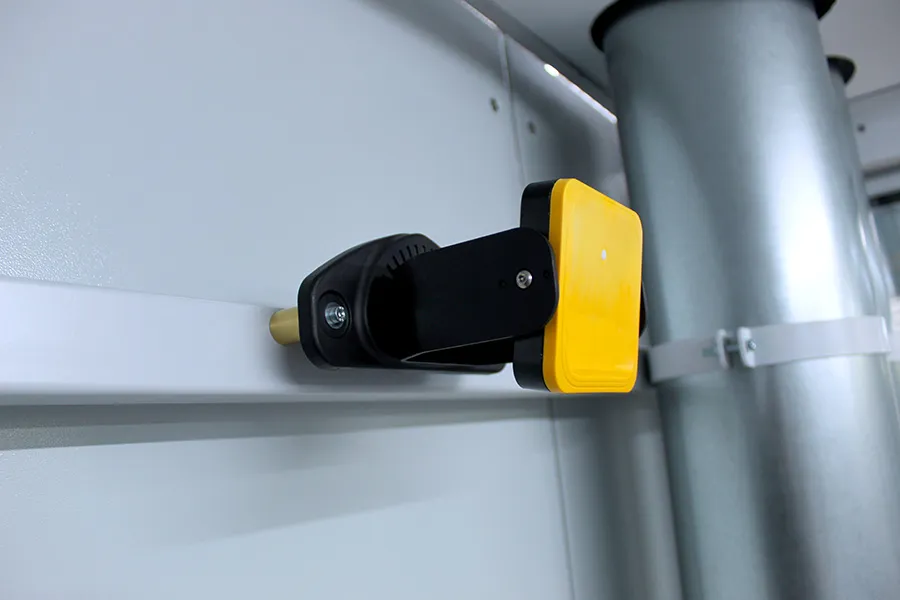
“One of our customers wanted a fail-safe system that would always detect anyone inside the cabin. We therefore opted for the PSENradar solution in consultation with Pilz. Four radar sensors are installed in the cabin to detect any movement in and around the machine. Radar provides adequate coverage even in blind spots. The machine can only be started once no one has been detected for four seconds.”
More challenging
For Pilz, this project perfectly demonstrates the benefits of PSENradar. Specialist Kwinten Cantraine explains why radar proved to be the best solution in this case: “Using radar is more challenging than the alternatives listed, because every aspect of the process needs to be assessed very carefully. Factors such as reflections, blind spots and micro-movements can cause problems or trigger false alarms. Depending on the application, this radar sensor solution can comprise up to six radar sensors, although four per machine were sufficient here. Depending on the size of the area to be monitored, the appropriate protected area can be defined for each sensor, taking into account its position, mounting height and angle. This needs to be analysed in detail together with the customer and requires the necessary testing. That way, we can be 100% sure that every area is perfectly covered. Once that process is complete, radar guarantees a very safe solution.”
Lisa Boucherie concludes: “Thanks to PSENradar, we can offer customers an additional safety option that protects workers efficiently. Until recently, we could only dream of such a high level of safety.” ■
Een zakelijke vraag aan Pilz Belgium? Get in touch
Companies in this story
Keep following this
Get an email when a new story is published. No account needed.
- SubjectSensors & vision
- CompanyPilz Belgium