Corrugated packaging manufacturer invests in automated production process
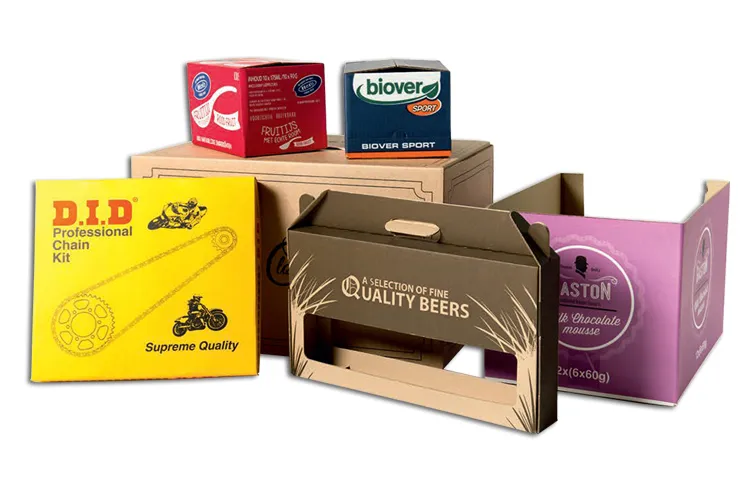
Corpack, a producer of corrugated packaging, continually invests in systems and machinery to guarantee customers the highest quality and service. Jorosoft’s specialists were therefore tasked with developing a solution to further automate the production process, enabling the production line to process every order from raw material to finished product, packed and ready for dispatch, almost entirely unattended.
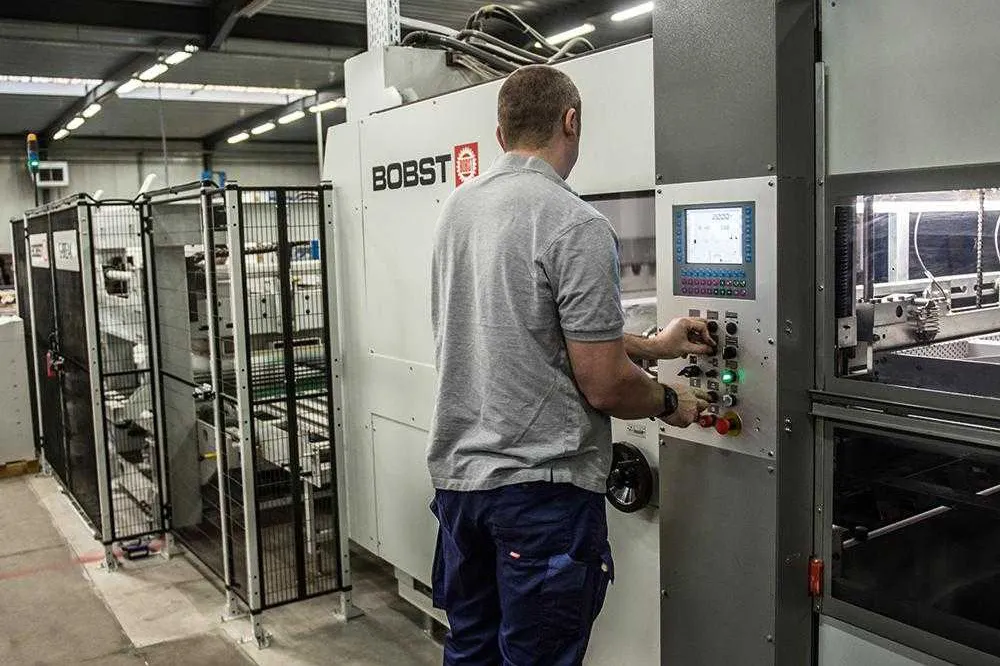
Corpack’s customers in Beveren-Waas are SMEs looking for transport packaging, with or without printing. These include standard American-style boxes in all flute thicknesses, designs and colours, UN-certified boxes, heavy-duty packaging, coated boxes, offset printing, partitions, creased sheets, die-cut products, crash-lock bottoms, and more. The company continually invests in its machinery. Some of its latest purchases include an in-house ink-mixing system, a CAD/CAM system, a Bobst flatbed die-cutter and a Bobst folder-gluer.
“The management of this manufacturer has been committed to automation for years. A roller conveyor, for example, ensures smooth internal transport between the various stages of the production process, from the arrival of raw materials to the dispatch of finished products,” says Geert Haeghebaert, managing director of Jorosoft. “However, too many manual operations still had to be performed along the way, meaning some of the benefits of automation were lost. They approached us looking for a solution to further optimise their production process.”
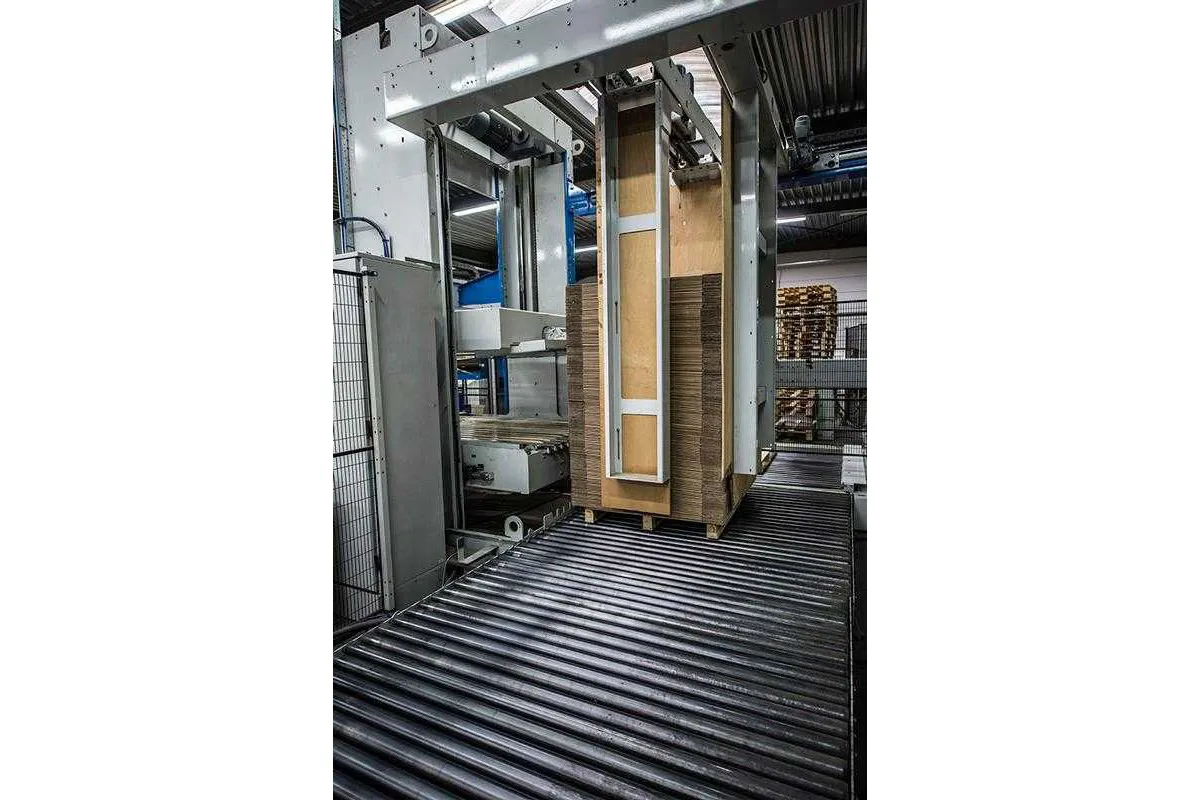
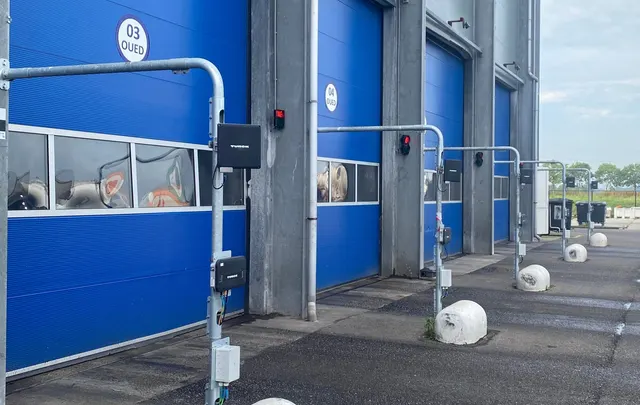
Glenn Roels, project manager and co-director of Jorosoft, explains: “We developed a solution in which RFID plays a key role. The cardboard sheets enter production and are scanned, then transported via the roller conveyor to the correct production line. Sensors track the use of raw materials, making it possible to determine the exact consumption of each machine. A robot loads the finished pallets. Thanks to an RFID reader, the system knows exactly which pallet belongs to which machine. In the next stage, the pallet is wrapped and labelled. RFID technology also enables the system to determine what needs to be printed on the pallet label, after which the labels are printed automatically. Finally, the pallet reaches the assembly point, where the forklift operator receives an automatic notification. The information on the display tells them which pallet to pick and where to take it for dispatch. Freight notes and CMR documents are also printed automatically.”
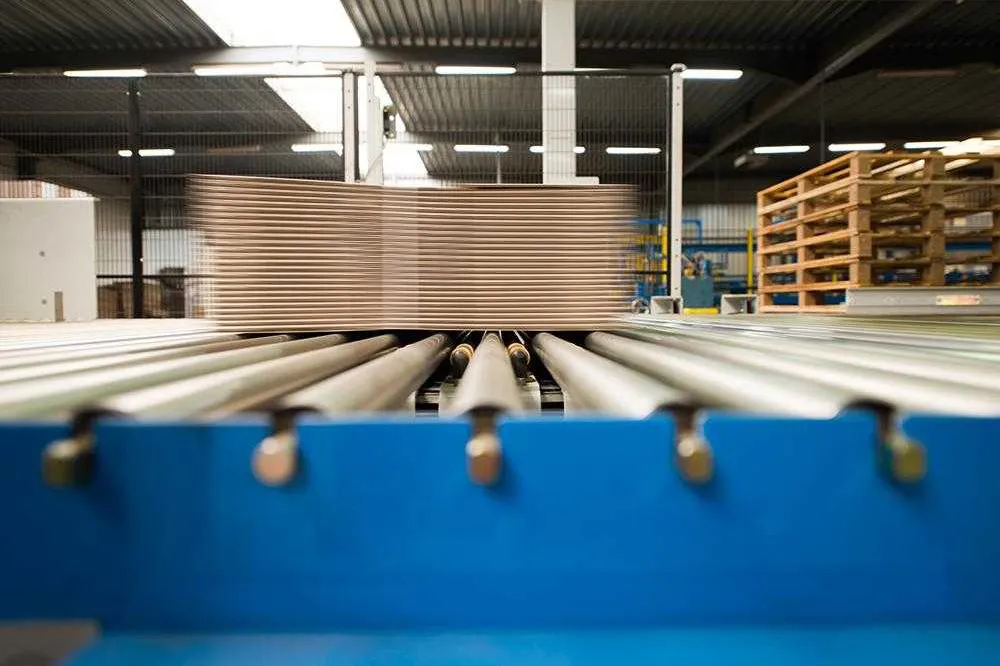
Corpack processes around 150 pallets per hour. Today, the entire process is controlled using real-time input from production, significantly reducing lead times.
Question about this story? Ask your question
Keep following this
Get an email when a new story is published. No account needed.
- ThemeSmart manufacturing and logistics
- SubjectSensors & vision