An innovation that changed the world of automation
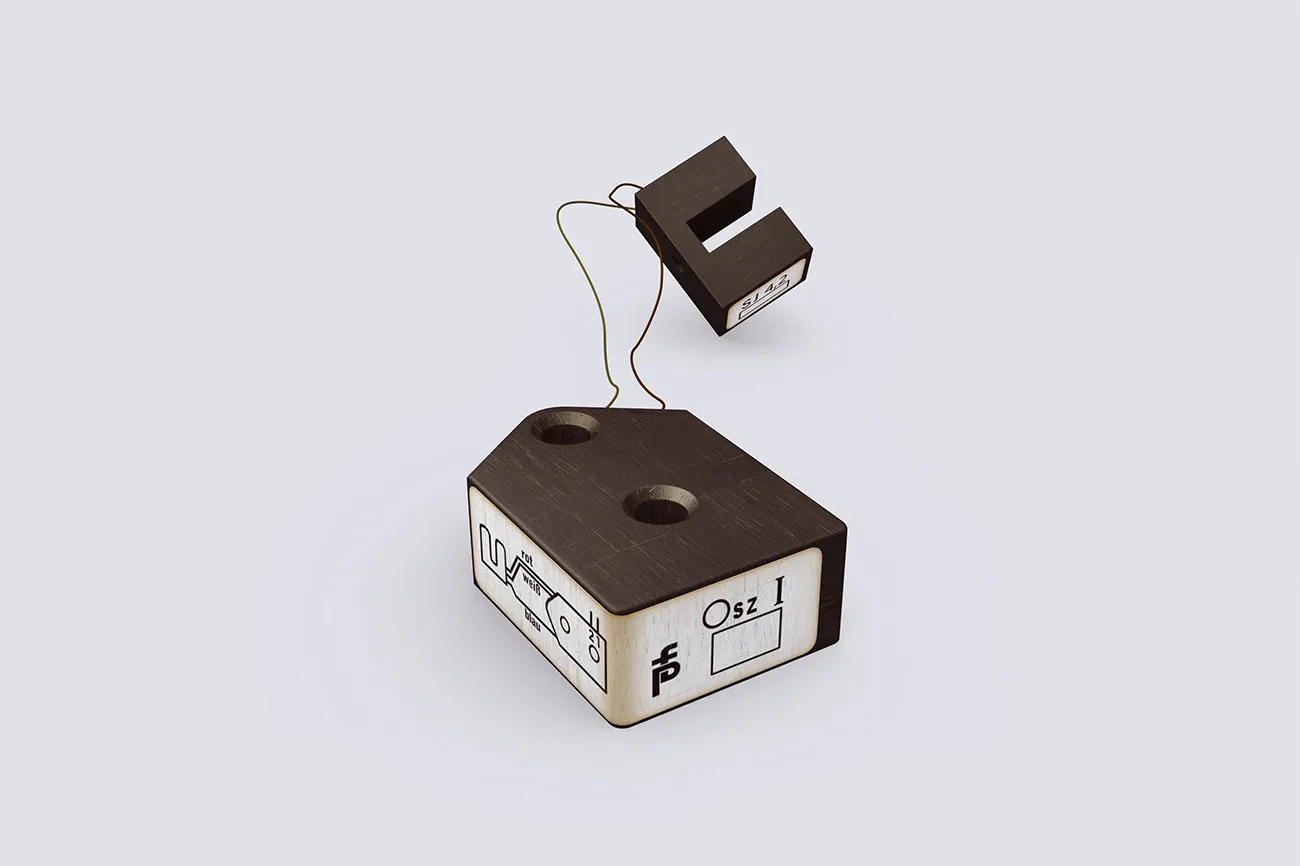
The inductive proximity sensor was invented in Mannheim in 1958, a groundbreaking innovation for the world of automation. It has been an integral part of industry ever since. The sensor set new standards for reliable, non-contact, wear-free detection of metal objects.
The story of Pepperl+Fuchs began in Freising, Bavaria, where bank clerk Ludwig Fuchs and radio technician Walter Pepperl met and decided to go into business together. In 1945, the pair moved to Mannheim, where they opened a radio repair shop. Later, from their own premises in Mannheim-Sandhofen, they sold radios as well as waffle irons and light bulbs.
Innovation
Post-war radios all had one imperfection in common: the built-in current transformer had a paper layer that made it susceptible to moisture. As new transformers were difficult to obtain, Walter Pepperl decided to wind one himself using copper wire. He built and sold the first transformer winding machine. As early as 1950, Pepperl+Fuchs built ballast units for the electricity networks in the Ludwigshafen region, which could convert a
110 V supply to 220 V. Shortly afterwards, the company developed regulating transformers for industrial applications.
Automation
The development of automatic conveyor belts and the emergence of industrial mass production in the 1950s led to rapid growth in automation technology. During this period, Ludwig Fuchs developed a close relationship with BASF, which wanted a suitable alternative to mechanical switches, ideally one that was contactless, wear-resistant and corrosion-resistant. Pepperl+Fuchs was tasked with finding a solution. The pair began developing a magnetic amplifier, and their focus shifted increasingly towards “intrinsically safe types of protection”.
The world’s first inductive proximity sensor was created just a year later, in 1958, in response to the need for a robust component that would still operate reliably after thousands of switching cycles, while requiring so little power that it could be used in potentially explosive atmospheres.
Evolution
Following the success of the inductive proximity sensor in the chemical industry, its virtually unlimited service life saw it adopted by other industries from 1960 onwards. The sensor has been continuously improved ever since, with more models introduced to the market. The portfolio now includes around 2,600 models, tailored to different machine installations. And there is no end in sight.
Een zakelijke vraag aan Pepperl+Fuchs N.V.? Get in touch
Companies in this story

Keep following this
Get an email when a new story is published. No account needed.
- SubjectSensors & vision
- CompanyPepperl+Fuchs N.V.