A carefully engineered vision system completes the puzzle in a robot cell
Text and images Valérie Couplez
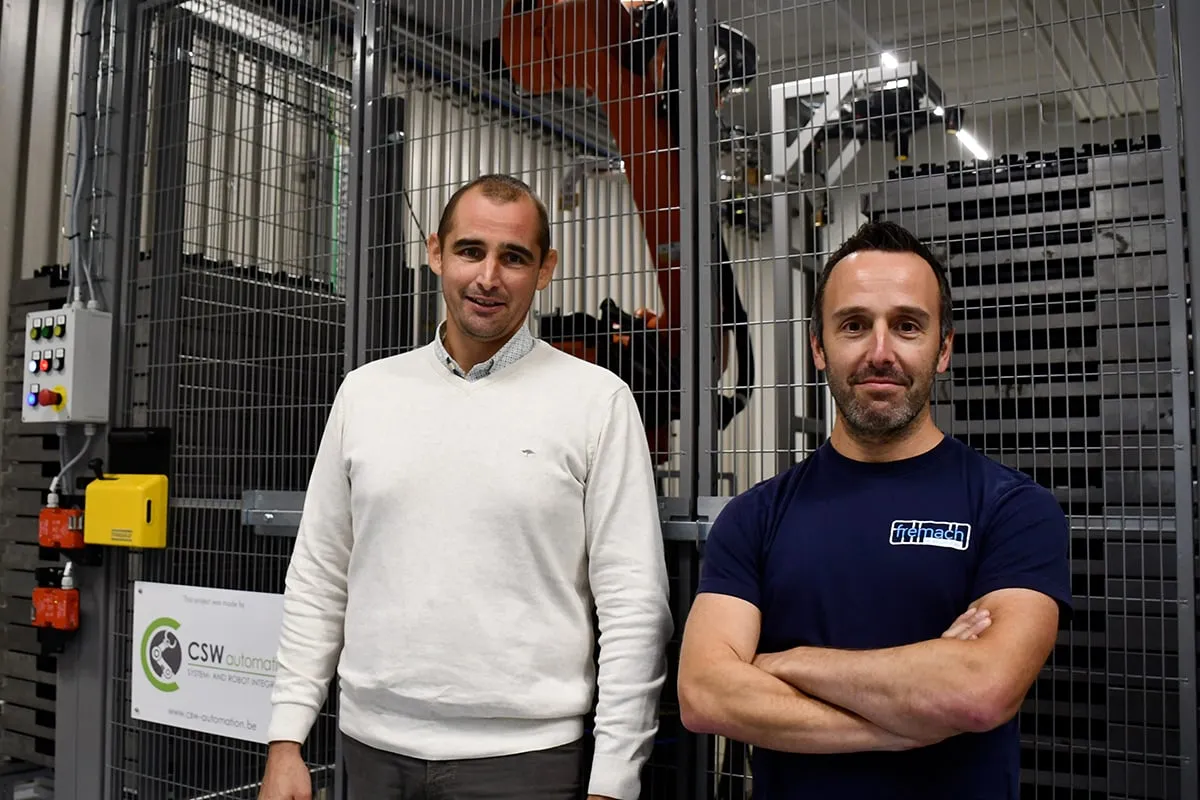
Fremach International knows all there is to know about injection moulding. Drawing on extensive expertise, the company produces plastic components, primarily for the automotive industry. Advanced automation is key to staying competitive. CSW automation recently supplied a missing link: a new robot cell and a vision system backed by extensive know-how now automate the laser marking process.
Fremach International, part of the ELEX Groep, operates from several sites, including two in Belgium, and also has production facilities in Czechia and Slovakia. A new plant in Bulgaria is being commissioned. “Here in Diepenbeek, we focus on smaller injection moulding machines of up to 400 tonnes and on more complex work,” explains process and automation engineer Kevin Donné. “That means keeping a close eye on machine settings.” Fremach International’s production has changed considerably over the years. “We used to make many different products, which meant frequent mould changes. But repeatedly restarting production takes its toll on quality,” Donné explains. “By intelligently distributing production across our sites, where we finish, for example, they start in Izegem, and by investing in advanced automation, we have transformed the way we work. You have to take these steps to remain competitive.”
The missing link
A recent automation project involved the buttons for a steering wheel. The injection moulding machines had already been connected to the paint line for the associated door panels. But a crucial link was still missing for the buttons. Donné explains: “After painting, the buttons are laser-marked to an accuracy of one tenth of a millimetre. The products are placed on paint fixtures, which are then put on grids. We were looking for a way to feed these stacked grids to the laser automatically. At first, we considered a system for destacking the grids, but working with integrator CSW, we found a better solution to the challenge.”
Inside the robot cell
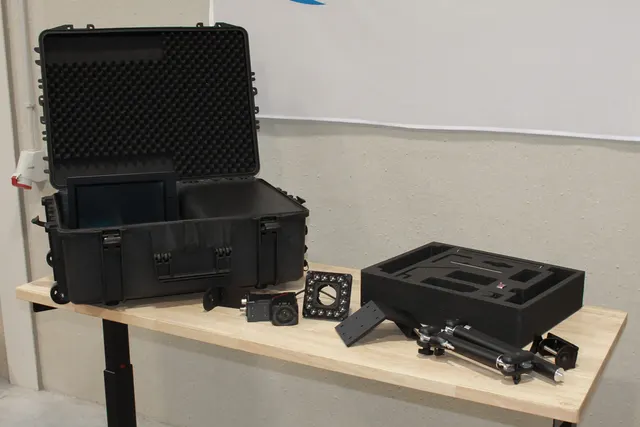
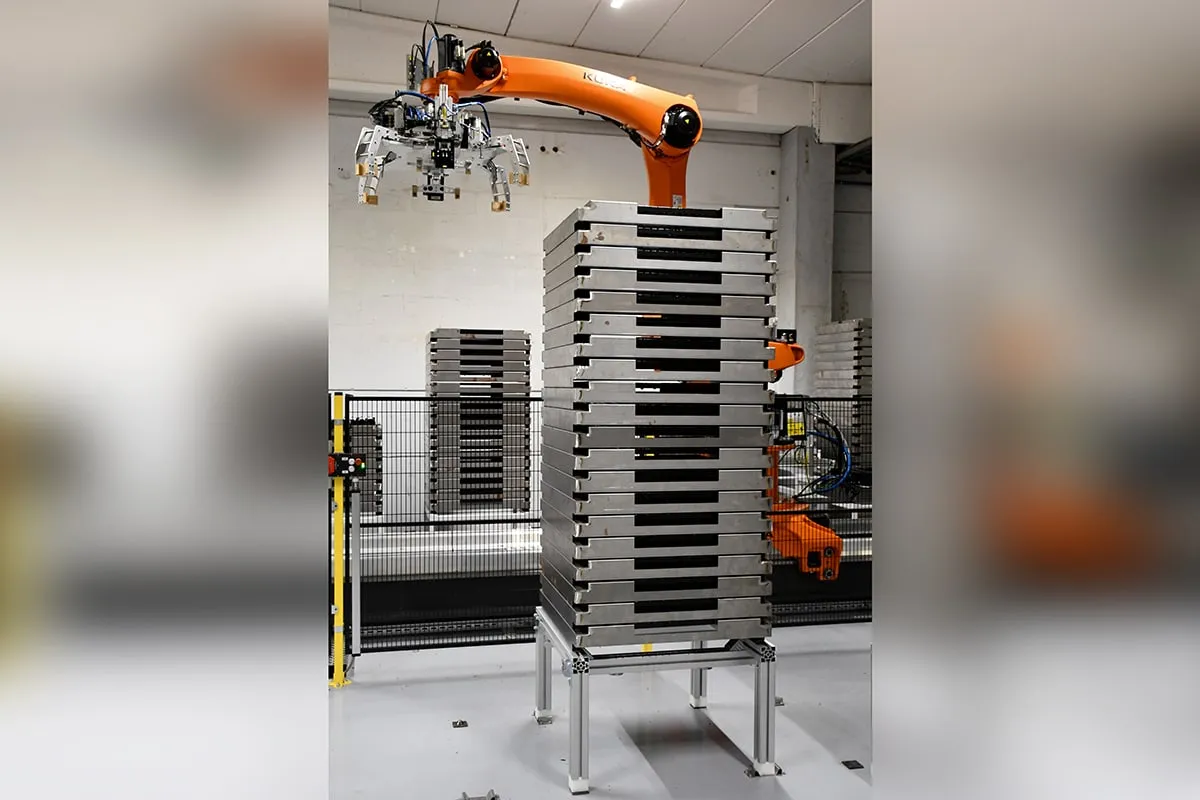
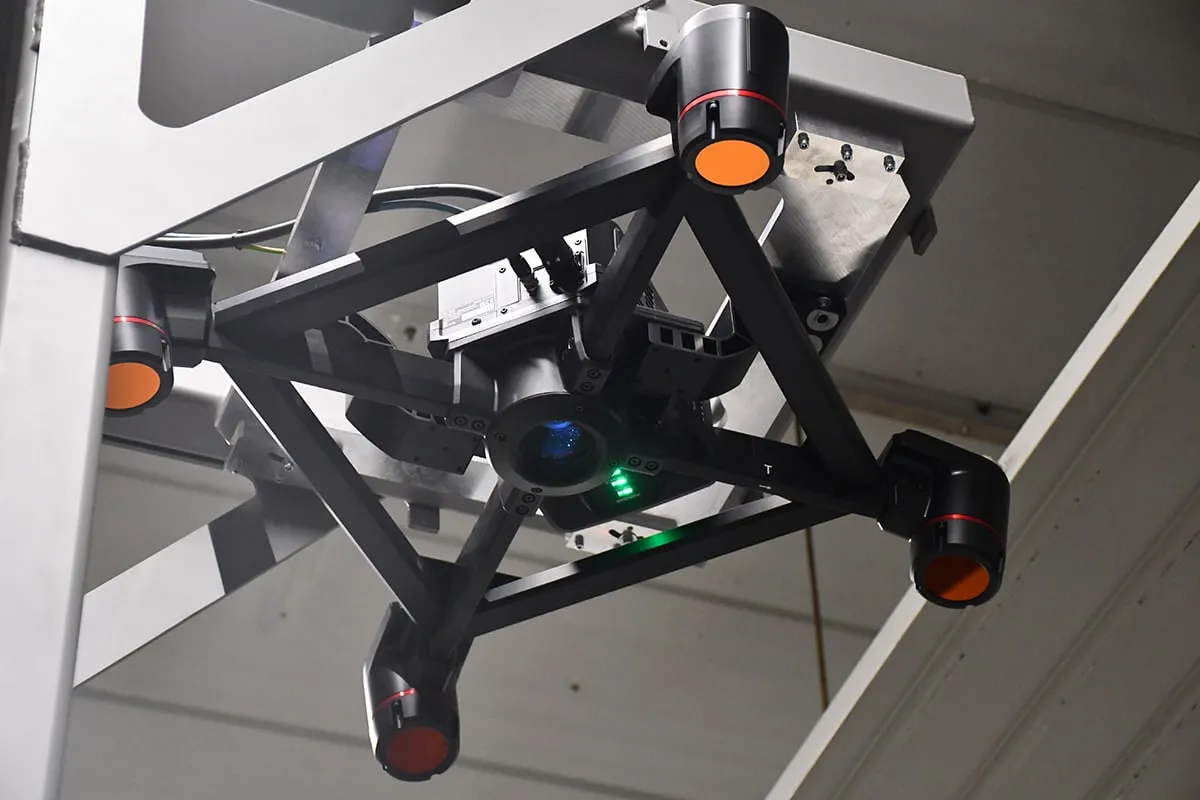
A carefully engineered combination of a vision system and two robots has enabled them to automate the process. Donné explains how it works: “Before the stacked paint fixtures enter the cell, a probe measures the height of the stack to check the exact height of the grid stack. A Kuka four-axis palletising robot removes them and takes them to a sliding system with our vision system mounted above it. We use a 3D camera to take what is essentially a photograph, giving the six-axis robot all the information it needs to pick the grids one by one. The robot then places the grids on a trolley with a conveyor, which takes them to the laser station. Because they are centred precisely on the trolley, we can position the buttons exactly for laser marking. The same robots then return the grids and place them on the stack of finished products.”
Quality, speed and ergonomics
Cycle time was a key factor, as the order was for 60,000 buttons a week. “Thanks to the combination of a sliding system that can handle two fixtures at a time, robots and an intelligent feed system, we now achieve a takt time of 12 seconds per fixture,” says Donné. “To ensure quality, we also integrated a pressing station so that every button is securely clipped into place. Previously, this work was done by two lasers and two operators. Our goal was not simply to achieve an attractive ROI. The rejection rate had been manageable and quality was fine, but the work was very demanding for the operators. Given the move to a higher level of automation and the delivery of buttons on stacked grids, it would no longer have been feasible for them. The robots now take over, allowing us to assign the operators more pleasant tasks.”
Working it through with the customer
Although engineering everything to perfection and achieving the required speed and precision was a major challenge, CSW looks back on the project with great satisfaction. Co-managing director Cédric Wéry says: “We were able to work with the customer to consider the best possible solution for their needs. The solution evolved as the project progressed. Reaching such a great result together is very satisfying.” For Wéry, the 3D camera was the crucial piece of the puzzle that made the project operational. “The robot’s motion logic is controlled by the vision system. But everything is software-based, so the cell can handle other types of buttons and trays. All the intelligence is built into the system itself. We made the HMI ‘dummy proof’, so any operator can use it after a few minutes’ training and resolve any faults or alarms themselves.”
Question about this story? Ask your question
Keep following this
Get an email when a new story is published. No account needed.
- ThemeRobots on the shop floor
- SubjectSensors & vision