The rise of Raman spectroscopy
Text Evi HussonImage Hellma

Raman spectroscopy is an analytical technique used to determine the chemical composition of substances and materials, or the quality of production processes. It is being used increasingly across a range of production environments. Oliver Mandal, who works at Hellma, takes a closer look at this promising technique and its potential in various sectors.
“Process analytical technology (PAT) is now an essential part of production environments. This technology is particularly valuable in the chemical, pharmaceutical and food industries. PAT lets you monitor production and quality control, then use the insights to improve process or plant performance,” explains Oliver Mandal. He is Senior Product Manager at Hellma. The company has many years of experience in integrated solutions for optical analysis and absorption spectroscopy.

Raman spectroscopy
One promising technique is Raman spectroscopy. “Raman spectroscopy uses light scattering to obtain information about molecular vibrations. When a monochromatic beam of light, often from a laser, strikes a sample, most of the light is scattered elastically, in other words reflected without any change. This is known as Rayleigh scattering. A very small proportion of the light interacts with molecular vibrations, causing the energy of the laser photons to increase or decrease. This inelastic scattering is known as the Raman effect. The shift provides unique information about the nature of the samples being analysed, allowing their molecular
structure to be determined accurately.”
Benefits
“The major advantage of Raman is that it works very well with aqueous samples compared with other PAT technologies such as NIR (near-infrared) or mid-IR (mid-infrared), because water barely interferes with the signal,” Mandal continues. “This is a major benefit in fermentation processes, which are typical in biotechnology. The technology is also well suited to in-line analysis in the chemical industry, monitoring in pharmaceuticals, and gas analysis in liquefied natural gas (down to -196°C). With the advent of portable, more affordable Raman instruments, Raman spectroscopy is now even more accessible across industry.”
A wide range of applications
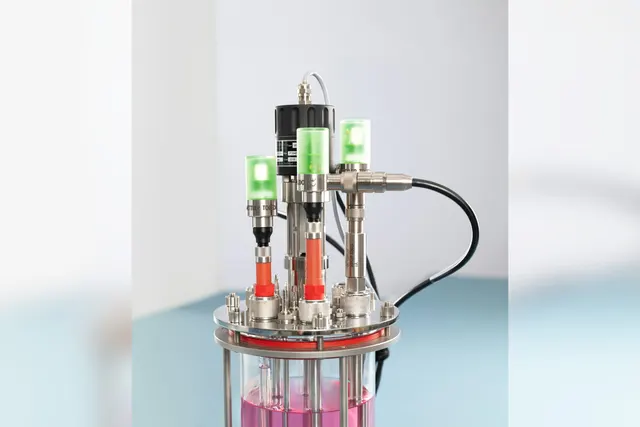
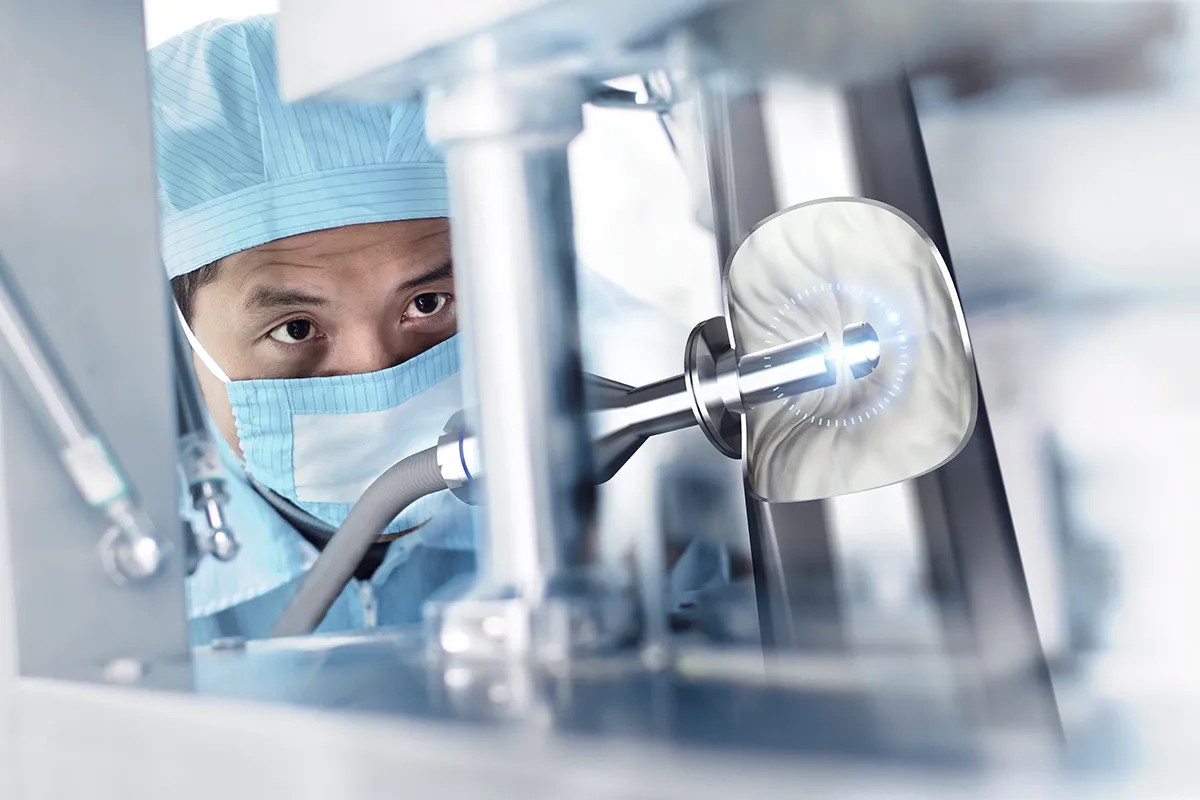
Hellma offers probes and measurement cells for a wide range of conditions. “The right choice depends on the application. For example, the Tidus Flex is well suited to upstream processing, such as the formation of chemical or biochemical compounds in reactors or fermenters, but it can also be used for downstream processing, including filtration, ultrafiltration, crystallisation and drying.”
ATEX environments
Hellma designed the Tidus Lumio for demanding industrial process conditions. “This probe has an integrated laser source and ATEX certification. This allows companies to take in-line measurements without the risk of explosions in zoned areas. It not only improves safety, but also makes analysis much more efficient, as companies gain immediate insight into process quality. This enables them to optimise production and meet the strictest industry standards.” The Tidus Lumio is also available in a non-ATEX version.

The right product for the right application
With so many measurement techniques and products on the market, companies can sometimes find it difficult to make the right choice. “That is why Hellma offers an online configurator with a wide product selection to support online measurements from
UV to IR. It enables customers to quickly and easily identify the right measurement interface or configure individual immersion probes or measurement cells.” The configurator is one option. “Our applications team supports customers throughout the process of making the right choice, from selecting modules and implementation to training. We start by analysing the customer’s process. What needs to be measured, where, under what conditions and for what purpose? Based on this, we select the most suitable technology (UV/VIS, IR, Raman, fluorescence). Our broad product range enables us to provide a tailored solution every time, so we can offer the right product for the application.”
Een zakelijke vraag aan Hellma? Get in touch
Companies in this story

Keep following this
Get an email when a new story is published. No account needed.
- SubjectProcess & instrumentation
- CompanyHellma