The right quality in your product and process, every time
Text Valérie CouplezImage Endress+Hauser
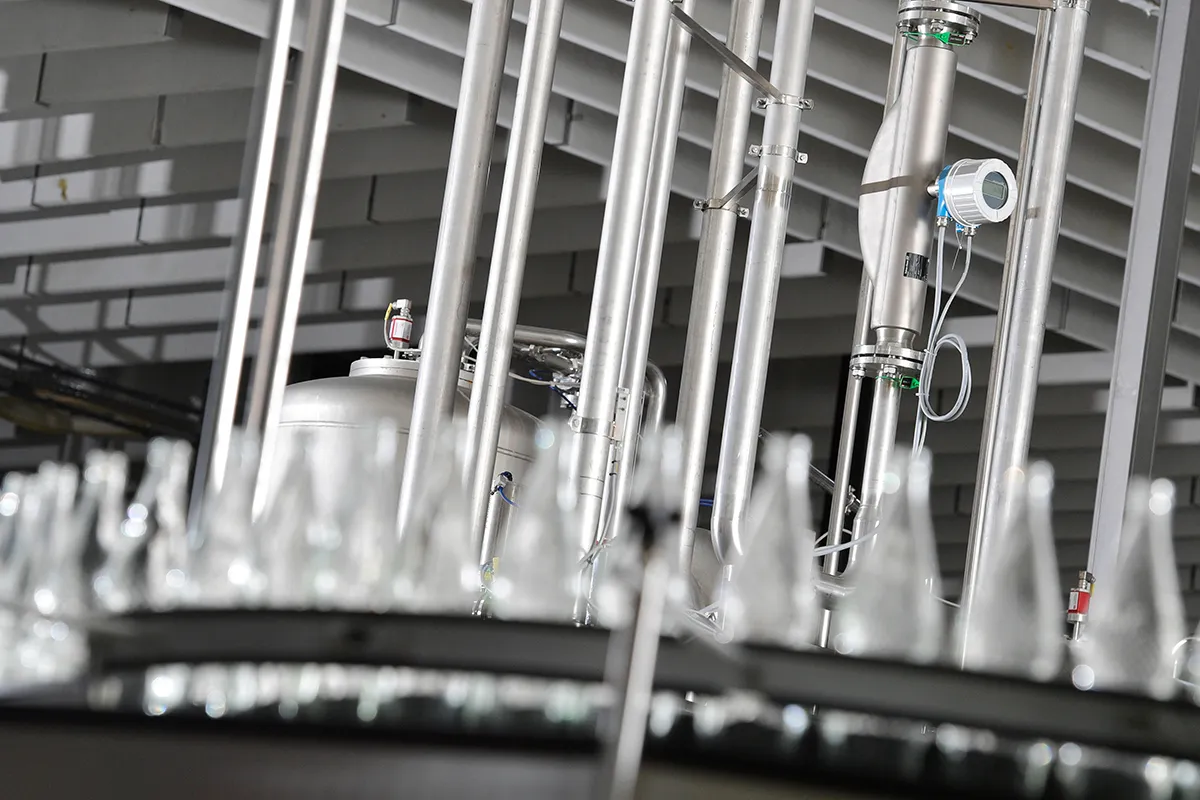
Pressure, level, temperature and flow sensors … they keep your process running smoothly. But did you know you can also monitor the quality of your products and processes inline? Especially if you choose Endress+Hauser. The Swiss specialist offers an exceptionally wide range of solutions. This article focuses on liquid analysis and how it can help improve quality.
“Analysis is a growing market,” says Wouter Vandevyver, Industry Manager for F&B. “This is particularly true in the food industry, where natural ingredients are used. Even if you always follow the same recipe, the end result can vary because of small differences in the raw materials. If you want to maintain quality, you need to measure it. The same applies to your process: to ensure everything runs efficiently and economically, liquids must remain within specification.”
The shift to inline measurement
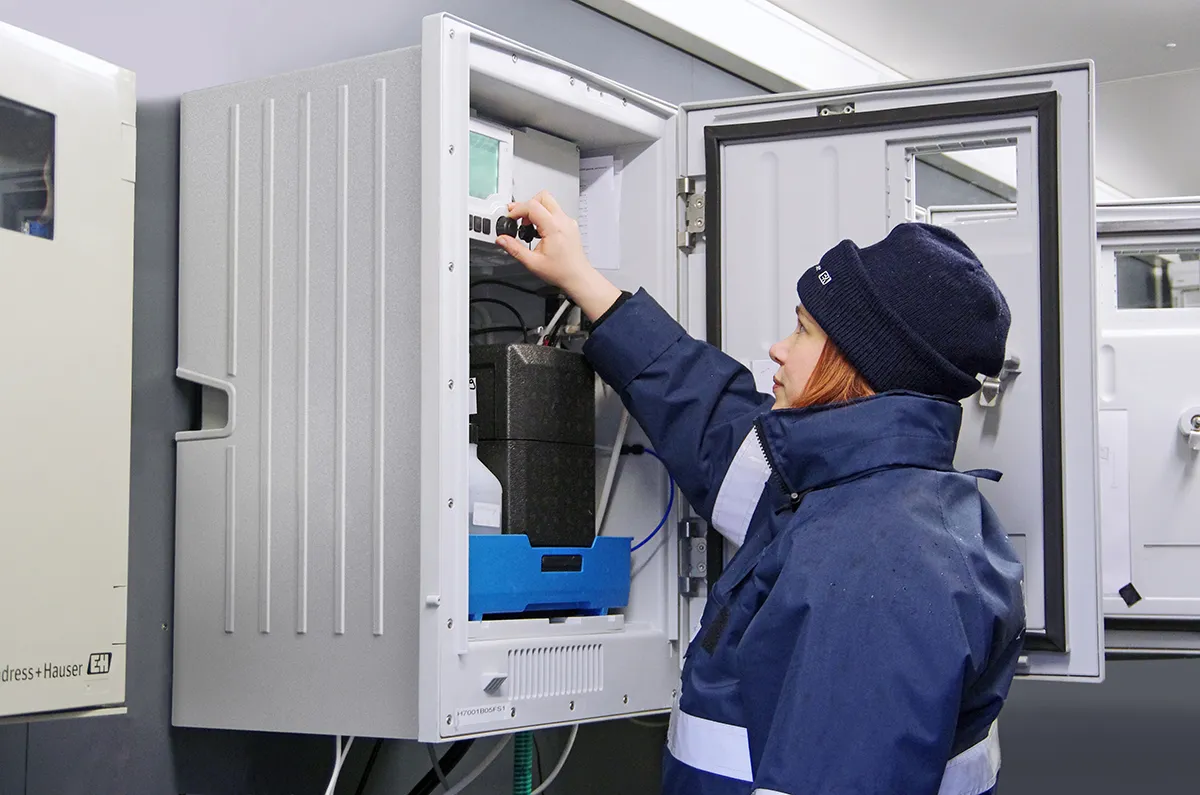
Traditionally, this involves taking samples during production, followed by extensive laboratory analysis. “There are two caveats. First, sampling must be carried out perfectly, with no risk of contamination. Otherwise, you risk sedimentation, crystallisation or phase separation. Second, laboratory analysis takes time and is carried out under controlled conditions that differ from the production environment. By the time any problems are identified and reported back, a lot of product may already have been lost.” Technological advances have driven a quiet revolution in quality analysis over the past twenty years. “The introduction of the Memosens sensor set a lot in motion. For the first time, quality parameters could be monitored easily, inline and in real time,” Vandevyver continues.
Improved quality and availability
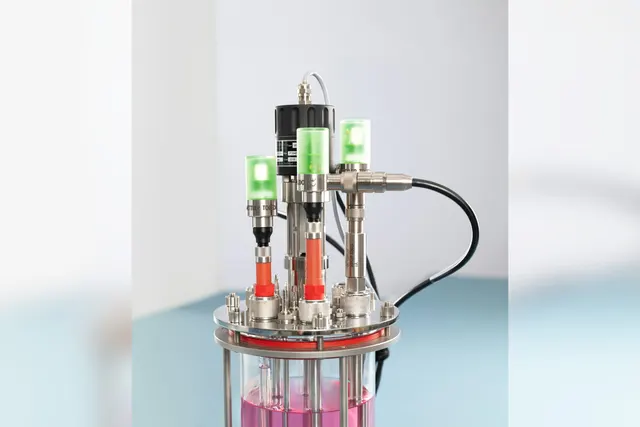
With the Memosens protocol, Endress+Hauser was the first to pioneer a digital measurement signal. Product Manager Liquid Analysis Axelle D’Hoore says: “By switching from analogue measurements, such as those taken with a conventional pH probe, to the Memosens version, you eliminate problems such as kinked cables, moisture ingress and corrosion. The technology also means you can calibrate in advance, in the laboratory. This improves measurement quality, but just as importantly, it ensures measurements can be shared by everyone in the process. This also increases production availability.” The result is reliable measurements. “When the pH value in the process changes, you can respond quickly, for example by adding an acid or a base. Acting quickly saves a great deal of money. We offer a wide range of inline analysis options, but of course certain laboratory instruments, such as a gas chromatograph, remain essential for more in-depth analysis. Our inline measurements do, however, give you a clear, continuous picture of what is happening to product and process quality.”

A wide range of products and specialists
Over the past twenty years, Endress+Hauser’s offering in quality analysis has continued to grow. It recently also acquired SICK’s gas analysis division. “We are investing heavily in this area because we want to offer our customers the complete picture. That gives them a single point of contact for all their instrumentation. Operators on the shop floor also appreciate this approach, because every instrument works in the same way,” says Vandevyver. So, generalists rather than specialists? “No,” says D’Hoore firmly. “Endress+Hauser’s strength is that every product is backed by a team of product specialists. We also have a highly experienced service team to provide customers with optimum support.”
Phosphate measurements
This technical expertise is also reflected in the instruments themselves, which deliver outstanding performance. Vandevyver gives phosphate measurement as an example, which is important in water treatment, among other applications. “We measure phosphate using a colour reaction. The more phosphate there is, the more intense the colour. The standard method uses yellow, which offers little contrast with wastewater. Our blue method makes it possible to determine the intensity, and therefore the amount of phosphate, more quickly and accurately.” D’Hoore adds another example from water treatment: “Our spectrometer, which has been on the market for a year and a half, performs an optical measurement across the full UV-VIS spectrum. A conventional analyser takes two hours in the laboratory to determine the organic load. Our spectrometer does it every ten seconds and also measures four other parameters: nitrate, spectral absorption coefficient, turbidity and Hazen colour.”
Further digitalisation
The digital signal was the spark that ignited quality analysis, but Endress+Hauser continues to build on that digital foundation. “Our instruments can be connected to the cloud using Netilion software. Customers can access a digital twin containing all the information about their instrument, including certificates. We can also carry out a verification: an electronic check-up of the instrument to improve operational reliability,” explains Vandevyver. Endress+Hauser also offers Liquiline, an advanced transmitter platform for liquid analysis. “You can connect all your measurements to it and monitor the parameters remotely using the Liquiline Assist app,” D’Hoore concludes.
Een zakelijke vraag aan Endress+Hauser NV BeLux? Get in touch
Companies in this story
Keep following this
Get an email when a new story is published. No account needed.
- ThemeProcess measurement and control
- SubjectProcess & instrumentation
- CompanyEndress+Hauser NV BeLux