The most advanced measurement technology for LNG plants
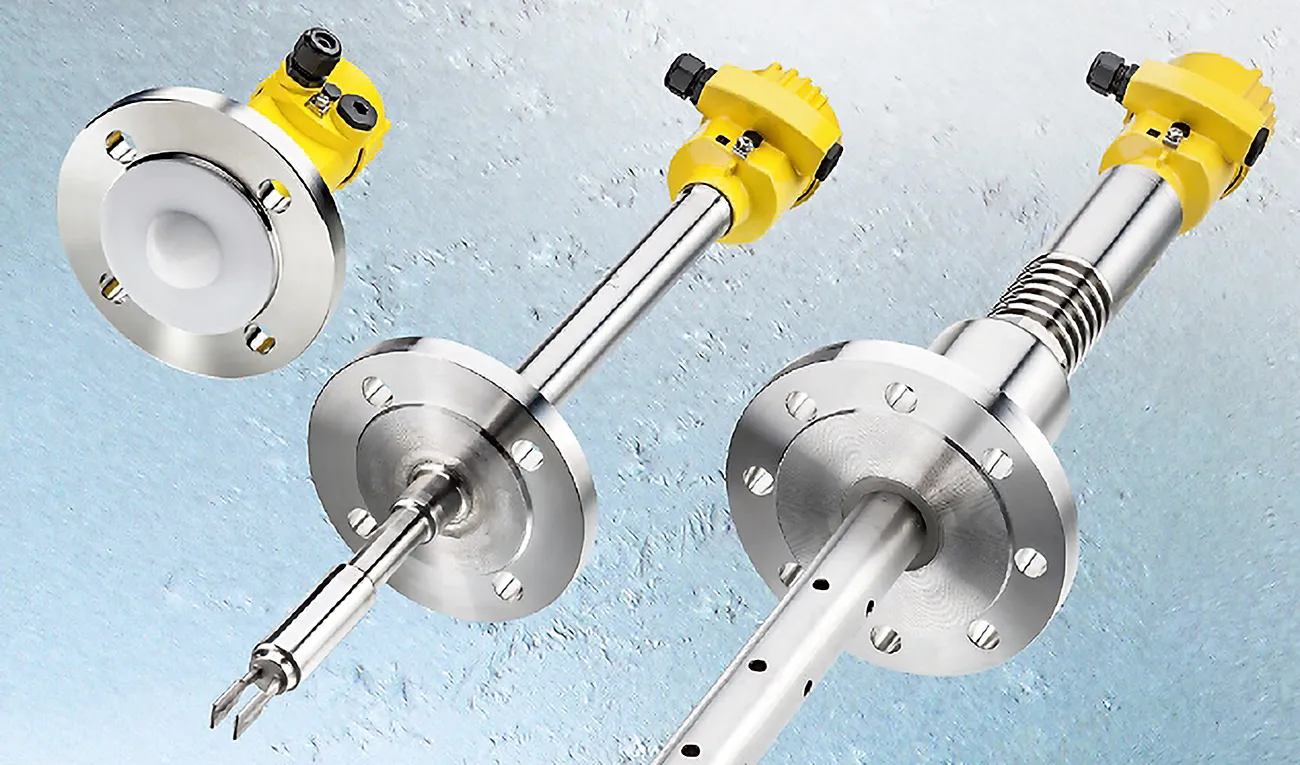
LNG plays a crucial role in the transition to an economically and environmentally sustainable energy future. This is reflected, among other things, in the enormous growth in global LNG production capacity in recent years and those to come. These plants use the latest technologies to process, liquefy, transport, store and regasify the gas. But what does level measurement technology look like in this sector?
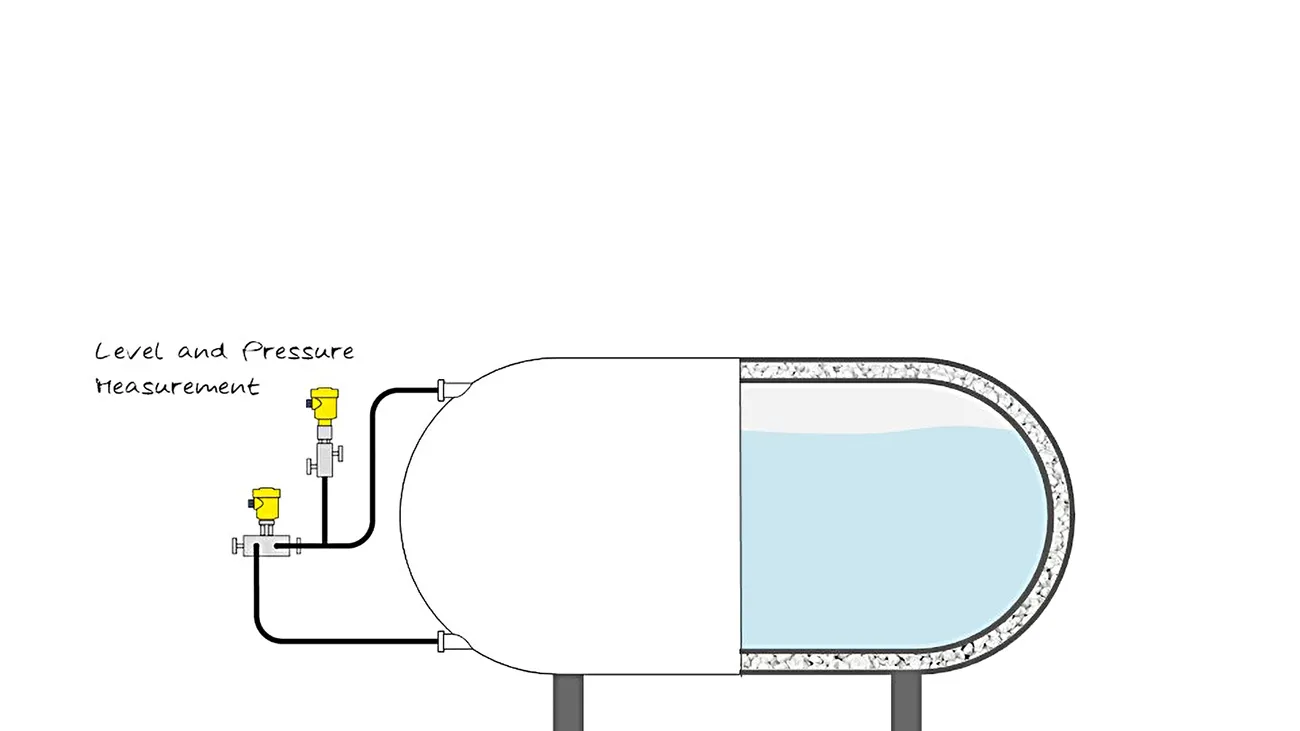
The primary aims of automation in an LNG plant are safety, availability and reliability. The measurement technology used must be able to meet a range of challenges to ensure stable operation. These include product properties such as cryogenic temperatures, low dielectric values, fluctuating densities and turbulent processes. There are also demanding installation conditions, such as high nozzles, stilling wells or stabilisation tubes, shut-off valves and insulation systems. For historical reasons, conventional differential pressure systems predominate. Alongside traditional differential pressure meters, modern pressure sensors with oil-free ceramic-capacitive measuring cells are gaining ground. SaphirKeramik® CERTEC® measuring cells are among the most mechanically robust and dynamically resilient pressure cells available. They stand out for their excellent long-term stability, high chemical resistance, ability to withstand extreme overloads and pressure shocks, and outstanding resistance to abrasive wear.
Radar technology for a lower TCO
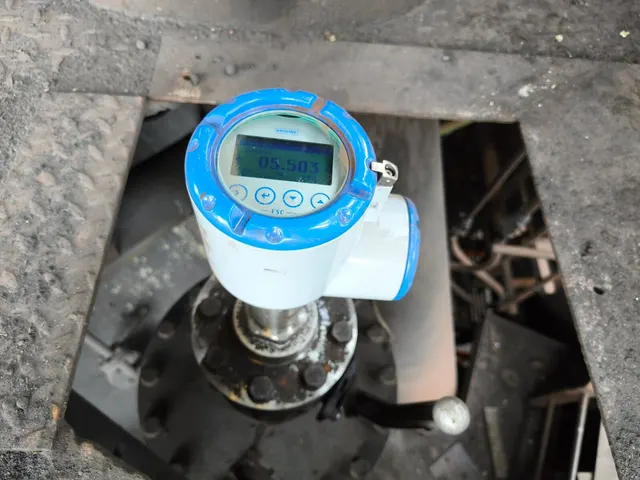
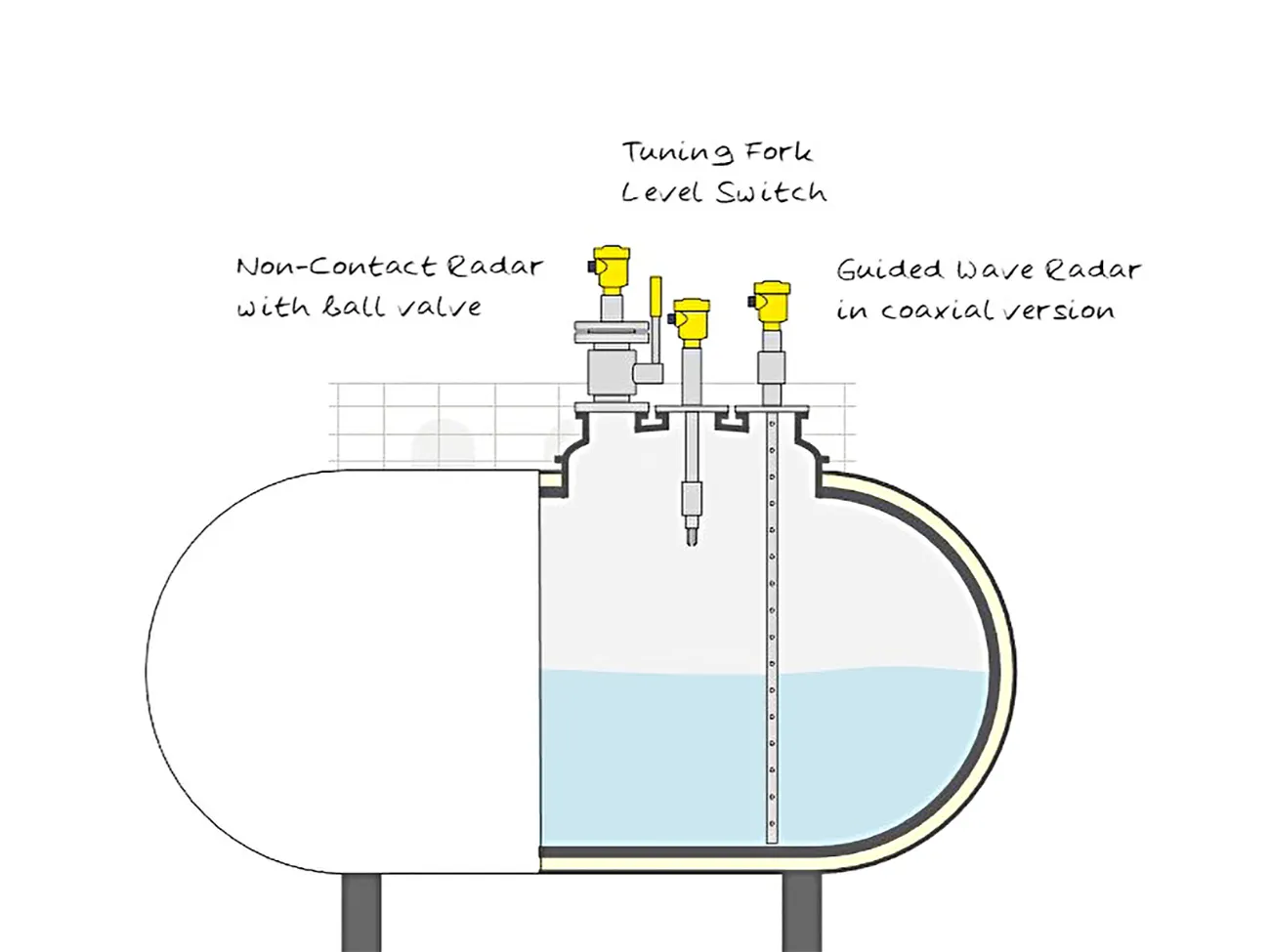
Complex pipework, maintenance costs and fluctuating density are among the challenges facing pressure transmitters. Contactless radar sensors and guided wave radar sensors have proved to be genuine alternatives in these areas. Although they often cost more to buy, they are virtually maintenance-free and reduce the total cost of ownership through their reliability and flexibility. The new high-frequency 80 GHz sensors eliminate the need for stilling wells or stabilisation tubes, which are installed to eliminate turbulence, among other reasons. Shut-off valves are mounted directly on the tank, particularly in processes where a production stoppage would involve considerable work and expense. The excellent signal focusing of contactless 80 GHz radar sensors allows them to be mounted on a ball valve without the valve causing false reflections. Reliable measurement is assured. Other benefits include:
- Accurate measurements unaffected by fluctuations in density and temperature;
- Unaffected by build-up and condensation on the antenna;
- Highly chemically resistant PTFE antennas ensure a long service life;
- The high accuracy of +/- 1 mm easily meets industry requirements;
- Easy commissioning and diagnostics, including via smartphone or tablet.
Level measurement in standpipes, stilling wells and bypass systems
Thanks to their low operating frequency, guided wave radar sensors are ideally suited for use in standpipes, stilling wells and bypass systems. A range of rod, cable and coaxial versions is available, selected according to the required installation arrangement and process requirements. Ambient conditions in LNG applications often vary. Measurement technology is exposed to rapid level changes, volatile atmospheres caused by evaporation, and fluctuations in temperature, pressure and density. Expertise is essential. Ongoing development of sensor software makes it possible to use guided wave radar sensors safely and reliably, even in critical applications. Other benefits include:
- Accurate measurements unaffected by fluctuations in density and temperature;
- Maintenance-free, with no moving mechanical parts;
- Flexible installation options, for example, to make it easy to replace existing displacer systems;
- Reliable interface measurement between two liquids;
- Easy commissioning and diagnostics, including via smartphone or tablet.
Overfill or dry-run protection
In addition to level measurements, switching levels are often measured to provide overfill protection in tanks or dry-run protection for pumps. Vibrating level switches are versatile and suitable for all liquids. In a compact version or with a tube extension, they reliably detect the switching level with millimetre accuracy. Their wide operating range in terms of process temperature (-196 °C … 450 °C) and process pressure (-1 … 160 bar) is unique. Tuning forks can also be used for switching in products with a density from 0.42 g/cm³. Other benefits of this measurement principle include:
- Low commissioning costs thanks to a plug-and-play solution, with no adjustment required;
- Accurate, reliable operation thanks to a switching point that is independent of the product;
- High operational reliability through continuous monitoring of the sensor element for corrosion, damage, cable breaks and vibration frequency;
- Maximum plant availability, with a function test at the press of a button during production, in accordance with IEC 61508 and 61511.
The right technology, the right partner
The key to greater safety, higher availability and maximum reliability lies in choosing the right technology, the ideal configuration and the correct commissioning of the sensors. Some applications may be better suited to radar sensors, others to pressure transmitters. In some cases, a simple level switch may be all that is needed. VEGA sensors are used around the world in the largest and most advanced LNG plants. We would be pleased to offer advice, show you solutions and share our experience, helping you make the best possible decision on measurement technology. We are at home wherever intelligent sensors with extensive functionality and high-quality materials are needed to perform in demanding processes.
Question about this story? Ask your question
Companies in this story
Keep following this
Get an email when a new story is published. No account needed.
- SubjectProcess & instrumentation
- CompanyVEGA N.V.