The best air quality with the WERMA CO2 traffic light
In the midst of the current coronavirus pandemic, we find ourselves in an unprecedented and exceptional situation. It is changing our lives in every respect, and each day brings new challenges. People’s health and safety are a top priority.
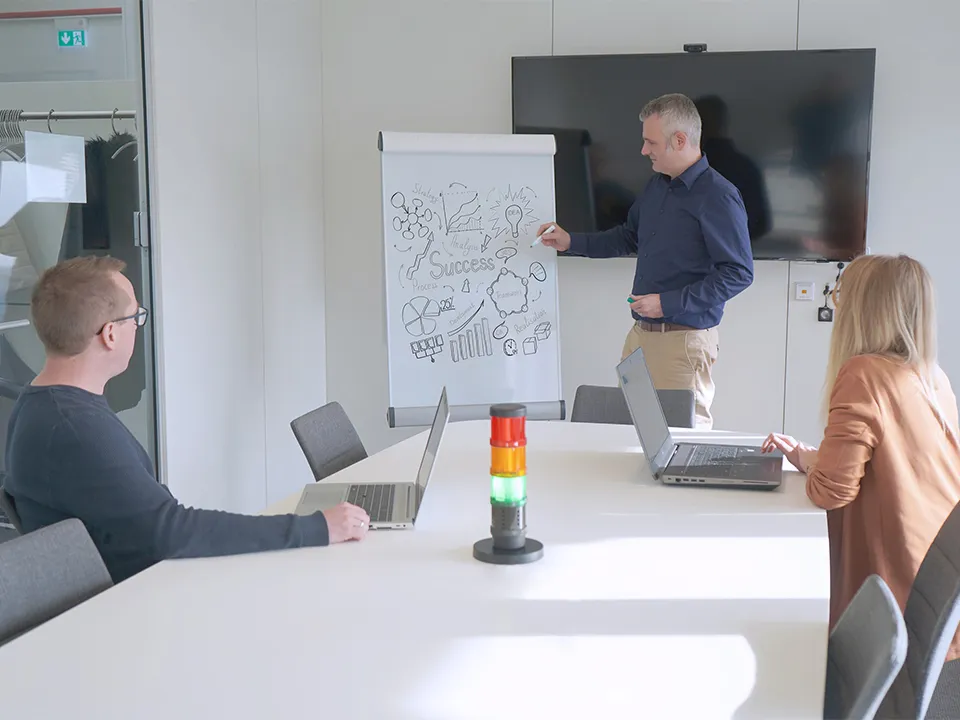
Governments and businesses are therefore continually looking for new ways to bring the global pandemic to a halt and respond to ever-changing circumstances. WERMA is making an important contribution: its new CO2 traffic light measures and displays the current carbon dioxide concentration (CO2) in the ambient air. The three traffic light colours clearly show whether ventilation is needed.
This helps prevent high concentrations of CO2 and aerosols from building up in the ambient air in offices and meeting rooms, restaurants, shops, theatres, doctors’ surgeries, universities, gyms and all other public buildings, minimising the risk of COVID-19 transmission.
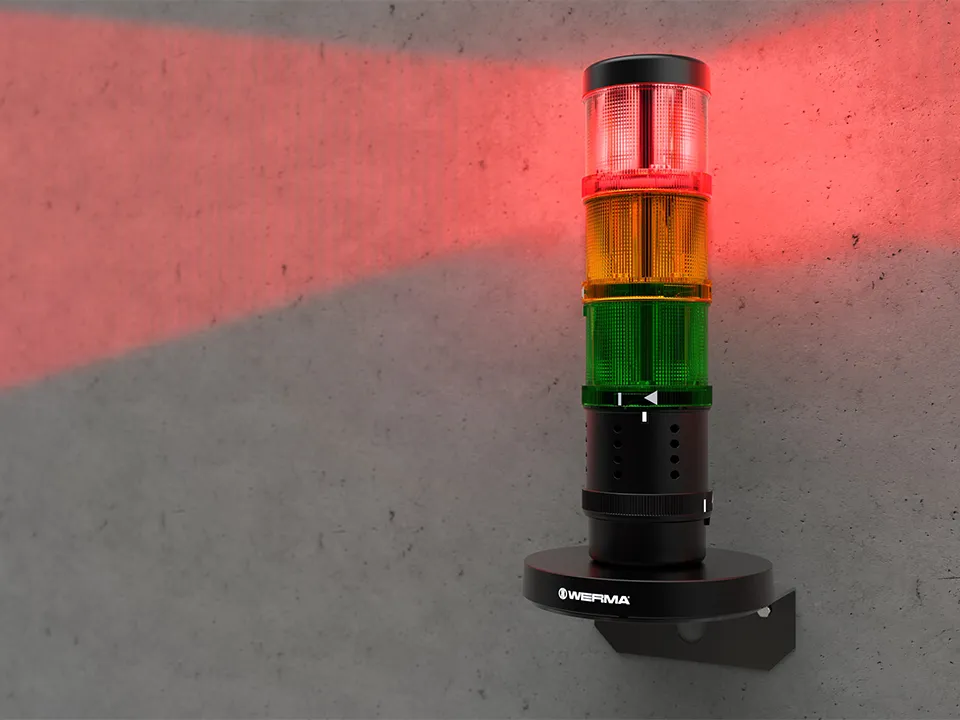
Green light: all clear!
An elevated CO2 concentration in a room can correlate with higher bacterial concentrations and increased infection and absenteeism rates. To protect everyone who spends extended periods indoors from COVID-19 infections and other infectious diseases, it is essential to ventilate regularly. The Federal Environment Agency therefore officially recommends ventilation from 1,000 ppm (ppm = parts per million, i.e. volume parts per million volume parts).
This is where WERMA’s new CO2 traffic light comes in: it continuously measures the current carbon dioxide concentration in the ambient air and indicates exactly whether and when it is time to ventilate again.
The three familiar traffic light colours make this easy for everyone to understand:
- If the CO2 concentration is below 1,000 ppm, the light is green, indicating that the air quality is satisfactory.
- If the CO2 concentration exceeds 1,000 ppm, the light turns yellow to indicate that ventilation is recommended.
- A red signal indicates that substantial ventilation is needed because the CO2 concentration is above 2,000 ppm.
- If the limit of 3,000 ppm is exceeded, a flashing red light signals that ventilation is urgently required.
The WERMA CO2 traffic light
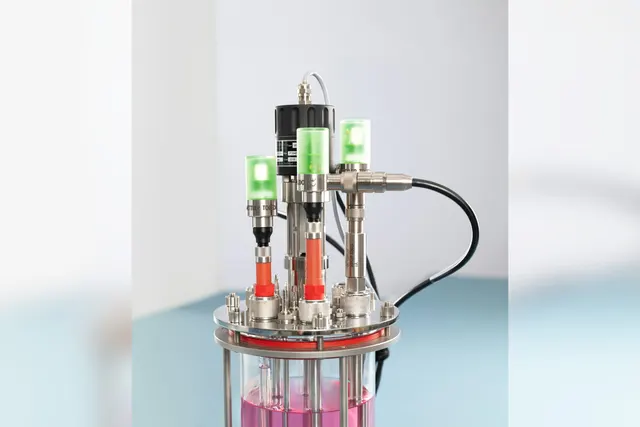
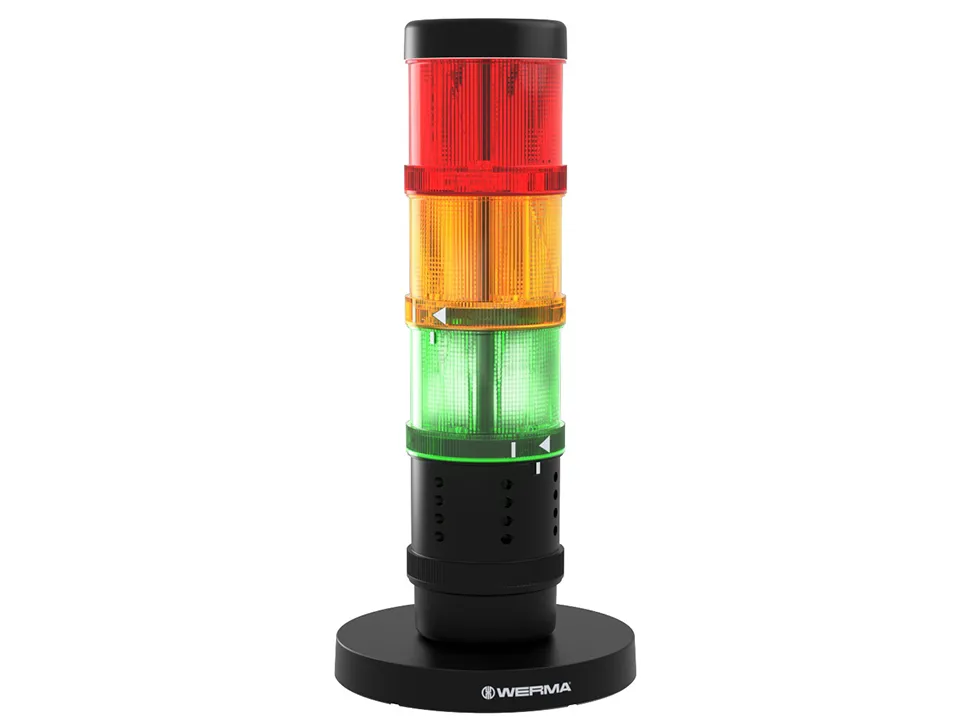
WERMA’s solution for measuring indoor CO2 consists of a three-stage signal tower that is ready to use straight away thanks to Plug & Play and is very easy to install: simply connect the power supply provided, wait for self-calibration to finish, and the traffic light is ready to use. The current CO2 concentration in the ambient air is measured and displayed immediately using the three traffic light colours.
The traffic light is clear, easy to understand and needs no explanation. Its signals are clearly visible from all directions thanks to 360-degree illumination and exceptionally bright LEDs, even in direct sunlight and bright surroundings.
Ideally, the CO2 traffic light should be positioned in the centre of the room, not too close to a window and no higher than 2 metres above the floor. Since carbon dioxide is distributed fairly evenly throughout a room, one traffic light is sufficient for most spaces. Two traffic lights are recommended in larger conference rooms or sports halls.
High air quality, more important than ever
WERMA’s CO2 traffic lights can improve air quality in enclosed spaces over the long term by preventing high concentrations of carbon dioxide and aerosols from building up through regular, effective ventilation. This creates indoor air that is not only more hygienic, but also more conducive to productivity and better overall. “We are pleased that the CO2 traffic light system is not a short-term investment for public buildings, offices and universities,” says Manuel Schutzbach of WERMA Technical Sales. “A low CO2 level in a room not only protects against infections, but also improves the concentration and performance of everyone present.”
WERMA’s new CO2 traffic lights therefore not only help ensure the highest possible level of safety for employees, customers and visitors, but also support long-term productivity and performance.
Question about this story? Ask your question
Keep following this
Get an email when a new story is published. No account needed.
- SubjectProcess & instrumentation