Safety must come first in hydrogen fuel systems
Text Fabian Brücker, Market Development Manager bij Parker Hannifin – Pressure Connectors Europe en Graham Johnson, Division Product Marketing Manager bij Parker Hannifin – Instrumentation Products Division EuropeImage Parker Hannifin
On 16 July 1969, NASA’s Apollo 11 spacecraft was launched from Kennedy Space Center in Cape Canaveral, with the aim of carrying out the first crewed landing on the Moon. On board were Neil Armstrong, Buzz Aldrin, Michael Collins and a wide range of Parker products, including products for the hydrogen and oxygen fuel cell systems (H2 and O2). Over the years, Parker’s solutions have enabled many successful and safe space missions. The company’s ball valves, stop valves, check valves, shut-off valves, seals, O-rings, tubing and fittings all contribute to the operation of fuel cell reactant supply modules and H2/O2 modules. With more than fifty years of experience in H2 solutions, Parker is now at the forefront of this advanced technology, and modern industry can reap the benefits.
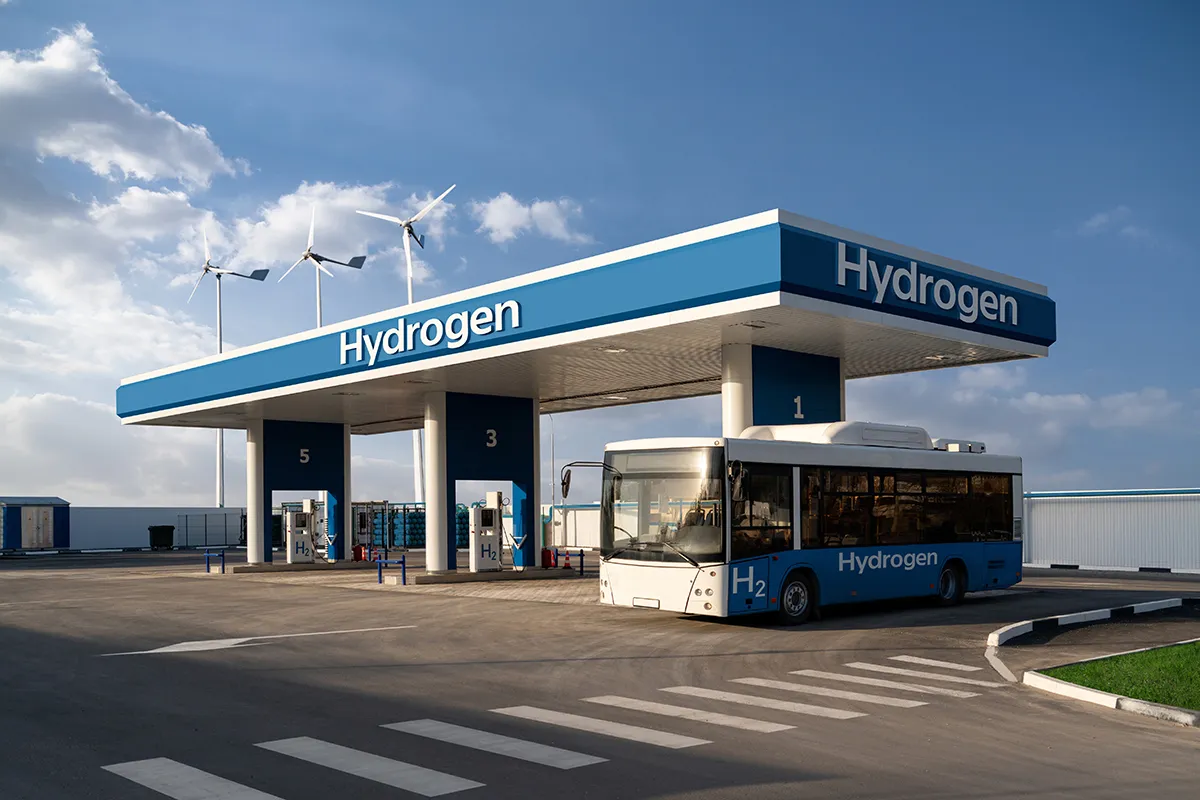
H2 may be a new concept for some companies, but for Parker it is an established technology. That is why Parker solutions are being used in the new Artemis spacecraft, which will take people on another journey to the Moon, currently planned for 2026. The company also has extensive experience in road transport. Around fifteen years ago, a Belgian manufacturer produced the world’s first H2 bus, with Parker fittings that were crucial to the safety and success of this new vehicle.



Safety first
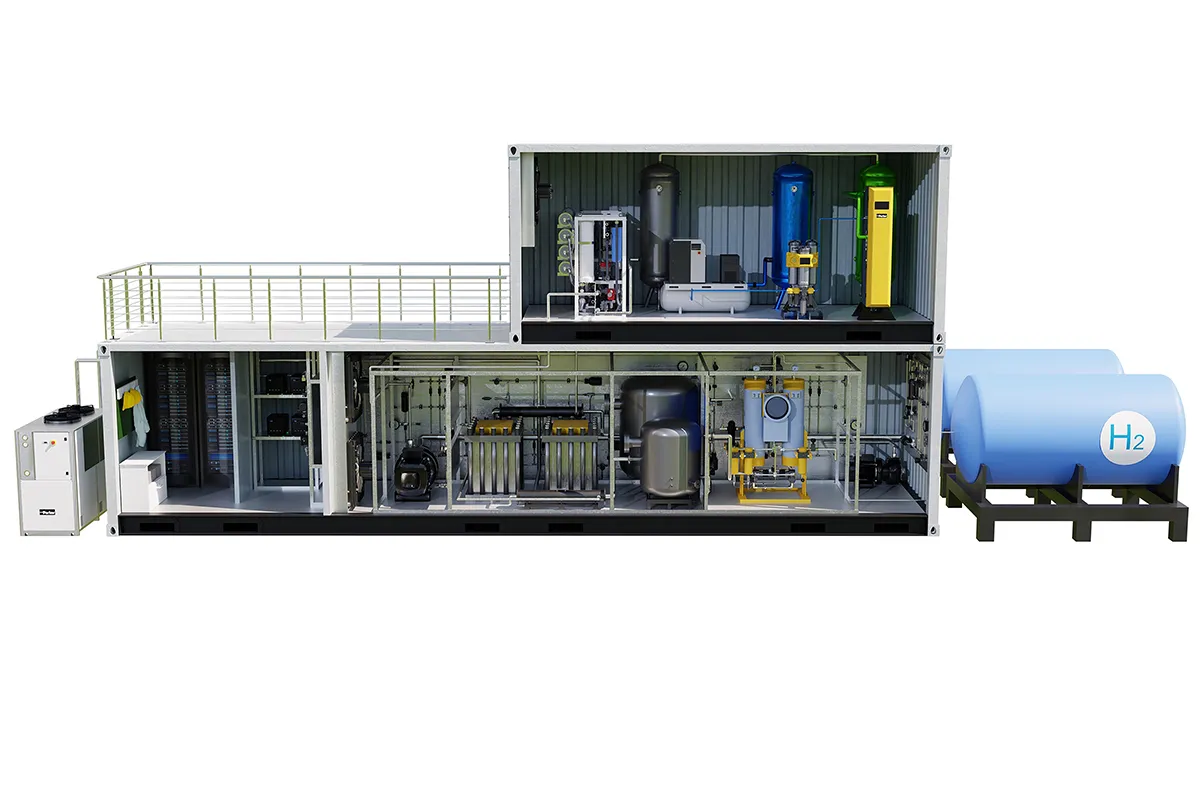
Many industries now use H2, including oil and gas, fertiliser, steel and cement. In all these sectors, safety is a top priority. H2 offers users many benefits, but also presents engineers with many challenges as they work to ensure the highest level of safety across all applications, whether H2 is being produced, conditioned, stored, distributed or used.
Typical H2 system components include parts for fluid supply lines. H2 is the smallest molecule and has a strong tendency to diffuse and permeate. H2 also has a high flow rate if a system leak occurs. The tubing and seals must be suitable for H2 use throughout the system’s service life. Other important components are those used for flow control, including valves, check valves and regulators. These components can be operated manually or remotely using electric or pneumatic actuators. Actuators require careful design to prevent them accidentally becoming an ignition source, particularly when they are electric.
What to look out for
Potential hazards and challenges associated with H2 systems include flammability, explosivity, the small size of the molecule, the fact that H2 gas is colourless and odourless, interaction with materials (the embrittlement of certain metals can cause catastrophic failures), higher storage pressure, and health risks such as burns and suffocation. This is a list of considerations for the design and operation of H2 systems. The options available to design engineers for addressing hazards, in order of preference, are: eliminate, prevent, avoid, mitigate or accept. Suitable H2-compatible products must be specified to achieve many of these options.
Naturally, every H2 system must have a fail-safe design, with redundant safety measures such as pressure relief equipment, backups for critical components and systems, and fail-safe valve positions. Valves must automatically return to the safe position in the event of a power failure, for example.
Automating safety design concepts includes remote monitoring of critical information, remote operation and automatic limitation of operating conditions, such as pressure or flow rate, as well as automatic operation of the appropriate equipment when H2 is detected. Possible actions include closing shut-off valves, switching ventilation on or off as required, and initiating the appropriate shutdown procedures.
Materials matter
With H2, flaws and leaks in materials containing defects or inclusions can be detected quickly. This issue therefore requires close attention during system development. Design engineers need to ask themselves: what constitutes a high-quality component material that resists brittle fracture and crack propagation? Although many suppliers of components for H2 systems refer almost exclusively to a material’s chemical composition, many other factors actually have an impact, including the operating environment, mechanics (internal and external factors) and specific microstructural characteristics.
While chemical composition and mechanical properties are naturally of paramount importance when it comes to microstructure, so too are the quality of the material production process and subsequent heat treatment. Incorrect or uncontrolled heat treatment can lead to high concentrations of undesirable phases and inclusions in the raw material. These defects can in turn reduce the service life of H2 system components, sometimes causing sudden catastrophic failures.
Full traceability
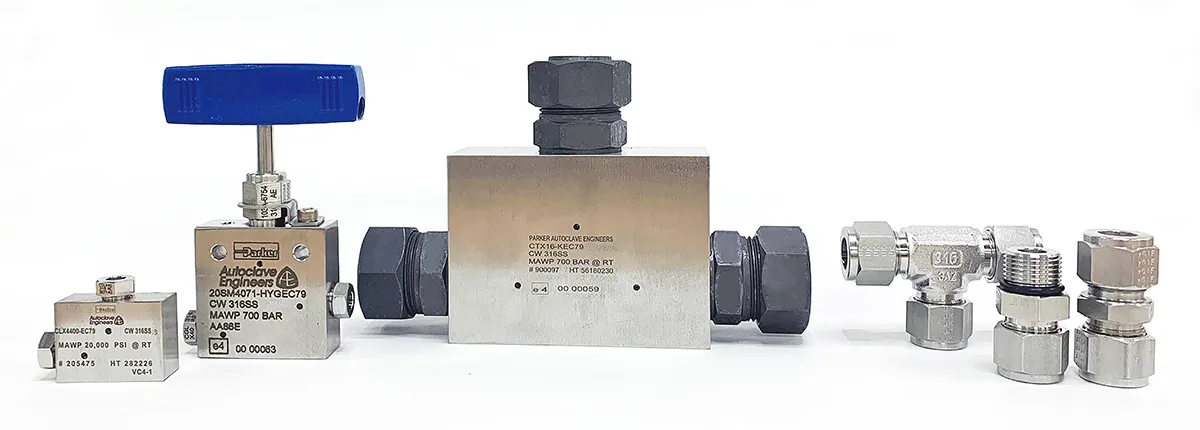
H2 system developers can protect themselves by working with suppliers that provide valid material certificates with traceability information to demonstrate the quality of metals. These certificates verify technical parameters, production routes, heat treatment information, test results, chemical analyses, mechanical properties and compliance with national and/or international standards. The material certificates provided by Parker contain full traceability information. The company can trace the material used to make every H2 system component back to the factory. In addition, rigorous production processes prevent H2 from being introduced into the material in advance.
Materials are not the only factor affecting the design safety of H2 systems. H2 is usually stored at a low temperature and high pressure. Low temperatures make H2 more likely to attack the container material, while high pressure increases the likelihood of leaks. Choosing the right components is crucial.
Some OEMs in the H2 industry buy lower-cost parts because they feel overwhelming pressure to remain competitive. Certification is not mandatory, and nothing prevents suppliers from offering poor-quality parts at an attractive price. The issue in the H2 sector is therefore one of awareness and understanding, particularly among buyers. Buyers need to have confidence in the breadth and depth of the supplier’s product range, the supplier’s experience with H2, and the training and support services provided.
Play it safe
Parker offers everything needed for safe, reliable H2 system installations. The company has years of experience with H2 media and extensive information on H2 safety, which is essential for customers proposing H2 solutions and needing to demonstrate their safety.
In addition to certifying robust materials, Parker has invested in obtaining H2-specific qualifications, such as EC-79 for transport, ISO
15848 for fugitive emissions and ISO 19880-3, which covers requirements and test methods for the safety performance of high-pressure gas valves at hydrogen refuelling stations. The components also meet the US HGV accreditation standard. This is an alternative to EC-79 and will be harmonised with the relevant ISO standards.
For H2 applications, the company offers a comprehensive range of H2-compatible components that enable safe and efficient operation across the full range of extreme H2 system pressures and temperatures. These include hose assemblies for high-pressure H2 dispensing and transfer applications, double-ferrule tube fittings and two-ferrule reverse compression design fittings for process instrumentation, medium-pressure cone and thread fittings, and needle valves for autoclave applications, as well as O-ring face seal tube fittings and adapters for high-pressure connections
on vehicles.
Brave new world
If H2 systems are relatively new to organisations and their employees, it may not be immediately clear why selecting the right components and fitting them correctly is so important to the safe and reliable operation of these systems. A system with poor-quality components may work well after initial commissioning, but problems soon arise when, for example, the H2 attacks the fittings.
Engineers can prevent these problems by discussing their requirements with Parker, a single source for all products, component training and global component support.
Een zakelijke vraag aan Parker Hannifin Benelux? Get in touch
Companies in this story

Keep following this
Get an email when a new story is published. No account needed.
- SubjectProcess & instrumentation
- CompanyParker Hannifin Benelux