Reliable material supply for injection moulding machines
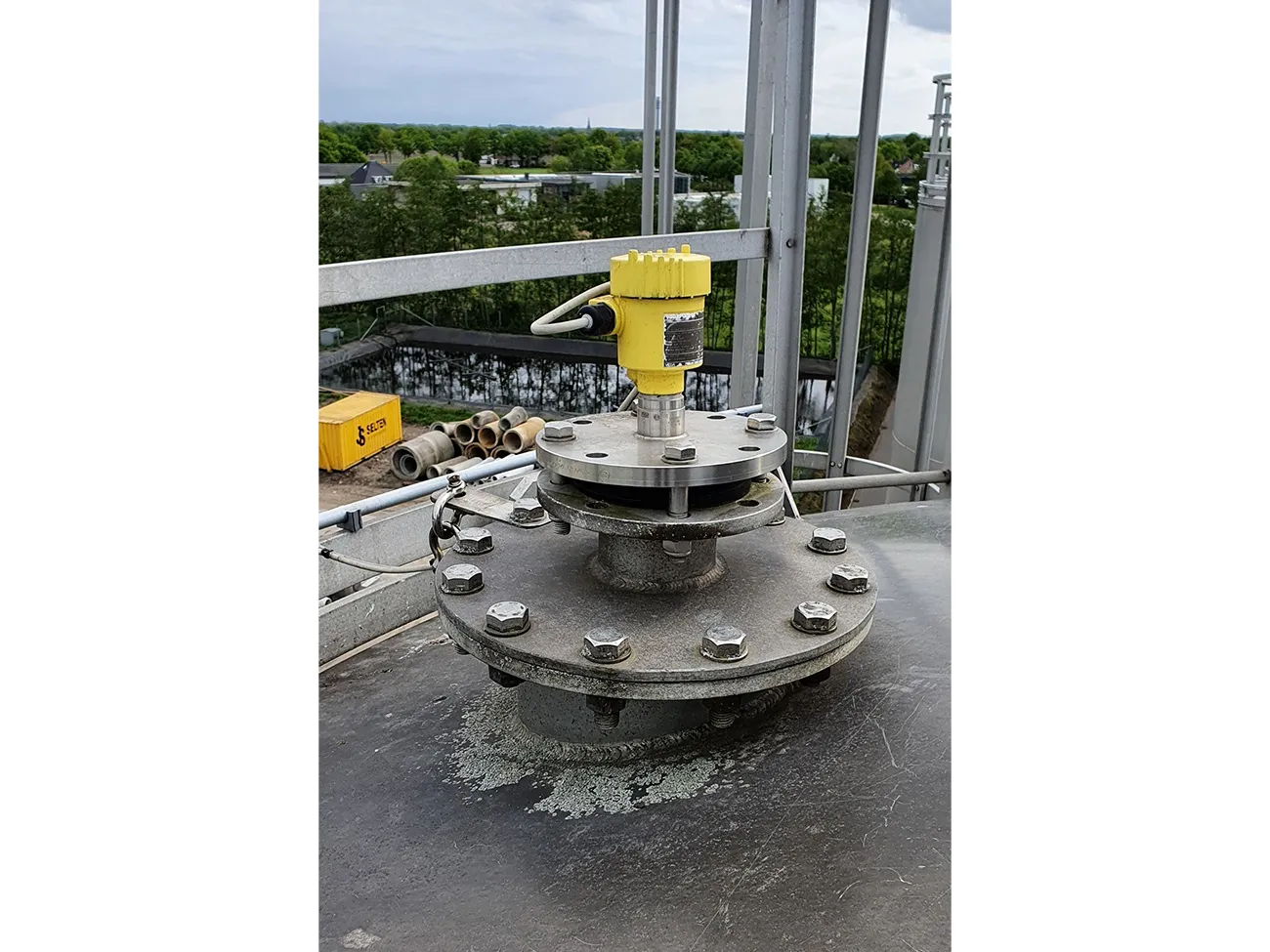
Injection moulding machines operate at peak performance. That is why raw material supplies must always be guaranteed. At a Dutch company, VEGA level sensors provide a reliable picture of the stock of plastic granules in the raw material silos.
For more than thirty years, Haval has been known as a manufacturer of disposable products and packaging materials for the food industry. Every year, some 5 billion single-use packages leave its state-of-the-art production site in Gemert, the Netherlands, on their way to customers throughout Europe. All products are developed in collaboration with renowned design agencies, with the focus on both design and physical requirements. As the EU is banning disposable items, Haval has been focusing more on the company’s second line of business for some time: the production of food packaging used, for example, to store and sell salads, vegetables, fruit …
From silo to perfect shape
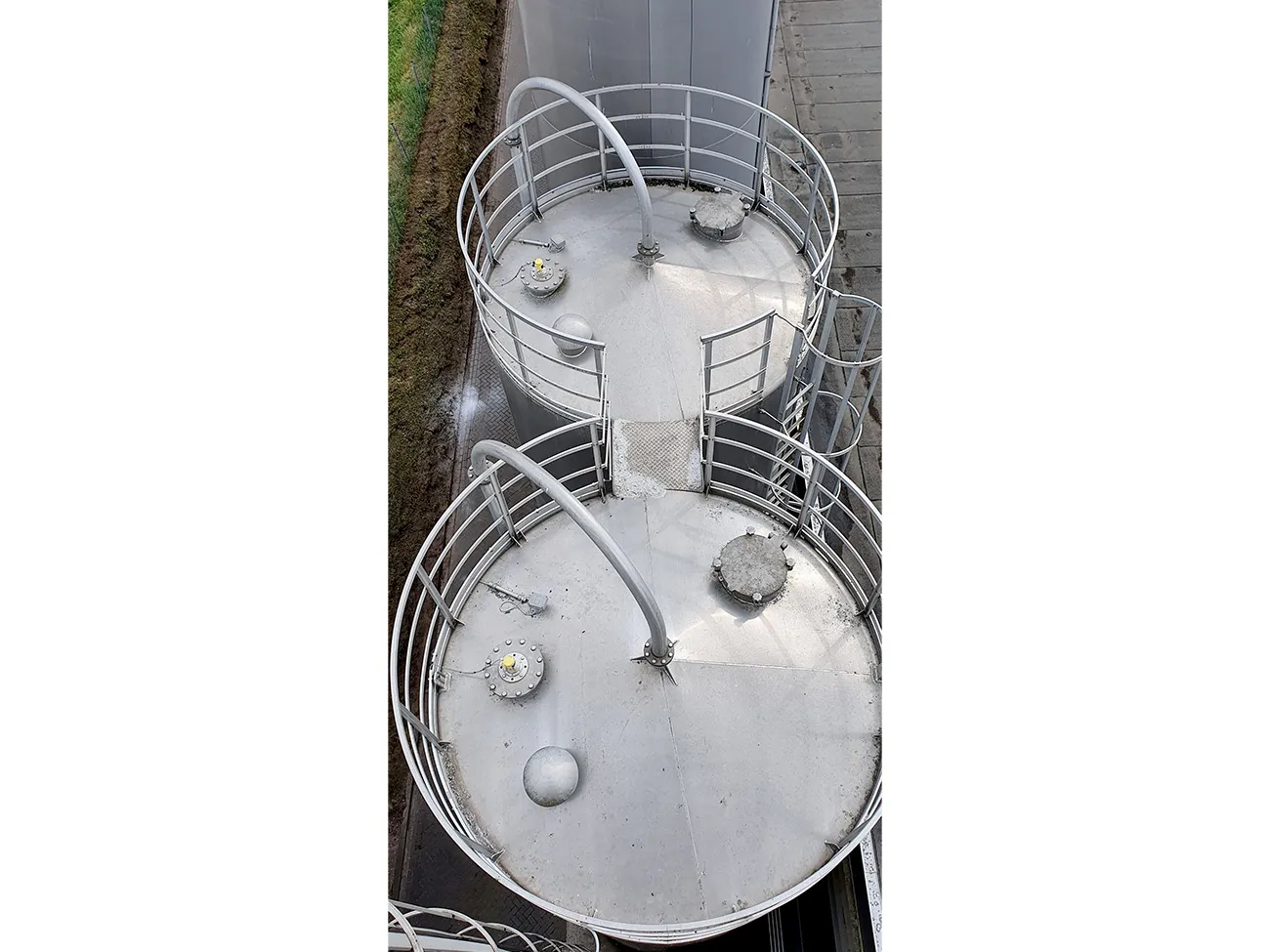
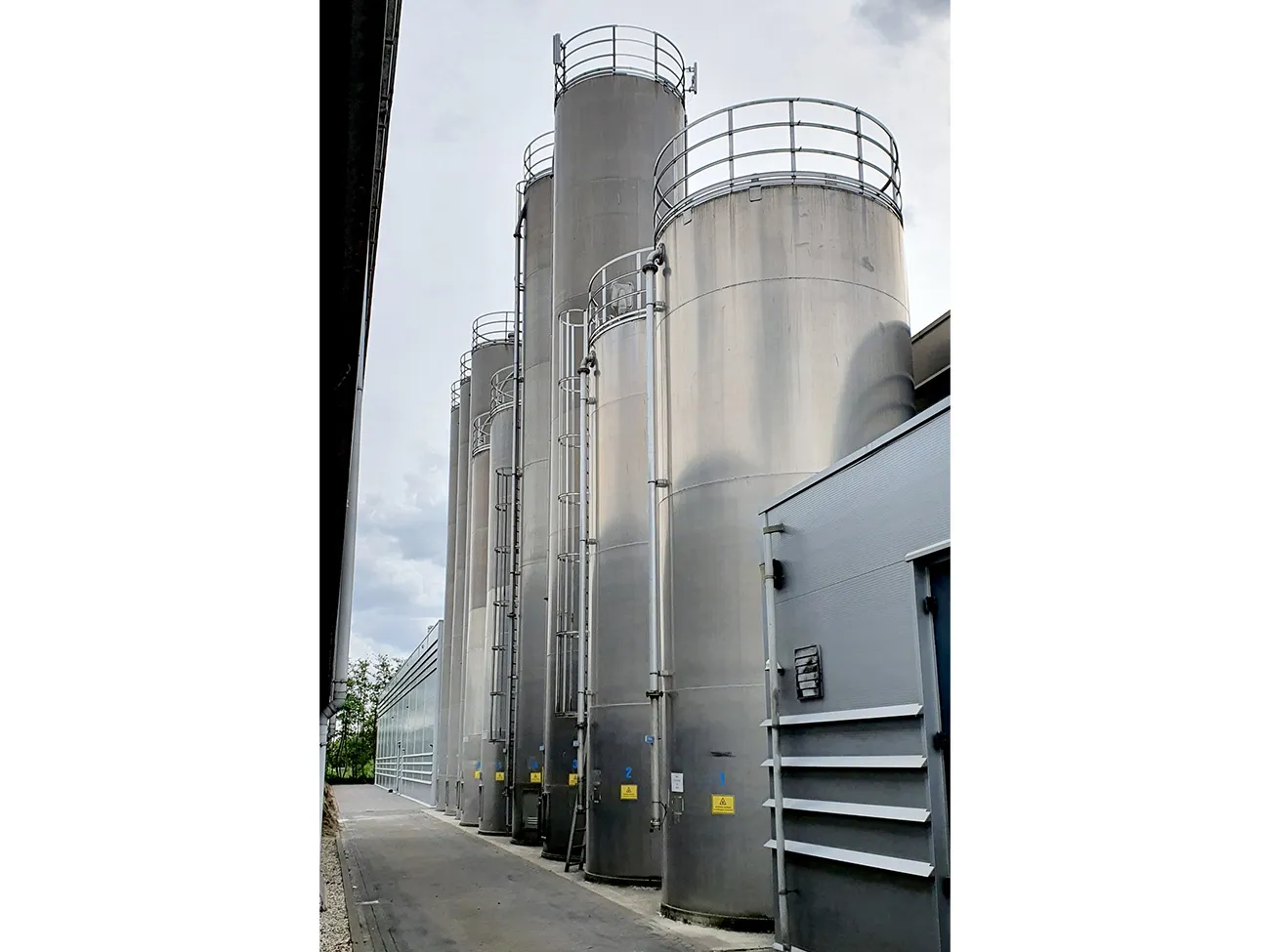
The basis for all these products is high-quality polystyrene and polypropylene granules. These raw materials are transported from the aluminium silos to the injection moulding machines, where the plastic is melted and injected under high pressure into its final shape. The total capacity of the nine storage silos now stands at 900 m3. “To ensure a reliable supply and keep the production process running smoothly, we need accurate and reliable volume readings. If we ran out of raw material, we would have to shut down one or more of our injection moulding machines,” says Ron Kastermans, production manager at Haval. “That is why we opted for a combination of radar-based level measurement and visualisation using the VEGASCAN.”
Reliability is the top priority
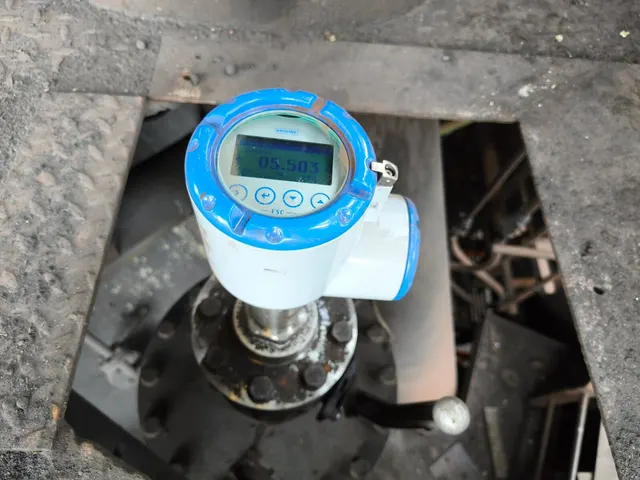
The VEGAPULS 68 has been in use in two silos for more than seven years and has performed flawlessly. The VEGAPULS 69 is installed in the other three silos. “The biggest challenge for level measurement was the low dielectric constant (1.2) of the plastic granules,” explains Kastermans. “The sensors also need to be unaffected by dust build-up. After all, we work with polystyrene.” Before the VEGAPULS 69 was introduced, the level of products with poor reflective properties, such as plastic granules, was often measured using sensors based on guided wave radar. This worked, but once interference signals were as strong as the level echo, reliable measurement was not always possible. Unfortunately, this situation occurs with many plastic powders and granules because of their very low Dk values. There are often interference signals to contend with as well. Plastic powder is generally stored in tall, very narrow silos. Circumferential weld seams, even if they are only a few millimetres thick, repeatedly cause interfering reflections in silos. For Kastermans, the reliability of the measurement signal is therefore the top priority: “The most important thing is to have a good measurement every day. It is not so much about achieving the highest accuracy, but rather about getting a consistently reliable result without any interference.”
Tighter focusing, greater dynamic range
It was only a few years ago, when VEGA launched the VEGAPULS 69, that these unsatisfactory measurement results in the plastics industry began to change. Operating at a frequency of 80 GHz, it has an antenna measuring around 75 mm. Together, these features provide much tighter focusing of the transmitted signal and a beam angle of just 4°, making it ideal for narrow, tall silos. The tight focusing helps distinguish the actual measurement signal from interference. This was made possible at the time by new microwave components capable of detecting even the smallest reflected signals. A second factor that has since led many users to choose the VEGAPULS 69 is its dynamic range. For radar sensors, this parameter indicates the range of applications in which a sensor can be used. The greater the dynamic range, the wider the sensor’s range of applications. Thanks to the VEGAPULS 69’s wide 120 dB dynamic range, even the smallest reflections can be measured. For media with poor reflective properties, this means that measurement is now possible at all.
Keeping track
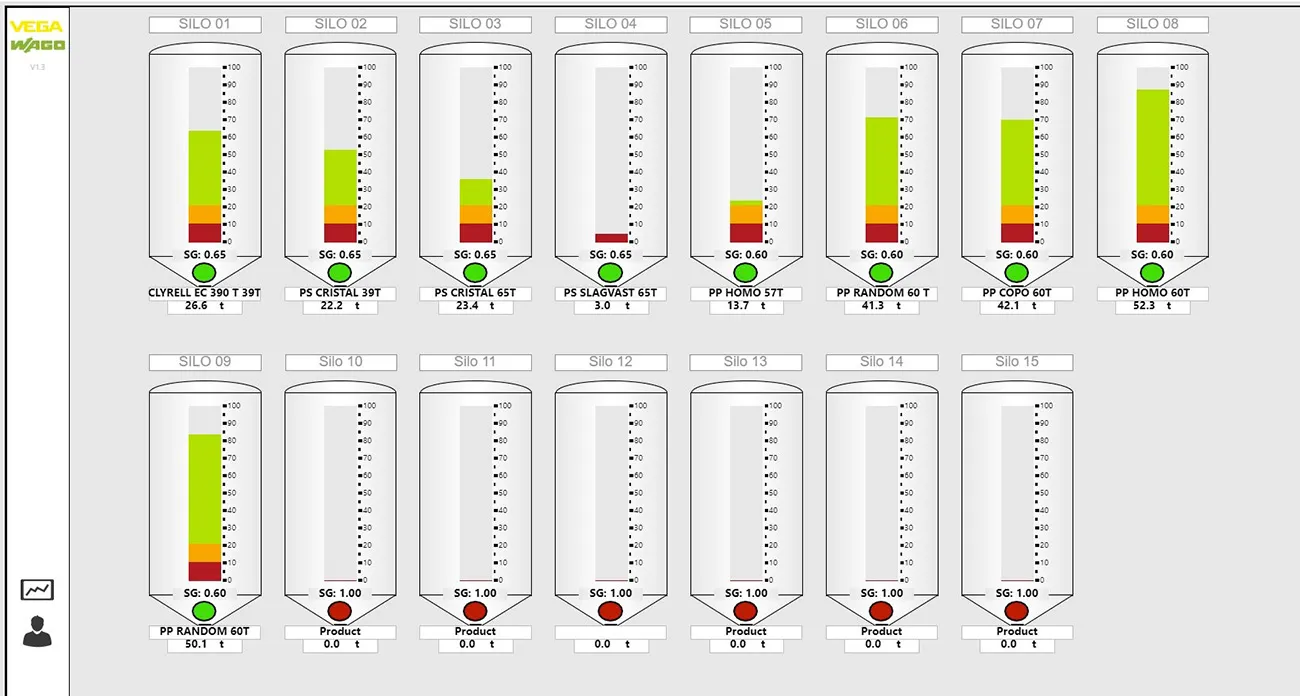
After radar level sensors had first been used successfully in six raw material silos, a further three silos were commissioned in May 2018, and three VEGA radar sensors were installed at the same time. It was also decided to introduce a stock management system for the raw materials. Until then, stock levels had been managed manually, so a clearer overview was very much needed. The VEGA sensors were therefore supplemented with the VEGASCAN 693, which provides a visual overview of current stock levels. The VEGASCAN 693 is a universal controller for a range of measurement applications. “With the visualisation function, we can now easily see when a new delivery arrives and which silo it has been unloaded into,” says Kastermans. “If a fault ever occurs in our production, we can quickly determine when we need to start recalling our products. This is crucial given the high standards in the food industry.”
Question about this story? Ask your question
Companies in this story

Keep following this
Get an email when a new story is published. No account needed.
- SubjectProcess & instrumentation
- CompanyVEGA N.V.