Perfect control over the production of CO2-negative facing bricks
Text Valérie CouplezImage Valérie Couplez en Vandersanden
Introducing the carbonation process
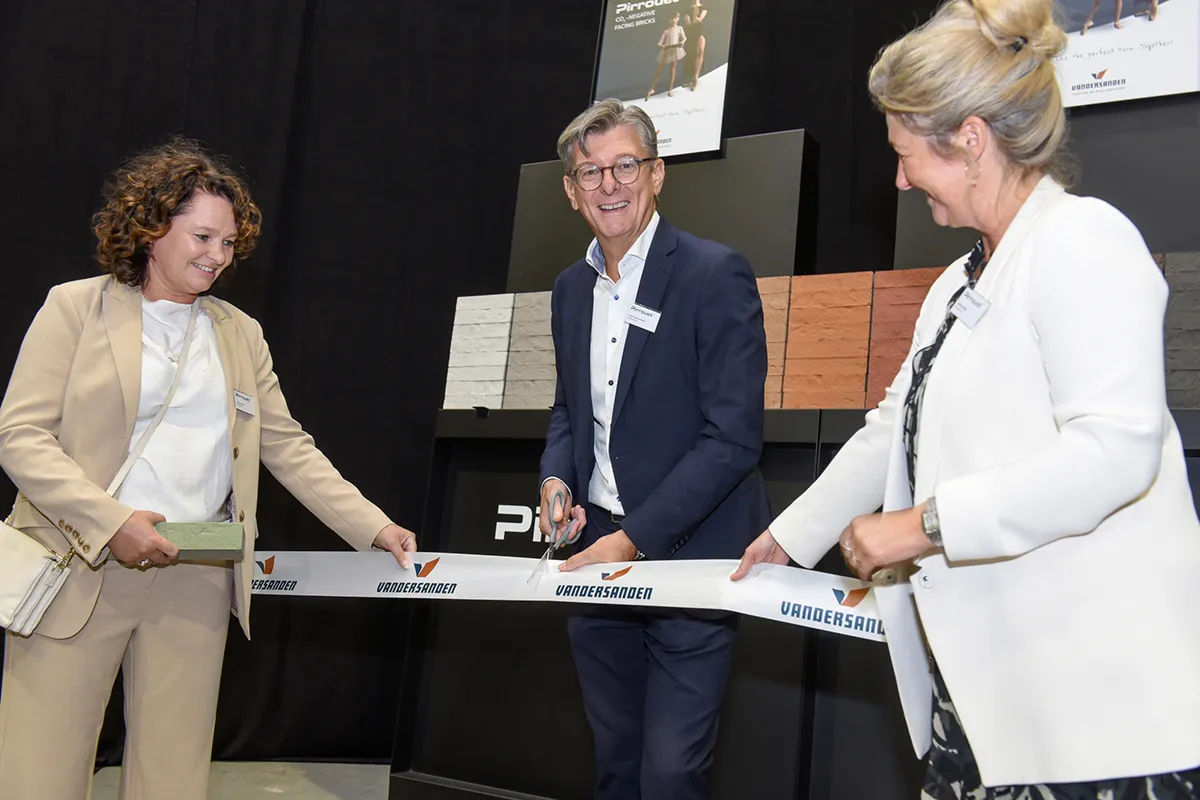
The Belgians have a brick in their stomach. At Vandersanden, they make 500 million bricks every year to satisfy that appetite. Although the word ‘firing’ no longer applies to all their products. Pirrouet facing bricks do not go into an energy-intensive kiln. Instead, they are cured in a climate chamber using CO2. In producing one million bricks, they capture 150 tonnes of CO2 from emissions generated by other industrial processes. This is one of the ways the ambitious family business aims to become fully CO2-neutral by 2050. Vandersanden is relying on KROHNE technology to ensure perfect control of this carbonation process.
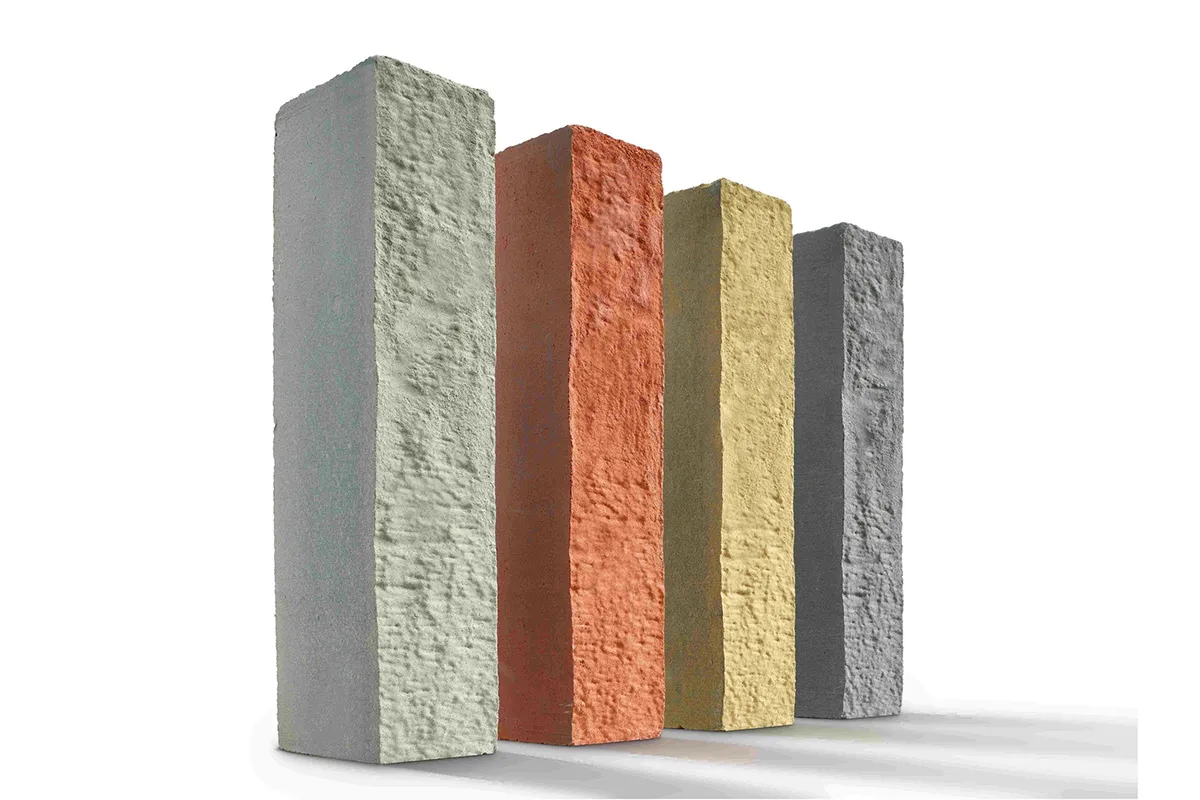
Carbonation is the process in which calcium hydroxide and carbon dioxide combine to form calcium carbonate, or hard limestone. It is therefore a fully sustainable way of making bricks. “We start with a residual stream of mineral residues from the stainless steel industry, which we mix with sand and water. As a result, 80% of our Pirrouet facing bricks are made from circular raw materials. They are then dried and pressed here using green electricity, before being cured in a climate chamber with a high concentration of CO2. The process requires no additional energy, resulting in a CO2-negative product,” says Vandersanden plant manager Rudi Vandormael.
Thinking in generations
Vandersanden is a family business through and through, with more than 100 years behind it. It has eleven production sites and fourteen branches across Belgium, the Netherlands, Germany, France and England. “We want to be a sustainable and innovative partner for façade and paving products and solutions,” says Vandormael, summing up the company’s mission. “That is the advantage of a family business: we can think in generations rather than years, and focus on building a better, more sustainable world in the long term.” Vandersanden also sets concrete figures and targets. “We want to be CO2-neutral by 2050. We will achieve this by working on the basis of our four pillars: energy efficiency, product transition, energy transition and CCS,” Vandormael continues.
44 bricks every 40 seconds
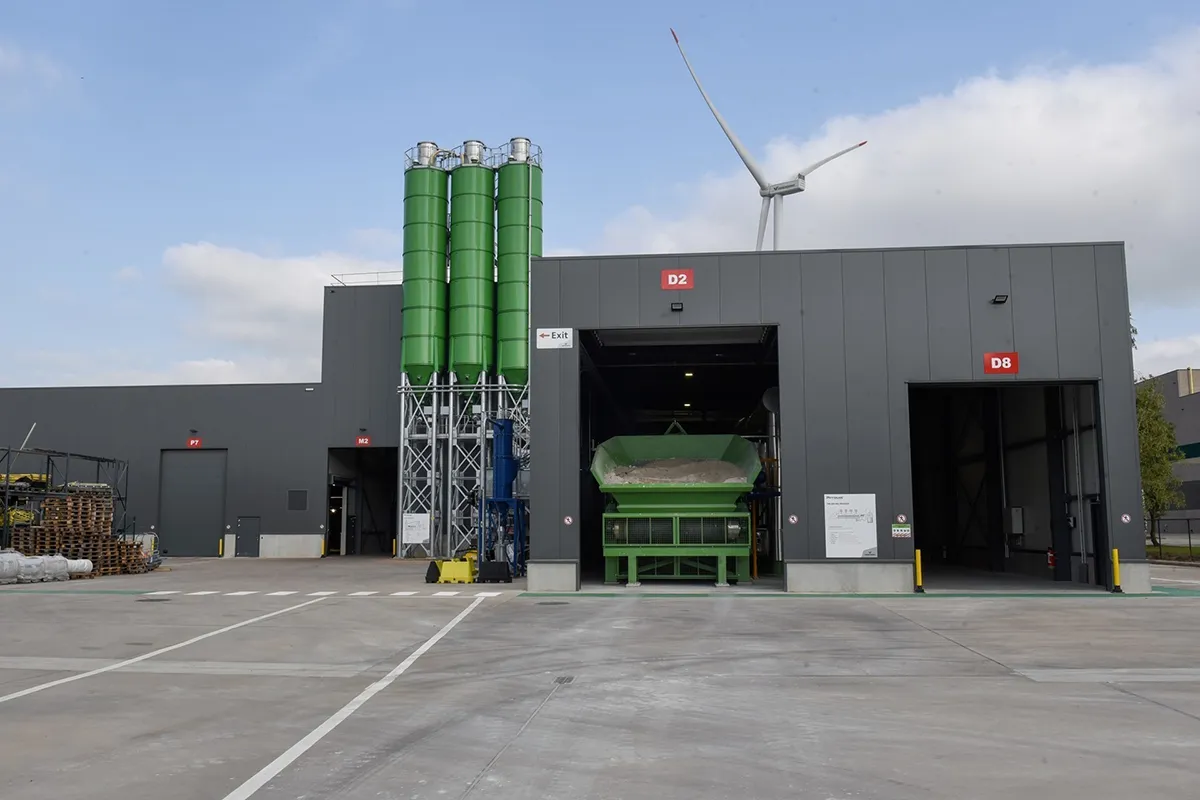
The introduction of the carbonation process for Pirrouet facing bricks is a good example of how Vandersanden is turning its ambitions into action. The company drew inspiration from Orbix, which developed the carbonation process. The pilot line and, once the process had been sufficiently proven, the brand-new Pirrouet factory were installed at the site in Lanklaar. Some of the mineral residual streams purified by Orbix are first dried using waste heat from the chimney of the adjacent brickworks. After mixing and the addition of additives, colour and fillers, a highly automated process presses a board containing 44 bricks from the mixture every 40 seconds. Once enough bricks have been collected, the carbonation process can begin. ❯
Five climate chambers
“Each climate chamber, and Vandersanden has five, holds a total of 35,000 bricks. Once it has been hermetically sealed, we fill the chamber with CO2 until it reaches a concentration of 30%. The CO2 is delivered in liquid form and converted into gas here. Once the right process conditions are in place, the carbonation reaction begins and the brick absorbs CO2. After 24 hours in the chamber at a temperature of 50 to 60 °C, the bricks are cured. This requires around 5 tonnes of CO2.” They are then given a protective coating before being packed and shipped. This part of the plant is also fully automated.
Coriolis flowmeter
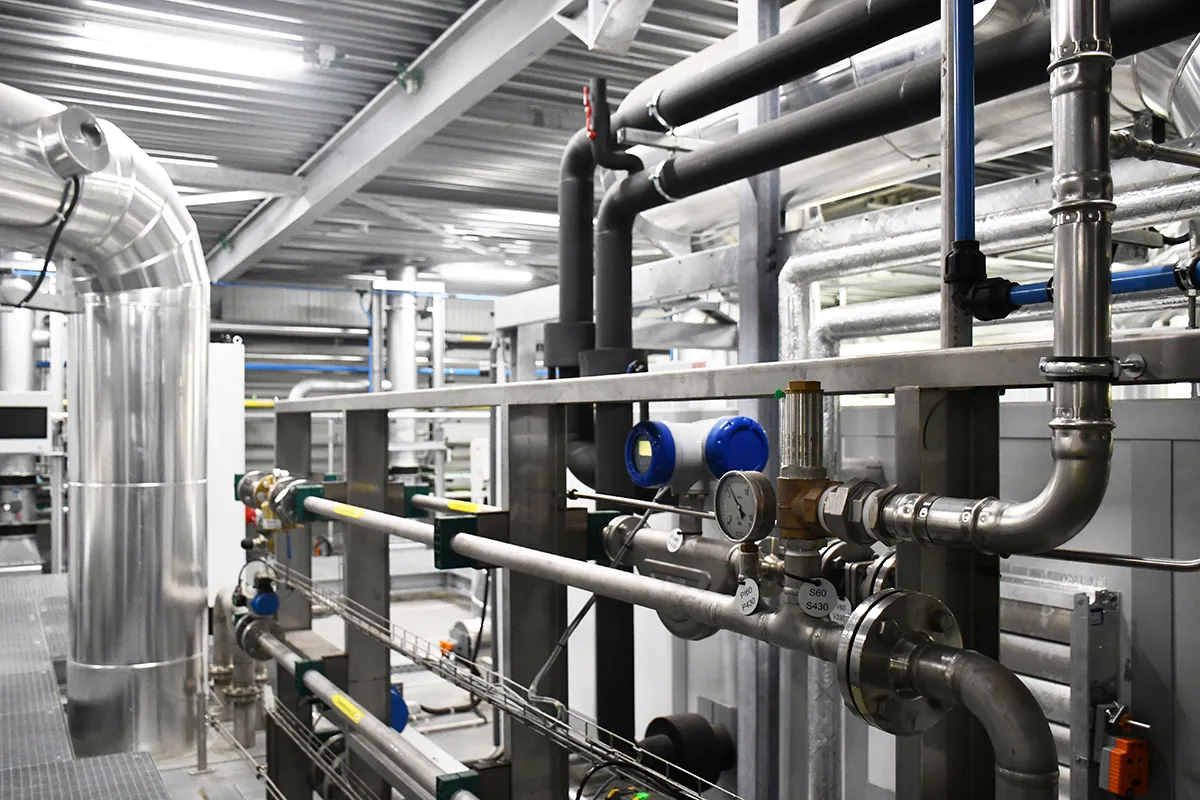
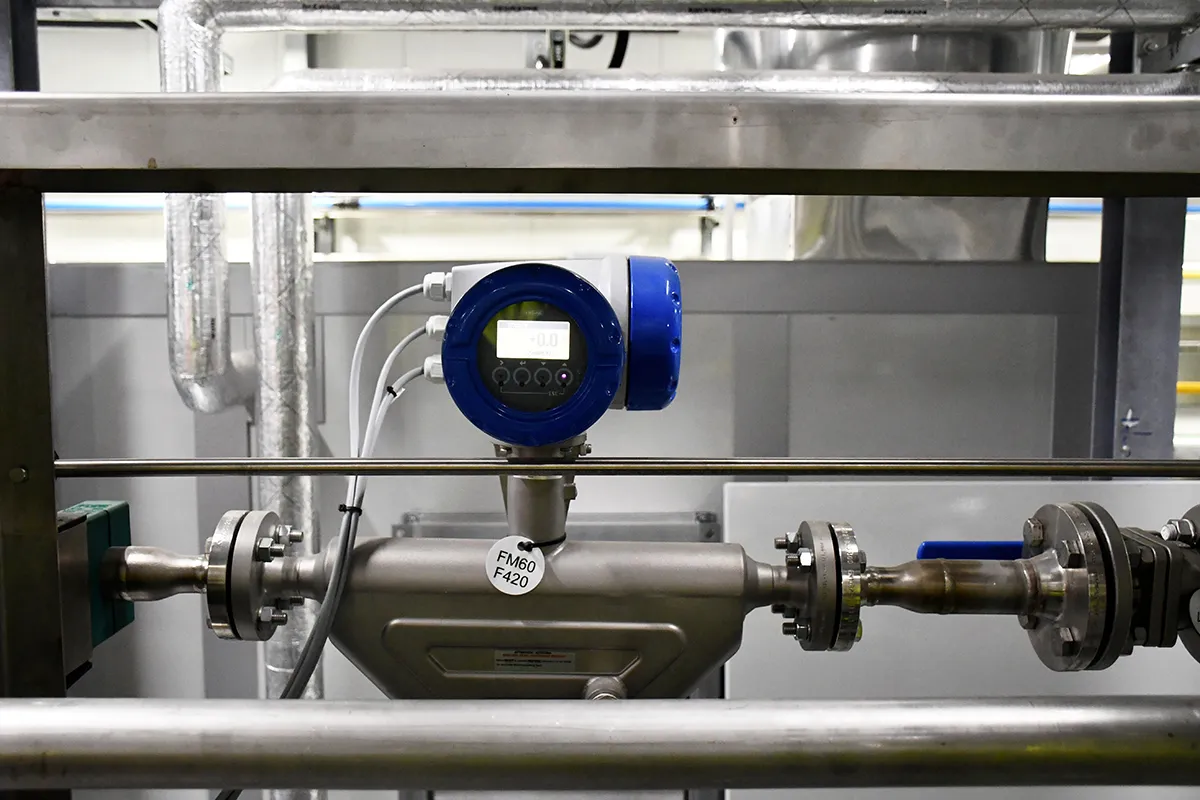
Messer built the climate chamber. A key element was setting up the control loop to monitor the CO2 concentration. “The flow measurement essentially determines the stability of the process. At the start, the process is highly reactive and requires a higher flow rate. Demand levels off as the hours pass,” explains Vandormael. Messer turned to KROHNE for the flowmeters. “Initially, they had opted for vortex flow measurement. This worked perfectly at laboratory scale. At industrial scale, however, it was not possible to guarantee the minimum flow rate required for this type of meter. For fluctuating applications such as this one, a Coriolis flowmeter is the better choice, thanks to its wide measuring range and high accuracy at both high and low flow rates,” says KROHNE technical sales engineer Jorgen Oorts.
Safety first
KROHNE also recommended the OPTIMASS 6400, a version with curved measuring tubes for more accurate measurement in this application. Each climate chamber technically requires one flowmeter, but a second was supplied as a spare. Vandormael says: “Safety comes first. The system was designed to shut down completely if the flow rate falls outside the meter’s range.” Vandersanden is particularly pleased with the climate chambers overall and the flowmeters in particular. “They have already proved to be a very robust solution. Everything is working exactly as it should. We also appreciate the service from KROHNE.”
3,000 tonnes of CO2 a year
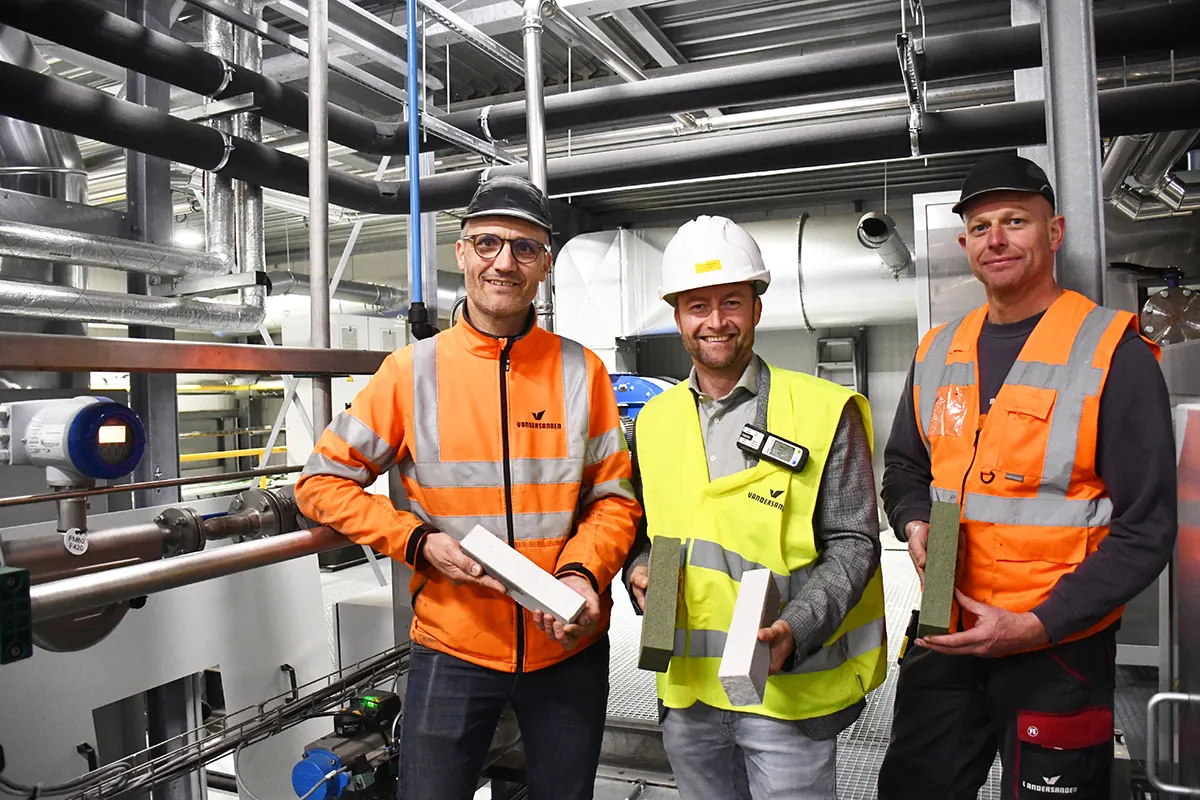
With an initial capacity of 20 million bricks a year, Vandersanden is showing its commitment to making a difference in the interests of a more sustainable construction sector. “This allows us to give 30,000 tonnes of mineral residual streams a second life every year and use 3,000 tonnes of CO2,” calculates Vandormael. The plant is already designed for expansion. Adding a second press would double its capacity. Pirrouet facing bricks are now appearing in an increasing number of projects, with a substantial pipeline of projects in progress. More and more companies and organisations are embracing sustainability. The bricks are being used, among other projects, in the new Living Tomorrow building and to define the appearance of the Neeroeteren cultural centre and a first Colruyt store in Temse, as well as contributing to sustainable urban development in Sint-Lievens-Houtem.
Developing colours and formats further
Vandersanden is already looking ahead. “We now want to continue developing our Pirrouet facing bricks. Our focus is on further optimising processes and techniques, as well as developing new products. The initial range of solid colours has since been expanded to include a range of multicoloured options. We firmly believe that Pirrouet facing bricks have a bright future,” concludes Vandormael.
Een zakelijke vraag aan KROHNE Belgium NV? Get in touch
Companies in this story
Keep following this
Get an email when a new story is published. No account needed.
- SubjectProcess & instrumentation
- CompanyKROHNE Belgium NV