Investing in ergonomics pays off in shorter production times
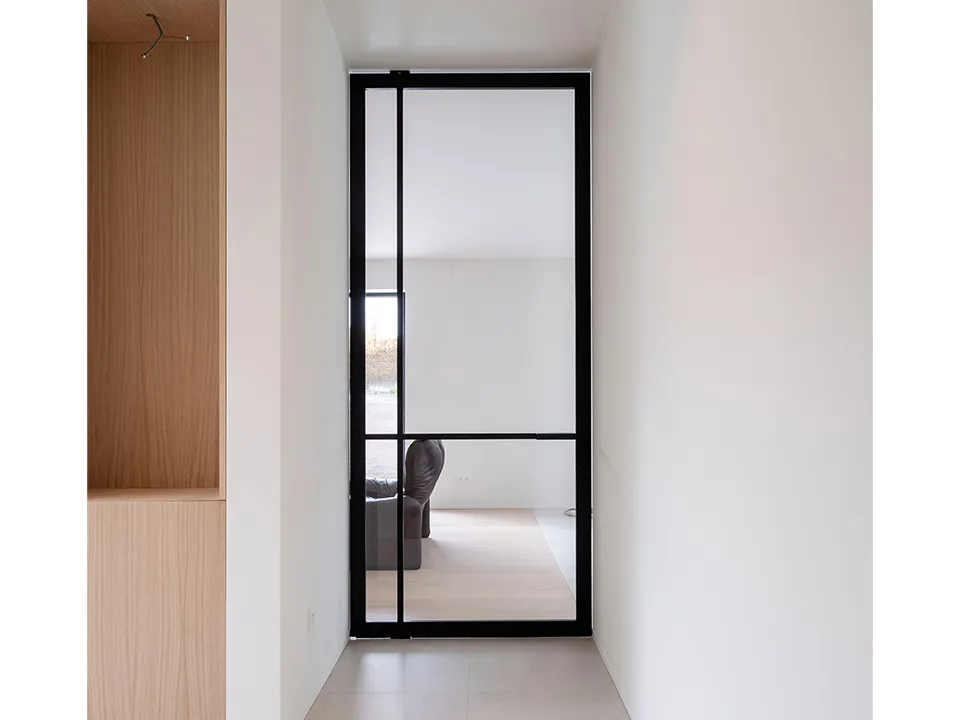
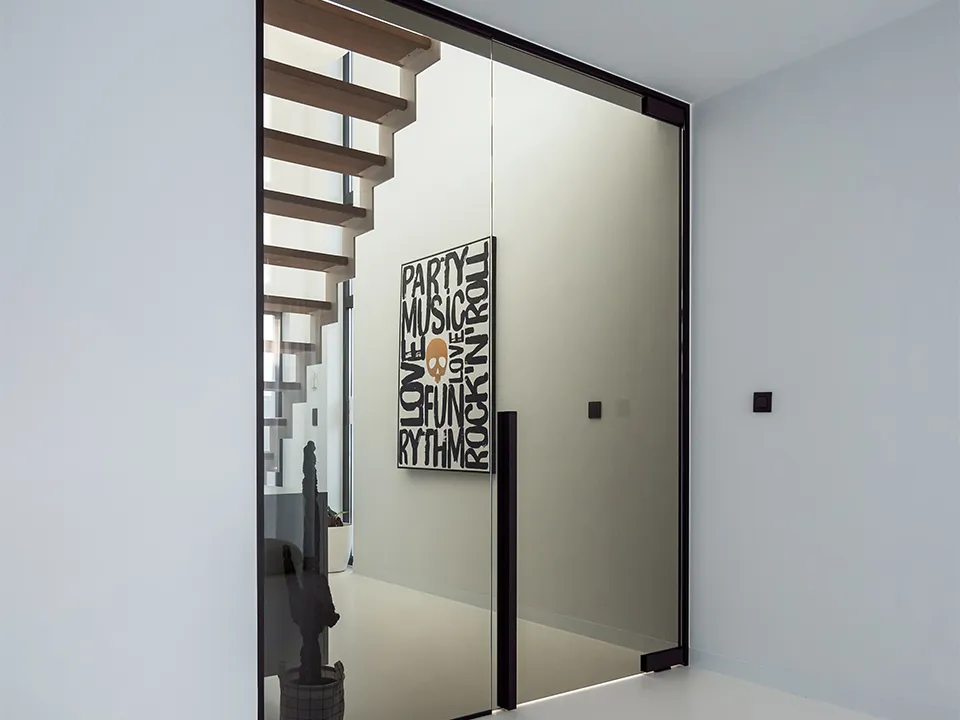
‘The ideal door is no door at all’. Or, at least, one that does not feel like a door.
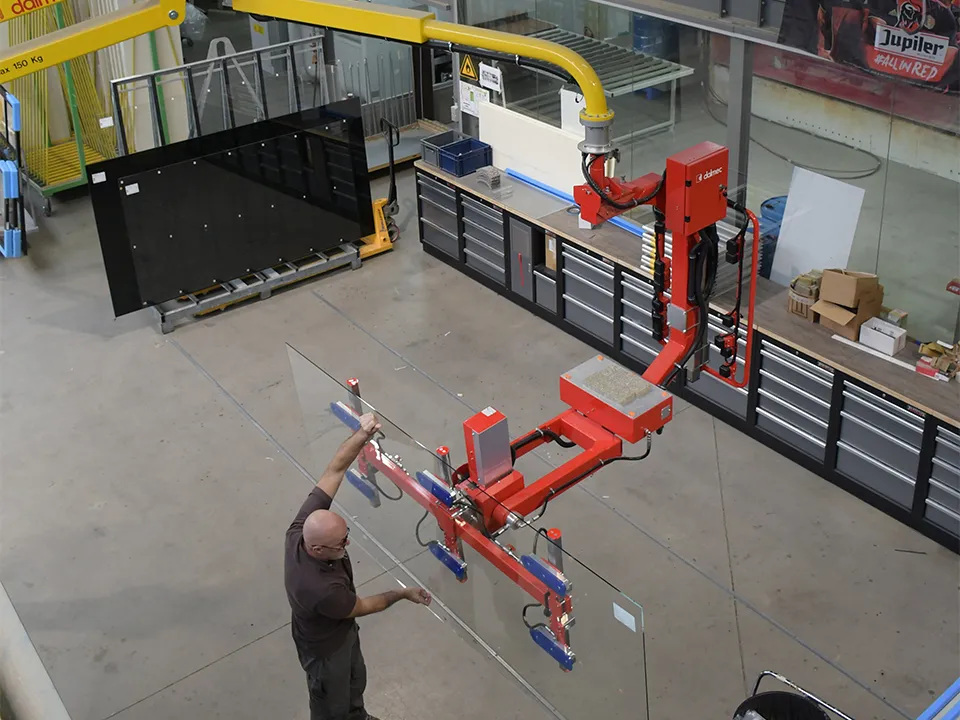
The concepts, already recognised with several international design awards, are developed and manufactured entirely in-house. With a trend towards ever larger, and therefore heavier, products, the company invested in pneumatic manipulators from Dalmec to improve ergonomics. This made it possible to adapt almost every workstation that had required two operators to be handled by one.
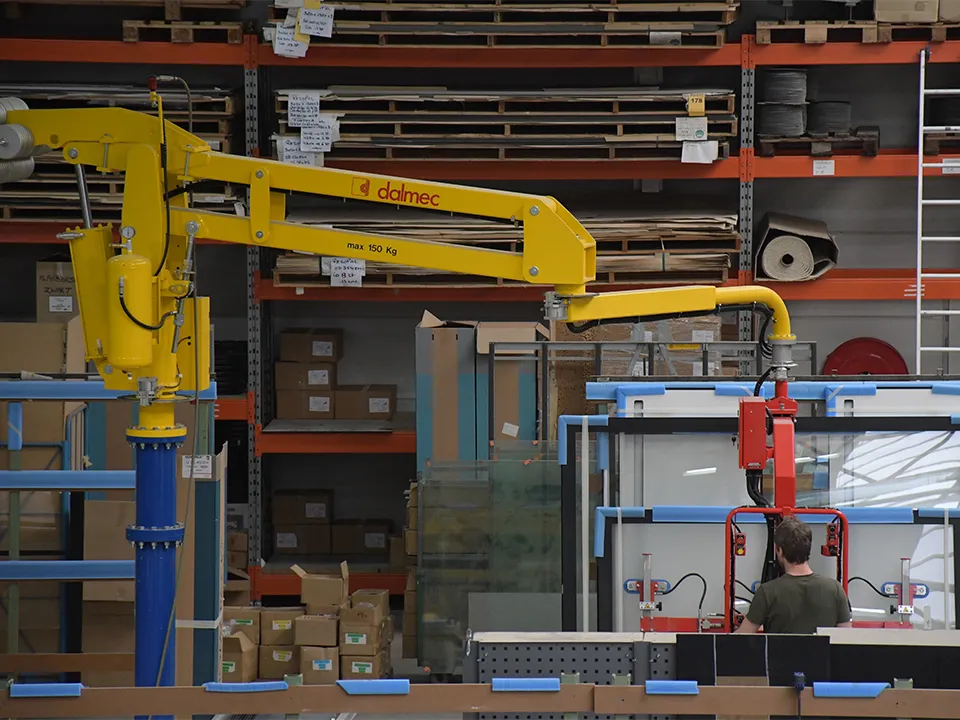
2020 marks exactly 25 years since Rudi Dries came up with an innovative concept for doors. The idea was to make the door as unobtrusive as possible while integrating it aesthetically into the space. COO Thomas Lierman says: “Next year, we will launch the eighth generation. By continually developing new techniques and reinventing the system, we aim to set ourselves apart in the market. Rudi is still just as passionate about designing the ideal door. He has a drawer full of ideas for adding functionality without compromising the appearance of the door or the space. By bringing together a team with backgrounds in architecture and interior construction, we have built up a wealth of in-house expertise on materials and how they work together in a space.”
36,000 possible door configurations
It is little wonder, then, that the company has been successful. On average, 120 doors leave the factory every week, mainly for the residential market. “Every door we make is bespoke, even within the same project. We always visit the site to take precise measurements and analyse the space, as well as to see how the door will fit into it. The customer can then choose exactly how they want their door finished to a high standard. I think there are around 36,000 possible configurations,” says Lierman. This approach is only possible because everything is manufactured in-house. Behind the 1,000 m² showroom is a 3,000 m² workshop, where each door is assembled in several stations to the finest detail, according to the customer’s wishes. “We pursue efficiency by investing in (semi-)automation. That allows us to work faster with as few people as possible.”
Focusing on ergonomics
Anyway Doors also wants to make careful use of its workforce. Lierman says: “The large products we make today are difficult to handle and, above all, heavy. We had already installed a system in the workshop in 2004, with a swing arm, hoist and suction cups to improve ergonomics. But the operators did not use it, as it was neither practical nor mobile enough. This physically demanding work would not be sustainable in the long term, however. We were determined to prevent people from going off sick and began looking for another solution.” An online search led them to Arcadel and Dalmec’s pneumatic manipulators in 2018. “It was only at Arcadel’s showroom in Roeselare that we realised just how easy these manipulators were to operate with one finger,” says Lierman.
Three manipulators
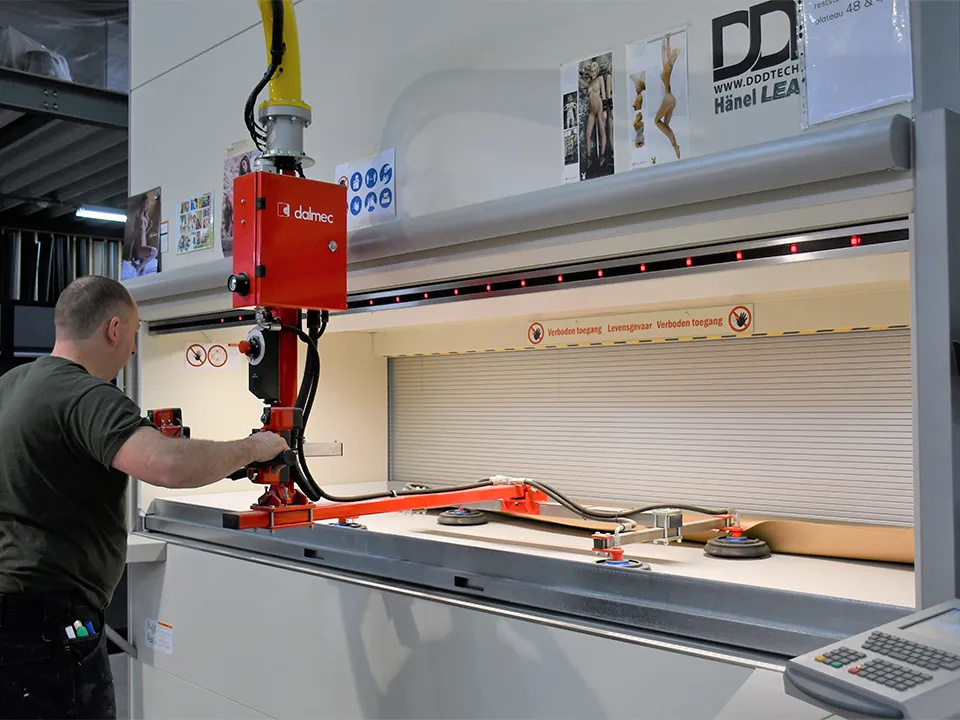
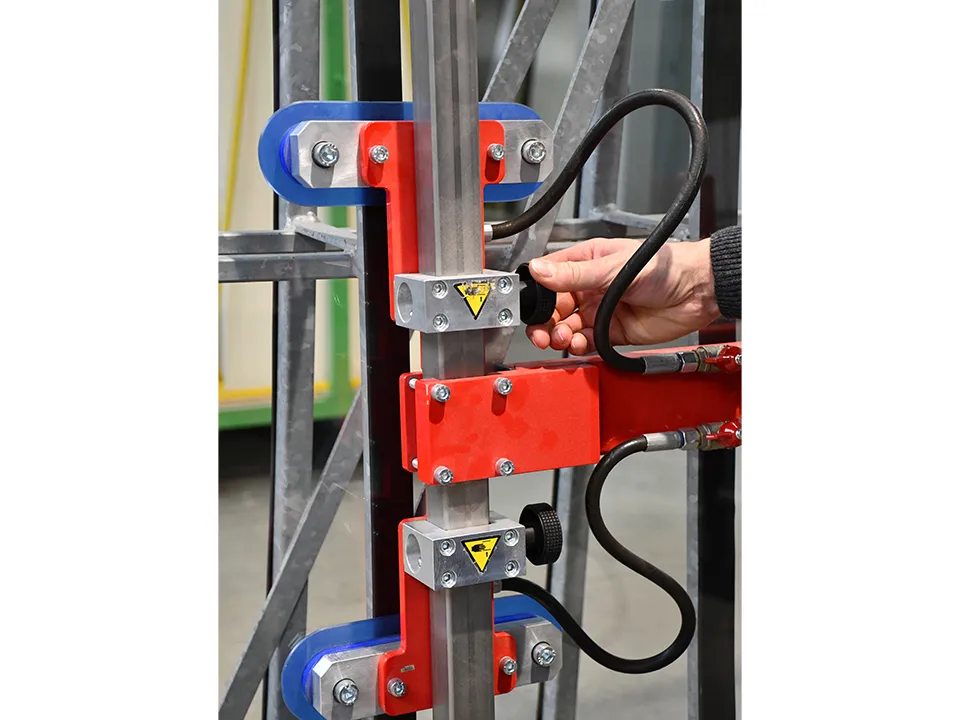
Anyway Doors immediately ordered three. Lierman says: “At the solid-core station, the challenge is to remove panels from an automatic lift system in the limited space available. With Dalmec’s solution, which has a very long arm, we can eliminate several handling steps, saving a considerable amount of time. The second manipulator is used to remove glass panels vertically from the glass rack, lay them horizontally for further assembly and then place them on the buffer line. The manipulator therefore needs to tilt through 180°. The suction cups are adjustable, so they can always be positioned correctly, whatever the door design. Finally, at the final inspection stage, the manipulator must also be able to rotate fully around its axis so that the entire door can be inspected.”
Saving time and costs
The three manipulators are different types, but they do have one thing in common. “Each station now needs only one operator, and we save time. A lot of time. Another essential requirement for us was that the handling should leave no marks. These are finished products, after all. Dalmec had the expertise to achieve this based on our samples. The manipulators can handle loads of up to 150 kg. Some of the larger pieces sometimes needed four people to handle them. Now the Dalmec manipulators do the heavy lifting. They have made a world of difference to the physical demands on our staff. Ergonomics have improved so much that even employees with a hip replacement can continue working here. You can see that enthusiasm for
this technology remains high on the shop floor,” Lierman concludes.
Question about this story? Ask your question
Companies in this story
Keep following this
Get an email when a new story is published. No account needed.
- ThemePeople make automation possible
- SubjectProcess & instrumentation
- CompanyArcadel