Instruments that make the difference to reliability and quality
Text and images Valérie Couplez
Paint production is all about mixing. The raw materials have to be combined in the right quantities to achieve the colour and quality the customer wants. The Italian Fenzi Group has made mirror paints its speciality. At its production site in Vilvoorde, it relies on VEGA instruments to get every detail just right.
It all began in 1941 with the group's founder, Othello Fenzi, who made mirror paint in his garage. Production & project manager Gert Verheyden explains: “Mirrors traditionally consist of glass and a layer of silver. But over time, the silver starts to corrode, causing black spots to appear on the mirror surface. The mirror paint on the back acts as a coating, shielding the silver from air and moisture.” More than eighty years on, Fenzi remains true to its roots, but its product range has expanded enormously. “Today, we supply all the chemicals needed around, on and behind glass. Our customers are mainly glass manufacturers. Production is based in Italy, where the company was founded, as well as in China and Belgium.”
Mirror paints, sealants and decorative paints
The Fenzi site in the Brussels area originally belonged to AkzoNobel. “They wanted to get out of mirror paints and were looking for a buyer. In 2005, we officially became part of the Fenzi Group. As well as mirror paints (more than 7000 tonnes a year), we also make sealants here (almost 16,000 tonnes), which are needed for insulating glass, and decorative paints (more than 500 tonnes
a year).” Vilvoorde employs 120 people in total. “Fenzi’s strength is its focus on this niche. The large volumes keep prices down, making us the market leader. But what really sets us apart is that every branch puts the customer first. We move heaven and earth to help our customers. The interaction between the three sites reinforces this further: we act as back-up for one another,” Verheyden continues.
Paint formulations
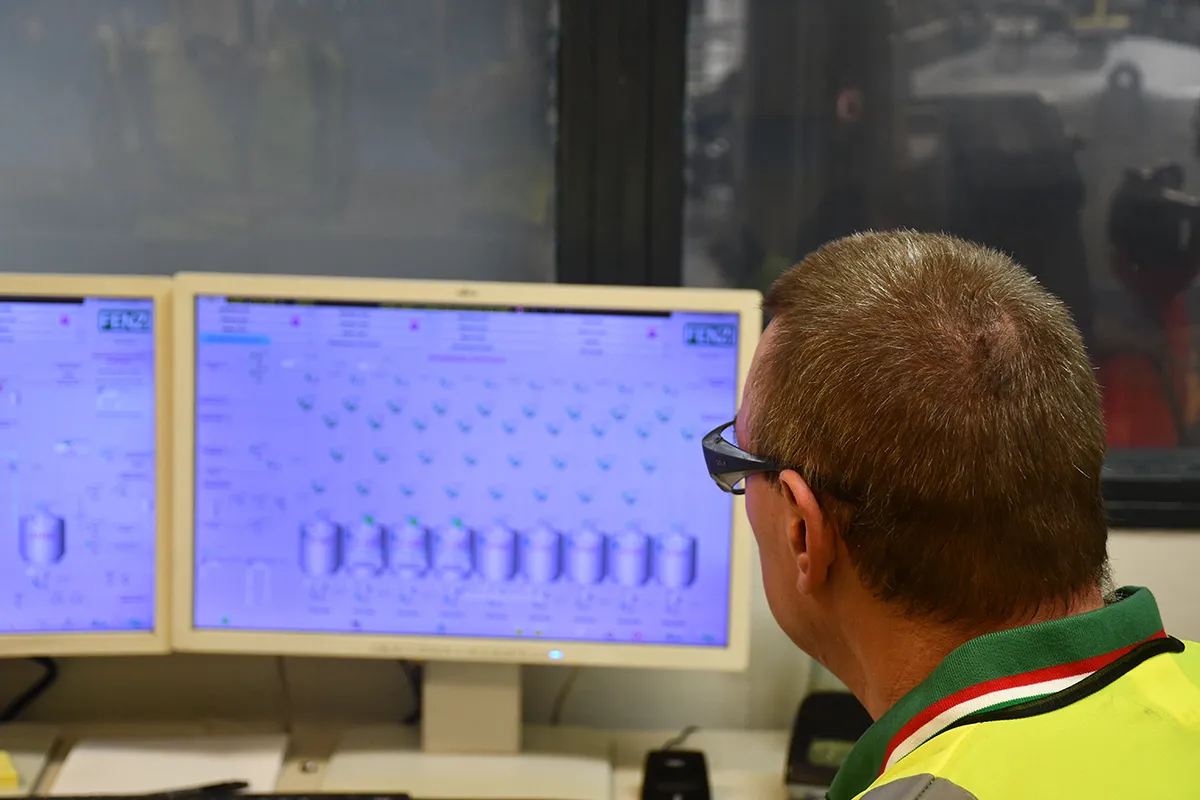
The key production process is mixing the various raw materials to make products that meet customer specifications. How many different formulations are there? Verheyden opens a screen in the DCS and stops counting after a few dozen. “So, a lot,” he sums up with a laugh. Production of the mirror paints is highly automated. This is less true of the decorative paints, “because the batches are smaller each time.”
Accurate dosing
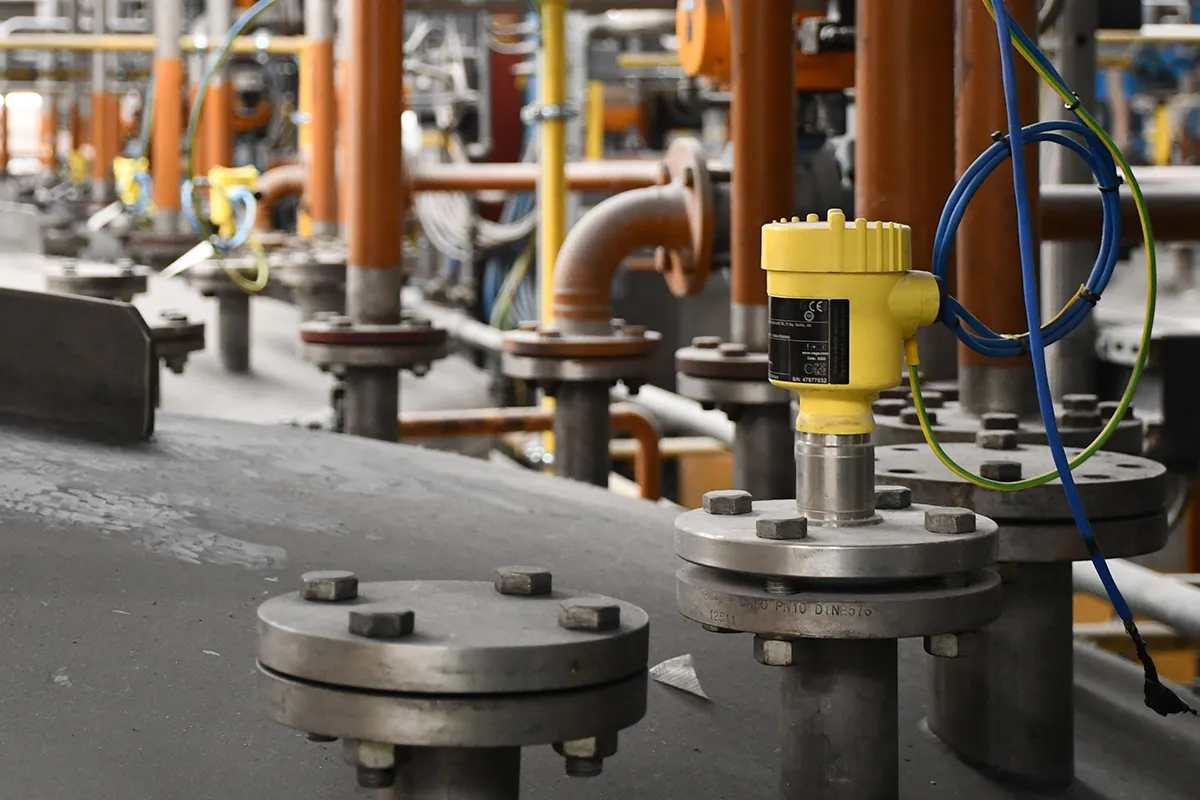
Accurately dosing all those raw materials is essential to delivering the quality Fenzi is known for. Look around the production area and you will see the familiar yellow of level and pressure specialist VEGA everywhere. “The collaboration began before I went to China to set up the factory there,” Verheyden recalls. “We were having problems with some of our pressure transmitters. When the plant was built, this line was used for automotive paint, not mirror paint. The instruments had not been selected specifically for this application. The paints tended to build up on them, so we could not always rely on the readings.” After tests on the process tanks in question showed that things could be improved, Fenzi opted for VEGA radar sensors. “Since then, measurement has been contactless, and it is also a cheaper solution.”
Everything as agreed
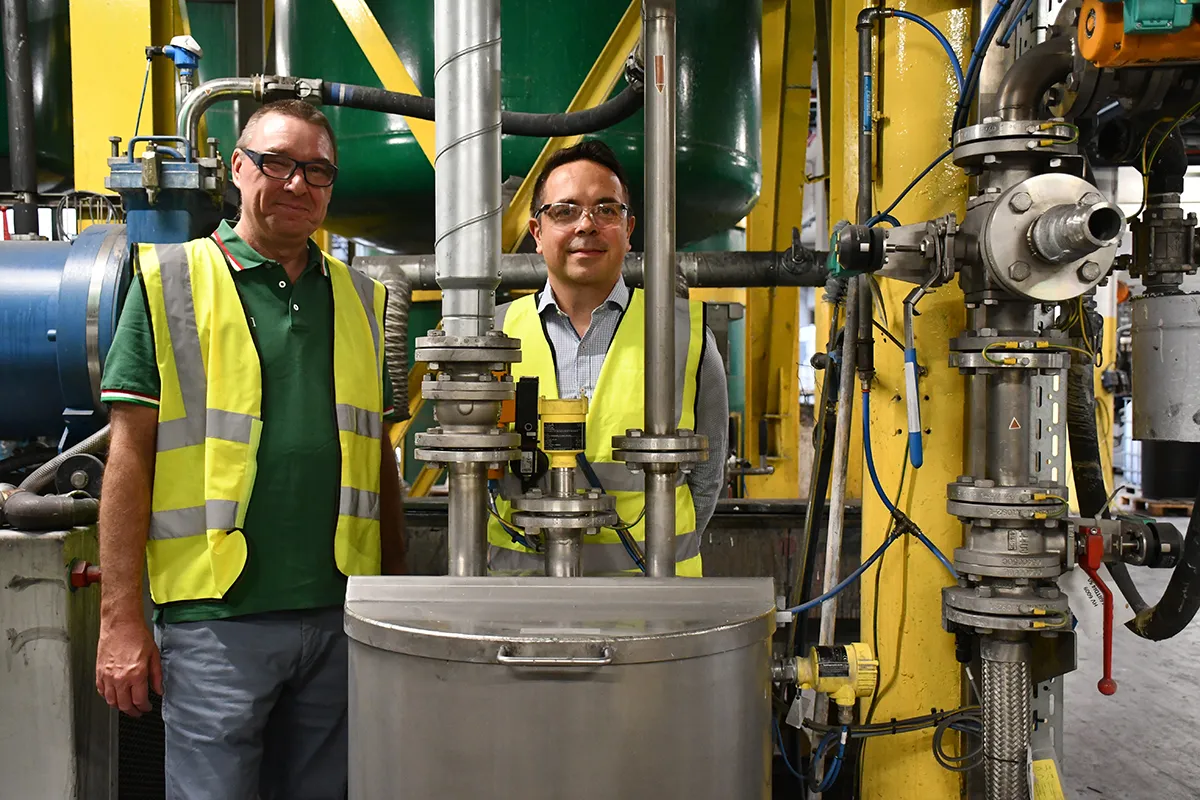
The last reactor still operating according to the “old” principle will soon be converted. “But we are now rolling out VEGA instruments elsewhere in production too. As well as radar sensors, we use differential pressure transmitters and pressure transmitters. Because you can always count on them. On the instruments, but also on the team. Everything is done as agreed.” He points to a small 200-litre tank a little further away. “If dispersion in the liquid phase is not enough to produce a stable paint, it is sent through a mill and refined to the right specification. To protect the mill, the paint is not pumped straight into it, as this could create back pressure and damage the seal. Instead, it passes through this hopper, which is monitored perfectly thanks to VEGA.”
Narrow beam angle
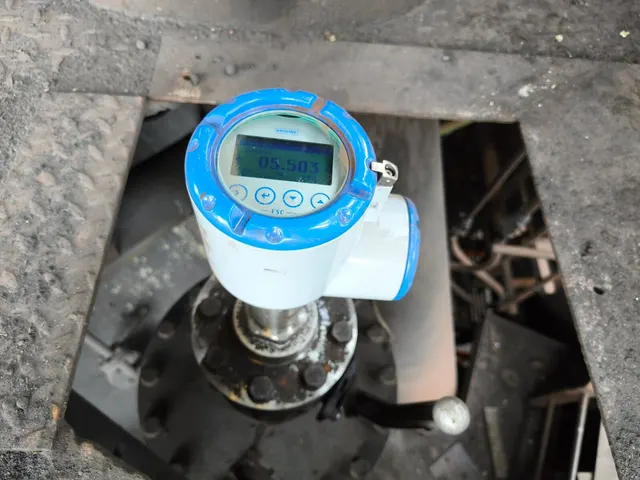
The hopper is fitted with a VEGA radar level sensor. “If the volume rises above a certain level, the pump can start. As soon as the level drops below a certain point, it has to stop again. We tried a conventional radar sensor, but it did not work because its beam angle was too wide. This resulted in constant false echoes. VEGA was the first to achieve a beam angle that was narrow enough for the application. We made the first switch back in 2017. Their technical leadership in pressure and level measurement is beyond question,” Verheyden concludes.
Een zakelijke vraag aan VEGA N.V.? Get in touch
Companies in this story

Keep following this
Get an email when a new story is published. No account needed.
- SubjectProcess & instrumentation
- CompanyVEGA N.V.