Are you getting the most out of your variable speed drive (VSD)?
Choosing an energy-saving installation is one thing, but to continue reaping the benefits of your investment, the equipment must also be installed correctly and monitored continuously. Here, WEG, the well-known global manufacturer of motors and drives, asks an important question: are you getting the most out of your VSD?
There is a wealth of information on saving energy in factories, from upgrading an electric motor to installing soft starters. But one of the most popular improvements is the variable speed drive (VSD), particularly in sectors such as water treatment, food processing, oil and gas, and climate control. VSDs can effectively control the speed of components such as fans, compressors and pumps in industrial processes. According to the European Committee of Manufacturers of Electrical Machines and Power Electronics (CEMEP), reducing speed by 20 per cent can potentially save 50 per cent in energy.
Audit
The first step is an energy audit to establish where your factory consumes the most energy. This will help you identify the areas with the greatest potential for energy and cost savings. Armed with this information, factory managers can focus on these areas. So what should you look for when deciding to buy a VSD? And if you already have VSDs installed, how can you ensure they are working effectively?
Upgrading
Engineers sometimes ‘inherit’ an existing installation that is incorrectly sized or not well suited to the new application. In such cases, you can upgrade or replace the existing VSD entirely to save more energy and reduce costs in the long term. From 1 July 2021, the Ecodesign Directive (EU) 2019/1781 stipulated that new AC drives sold in Europe must meet the IE2 efficiency class. This regulation applies to 3-phase standard drives from 0.12 kW ≤ Pn ≤ 1,000 kW.
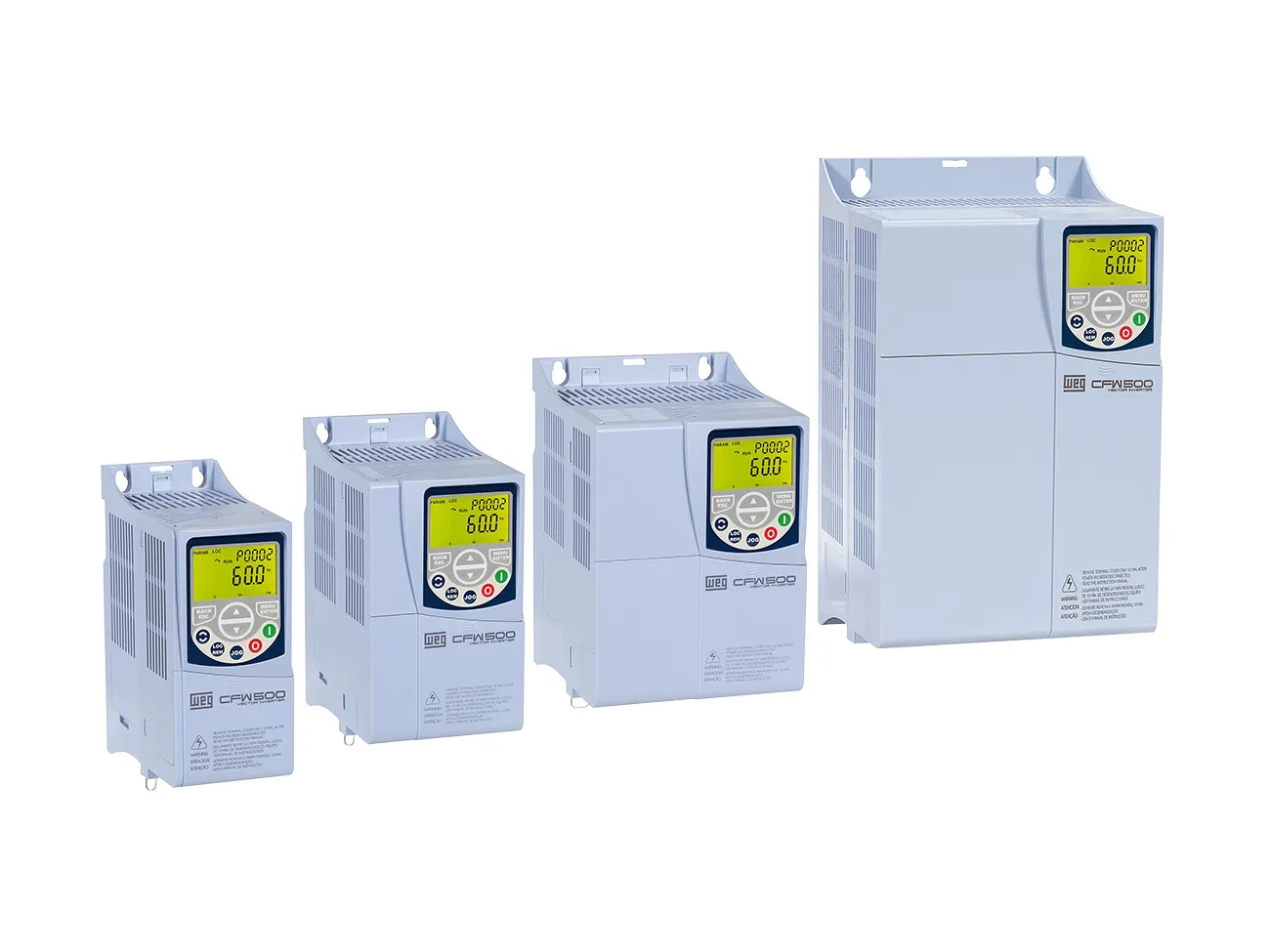
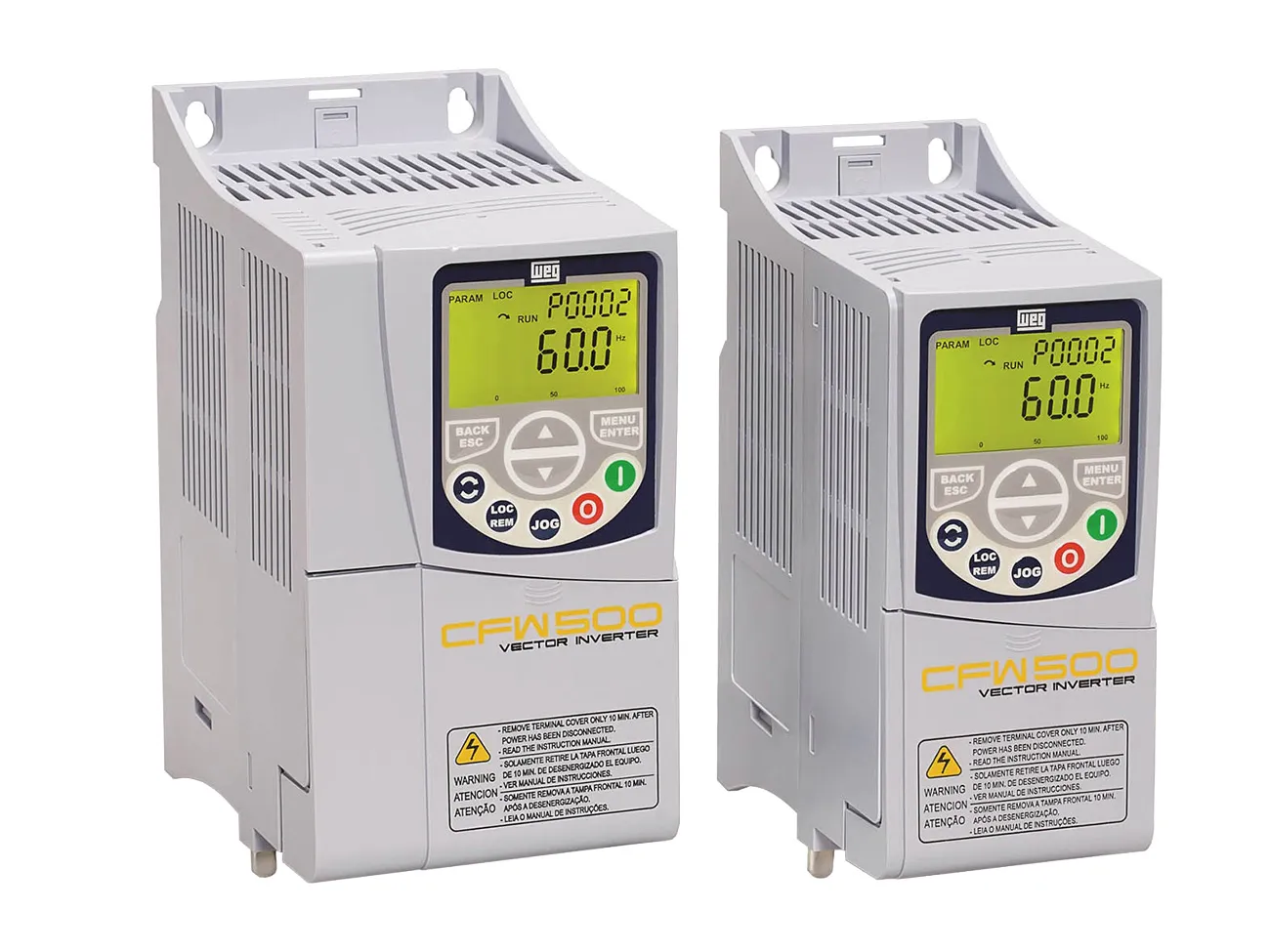
The new regulation places greater emphasis on reducing the energy consumption of electrical drive technology components, and forecasts suggest the legislation will deliver significant benefits for Europe by 2030. WEG’s CFW500 models meet IE2 efficiency standards and are suitable for general machinery, conveying, rotating, lifting, pumping and ventilation applications. However, depending on your application, you may need a specialist VSD, such as the WEG CFW501, which is specifically designed for HVAC while still offering the same reliability, flexibility and efficient power control.
Installation and parameters
To achieve maximum energy savings, VSDs must be installed and commissioned correctly. Following the manufacturer’s instructions can make the difference between an installation that runs trouble-free for years and a system with a much shorter service life. This is where working with an expert such as WEG really pays off. If the VSD is not configured correctly, system performance can be significantly reduced. To make installed VSDs as reliable as possible, first consider the operating conditions and the required motor speed.
Parameters usually have a ‘default’ setting, which is likely to work for most applications, but you will need to check and adjust the settings to optimise the system. Contact your local WEG dealer if you need help with this.
Additional functions
VSDs are often packed with useful functions that factory managers may not even be aware of. For example, enabling VSD energy management, which ensures the motor always runs as efficiently as possible at a given speed and load, is a simple and effective measure. Additional sensors for measuring vibration and pressure can also be an affordable upgrade, allowing the system to act as a smart sensor for monitoring operating conditions. Incorporating control functions into the drive eliminates the need for a PLC, while also saving energy and reducing downtime.
Another example is Pump Genius in WEG VSDs for water utilities. This function makes more effective use of motors based on production demand and the available volume of liquid. Automatic pipe-break detection in the VSD detects leaks and adjusts motor performance accordingly. Dry-run detection also automatically switches off the motor and issues a pump alarm as soon as there is no more liquid. In both cases, the motor’s power consumption is reduced because the prevailing conditions require less energy, and the operator receives a fault notification.
VSDs can even automatically clean a pump’s impeller when required. This keeps the pump in perfect condition, which benefits the motor and improves energy efficiency.
Finally, it is also important to monitor your systems continuously so that your factory becomes increasingly energy-efficient. Setting up a metering system to measure energy consumption over a longer period is a good way to see whether the chosen energy-saving measures are effective or could be improved. An engineer can only answer the question of whether you are getting the most out of your VSDs by keeping a constant eye on the installation.
Question about this story? Ask your question
Keep following this
Get an email when a new story is published. No account needed.
- SubjectProcess & instrumentation