












Virtual and augmented reality for manufacturers and machine builders
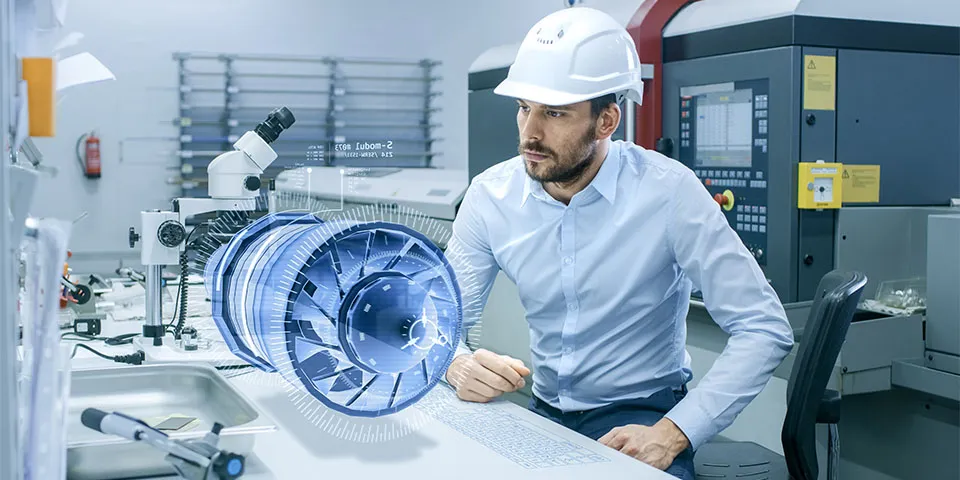
Virtual and augmented reality have long since moved beyond the entertainment sector. This technology is now proving useful in a wide range of industries, with a number of benefits to be gained. In this article, we explore how virtual and augmented reality can benefit machine building and manufacturing.
The concept of a virtual world has been around for some time. Augmented or mixed reality combines this virtual world with an image of our own surroundings. In other words, when we look through a HoloLens or another VR headset, we see an enhanced view of reality. We stand in front of the machine in the real world, while a virtual view shows us where all the components are located behind its casing. This may still sound like a distant prospect to some, but there are already manufacturers for whom it has become the way they work today. The technology has yet to take industry by storm, but applications are becoming increasingly common.
For assembly and quality control
Machines and products comprise an intricate interplay of different, often tiny components. In today’s production environment, the aim is to assemble them as quickly as possible. Time is money. Operators receive detailed assembly instructions, often still on paper, though some are now provided on tablets or touchscreens. After all, companies cannot afford mistakes in these complex assemblies. The cost of reworking them would be too high. Virtual and augmented reality are the next step towards 100% accuracy. Operators are shown step by step where each component belongs. Get it right first time.
For maintenance
Maintenance is an integral part of production. Machines need to be kept running. But every machine has its own maintenance procedures. Technicians who have worked on the factory floor for years may know them inside out. For newcomers, however, reading and memorising them can take a long time. Virtual and augmented reality can help. Using a device, they can view the machine’s status and follow digital instructions step by step. Still unsure what to do? A digital simulation showing how to repair the machine can get them back on track. Or virtual and augmented reality can be used to bring in remote support. In maintenance applications, virtual and augmented reality can also reduce human error, shorten task completion times and boost productivity and speed.
For training
Virtual reality in particular is ideal for training employees to operate machines or carry out specific procedures. Its main advantage is that training can take place in complete safety. Theory can be supplemented with practical exercises in a safe VR environment. These virtual sessions can also help trainers identify where users need further training to improve their performance. The main reason for using virtual reality in training is the productivity boost it delivers at every stage of the production process, from design to final assembly.
For design
Finally, virtual and augmented reality can be invaluable when designing new products. The traditional design process involves a lot of trial and error. Virtual techniques can demonstrate a product’s manufacturability more quickly, as potential problems can be identified in advance. Companies already using virtual and augmented reality at the design stage report deeper insights into their designs, better visualisation of their impact and potential, and opportunities for closer collaboration between colleagues and customers. This reduces the risk of delays, shortens time to market and leads to optimised product designs.
Question about this story? Ask your question
Keep following this
Get an email when a new story is published. No account needed.
- ThemeFrom design to flexible machine
- SubjectNews







