












Trends in direct-drive motors
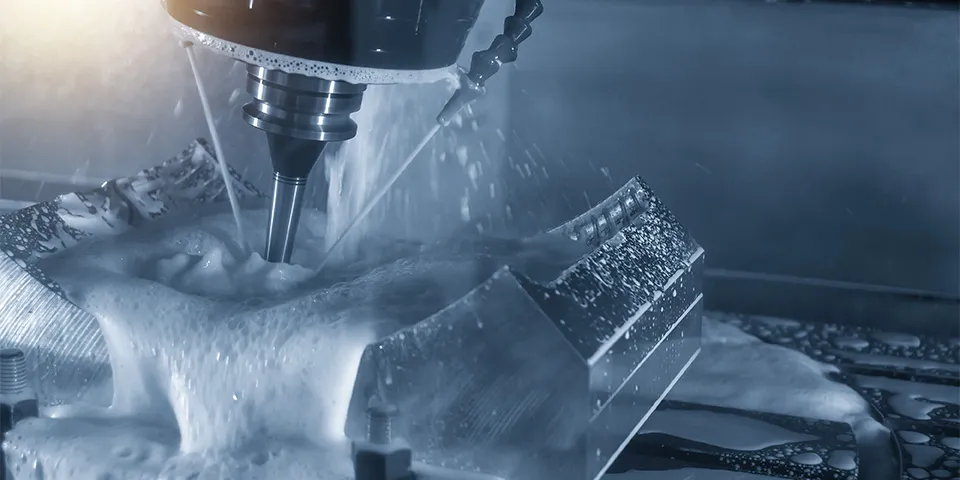
Despite the technological maturity of certain industry segments, the capabilities of a machine are still limited by what its manufacturer can implement. One of the key decisions they will need to make is which type of motor to choose. Direct-drive motors are regarded as a technological evolution of standard drive systems. Although their basic design has remained unchanged for years, motor manufacturers are working hard to optimise various aspects and improve overall performance and quality. Below, we look at six developments they are pursuing.
One of the main advantages of direct-drive motors is their high performance relative to their compact footprint. Their torque and power allow a machine to take up less space without sacrificing power. Machine builders are therefore keen to increase power density within a limited volume. One widely used approach is to fit more copper windings into the same volume. This can be achieved, for example, by creating unique shapes or using different manufacturing methods. The more tightly they can be packed, the stronger the magnetic flux. Another way to boost performance is to optimise heat distribution. After all, the better the motor is cooled, the better it performs. State-of-the-art designs and materials hold the key to achieving this.
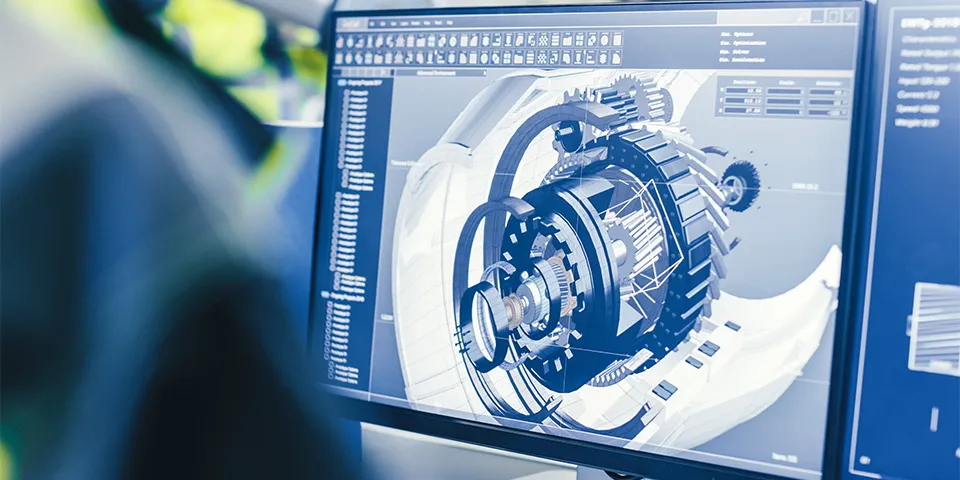
The wide range of sizes allows machine builders to maximise space and efficiency,
to the extent that they may feel the motor was custom-built for their application.
More size options
Direct-drive motors may be designed to optimise power within a given volume, but matching them to a specific application requires a range of geometries. This gives machine builders greater flexibility to choose the ideal motor for the space available. Torque motors come in a choice of diameters, lengths and power ratings. Finding the ideal combination is no longer so difficult. If the motor’s outer diameter is restricted, the manufacturer will often still offer several height options to maximise torque. This variety of sizes also provides greater cost flexibility. If a linear motor can be made longer, it requires less width and fewer costly magnets. The wide range of sizes allows machine builders to maximise space and efficiency, to the extent that they may feel the motor was custom-built for their application.
Easier integration
Many machine tools have internal cooling. Good heat distribution is an effective way to double a motor’s torque capacity and fit it into a smaller package. However, using fluids can be a deterrent in some applications. Motor manufacturers therefore sometimes offer stand-alone, integrated closed-loop cooling jackets. These eliminate the risk of leaks and the challenge of designing optimum cooling channels. Responsibility for efficient cooling is thus shifting increasingly from the machine builder to the motor manufacturer. Integration of linear motors can also be simplified by keeping the magnetic paths consistent. If the magnetic path is similar across the different motor models used in a machine, modifications are easier to make. The benefits are even greater if the next generation of machines builds on the same approach. This allows customers to upgrade their machines with little effort.
More windings
Although a motor may have a certain torque or force rating, its full output is not necessarily available at all speeds. The faster a motor runs, the more its torque capacity is reduced by factors such as eddy currents. These effects can be reduced by adjusting the winding of the copper coils. This raises the speed threshold, but requires more current. To minimise the impact, it is best to offer several torque-speed profiles within the footprint of each motor, catering to as many requirements as possible.
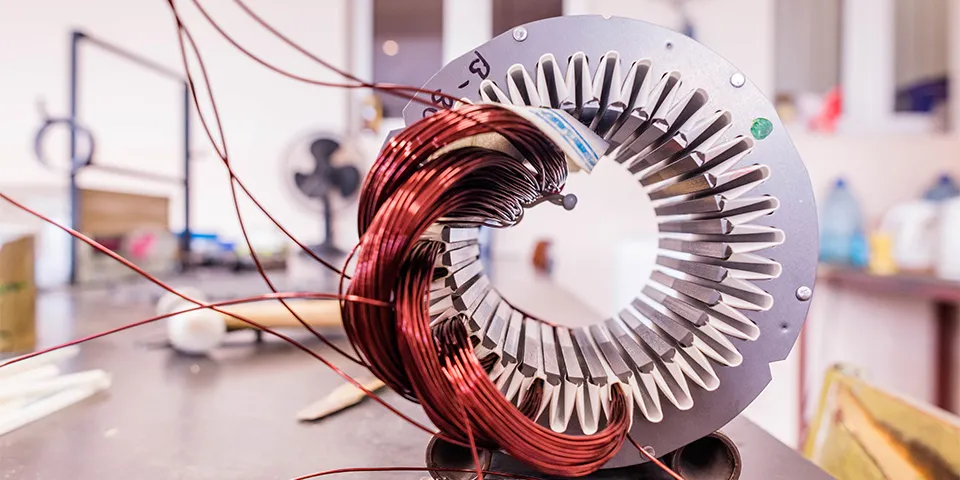
Machine builders are therefore keen to increase power density within a limited volume.
One widely used approach is to fit more copper windings into the same volume.
New ways to integrate
For a long time, direct-drive motors were reserved for a limited number of standard applications. As machine builders have become more familiar with the technology, more ways have emerged to benefit from direct drive. One example is the configuration of a linear motor. Normally, the motor moves along a magnetic track, but what if the magnetic section itself were to move? This configuration enables short, fast strokes. It allows for a lighter load that does not need to be constrained by a cable and can therefore move more freely. A linear motor can also be adapted so that its track follows a curve rather than a straight line, allowing the load to move in a circular or stadium-shaped configuration. It takes up less space than a torque motor and also offers a cost advantage, as users do not have to pay for unnecessarily high torque. Combined with the modular nature of a separate linear motor that can be connected in parallel, this also provides a solution that is easier to integrate and maintain.
Greater efficiency
Growing concern about climate change is prompting companies to seek greener, more energy-efficient technologies. To meet these requirements, motor manufacturers must develop new ideas to minimise power losses. To do so, they are looking at every aspect of the materials and how they are assembled, with the aim of achieving the most efficient performance within the same basic design developed for direct-drive technology.
Question about this story? Ask your question
Keep following this
Get an email when a new story is published. No account needed.
- ThemeFrom design to flexible machine
- SubjectNews







