












Touchscreen solutions for industry
Did you think touchscreens were only suitable for retail, banking or healthcare? ArcelorMittal Gent proves otherwise. The steelmaker uses this modern communications technology to optimise production processes, with DOBIT as its partner. Both the LUVOX range and Elo screens are ideally suited to the harsh industrial environment. This makes ArcelorMittal a pioneer!
Installing touchscreens is a sustainable solution and also budget-friendly compared with all the work and costs involved in cabling. One practical example can be found in the steel plant, where pig iron is converted into steel. The machines involved in this process are operated entirely via a built-in LUVOX touchscreen. Pieter Heynssens, Process Instrumentation Work Planner, explains the choice: “In the past, the machines were controlled using various push-buttons. We had to provide a separate cable for each push-button, resulting in a huge bundle of cables. The main problem was the amount of work involved in rewiring everything whenever a button had to be added. Since this was an expensive and time-consuming process, we looked for an alternative and discovered the advantages of working with touchscreens.”
A solution for every environment
ArcelorMittal’s plant is characterised by a lot of fine dust, high temperatures and huge machines. Even in these conditions, touchscreens can offer a solution. Wendy van de Sande, Sales Engineer at DOBIT, explains: “In a harsh industrial environment, it is often impossible to use peripherals because fine dust quickly damages them. A touchscreen, by contrast, can withstand knocks and can be built in, leaving no opportunity for fine dust to get in. As well as being robust, it is also a very intuitive way to operate a screen. In other words, fewer mistakes are made because the communication is one-to-one. The LUVOX screens are ideally suited to this environment,” van de Sande continues. “They are durable and have a metal bezel that provides the necessary protection and sealing. It was also important that the screen should not be damaged during the process, and we had to take into account that employees operate it while wearing gloves, using pens or sometimes even a screwdriver.” ArcelorMittal’s installations show that touch solutions and large-screen visualisation can also withstand a harsh industrial environment.
As DOBIT manages this product line entirely in-house, it can equip the LUVOX units with different components and connectors to meet customer requirements. Another advantage is that the monitors can be installed in various ways.
Modern and efficient
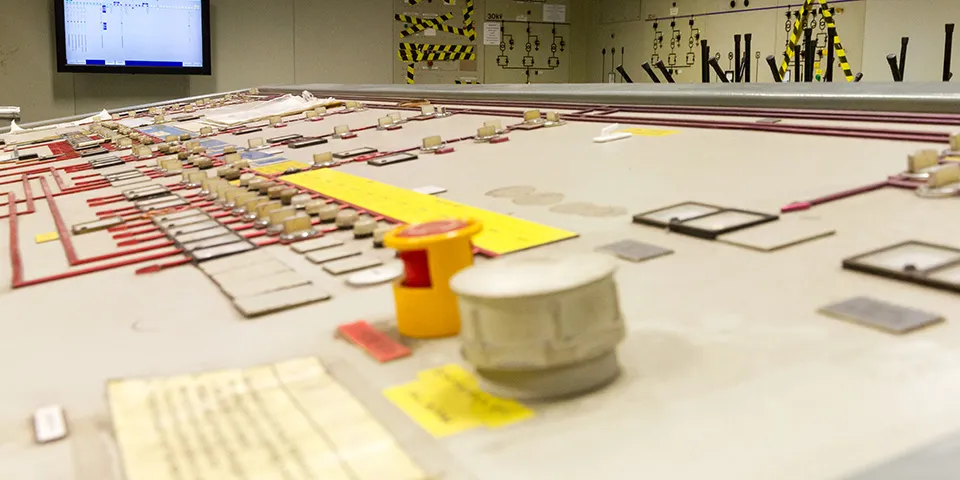
One example in the hot-rolling mill is a 55’’ touchscreen in the control room. Patrick De Coninck, Reliability Support Manager for the Hot Rolling Mill, explains: “We used to work with synoptic panels. These panels took up a lot of space, and making changes involved a great deal of work. That is why we looked for a flexible solution.” The synoptic panel was replaced by a 55’’ touchscreen. “One advantage is that we can now make changes very quickly. Our programmers can implement them themselves using the SCADA software. This takes just a few minutes, whereas modifying a synoptic panel used to take weeks or months. We have also got rid of all the cabling required for the panels, as everything now runs over a network.”
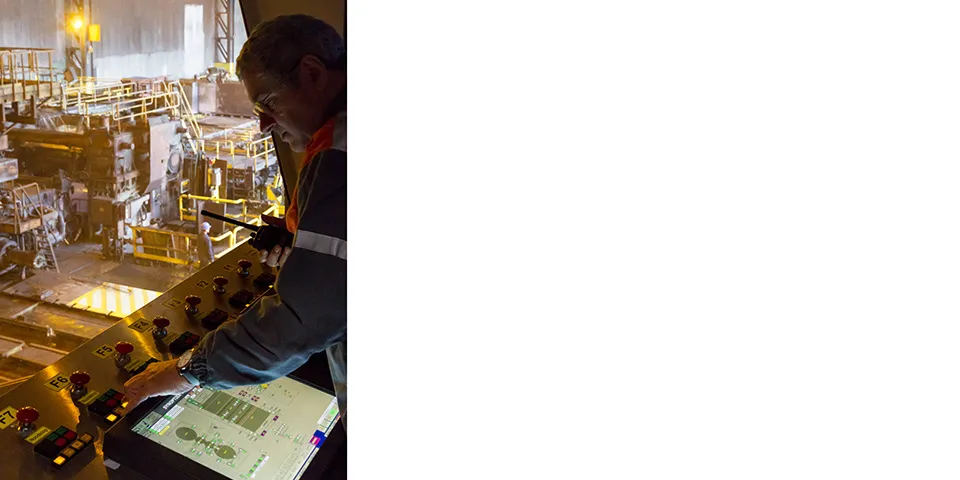
ArcelorMittal’s plant is characterised by a lot of fine dust, high temperatures and huge machines.
Durable and flexible
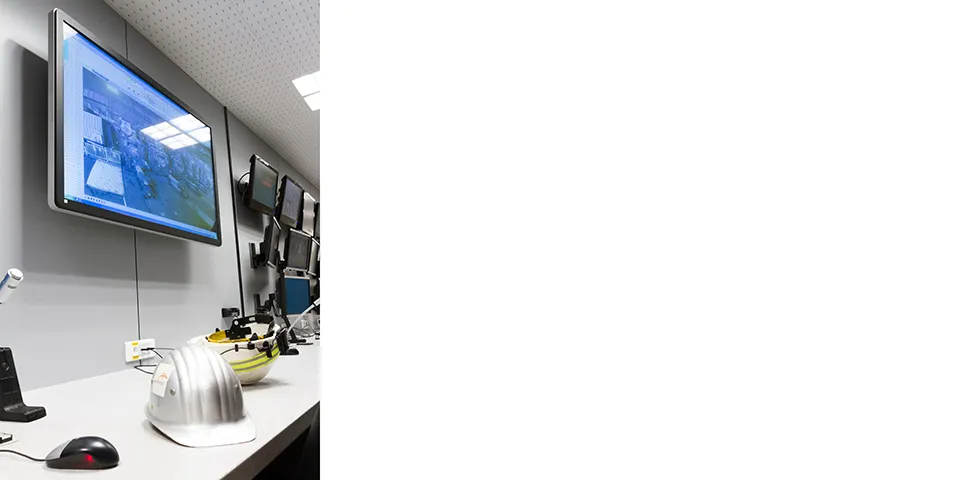
In the control cabin, a cabinet of push-buttons was also replaced by a large 55’’ touchscreen. “Dozens of machines are operated from the control cabin, each with dozens of components that have to be switched on and off. This used to be done with cabinets, buttons and lights, but now a single touchscreen brings all these functions together,” says De Coninck. “We have also got rid of all the cables here.” A third application in the hot-rolling mill is a visualisation solution. A 55’’ Elo screen in the control rooms displays live footage of the production process continuously. The camera feeds give operators a better view of the process. De Coninck says: “We can watch the footage on a delayed basis. This allows us to synchronise it with our measuring instruments, link it to the relevant measurements and see exactly what happened.”
A tailored solution
ArcelorMittal consulted various manufacturers and suppliers to develop the solutions described above. De Coninck says: “We are dealing with very heavy industry here, and there are so many factors to take into account. We had some problems with the previous supplier at the time, for example screens that broke down very quickly. That is why we looked for other partners. We challenged DOBIT to provide a better solution and decided to make them our partner on that basis.”
Question about this story? Ask your question
Keep following this
Get an email when a new story is published. No account needed.
- SubjectNews







