












Tips for an efficient warehouse
Text Valérie CouplezImage iStock
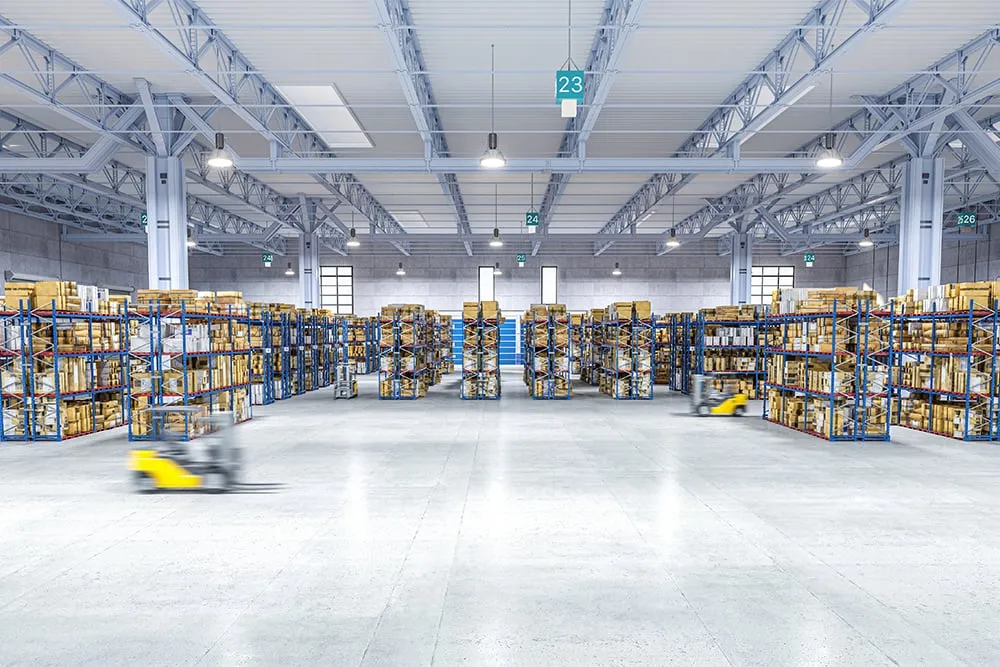
In many households, spring is the traditional cue for a thorough clean. Businesses usually wait until the summer break. But it’s worth thinking now about how to give your warehouse a makeover then. As customer needs change, throughput fluctuates and product ranges vary, it’s high time to consider how best to adapt your warehouse. Modern technologies make it possible to automate processes and manage them digitally, for example, to improve efficiency.
Automating cumbersome processes makes your project more complicated. That’s why it’s important to analyse all the processes in your warehouse first and decide which are worth automating. Automating pick-and-place and repetitive tasks is much easier than automating complex tasks that require thought, for example. Picking products from stock for a specific order is easier to automate than shipping them.
Don’t automate everything
There’s no need to automate everything straight away. It’s better to focus on automating the most important processes. Pay particular attention to warehouse staff. They do a lot of repetitive, ergonomically demanding and monotonous work. Warehouse workers walk many kilometres every day, even though they could be deployed more effectively on less physically demanding tasks. Robots can easily perform these kinds of repetitive and hazardous tasks, 24/7. Staff can then take on other duties, such as working with and operating robots. Close collaboration between robots and staff is what makes for an optimal process. Improved productivity and working conditions: a win-win!
Consider flexibility, scalability and modularity
Even the best automation solution is of little value if it is no longer profitable or fit for purpose in a few years’ time, for example because needs have changed or the business has grown. Flexibility and scalability are therefore important criteria when selecting an automation solution for your warehouse. Can you expand the chosen solution if necessary? Can it handle seasonal peaks? Challenges in the logistics sector make it difficult to predict or anticipate business growth. Scalability gives a business the ability to respond to growth, increasing automation during peak periods. This need not involve major changes to your warehouse, as installers take its existing layout into account as far as possible. Production can therefore continue, in whole or in part, as before. This minimises lost output.
Collect data
The quality of the data you have at the outset determines how effective your automation solution will be. This means collecting all the basic data for your system. What is the objective? How large is the warehouse? What throughput capacity does it need to achieve? Different types of automation are possible for different warehouses. For example, you can make optimal use of warehouse capacity by storing goods on high-level racking. This maximises storage capacity per m² of warehouse floor space. That’s particularly useful in today’s economy, where consumers expect their goods ever faster. Sufficient stock in the warehouse is essential, and a wide range of products and shorter processing times help keep customers satisfied.
Take account of the different stakeholders
Last but not least, several people are usually involved in decisions about warehouse automation. Be aware of the various stakeholders, such as IT, the logistics manager, warehouse staff, the CEO and the CFO. Talk to the different stakeholders so that everyone has the chance to raise questions and provide input. Each stakeholder has their own specific questions that need to be answered to ensure the project is implemented successfully from an economic point of view.
In short, by automating the right processes and taking account of flexibility and the needs of all stakeholders, a warehouse can operate optimally in an ever-changing logistics sector.
(Based on a contribution by Exotec.)
Question about this story? Ask your question
Keep following this
Get an email when a new story is published. No account needed.
- ThemeSmart manufacturing and logistics
- SubjectNews







