












The right gripper for every automation system
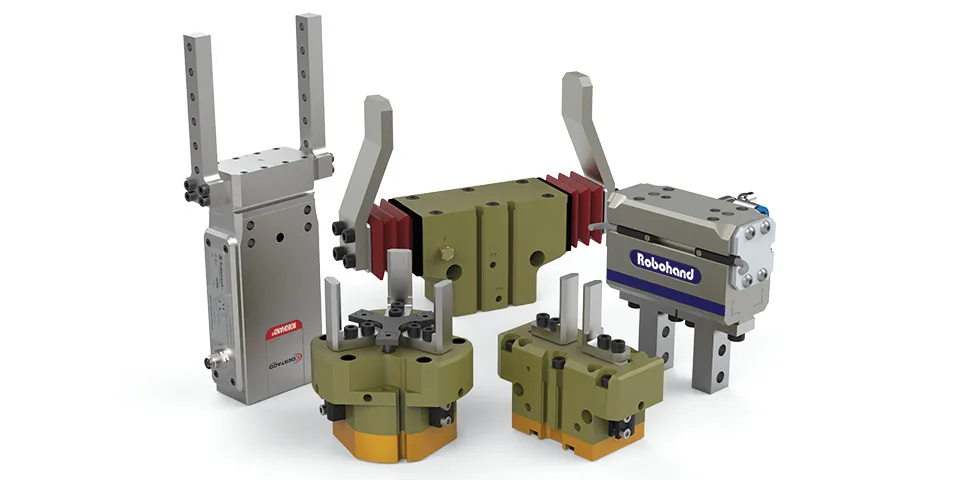
Anyone designing pick-and-place automation systems needs to integrate the right gripper. If designers and engineers fail to do so, this can have negative consequences for system operation, and they may eventually have to look for a different gripper after all. So it is not enough to pick a gripper at random from a shelf or catalogue. Destaco, a specialist in developing and manufacturing precision motion, positioning and control solutions for industrial automation, offers technical advice on selecting the right gripper. Under the RobohandTM brand, the manufacturer offers innovative pneumatic and electric grippers, including the successful G110 gripper range.
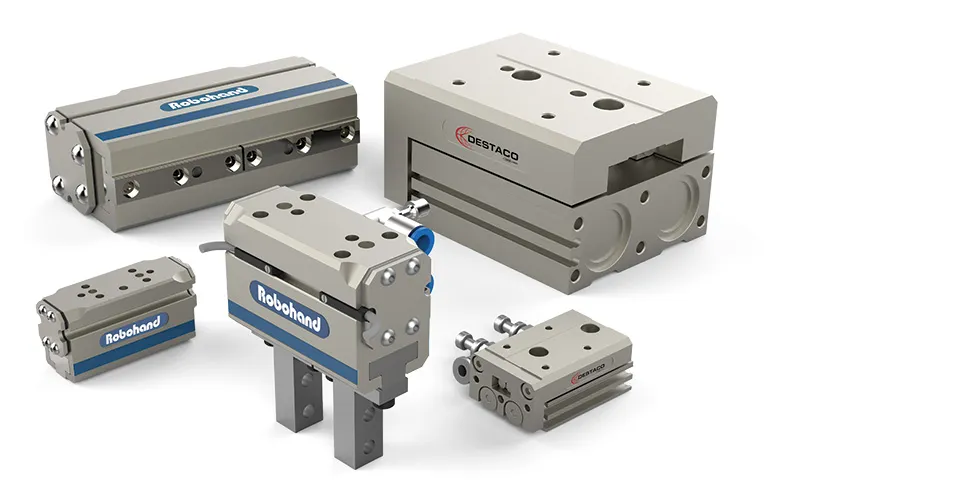
The G110 grippers comprise around twenty design models that enable OEMs to produce many more products per hour. A shield protects the internal mechanism from damage.
Founded in 1915, Destaco (Detroit Stamping Company) is a leading global supplier of precision motion, positioning and control solutions for industrial automation. Its product family comprises several leading brands, including Destaco itself (manual and power clamps and end effectors), CAMCOTM and FergusonTM (indexers), CRLTM (manipulators and transfer ports) and RobohandTM (grippers). The company has also had a sales office for the Benelux since mid-1996. Those seeking technical support with selecting the right gripper can turn to this specialist. “Experience shows that, when designing pick-and-place automation systems for use in a wide range of applications, engineers often give too little consideration to selecting the most suitable gripper. Yet the right gripper is essential to the proper operation of the system,” says Fred Voogel, general manager of Destaco Benelux. “The performance of an automated production system is only as strong and reliable as that of its weakest link. To ensure that the gripper is not the weakest element, attention must be paid to the operating environment and to selecting a suitable gripper, specified on the basis of the design and the options available. This could be a standard solution, but an application may just as well require a custom gripper.”
Several factors come into play
Many factors need to be taken into account when selecting a gripper. Dirt, grit, oil, grease, cutting fluid, temperature fluctuations, cleanliness and the level of human interaction all affect how an automation system operates. Gripper design and construction also influence performance in a particular working environment. “A gripper consists of three basic elements: the body, with its force-transmission components, the jaws and the fingers. The gripper manufacturer designs and builds the body and jaws, while the machine builder or end user supplies the customised fingers needed to grip or enclose the part in question,” explains Voogel. “Finger size, gripping force, stroke, actuation time and accuracy are among the factors to consider when selecting a gripper. Manufacturers provide these specifications for each gripper model.” Specific operating environments also play an important role in determining the type of gripper design. The jaw support mechanism (bearing type), the internal design and the way force is transmitted from the piston to the jaws can all have an impact. Grippers may be the same size and perform the same function, yet have completely different designs, making some models better suited than others to a particular operating environment.
Question about this story? Ask your question
Companies in this story

Keep following this
Get an email when a new story is published. No account needed.
- ThemeRobots on the shop floor
- SubjectNews
- CompanyDESTACO Benelux B.V.







