












The future of AGVs
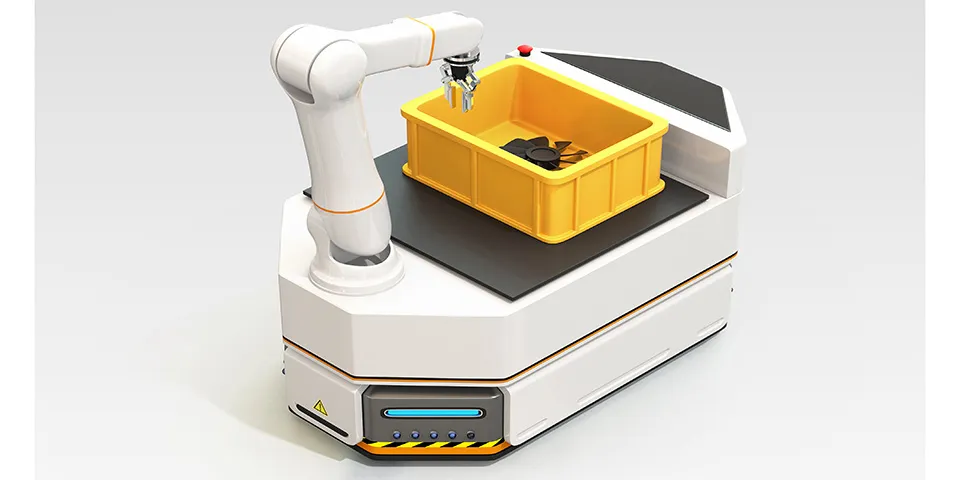
Companies looking to automate their logistics processes are increasingly turning to AGVs. Their capabilities have grown significantly in recent years, mainly thanks to advances in software and sensor technology that keep them on the right track. The models manufacturers deliver today offer greater precision, safety and efficiency than ever before, and the coming years look even more promising. Below, we look at the emerging technologies that are making AGVs future-proof.
In 2017, the global AGV (automated guided vehicle) market was worth around $2 billion. Growth of more than 10% is forecast for each of the coming years. There are several reasons why AGVs are gaining traction. First, the number of logistics processes is increasing. Today, we order all kinds of products from the comfort of our armchairs. Parcel delivery companies often collect these from large warehouses before bringing them to our doorsteps. Automation is crucial in such warehouses, and AGVs are part of the picture. But they are particularly welcome workers in industry, where logistics is far from the top priority. By having AGVs take over these tasks, staff can focus on the real core business: manufacturing. And that is where companies can make money. AGVs therefore offer a strong response to the shortage of technical staff. Their popularity is also growing because technological developments have brought down their cost and made them more flexible. The introduction of new technologies is likely to drive further growth.
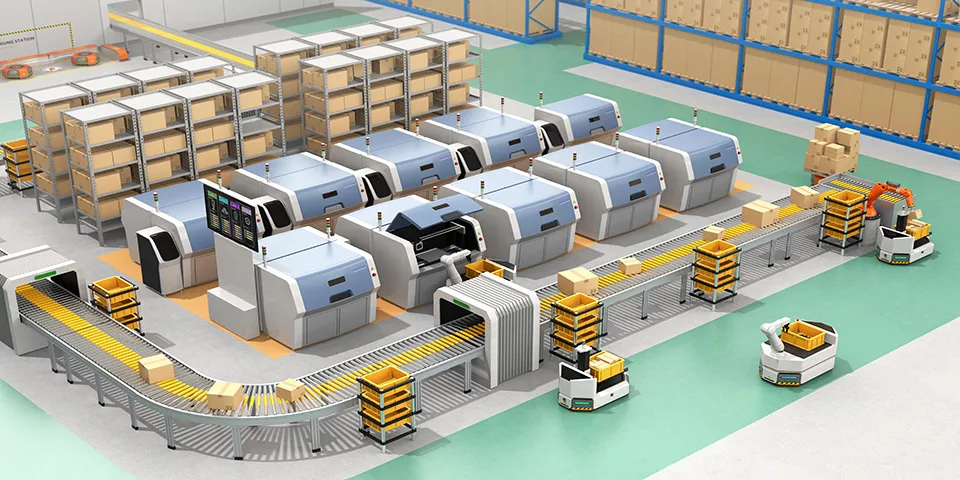
Thanks to LiDAR, no additional infrastructure is needed to put AGVs to work.
LiDAR sensors
LiDAR stands for Light Detection and Ranging. When this type of sensor is installed on an AGV, it emits a broad beam of laser pulses, each measuring the distance between an object in its path and the vehicle itself. When the software combines this data, it creates a 360° scan of the entire working area and can plot the best possible route for the AGV through the factory. No additional infrastructure is therefore needed to put AGVs to work. It goes without saying that this technology gives AGVs a significant boost in flexibility. Although LiDAR has been around for several years, the price of a unit is now falling, making it easier to incorporate into AGV systems. LiDAR will have an even greater impact on the AGV industry in the years ahead.
Camera vision systems
LiDAR is not the only technology that supports navigation. Computer and camera systems can work together to guide an AGV using images. They can also be used in combination with LiDAR technology. Since cameras can capture data in real time, vehicles can operate more easily in a live production environment. Cameras not only detect obstacles, but can also help identify pallets, for example. Camera systems therefore enable AGVs to interact more efficiently with other objects and vehicles. This also improves the efficiency of an AGV operating on its own in a warehouse or factory.
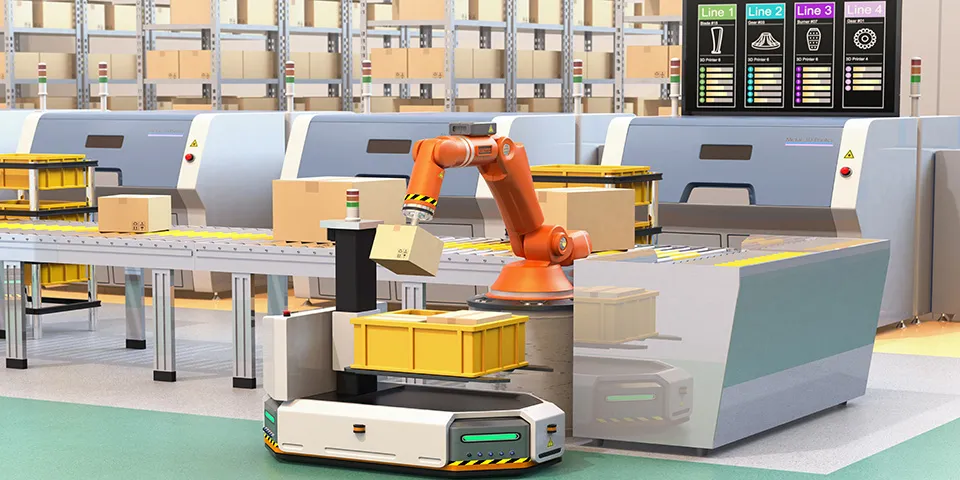
The better they can tailor the AGV to the unique challenges of a real-world production floor, the more clearly its benefits will come to the fore.
Dual mode
AGVs that can operate both automatically and manually have been available for several years. However, users do not always find it easy to make full use of the vehicles’ capabilities as designed. Switching between manual and automatic operation can also be unreliable and inefficient. But with AGV sensors becoming more precise and reliable, the future looks bright for dual-mode AGVs. The hurdles this presents can be overcome more easily thanks to technological improvements. And closer collaboration between forklift manufacturers and AGV experts can lead to practical solutions.
Software
Digitalisation is currently setting the tone in industry, and AGVs are no exception. Software is the backbone of an AGV system. The way it coordinates communication between vehicles, task generation and traffic control is what distinguishes a well-functioning system from a poorly functioning one. Even if you only see one AGV moving through your factory, its efficiency will still be dictated by the software. The greatest potential for improvements in AGV technology will therefore come from software development and expertise. The better they can tailor the AGV to the unique challenges of a real-world production floor, the more clearly its benefits will come to the fore.
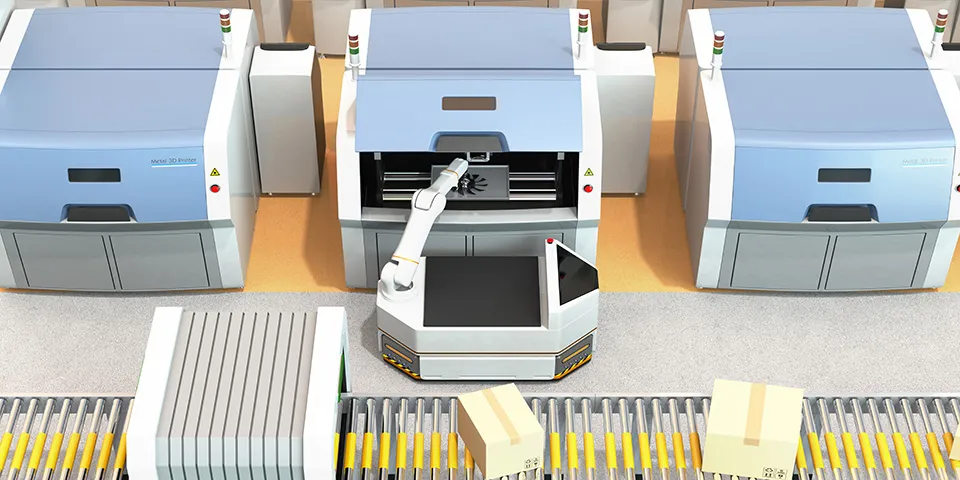
Camera systems therefore enable AGVs to interact more efficiently with other objects and vehicles.
Conclusion
Although automation has been part of material handling for years, its applications will only increase in the years ahead. Logistics could even change the way companies manufacture their products. Fully automated facilities already exist, and their numbers are steadily growing. AGVs play a key role in these facilities and will take centre stage in the evolution of the manufacturing industry.
Question about this story? Ask your question
Keep following this
Get an email when a new story is published. No account needed.
- ThemeProcess measurement and control
- SubjectNews







