












The digital twin in practice
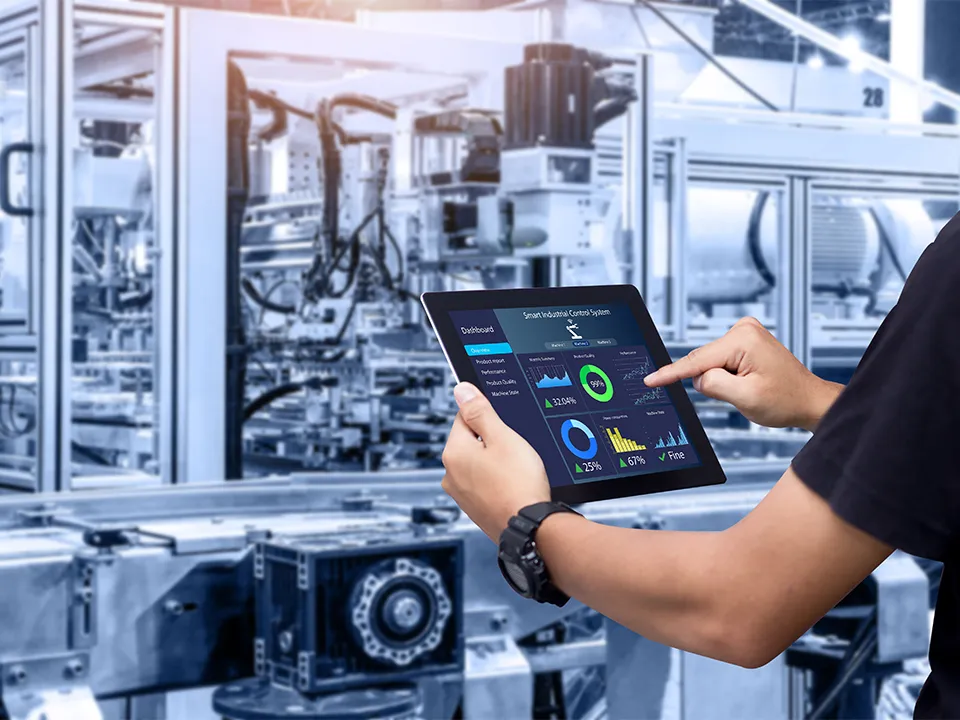
The digital twin is essentially the perfect summary of everything Industry 4.0 stands for. By creating a virtual copy of workpieces, components and machines that can communicate, benefits can be gained at every stage of the lifecycle.
But they must be able to communicate flawlessly. The Asset Administration Shell is the umbrella term for bringing together all information about workpieces, components and machines, in other words, assets, in a standardised way. But how far has this progressed in practice? Lenze hosted a round-table discussion at SPS Connect to take stock. Participants were Michael Hoffmeister (Festo), Markus Kiele-Dunsche (Lenze), Andreas Orzelski (PHOENIX CONTACT) and Markus Schoisswohl (HEGLA).
It will be several years before the Asset Administration Shell (AAS) takes centre stage on the production floor. This will not be theoretical research, but work focused on learning from practical experience. The first scenarios are already being used in industry, as they can create value in the short term. The more practical insights emerge, the faster progress can be made. For this reason, a new user organisation was also set up under the auspices of VDMA and ZVEI, two leading German federations representing the mechanical engineering and electrical industries respectively: the Industrial Digital Twin Association. The IDTA officially launches in early January and is intended to pave the way for more standardisation and open-source software in industry.
Making machines more competitive
This is the key to bringing the digital twin and the AAS into practice. The case of German company HEGLA proves it. To make machines more capable, and so help increase a company’s competitiveness, the machine builder firmly believes they need a digital foundation. In the past, this was limited to 3D plans. Now, all documentation needs to be in 3D, and interfaces must be provided between different components. “Manually updating everything whenever a change was made was no longer sustainable. We were therefore actively looking for a standardised model, or at least a way to classify digital data in a standardised manner. If it had existed two years ago, we would have jumped at the chance, but the technology has only just become ready for industry.”

Integrating data automatically
HEGLA applied the AAS concept to a sorting cell consisting of around 150 substructures. In principle, each one has to be created manually. The AAS makes it possible to generate them automatically, however, using a uniform data structure and automatically linking the documentation to the right component. But this is only the beginning. Sharing this data with the machine’s digital twin can create a digital shadow of production. “The revolutionary thing about this concept is that you would normally have to build different interfaces to get components to communicate with each other. A machine cannot consist entirely of Lenze components, after all. Now everything is standardised in one go, which saves a lot of time.”
How can you get started?
So how can you get started with a digital twin using the AAS? It’s simple: just try it out for yourself. The first partial models are already available for experimentation. Choose a submodel from your machine and find out where the data needs to come from and how it is structured. Within a month, HEGLA’s prototype project to integrate the data automatically had already delivered results. This will only improve in future, as more suppliers commit to working with the AAS and more international standards are introduced. These two developments will reinforce each other, enabling engineering to be carried out in a new, open and structured way without extra interfaces. Only then will production become truly flexible.
Question about this story? Ask your question
Companies in this story

Keep following this
Get an email when a new story is published. No account needed.
- ThemeFrom design to flexible machine
- SubjectNews
- CompanyLenze BV
- CompanyFesto







