Industrial Automation Vlaanderen is part of Louwers Mediagroep: 45+ trade platforms in the Netherlands, Flanders and Wallonia. Trade magazines, websites, newsletters, video and podcasts, since 1987.
Speed and precision, or from compact to power pack? Drive solutions for laboratory automation
Large numbers of samples are analysed in analytical laboratories every day. The benefits of automation in this field are clear: automation delivers faster results, higher throughput, fewer errors and lower staffing costs. Drive systems need to be highly dynamic and precise to ensure smooth operation. We speak to Dr Aihua Hong, who is responsible for this market segment at FAULHABER, about its requirements and developments.
Dr Aihua Hong
Which sectors use laboratory automation?
Automated processes are used in every sector with laboratories, including the chemical and pharmaceutical industries and food technology. The medical sector is also experiencing significant growth worldwide. Automated solutions have been indispensable in this field for many years in so-called in vitro diagnostics (IVD), the analysis of medical samples such as blood, urine and tissue. Research laboratories at pharmaceutical companies are also increasingly automating the testing procedures needed to develop new medicines.
What exactly is laboratory automation?
The level of automation varies considerably between laboratories. It ranges from performing individual processes using standalone devices to carrying out complete sample analyses in complex systems. The latter is particularly necessary when large numbers of samples need to be analysed according to a standardised protocol, with little need for flexibility, for example in IVD at a hospital’s central laboratory or in large medical diagnostic laboratories.
Which processes are automated in these laboratories?
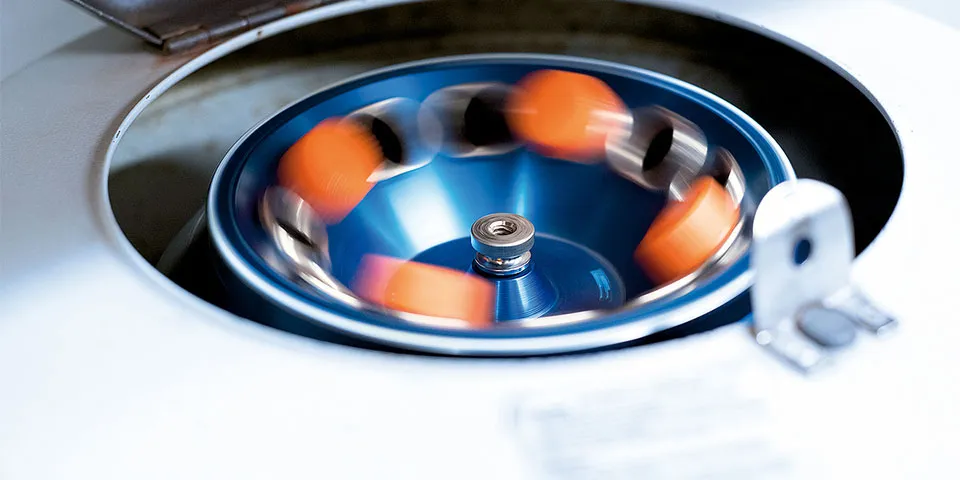
In these laboratories, almost the entire analysis process is automated. It starts with preparing blood samples in colour-coded test tubes. A scanner records the type of analysis required for each tube and ensures that a robotic arm picks it up accordingly. Some samples are centrifuged to separate the components of the blood. The samples are then moved in special transport units to the analysis station, for example on a conveyor belt or in a small wheeled vehicle.
What happens at the analysis station?
First, the sample is identified by pointing its barcode at a camera for scanning. The cap is then removed from the test tube and a small amount of the sample is taken from it. The tube is then resealed and archived in case further tests are needed later. The sample is moved to a reaction vessel for analysis, for example on a plate or in a Petri dish. During the test itself, drive technology is used mainly for processes such as pipetting, liquid handling, mixing and stirring.
In vitro
What requirements do the motors need to meet?
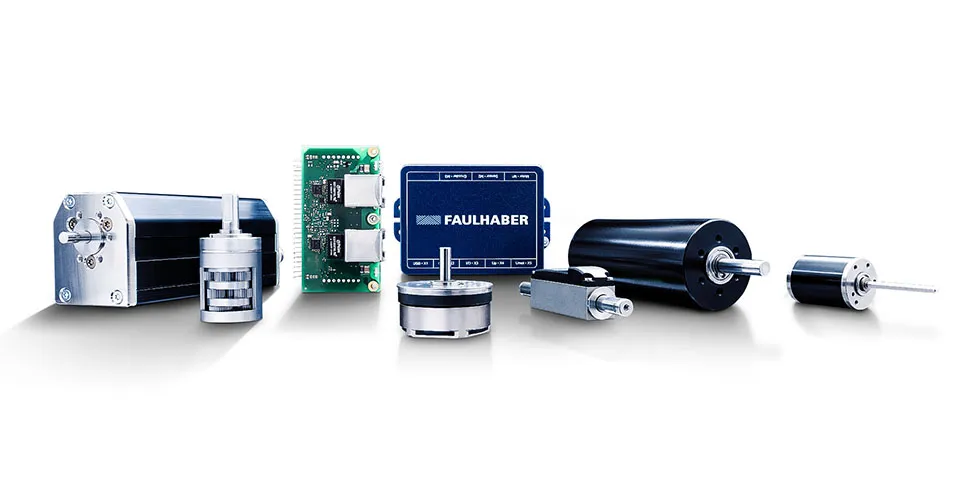
A wide range of different movements must be performed during the process, and the drive technology must be able to deliver them all. Conveyor belts require large, powerful motors, while components need to be as compact and lightweight as possible. Thanks to our extensive product range, we can cover the full spectrum and provide exceptionally good solutions in almost every case, whatever the requirements.
Find the right company in the sectorSearch by product, area of expertise, region or project in the company directory and across all articles from Industrial Automation Vlaanderen.
We use cookies to keep the site working properly. With your consent, we also use cookies for statistics and third-party banners. Read more in our privacy and cookie statement.