












Sony launches intelligent vision sensor with AI functionality
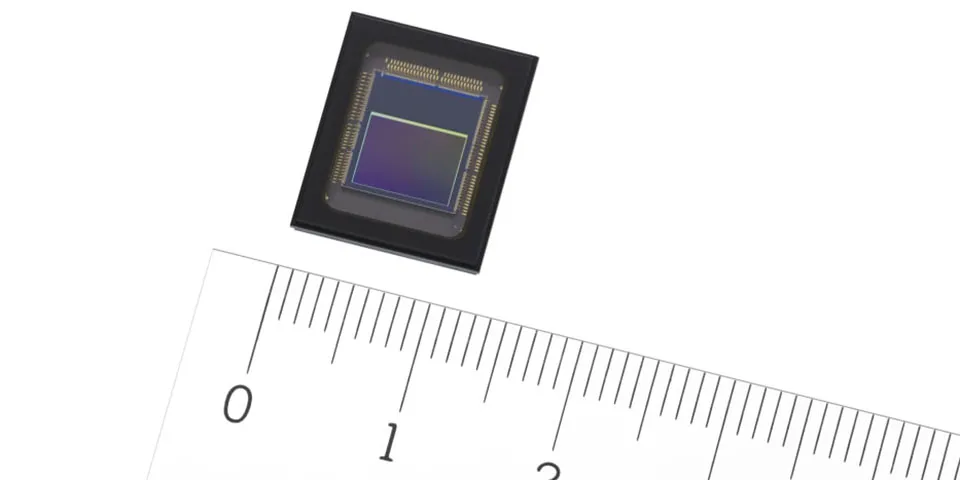
Sony Corporation announces two intelligent vision sensors with AI processing functionality. Artificial intelligence (AI) processing on the image sensor enables high-speed data processing using only essential data. …
Sony Corporation announces two intelligent vision sensors with AI (artificial intelligence) processing functionality. Artificial intelligence (AI) processing on the image sensor enables high-speed data processing using only essential data. This speeds up data transfer when using cloud services, helping to optimise systems connected to the cloud. It also improves privacy protection while reducing power consumption and communication costs.
These new sensors are also of interest for developing AI-equipped cameras. They offer a wide range of applications in retail and industry.
The rise of IoT (Internet of Things) is leading to more and more devices being connected to cloud systems. As a result, the number of information-processing systems that use AI processing is also increasing. This growth in data transmission brings a range of challenges. Among other things, it slows down real-time information processing. Users are also becoming more concerned about the security of stored personal data. Finally, power consumption and communication costs are rising.
These new Sony sensors have a stacked structure and consist of a pixel chip and a logic chip. They are the first image sensors to integrate AI for image analysis and image processing into the logic chip. The signal detected by the pixel chip is processed by AI on the sensor, eliminating the need for a powerful processor or external memory. This makes it possible to develop Edge AI systems. Instead of image data, the sensor processes metadata, that is, semantic information associated with the image data. This reduces the data volume and provides better data protection.
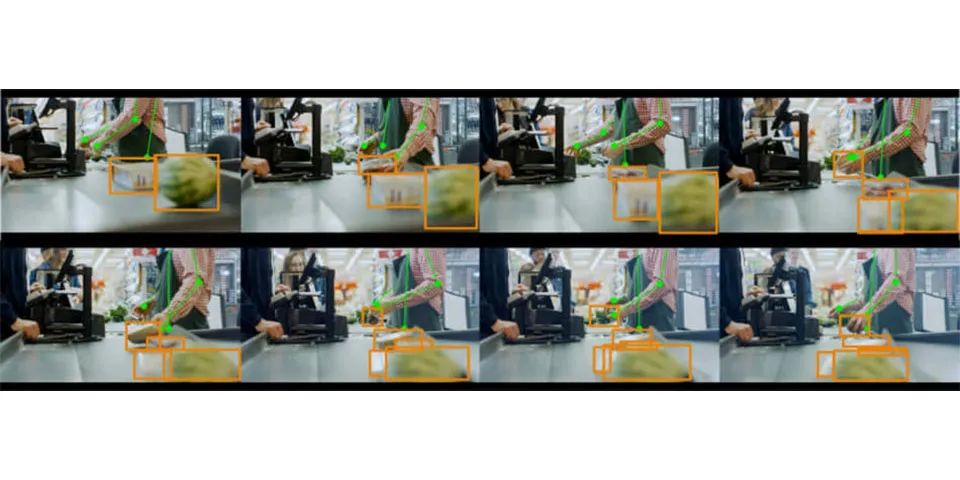
These extensive AI capabilities enable a range of applications, such as high-speed, real-time object tracking. AI models can also be selected by adapting the internal memory to the specific application at the site. Users can also choose other AI models by rewriting the internal memory to meet the requirements or conditions of the system in question.
Key features
The first image sensor with AI functionality
The back-illuminated pixel chip has 12.4 effective megapixels for capturing information. The logic chip is equipped with Sony’s digital signal processor (DSP) for AI signal processing and internal memory for the AI model. This configuration eliminates the need for powerful processors or external memory.
Metadata output
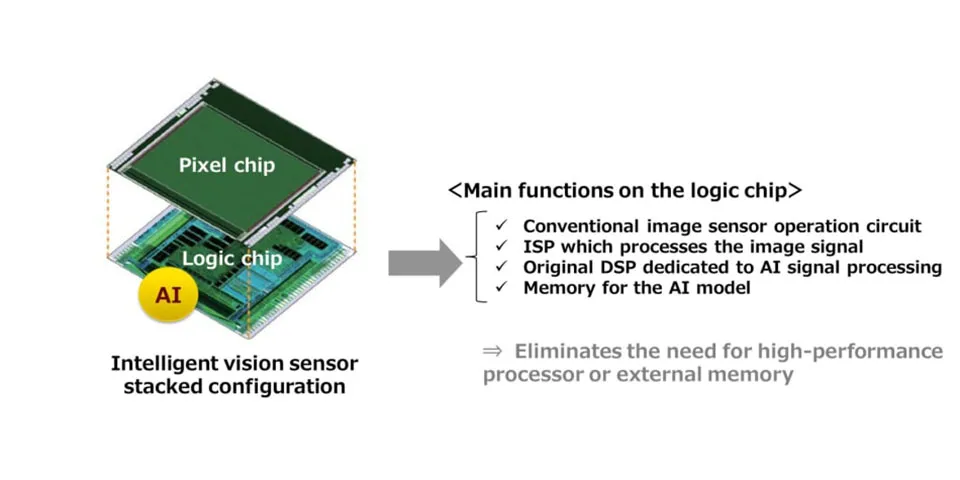
The signals detected by the pixel chip are passed through an ISP (image signal processor). AI processing takes place on the logic chip, and the extracted information is output as metadata. Since image data is not processed externally, data protection is maximised. In addition to the image captured by the conventional image sensor, users can select their preferred output format. Options include images in ISP format (YUV/RGB) and specific ROI (Region of Interest) selections from the images.
High-speed AI processing
When video is recorded with a conventional image sensor, the data is sent for AI processing. This increases data transmission, making it difficult to achieve real-time performance. Sony’s new sensors perform ISP processing and high-speed AI processing (3.1 milliseconds processing time for MobileNet V12) on the logic chip, completing the entire process in a single frame. This design enables real-time, high-precision object tracking during video recording.
AI model selection
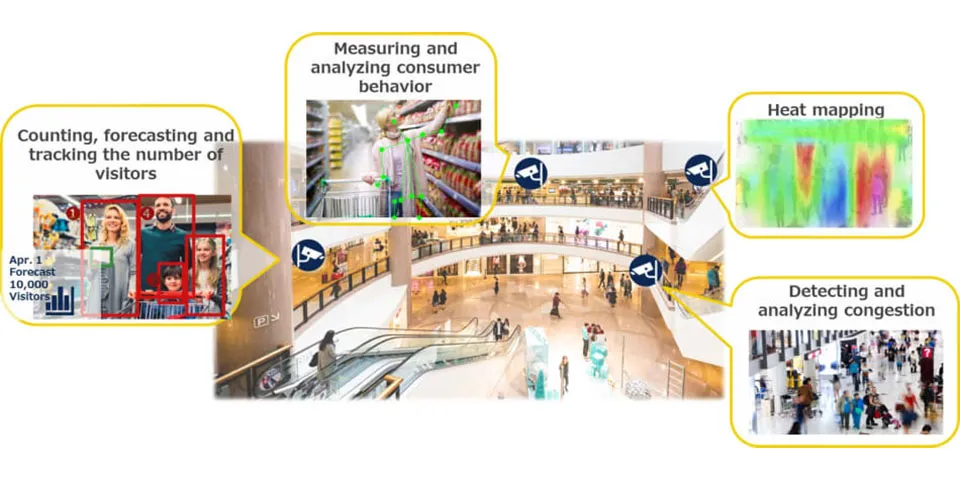
Users can programme their preferred AI models into the memory, depending on the conditions at the system’s location. This can be useful, for example, when multiple cameras are installed in a shop. The user can then use the same type of camera for multiple applications. If installed at the entrance, the camera can count customers entering the shop. If installed on a shop shelf, it can detect stock shortages. If mounted on the ceiling, it can be used to create heatmaps, identifying areas where many visitors gather. The AI model in a particular camera can of course be reprogrammed, for example, from one that detects heatmaps to one that identifies consumer behaviour, and so on.
Question about this story? Ask your question
Keep following this
Get an email when a new story is published. No account needed.
- ThemeProcess measurement and control
- SubjectNews







