












Schneider Electric and Saint-Gobain join forces on innovative automation initiative for smarter, safer glass production
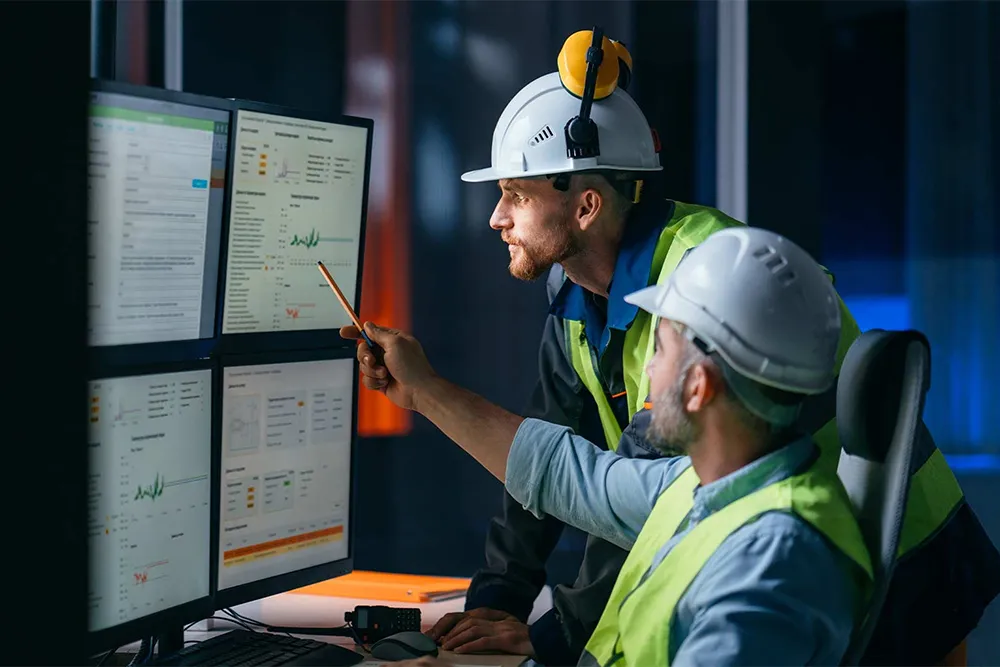
Schneider Electric, a leader in the digital transformation of energy management and automation, and Saint-Gobain, a leader in lightweight and sustainable construction, are joining forces to implement the first software-defined automation system for glass production.
- A one-minute power outage can cause up to six months of unplanned downtime, costing as much as € 200,000 a day
- Smart automation improves the reliability of the annealing lehr drive process, saving time and money during procurement, implementation and operation
- At Glasstec 2024, Schneider showed how it is transforming operations in the glass sector
Unveiled at Glasstec 2024, the world’s largest trade fair for the glass industry, the project addresses the urgent need for greater reliability in the critical lehr process. This furnace, which is vital for annealing and cooling float glass, typically remains in service for fifteen to twenty years. However, any interruption to the process brings production to a complete halt. Industry studies show that a power outage lasting just one minute can result in six months of lost production, often requiring equipment replacement and incurring costs of up to € 200,000 a day.
Saint-Gobain and Schneider Electric developed the first open automation solution for the lehr process. The proof of concept (POC) is powered by Schneider Electric’s open automation technology, EcoStruxure Automation Expert (EAE). It decouples hardware and software, allowing devices and equipment to connect freely across different architectural layers, regardless of manufacturer.
The project also improves safety and efficiency in glass production, as EAE enables autonomous drive capabilities and marks a major advance in distributed intelligence. The ‘smart’ drives control the two motors that pull the glass. This enables autonomous operation and critical process decisions at equipment level, such as choosing which motor will pull the glass, carrying out quality checks and paving the way for predictive maintenance.
“Our understanding of the float glass process has led to a groundbreaking solution that ensures reliability, safety and productivity. Autonomous drive technology enables smart decision-making, while this solution, with its built-in modularisation and standardisation, offers immediate scalability, greater flexibility and reliability. It demonstrates our commitment to innovation and serves as proof of the potential to extend this technology across the industry,” says Alex Richards, VP EMEA of Mining Minerals and Metals at Schneider Electric.
Crucially, the solution’s modular design means it can be easily deployed worldwide. Plug-and-play interoperability reduces engineering, testing and commissioning time by up to 50%. This inherent scalability enables the construction company to realise value at its sites and unlock exponential value globally.
Related resources (English):
Een zakelijke vraag aan Schneider Electric? Get in touch
Companies in this story
Keep following this
Get an email when a new story is published. No account needed.
- SubjectNews
- CompanySchneider Electric







