












Safety and security will soon go hand in hand
Text Piet DebisschopImage PILZ
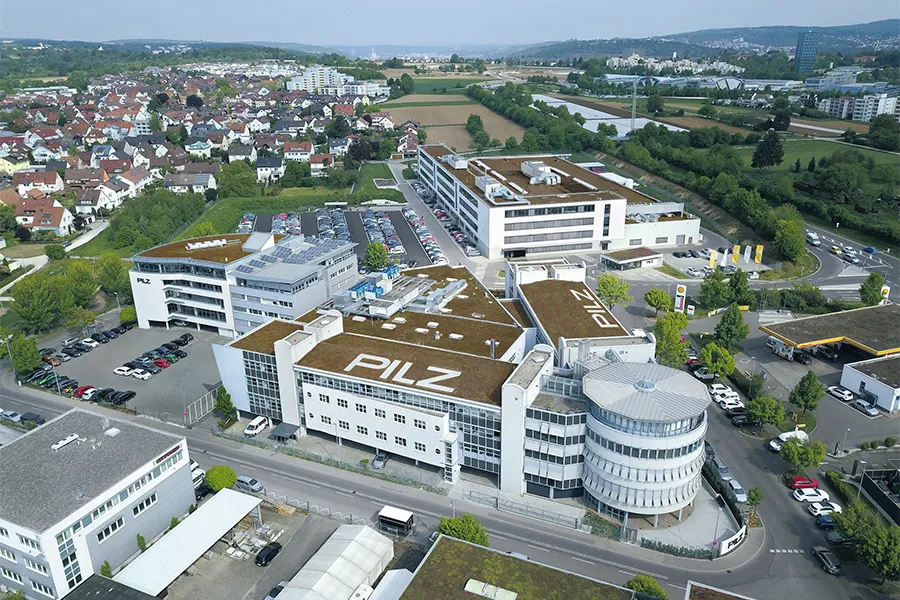
Safety in the digital transformation. Pilz opened its online press event on 25 May this year with this powerful slogan. The company highlighted, among other things, the harmonisation of the communication protocol and the prospect of dynamic safety becoming the standard in the future. Above all, however, speakers Suzanne Kunschert and Thomas Pilz focused on the inevitable interdependence of safety and security.
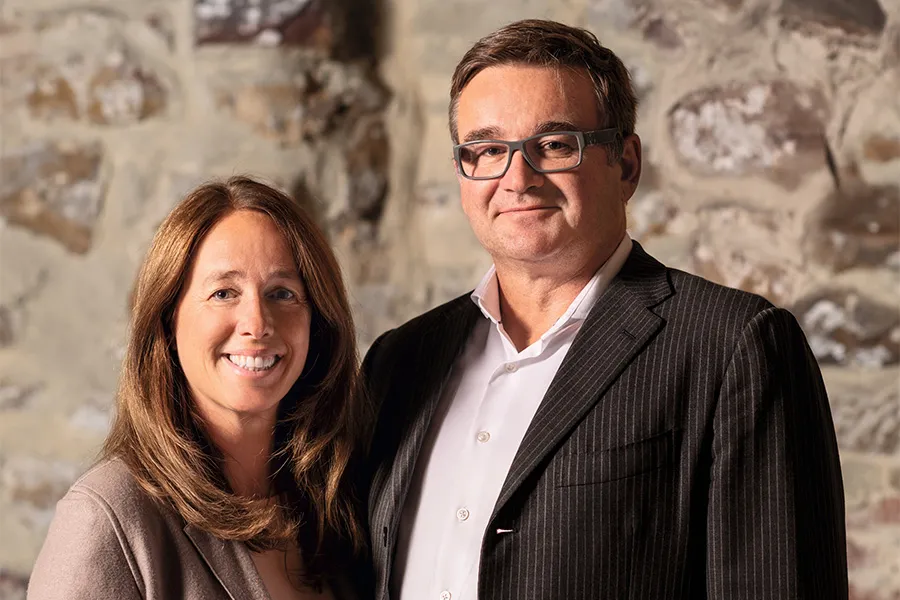
Pilz and Kunschert have led the German company Pilz since 2017, representing the third generation at a business celebrating its 75th anniversary this year. This made the online press conference, attended by an international audience, a special edition. It also covered a range of topical issues. Here is an overview.
By the numbers
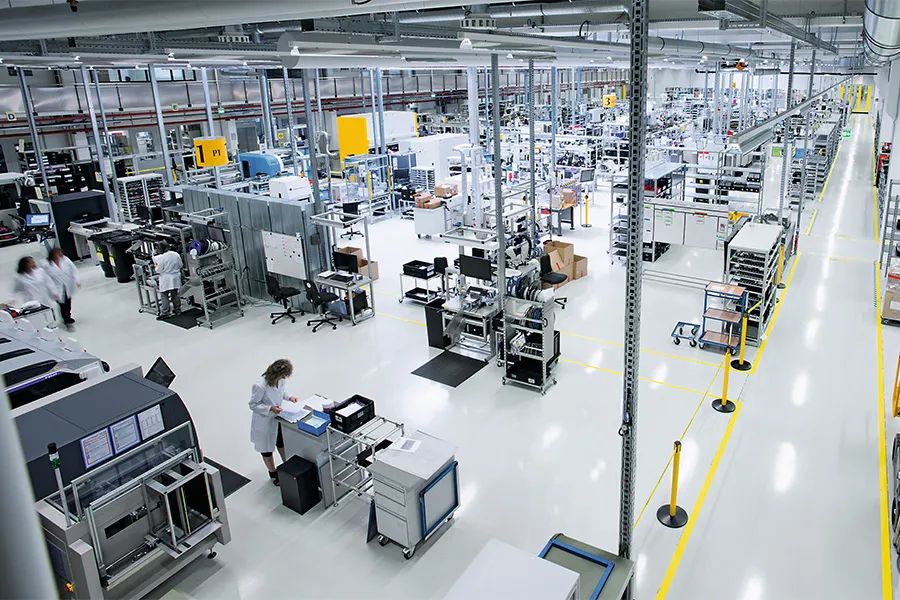
Pilz is a leading manufacturer of components and safety systems for the automation industry, and owes much of its success to its reliable supply policy. Even in the difficult year of 2022, the company achieved sales of 403.3 million euros, representing growth of 15.8 per cent. The export share rose by 1.1 percentage points to 76.3 per cent. Germany remains Pilz’s largest market, although the company is now seeing healthy growth in Asia. The company operates in 42 countries worldwide and had no fewer than 2,399 employees on 31/12/2022. To sustain this global growth, Pilz has earmarked an investment budget of 38 million euros through to 2025.
Sustainability is quality
Pilz has long focused on the combination of quality and sustainability. High product quality also means fewer returned products and, proportionately, less waste. The company’s own Repair Center ensures that returned products are reused as much as possible. These measures have enabled Pilz, for example, to increase its waste recycling rate to 95%. A case study has also been conducted on the CO2 footprint of one product. It showed that the polycarbonate housing accounts for the largest share of CO2 emissions. Pilz’s R&D department is therefore working intensively with Linz University of Applied Sciences to switch to environmentally friendly materials.
Security and safety aspects
Standards and legislation relating to safety in industrial environments are clearly at a turning point. This is due both to security and to the imminent reality of AI. Three new pieces of legislation will soon become relevant to machine building: the EU NIS 2 Directive, the EU’s new Machinery Regulation and the Cyber Resilience Act.
NIS (Network and Information Security) is a European Union directive designed to strengthen cybersecurity. It extends obligations and provides for stricter penalties.
The Cyber Resilience Act, in turn, targets manufacturers of products containing digital elements. Among other things, this means manufacturers must provide software updates after the usual warranty period to protect against future cyber threats.
The third new legal security requirement is the EU Machinery Regulation, which makes cybersecurity mandatory. Under this new Machinery Regulation, machine builders must now demonstrate that their machines are also protected against tampering.
Open communication as the standard
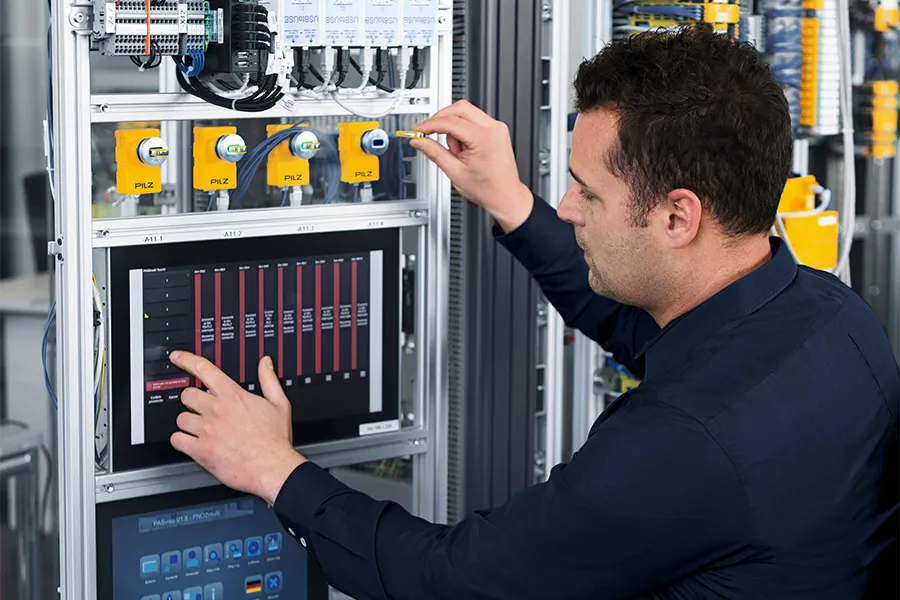
As a co-founder of the OPC Foundation, Pilz helped drive the introduction of safe, manufacturer-independent communication networks. The industry has now reached agreement on Open Platform Communications Unified Architecture, which provides for a standardised (IEC 62541) communication interface between different data sources in industry. A key consideration is the know-how involved in using publisher/subscriber technology (pub/sub) alongside the requirements for functionally safe fieldbus protocols. Unlike the traditional master/slave architecture, pub/sub allows data to be exchanged directly between participants. Pilz’s safety protocol SafetyNET p is Ethernet-based and supports pub/sub.
IO-Link Safety
At sensor level, automation has already made progress in harmonisation. The IO-Link Safety communication protocol, for example, will soon be commercially available. This point-to-point communication offers many advantages, including easier installation thanks to standardised cabling and the elimination of parallel wiring, automated, tool-assisted parameterisation and, above all, extensive diagnostic capabilities. To make IO-Link suitable for safety-related automation tasks, Pilz has worked intensively within the IO-Link Community on the relevant extension, including the associated testing and certification.
Een zakelijke vraag aan Pilz Belgium? Get in touch
Companies in this story
Keep following this
Get an email when a new story is published. No account needed.
- SubjectNews
- CompanyPilz Belgium







