












Round-table discussion hears positive stories from the chemical industry: “There’s more to our sector than doom and gloom”
Text Björn CrulImage Boris Vermeersch
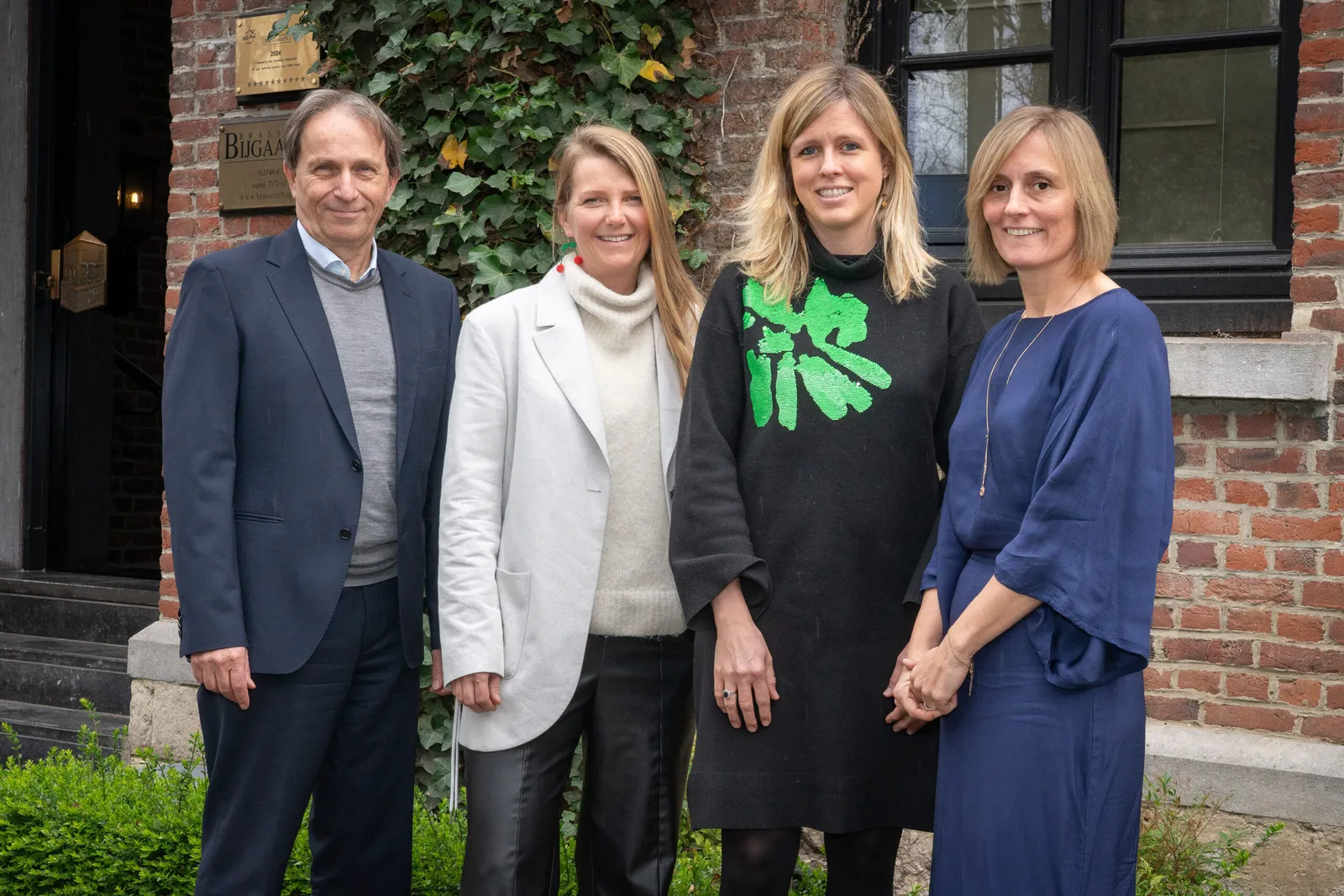
The chemicals and life sciences sectors have been rarely out of the news over the past few months. Unfortunately, the coverage has mostly been about activities under pressure, restructuring and investments put on hold. Yet chemicals, biotech and pharmaceuticals all remain sectors with huge potential for the future. We brought together a panel of four experts to hear some positive stories: Hans Vloeberghs (Fujifilm Electronic Materials), Sophie Roelants (AmphiStar), Barbara Veranneman (BlueChem) and Nele Van Roey (Molymet Belgium).
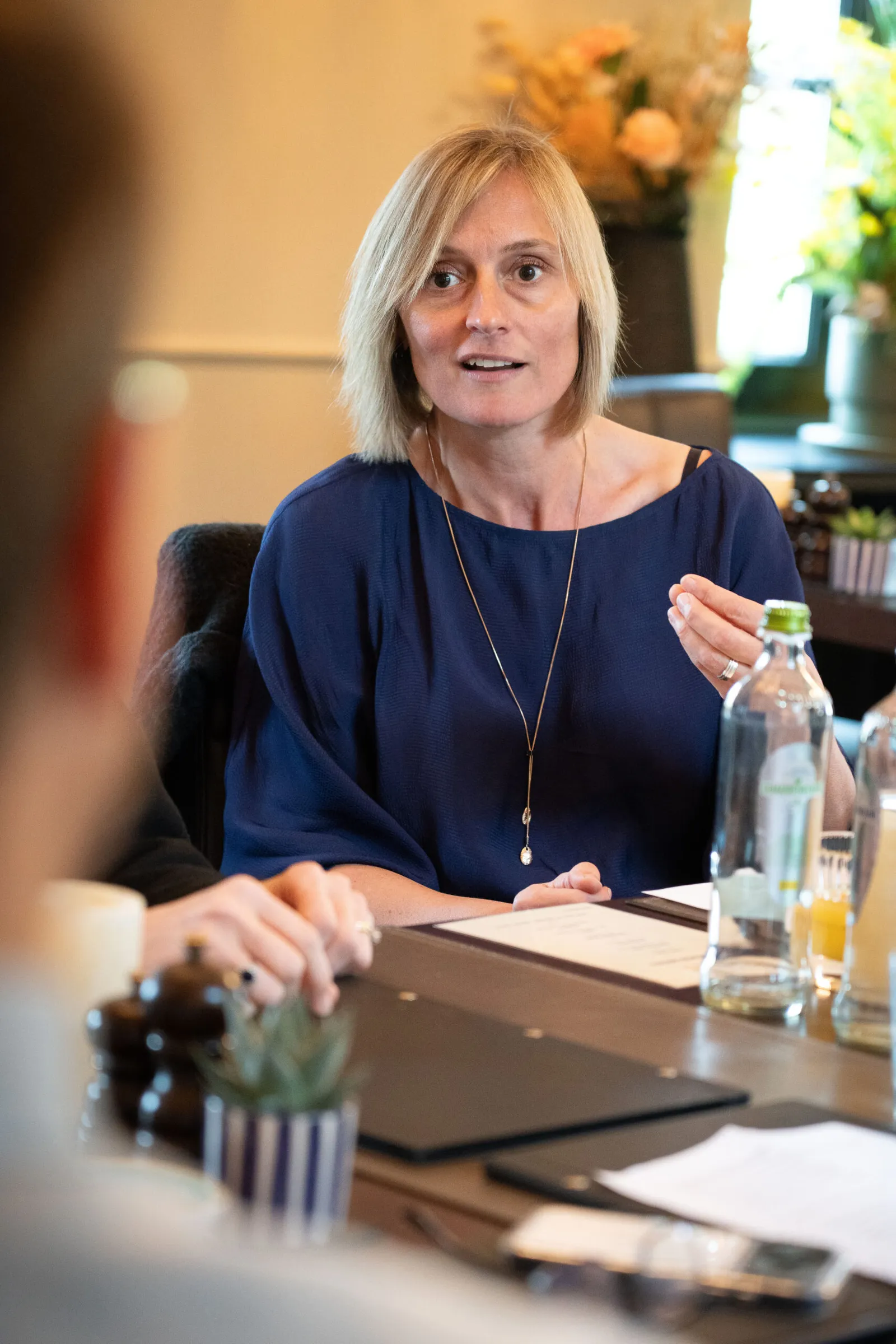
Molymet Belgium is a company in the Ghent Canal Zone that has been in business for more than 100 years and employs 150 people. It specialises in molybdenum compounds, a raw material used in, among other things, stainless steel and applications in the green energy sector. “2025 was a good year, and 2026 also looks promising so far,” says CEO Nele Van Roey. “We are the European market leader in our niche and supply customers across the continent. There is a clear trend towards higher-grade steel, and our products meet that need.”
Multinationals invest tens of millions
The company has been part of the Chilean group Molymet since 2003. “Since then, more than €200 million has been invested in our site. This includes our roasting furnace, now the largest in the world, the optimisation of our sulphuric acid plant, and our own wind turbine and solar panels,” says Van Roey. “All the investments are funded by the group, which clearly believes in the strength of our plant. We are currently looking at a further expansion that would allow us to purify the raw materials we receive ourselves.”
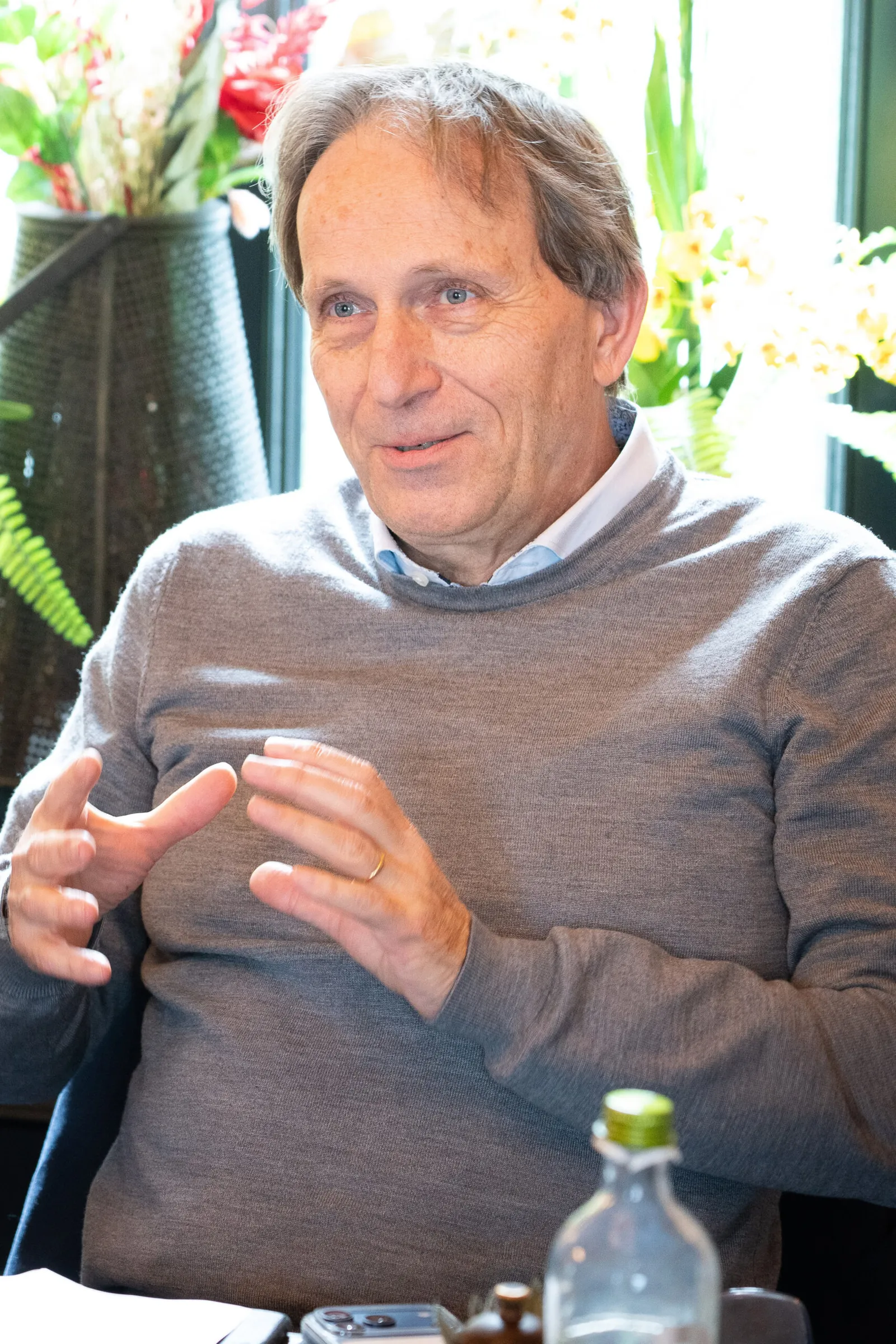
Hans Vloeberghs is president and managing director at Fujifilm Electronic Materials, which has its European headquarters in Zwijndrecht: “We have been active here since 1992, making fine chemicals and polymers for semiconductor chip manufacturing. We have seen strong growth in microelectronics, particularly since the Covid period. Europe is now also getting on board. We currently have 250 colleagues in Zwijndrecht, but following acquisitions in the UK, France and Italy, our European division now employs 450 people.”
Fujifilm Electronic Materials is a highly specialised chemical company that develops innovative formulations for manufacturing current and next-generation chips. “Our chemicals improve the performance and quality of chips. They are often developed to meet the needs of a specific application. That is why we have our own R&D department for one product line, which is considered a global centre of excellence for innovation within Fujifilm,” says Vloeberghs. “Since 2020, around €100 million has been invested, including in an expanded laboratory, additional production lines and a new warehouse, part of which has already been converted into production space.”
A successful start-up ecosystem
Alongside the strong presence of multinationals, Flanders’ chemicals sector also has an extensive ecosystem of start-ups and scale-ups. BlueChem, an incubator in Antwerp, is one place where they can find suitable premises. Its chair, Barbara Veranneman, says: “BlueChem opened in 2020. To date, 21 start-ups have made it their home. They have access to plug-and-play laboratories and a network of partners providing strategic support, IP and safety advice, and connections with industry. Not every start-up succeeds in turning its idea into a commercial reality, but we have already seen a number of strong growth companies. Three businesses are planning to establish their own facilities. One of them is D-CRBN, which converts CO2 into new raw materials for the chemicals industry.”
As an incubator, BlueChem focuses on sustainable chemistry, a growing segment. Occupancy has generally been high in recent years, so the founders, sector federation essenscia, POM Antwerpen, the City of Antwerp and VITO, have decided to build a second incubator on the NextGen industrial estate in the Port of Antwerp. “This will double our laboratory capacity to 1,800 m2. If all goes smoothly, the new incubator will open in May 2027.”
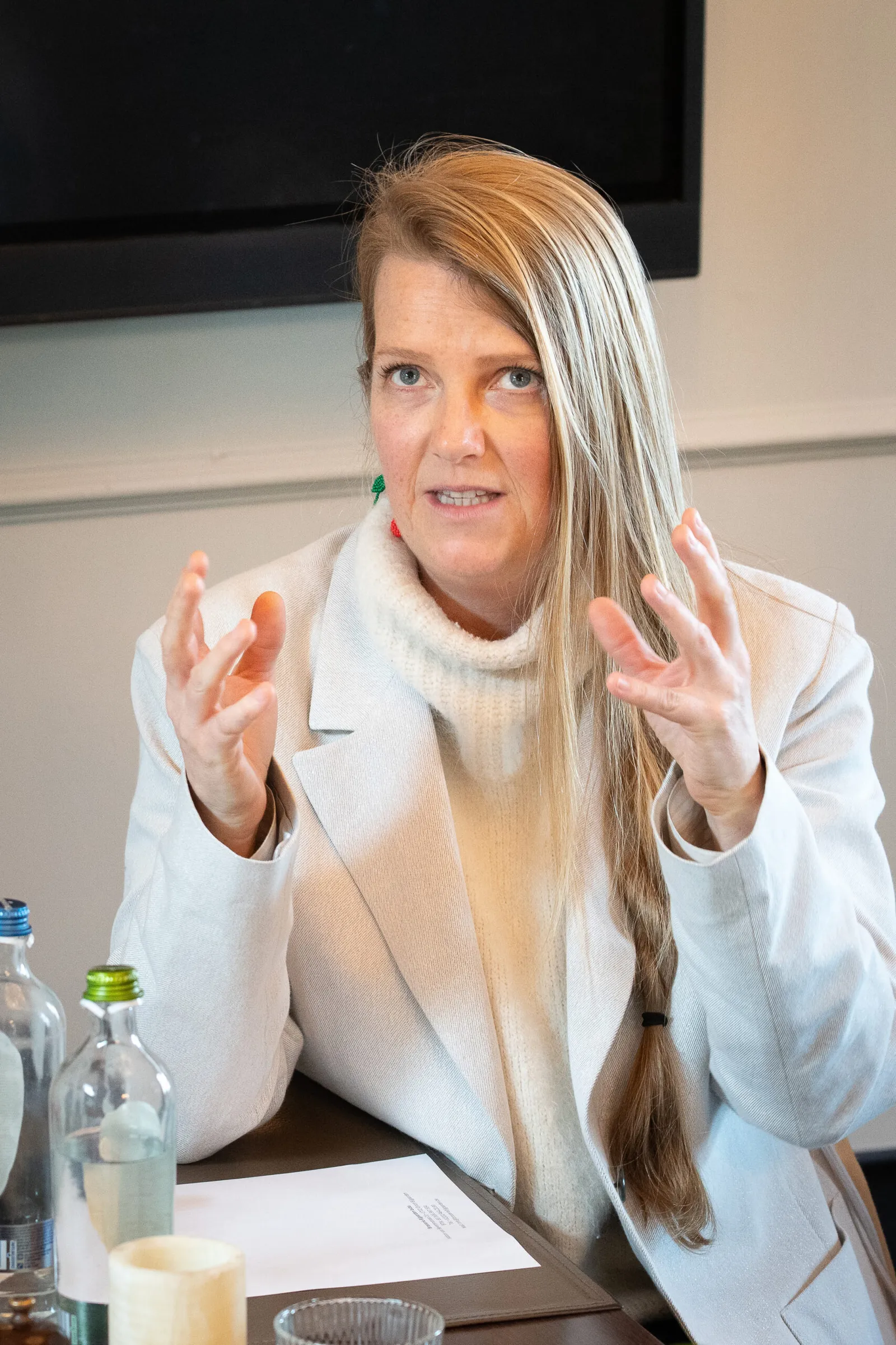
Sophie Roelants is COO and co-founder of AmphiStar, a biotech company that makes biosurfactants from biobased waste and residual streams. These are biological raw materials for shampoos, soaps and cleaning products. “This is the result of research into fermentation technology at UGent, which we were able to scale up at the Bio Base Europe Pilot Plant. Initially, we wanted to license our technology to B2B companies in the surfactants market. But when it became clear that they were more interested in finding a producer of biobased raw materials, we changed our business model and started producing ourselves,” she explains.
Ecover was one of the first customers. Several major projects with the cleaning products industry are now under way in the US, and large personal care brands are also showing interest. “We still produce at third-party facilities, but our ambition is to build our first plant of our own somewhere in Europe in the coming years. We need to scale up to bring down the price of our products,” says Roelants. The shift from a knowledge-based company to a producer means AmphiStar needs much more capital. Since 2024, it has raised just under €15 million through funding and grants. The company is planning another major funding round later this year.
The impact of geopolitics
This is where scale-ups run into difficulties, says Barbara Veranneman. “Promising companies such as those we get to know at BlueChem need investors and markets for their products. We are seeing the geopolitical situation put something of a brake on their innovation: customers are hesitating to invest in new applications, and investors are less inclined to take risks and provide funding to scale-ups. Hopefully, the tide will turn soon.”
Geopolitics is also a significant factor for the multinationals around the table. Hans Vloeberghs says: “It is clear that reliable supply chains and local product availability are receiving much more attention today. Europe’s desire to become less dependent on non-European semiconductors is a positive development for us. We try to source our raw materials locally wherever possible. This reduces the environmental footprint of our logistics and makes us less dependent on distant suppliers.”
Trade wars, the situation in the Middle East and energy prices are adding to the uncertainty. Yet Molymet Belgium is managing to increase its market share. “Like any company, we need to remain competitive on price. Our expertise, process knowledge and high productivity are major strengths in that respect,” says Nele Van Roey.
“The price of molybdenum is highly volatile. So for a European customer, it is an advantage that we produce nearby and can respond quickly. We are definitely seeing a trend towards buying more locally rather than, for example, in Asia.”
What policymakers can do
Sovereignty, local supply and sustainability … all these trends confirm the potential of the sector in Flanders. “Europe has taken note too,” says Barbara Veranneman. “At the end of last year, the City of Antwerp’s sustainable chemistry ecosystem won two awards at the prestigious European Enterprise Promotion Awards in Copenhagen. That is a welcome boost. But policymakers now need to follow through and provide further support for these innovations: enable chemical recycling, develop infrastructure for CCS (Carbon Capture and Storage) and ensure a sufficient supply of affordable electricity. This would give all companies even more levers to build on.”
Hans Vloeberghs and Nele Van Roey stress the importance of continuing to invest in education and talent: “The need for STEM professionals remains high. They will help us further optimise our production processes and devise the new products that will secure our future growth. Flanders also still needs to make progress on permitting: expansion too often remains a drawn-out process.”
Sophie Roelants sees a dual challenge for policymakers at AmphiStar: “European regulation is one thing, but it is still often interpreted differently at local level in the member states, which is a problem when you are a scale-up looking to grow. Hopefully, a way can be found to address that. We also hope to see more sustainability incentives in public procurement, such as requirements for a percentage of biobased raw materials or upcycled content. That too could be a game-changer.”
Question about this story? Ask your question
Keep following this
Get an email when a new story is published. No account needed.
- SubjectNews







