












Reliable object detection with the 3-D LiDAR multi-layer scanner
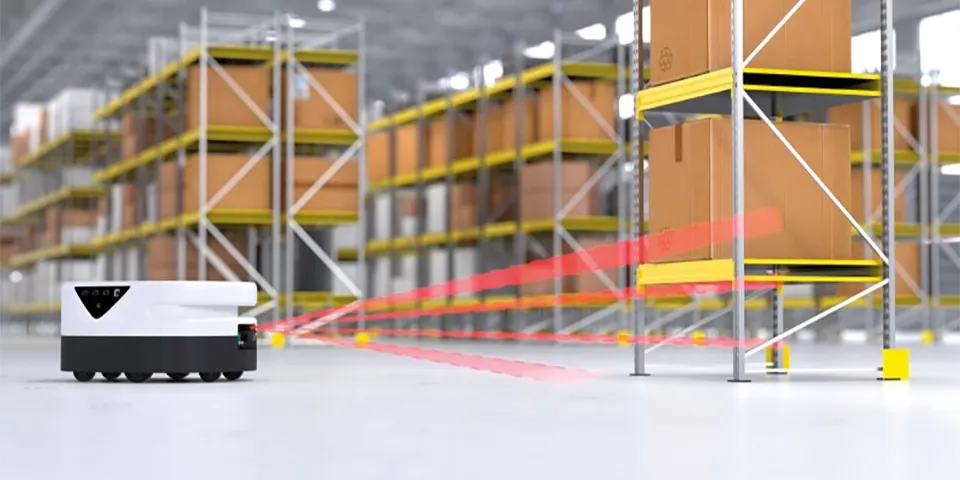
The R2300 from Pepperl+Fuchs impresses with its precise measurement technology and application-specific performance
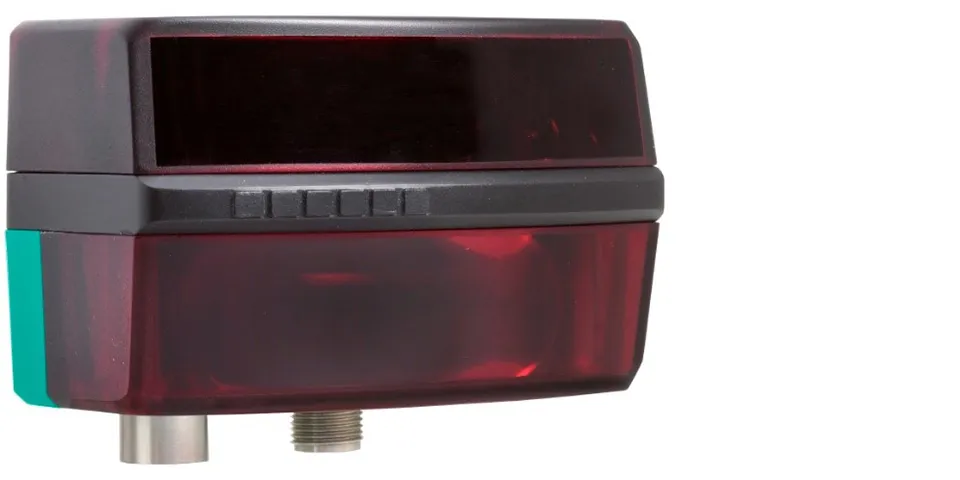
R2300 Multi-Layer Scanner
At the SPS trade fair in Nürnberg in 2019, Pepperl+Fuchs, the world’s largest manufacturer of industrial sensors and sensor systems, unveiled its new R2300 multi-layer scanner. This sensor for 3-D object detection stands out for its exceptionally high measurement density: its compact, easy-to-integrate housing contains highly precise LiDAR laser measurement technology. It analyses a total of four scan planes and can detect and measure the length, width and height of objects. A number of innovative design features also ensure a very high level of detection reliability and availability, even in demanding applications. The compact, space-saving R2300, with a height of just 58 millimetres, is a 3-D LiDAR sensor (Light Detection And Ranging) for optical angle and distance measurement in stationary and mobile applications. The device uses four scan planes, slightly offset from one another by a rotating mirror inside the sensor housing, to achieve contactless 3D scanning of the surroundings.
Long measuring range, configurable field and unparalleled angular resolution
The R2300 has a 100° field of view, a long measuring range of up to ten metres for light-coloured objects and up to four metres for dark surfaces, a measurement frequency of 50 kHz and selectable scan rates of 12.5 Hz and 25 Hz, with up to 4000 pixels per scan. These features enable the multi-layer scanner to meet the main requirements of a wide range of applications. The measurement area can also be adjusted by selectively masking areas outside the detection zone or by installing a second R2300 next to the first, extending the field of view to 180°. A striking feature of 3-D sensors is their small, and therefore high, angular resolution of just 0.1°, which no comparable LiDAR or multi-layer sensor can currently achieve. Combined with the precise infrared light spot typical of lasers, the R2300 can reliably detect complex object structures and contours.
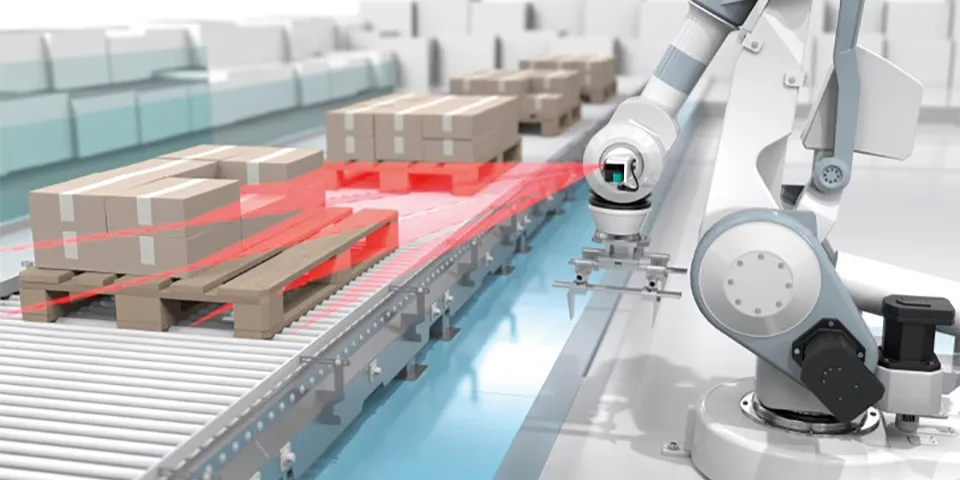
Detecting carriers in robotic applications
Robust design, high availability
Potential applications for the R2300, such as intralogistics, mobile equipment and robotics, require the multi-layer scanner to have a particularly robust design. The sensor housing is therefore made of durable plastic, while the electronic components are housed in the sensor head, protecting them effectively against vibration. The Pulse Ranging Technology (PRT) in the R2300 not only provides a high degree of independence from object and surface properties, but also offers a high level of resistance to interference from ambient light, HF lamps and optical reflections in the application environment. Another unique feature of the R2300 in the multi-layer scanner market is the mechanical separation of the transmitter and receiver in the optical unit. The separating element in the sensor head reliably prevents optical short circuits that can occur if the front panel becomes dirty and some of the emitted light is reflected directly back onto the receiver. This ensures that the R2300 always produces correct measurement results and a high level of detection reliability, while also significantly reducing maintenance costs. For the user, this means less downtime, considerably longer downtime, longer cleaning intervals, improved availability and greater process reliability.
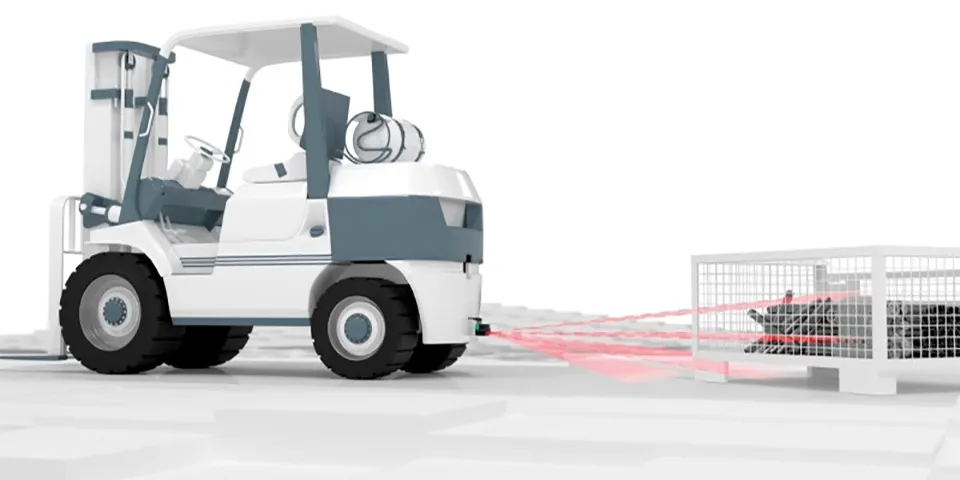
Reliable rear monitoring
Pilot laser simplifies commissioning
The R2300’s integrated pilot laser simplifies the process of aligning the sensor with specific surfaces or other objects. The pilot laser is switched on for alignment and is only active during commissioning. No additional tools are needed, as the visible red laser beam follows the same path as the actual infrared measurement laser.
Raw data output
The R2300 outputs angle, distance and reflectivity data with the corresponding timestamp. The data are transmitted via the sensor’s Ethernet interface, making them accessible to a wide range of automation systems. In the near future, the R2300 will be available in a switching version and with additional connection options that can be integrated simply and cost-effectively via the flexible interface module
Question about this story? Ask your question
Companies in this story

Keep following this
Get an email when a new story is published. No account needed.
- SubjectNews
- CompanyPepperl+Fuchs N.V.







