












Ready for the CSRD?
Text Valérie CouplezImage iStock
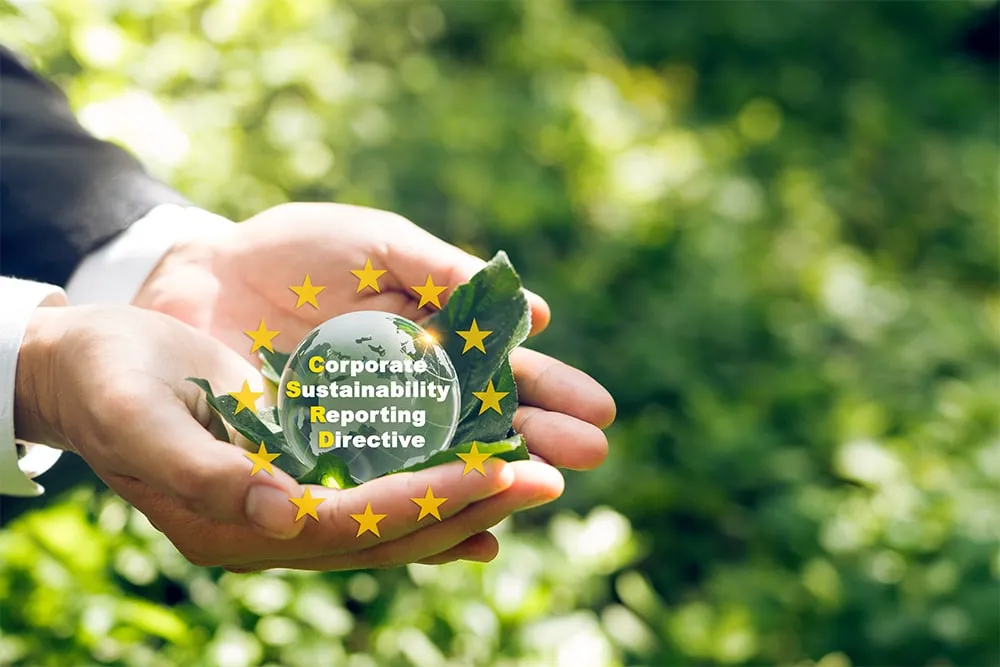
The CSRD (Corporate Sustainability Reporting Directive) legislation comes into force from 2025. Alongside financial data, companies will soon also have to report on sustainability criteria. The rules are being introduced in phases. Large, listed companies are first in line. SMEs will eventually be affected too, as the CSRD requires reporting across the entire value chain. “There is a lot of administration involved, but it also presents opportunities. It is important to seize them and turn the value generated by this data and insight into tangible benefits,” says Reinout De Clercq of Deloitte.
“We help clients develop a sustainability strategy, implement and operationalise it, and then report on it in accordance with legal requirements,” says Reinout De Clercq, partner Sustainability & Climate at Deloitte. “That sequence matters, because reporting is the end product of a well-considered strategy and its implementation. For companies with sustainability at their core, sustainability data are also financially important. Collecting and analysing this information is simply good business management.”
Transparency as a catalyst for sustainable choices
Customers’ questions will soon follow. “Europe wants this legislation to create greater transparency,” says De Clercq. “Companies must assess what matters to them and report transparently on their risks, impacts and opportunities, including data on the inputs and outputs in the production process. Ultimately, this should act as a catalyst for promoting circularity and enabling companies and consumers to make more sustainable choices.”
A step-by-step approach
How do you find your way through the complex CSRD legislation, which consists of hundreds of documents? “It is important to start by defining the legal scope of the reporting,” explains De Clercq. “The approach differs for companies that are part of a European or US group. You need to know the specific requirements. Everything then starts with the double materiality assessment, which determines what matters to your business and what you will report on. In the third step, we look at what data is already available and what still needs to be collected. This varies from company to company. Compliance is the minimum requirement, but some want to lead the way. Finally, we draw up a plan with milestones and sub-projects to achieve these goals, which we then implement.”
Change management is crucial
De Clercq identifies two key challenges in implementing the CSRD legislation. “A lack of change management to get everyone on board, and a lack of clear roles and responsibilities for collecting, checking and reporting data,” he says. “That applies to any major implementation, but the broad scope of the CSRD and the number of stakeholders involved make it even more complex. There is often a lack of knowledge about the subject, and the work is seen as an additional burden because it comes on top of existing tasks. Management must not underestimate the effort required for successful implementation. But if it is handled intelligently, the annual cycles that follow will be less demanding and will start from a solid foundation.”
Time is running out
Waiting is not an option. “These kinds of projects often take two to three years. Companies that have not yet completed their double materiality assessment risk being unable to report on 2025 on time in 2026. Not all data can be filled in retrospectively,” warns De Clercq.
More and more companies are choosing to work with an external partner on the CSRD. Deloitte can support clients from A to Z, including with the selection and implementation of technology. “At our technology hub, we have screened around 400 software solutions for their capabilities, so we can recommend the right fit for every company. Above all, make sure your partner works in compliance with the rules and can pass future mandatory audits. Otherwise, you may have to repeat the entire exercise,” De Clercq stresses.
Question about this story? Ask your question
Keep following this
Get an email when a new story is published. No account needed.
- SubjectNews







