












Process transparency included
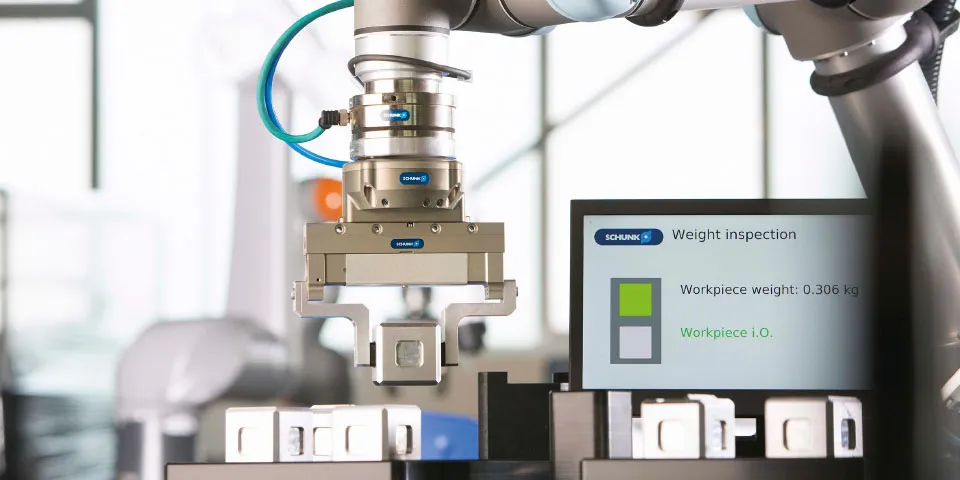
Condition monitoring systems (CMS) detect changes and deviations in the production process. They provide early warning of incipient damage, detect quality deviations, monitor the stability of a production process and ensure consistent quality control at every stage of production and value creation. In this context, gripping systems and clamping devices are becoming increasingly important because they are positioned closest to the part.
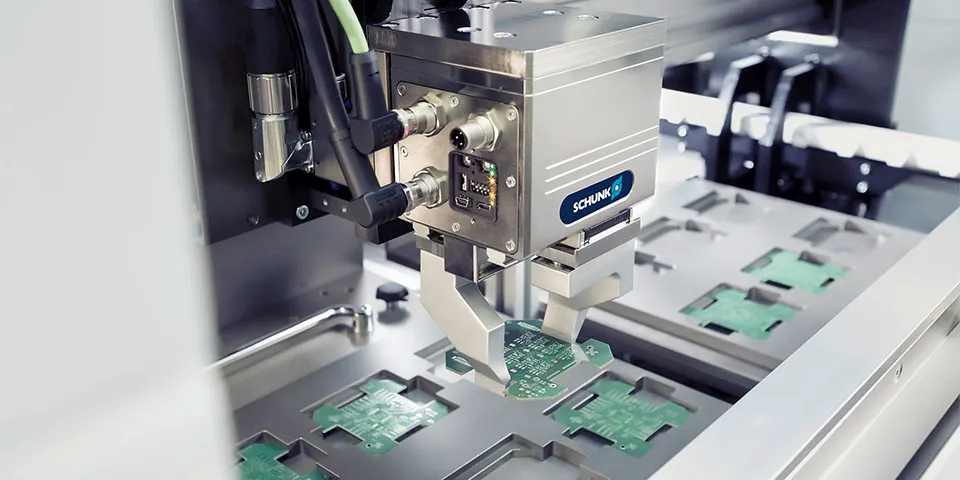
As an in-line measurement system, the intelligent EGL gripper uses its position directly on the workpiece during ‘smart gripping’ to acquire data and evaluate it immediately using the advanced technology integrated into the gripper.
Machines and automated systems, smart tools and components already generate huge volumes of data. However, only a very small proportion of this data is actually used, an estimated 5%. Until now, little importance has been attached to the values recorded by sensors, which are used at most in the event of damage or for troubleshooting. Making full, systematic and, above all, real-time use of this existing data can enable smart production scenarios that promise significant benefits. At the same time, growing network integration and digitalisation are also driving a rapid increase in the volume of data generated. This creates a risk that connections to cloud data centres may be unable to cope with the huge and rapidly growing data flows, resulting in downtime and high latency. The focus is no longer just on collecting data, as it was in the past, but on analysing it on site and turning it into valuable information. In other words, moving from big data to smart data.
Gripper as a universal tool for smart, flexible production
Smart handling modules make it easy to meet the requirements for fully integrating automated production systems into production environments. They connect to cloud-based ecosystems to determine overall equipment effectiveness (OEE), downtime statistics (MTBF, MTTR) and medium-term process stability. One such component is the SCHUNK EGL parallel gripper, a smart standard gripping module with integrated functions, a certified Profinet interface and integrated electronics, variable stroke and gripping force that can be set between 50 N and 600 N. As an in-line measurement system, the intelligent gripper uses its position directly on the workpiece during ‘smart gripping’ to acquire data and evaluate it immediately using the advanced technology integrated into the gripper. Every individual process step can be monitored in detail, with data relayed, for example, to the system control system, the higher-level ERP system, as well as to analytics databases and cloud solutions. Intelligent grippers can therefore capture and process systematic information about the workpiece being gripped, the process and the components, and can also carry out the appropriate responses themselves.
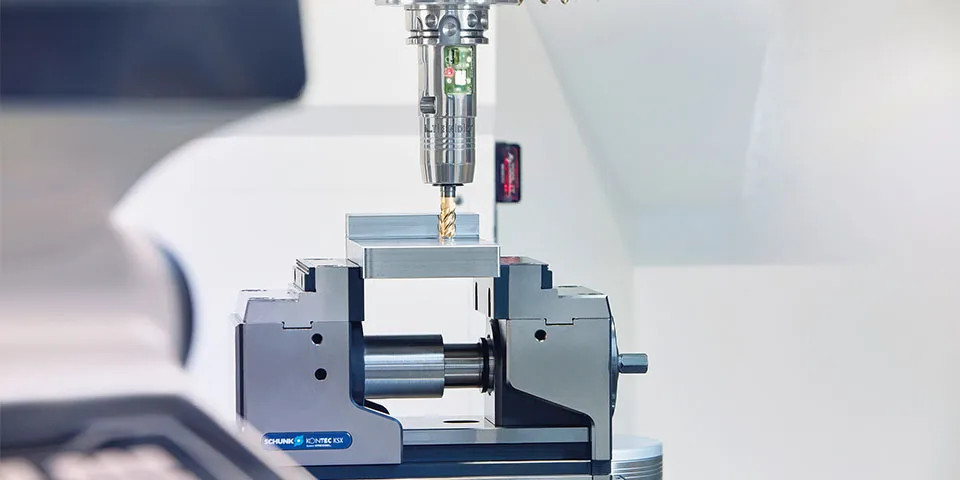
Equipped with a sensor, a battery and a transmitter unit, the SCHUNK iTENDO sensorised toolholder monitors the process directly at the tool at 5,000 Hz. An algorithm continuously determines a parameter for a stable process.
Sensorised toolholder
In future, SCHUNK plans to automate tasks for controlling the entire kinematic chain, consisting of robots and grippers, as well as monitoring their operation. This would eliminate the need to programme every individual step, set limits or adjust them continuously. Artificial intelligence (AI) and various sensors are crucial to this type of autonomous gripping. Equipped with a sensor, a battery and a transmitter unit, the SCHUNK iTENDO sensorised toolholder monitors the process directly at the tool at 5,000 Hz. An algorithm continuously determines a parameter for a stable process. The so-called IFT value is designed specifically for the iTENDO and represents the measured vibration as a numerical value on a defined intensity scale. If the cut becomes unstable, the integrated intelligence intervenes directly in real time, with a latency of around 20 ms and without operator intervention. Depending on the situation, the process is stopped, reduced or adjusted to predefined baseline parameters, tool feeds are changed, sister tools are replaced or messages are sent to the operator.
Question about this story? Ask your question
Keep following this
Get an email when a new story is published. No account needed.
- ThemeLess downtime through maintenance
- SubjectNews







