












Pneumatics at their most sustainable
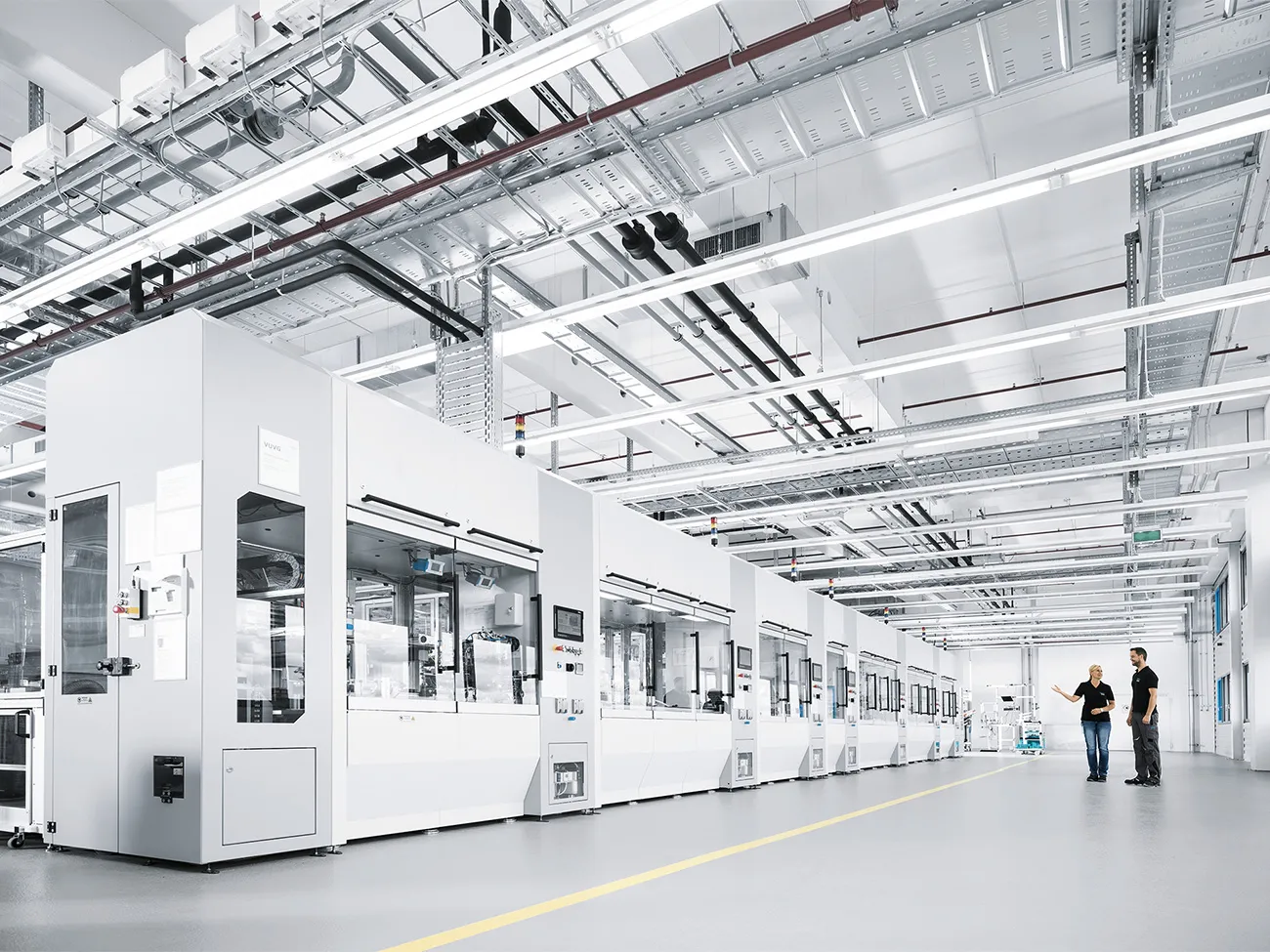
Sustainability must become the foundation of a competitive European industry. If we are serious about achieving carbon neutrality, we will need to step up a gear. That is why Festo put the topic at the top of the agenda at its annual press conference. Its own products have been revamped to make them more sustainable; Festo Energy Saving Services help companies save energy; and a bioreactor is being developed that can efficiently produce algae on a large scale using photosynthesis. The company also announced that it will be carbon neutral by early 2023.

Automation will play a key role in the industrial transformation towards climate protection, efficient use of resources, sustainability and the circular economy. Festo also wants to lead by example, drastically reducing its carbon footprint over the next two years.
“This means that all our production and logistics sites worldwide, along with our sales locations in Germany and our headquarters in Esslingen, will be CO2-neutral from the beginning of 2023,” explains CEO Oliver Jung.
Festo has used the United Nations Sustainable Development Goals as benchmarks for its own sustainability strategy. It illustrates its efforts through the so-called Blue World concept. “We want to show how automation technology can balance population growth on the one hand with the protection of our natural resources and climate-neutral production on the other,” Jung explains. The aim is to help industry transform towards efficient and climate-friendly production.
A partner for customers
“Our customers see us as a partner in their own transition. Together with us, they can shape the transformation of industry. Innovation will play a key role in this,” Jung adds.
Festo has plenty of credentials in this area. Digital and intelligent pneumatics, automation platforms and concepts for saving energy in pneumatics… At the last Hannover Messe, Festo also unveiled the world’s first pneumatic cobot. It intends to continue playing a pioneering role. In 2021, 7% of revenue was reinvested in research and development.
Companies can turn to Festo Didactic for training to meet the challenges of today and tomorrow in this transition. Its training courses offer learning content and environments for acquiring new skills, based on needs in IT, artificial intelligence, data science and sustainability.
Sustainable products
Carbon neutrality starts with sustainable products. Festo’s ‘Stars in Automation’ range comprises more than 2,200 pneumatic and electrical components that form part of the German automation specialist’s core range. They enable machine builders to construct around 80% of their applications simply, quickly, even in large volumes, and at a competitive price. Sustainability is the defining feature of the latest additions to the range. They are designed to save weight, volume, energy, raw materials and space, all of which are essential building blocks for more sustainable machines.
A good example is the new round DSNU-S cylinder, which delivers the same performance as the proven DSNU cylinder, but is 35 mm shorter and has a 40% narrower mounting interface. Developers and production planners work closely together to reduce cycle times.
Sustainable engineering
But how can you tell whether you are making the sustainable choice when building your machine? A machine’s design lays the foundations for its CO2 footprint. By providing free engineering tools, Festo enables customers to see which products are associated with which CO2 emissions. It is also focusing on innovative solutions to reduce those emissions.
Julia Bikidis, project manager CO2 reduction for the product portfolio at Festo: “The focus is always on how the customer uses our products. But we also look at how much CO2 was needed to make them. We expect a digital product passport to become the standard over the next five to ten years. Through our work on digital twins based on the administration shell, we are trying to anticipate this and develop a carbon-neutral product portfolio. The key support for this will come from the technological advantages offered by Controlled Pneumatics,” Bikidis emphasises.
Controlled Pneumatics
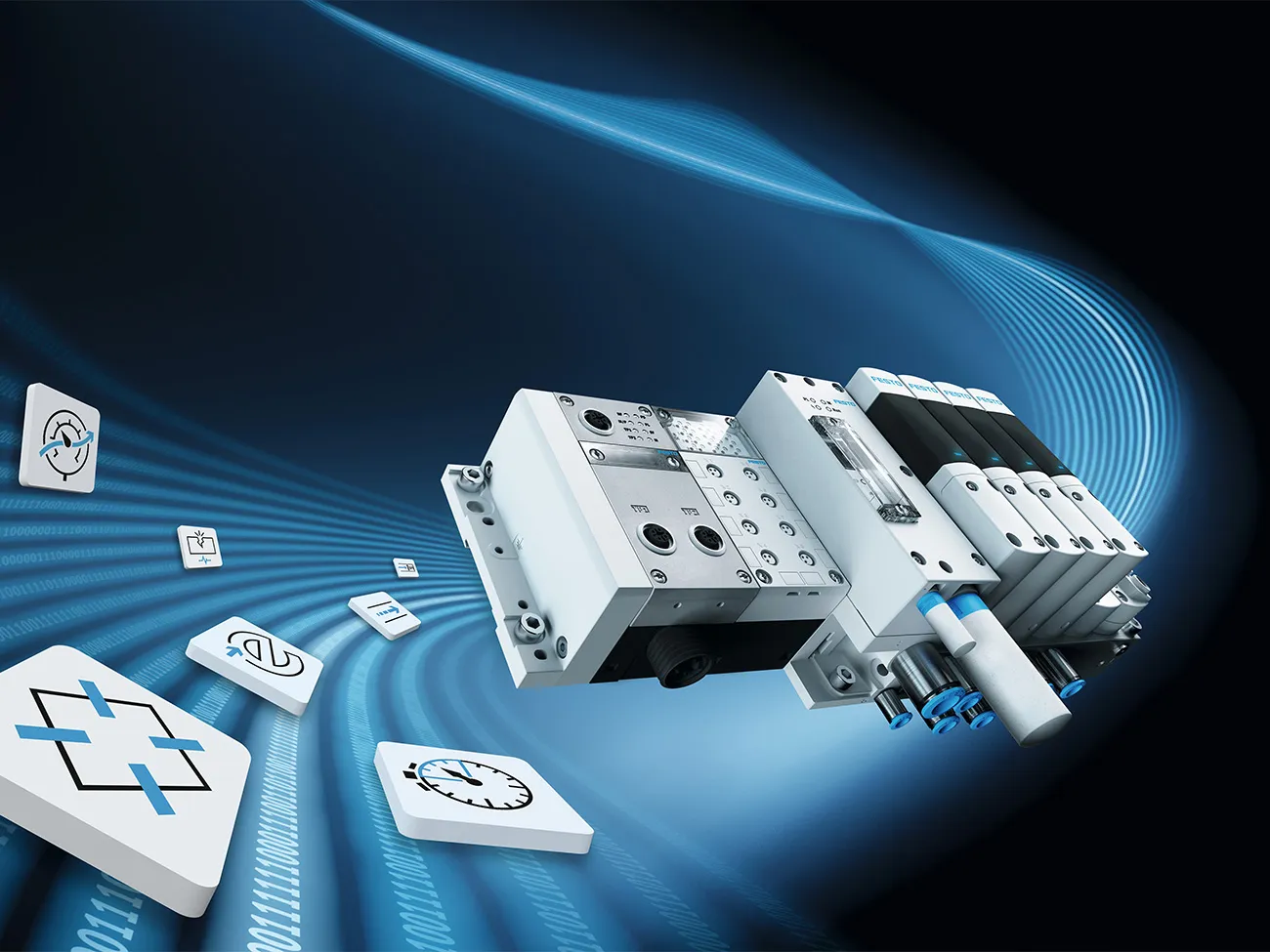
For anyone wondering what all this means, Festo defines Controlled Pneumatics as mechatronic pneumatic systems featuring innovative valve and communication technology. Digital control can be applied based on variables picked up by sensors. This means users can still enjoy the simplicity of standard pneumatics for moving things, while gaining greater control for more reliable, precise and efficient solutions.
The prime example of Controlled Pneumatics is the Festo Motion Terminal VTEM, with which Festo digitised the world of pneumatics. Festo is taking compressed air technology to an entirely new technological level, where saving resources, energy efficiency and sustainability are the watchwords.
Finding compressed air leaks
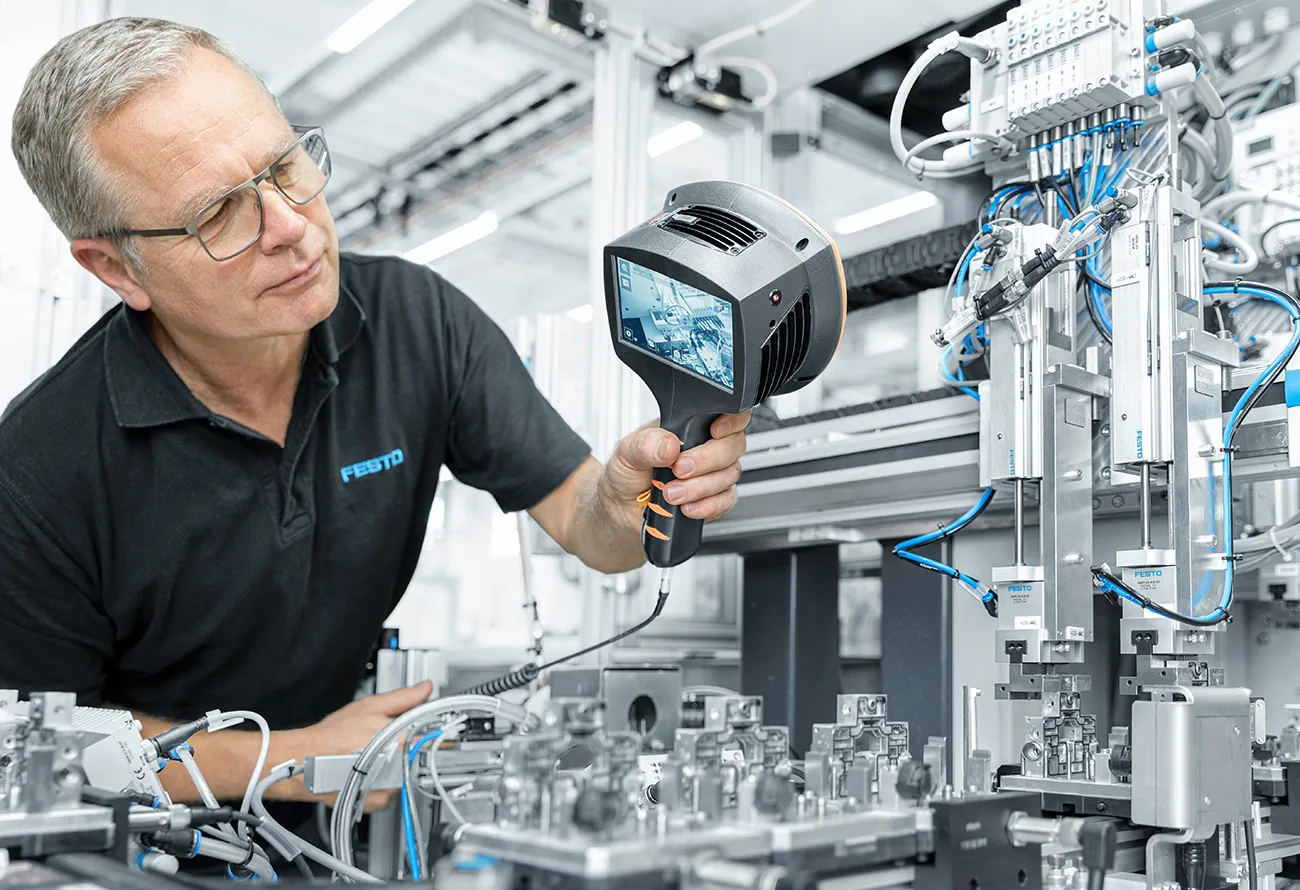
A good idea, particularly given current energy prices. It is therefore no surprise that Festo Energy Saving Services is also being highlighted in this context. Festo follows the DIN EN ISO 11011 standard and works with customers to identify potential savings in compressed air use through a standardised approach. Did you know that artificial intelligence can also point the way to energy savings?
Experts work through five steps. The first three examine compressed air generation, treatment and distribution. They then turn their attention to the consumers: pneumatic applications and systems. The final step involves proposing a monitoring system to track energy status continuously. Festo AX Predictive Energy, for example, creates a fingerprint of your production line and continually compares it with its current status. Machine learning and artificial intelligence can then automatically detect leaks.
Question about this story? Ask your question
Companies in this story


Keep following this
Get an email when a new story is published. No account needed.
- SubjectNews
- CompanyFesto
- CompanyHANNOVER MESSE







