












Parker Hannifin launches new PT PAC Terminal to support the latest motion control applications
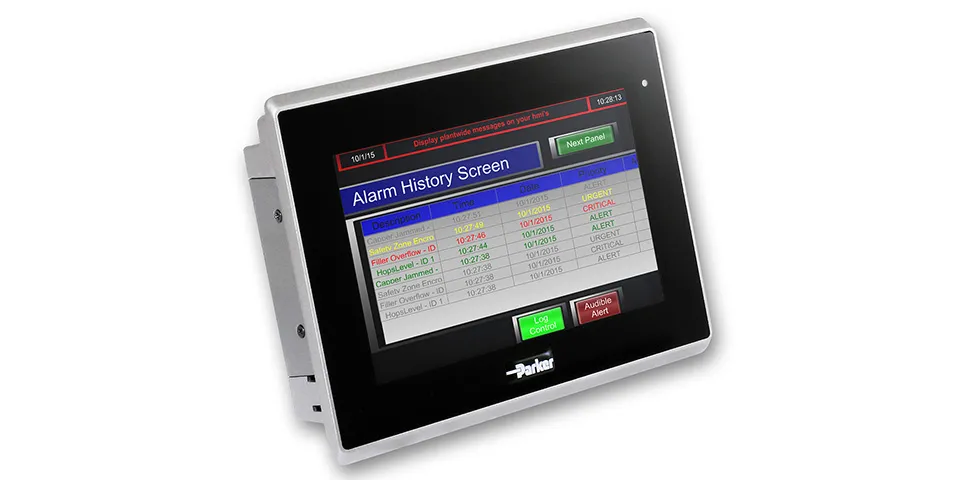
Parker Hannifin, the global leader in motion and control technologies, has launched the PAC Terminal (PT). The PT is a thin-client Human Machine Interface (HMI) designed to work seamlessly with the Parker Automation Controller (PAC).
Working with the PAC, which processes the control and HMI logic, the PT displays the integrated HMI and sends user input from the touchscreen to the PAC. As a thin client, the PT significantly reduces overall system costs compared with a traditional HMI, particularly when multiple PTs are connected to a single PAC.
Parker’s PAC is an all-in-one machine control solution that combines PLC, HMI and motion control functionality in a single device. The PAC is also programmed using a single integrated development environment (IDE), known as Parker Automation Manager (PAM).
Parker has chosen to standardise on the IEC 61131-3 programming language and PLCOpen motion control function blocks. This gives machine builders the option of using traditional ladder diagrams (LD), as well as the latest control languages, including Structured Text (ST), Continuous Function Chart (CFC) and Sequential Function Chart (SFC). IEC 61131-3 brings object-oriented programming capabilities to the automation industry, enabling users to create custom function blocks, libraries and different data types. This allows OEMs to create reusable modular code, significantly reducing overall machine development time.
“The same IEC 61131-3 code used to program the PAC PLC control logic is also used to control the logic of the integrated HMI, WebVisu,” says Christian Ruf, Product Marketing Manager Controls and HMIs. “There is no need for tag sharing or additional logic to enable the PLC to communicate with the HMI: they are fully integrated.”
As with traditional HMIs, WebVisu allows programmers to develop their HMI simply by dragging and dropping buttons, sliders, and pre-built alarm and recipe objects. WebVisu takes this a step further, allowing developers to create libraries of visualisations or use a selection of Parker’s pre-programmed objects, significantly reducing the time needed to build common HMI functionality. Users can also use pre-programmed themes or create their own during one or more projects.
WebVisu uses web publishing technology, allowing multiple PTs to be connected to a single PAC controller. In addition, any remote client, such as a browser or mobile device using Parker’s Remote Manager (RemoteMgr) app, can connect to the integrated HMI by simply entering the PAC’s IP address and the desired application. User management tools in PAM allow developers to create user groups with different read and write access to various screens or specific objects. This ensures that the right information is displayed to the right users.
The PT provides a window into the PAC, delivering the look and feel of a traditional HMI while also enabling the use of modern remote technology and programming
with a single device. The ability to provide a single solution and programming environment for PLC logic, local and remote HMI visualisation, and motion control makes the PAC an all-in-one machine controller capable of handling the most demanding applications with ease and shorter lead times.
Question about this story? Ask your question
Keep following this
Get an email when a new story is published. No account needed.
- ThemeFrom design to flexible machine
- SubjectNews







