












One programming environment for robot, camera and PLC
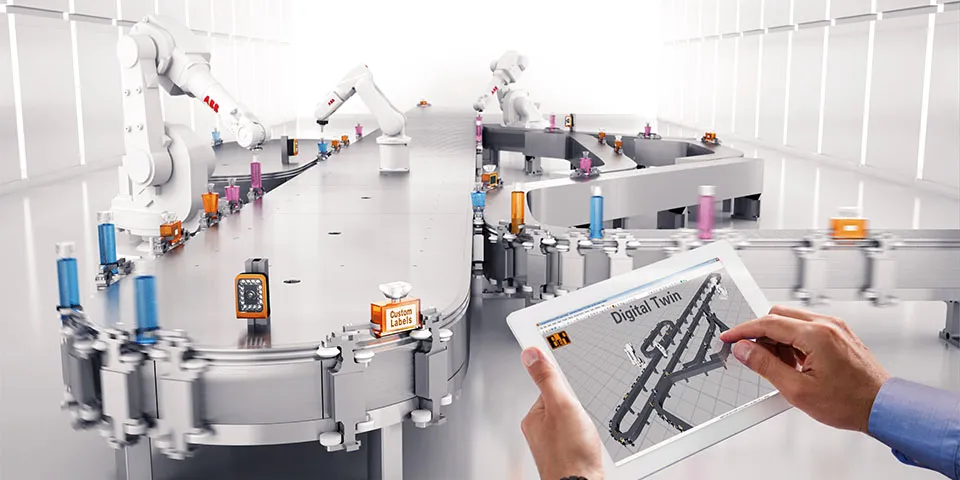
Digitalisation has turned the traditional world of automation upside down. Not so at B&R. With its high processor speeds and large memory capacities, this Austrian industrial automation specialist was better prepared than anyone for the digital wave that followed. A conversation with B&R Benelux managing director Piet Tak about the current state of play and what lies ahead.
On 4 April, it was exactly three years since the announcement that Austrian family-owned automation specialist B&R was to become part of ABB. The Bernecker and Rainer families had no successor within their own ranks, and found a good industry partner in ABB. B&R managing director Piet Tak immediately saw the complementarity between the two product portfolios. “By entering the automation market only in ’79, B&R focused largely on high-end machine building, a segment that offered more scope for differentiation. That meant we were perfectly prepared for the digital wave of the past decade, with our powerful processors and large memory capacities.
We had, and still have, enough computing power to process all that valuable raw data and turn it into useful information. In the PLC, using edge computing or in the cloud, as the customer prefers. ABB had less of a presence in machine building with PLCs, industrial PCs and servo technology, which is why we work so well together.”

Piet Tak: “With our powerful processors and large memory capacities, we were perfectly prepared for the digital wave of the past decade.”
One programming environment for robots and production
The collaboration is now beginning to bear fruit. At SPS 2019 in November in Nuremberg, B&R presented new solutions for programming and controlling ABB robot arms. From now on, they can be controlled by the same controller as the machine. Tak: “Machine builders need more flexibility than before because consumers increasingly demand different products. That plays to our strengths because our B&R Automation Studio development environment lets us program the PLC, including motion control, visualisation and integrated safety, as well as robot arms in and on the machine. We can now control both the machine and the robot arms from one and the same controller, saving on material costs and programming time.”
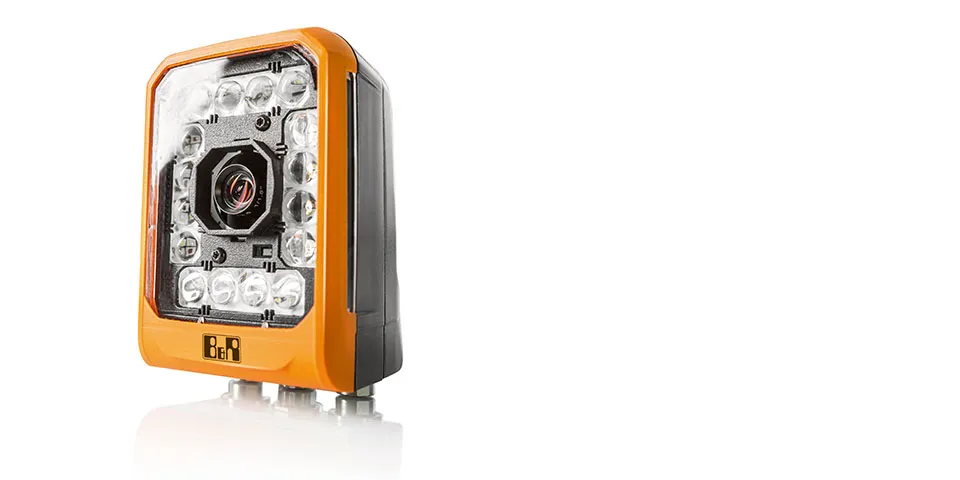
B&R opted for monochrome cameras because a monochrome sensor needs less resolution to achieve the same result. This makes image processing faster.
The ultimate in flexibility
B&R also meets this need for flexibility with its ACOPOStrak and SuperTrak track systems. “Essentially, they are one large linear motor on which shuttles can be moved to different processing stations. By varying the speed and distance between shuttles, and adding parallel and bypass routes, not every product has to follow the same route. You effectively get customised production at virtually no extra cost. This brings us a step closer to producing single units at the cost of mass-produced goods. That is the ultimate goal of Industry 4.0,” Tak explains. To check that everything is running smoothly, B&R added a vision solution to its portfolio last year. “Previously, image recognition and/or processing was only possible with a standalone camera and a powerful PC. We opted for monochrome cameras because a monochrome sensor needs less resolution to achieve the same result. This makes image processing faster. By adjusting the lighting, you can detect different shades and shadows for each colour, without needing a powerful processor or a lot of memory. The result is an affordable solution that covers a large segment of the vision market, with the exception of the high end. B&R vision systems are also programmed using the same development tool. “Machine builders see the provision of fully integrated solutions from a single manufacturer as an important selection criterion,” says Tak.
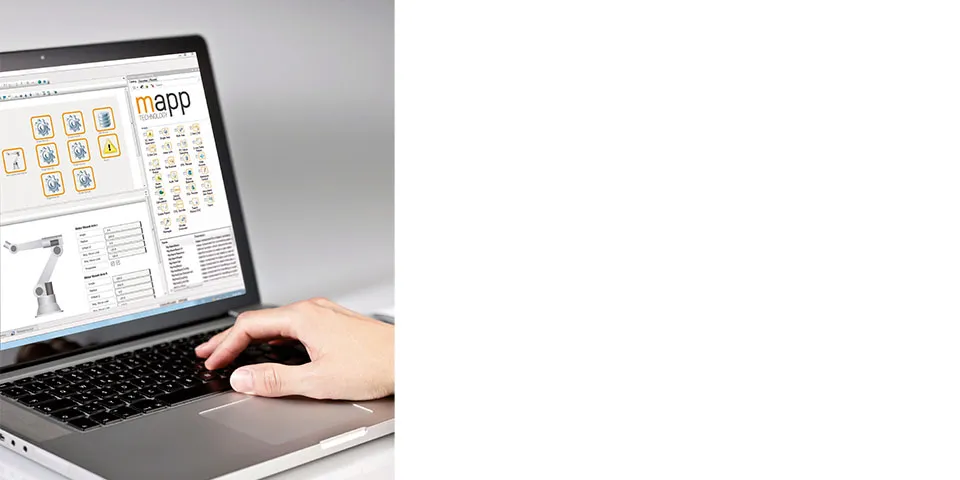
Machine builders see the provision of fully integrated solutions as an important selection criterion.
Looking ahead to artificial intelligence and a communications standard
That is what B&R can already deliver today. The next phase will see artificial intelligence begin to make its mark. Tak: “The convergence of OT and IT is becoming a little more real every day, bringing us closer to the goal of eliminating unplanned production downtime. We can already go a long way with condition monitoring. Predicting motor wear by monitoring changes in temperature, current and vibration is already standard in control and drive technology. The next step is to connect this production data with information about consumer behaviour, for example, as we know from the IT world. That way, you can already have the granulate for your packaging in stock in the right colour before demand and prices rise.” These are the first steps towards artificial intelligence. Standardisation will be important here. Industrial networks must go beyond individual preferences. “That is why B&R is one of the pioneers of OPC-UA over TSN. I hope everyone commits to making this happen, because it will greatly reduce the burden on machine builders and end users,” Tak concludes.
Question about this story? Ask your question
Companies in this story
Keep following this
Get an email when a new story is published. No account needed.
- ThemeFrom design to flexible machine
- SubjectNews
- CompanyABB N.V.







