












New machinery safety rules from 2027
Text Valérie CouplezImage iStock
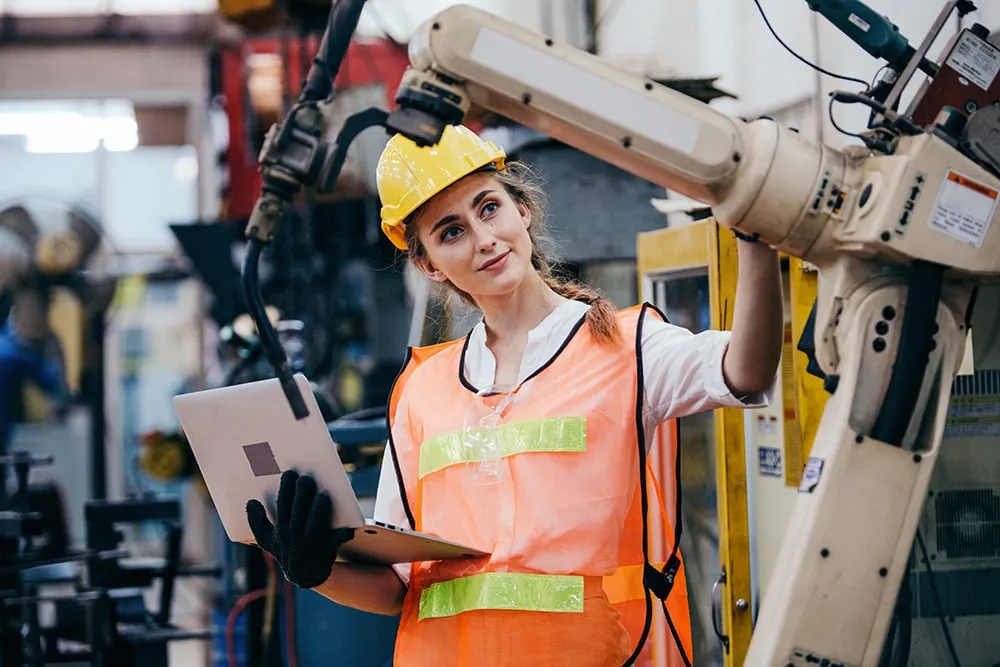
In the beginning, there was nothing. But gradually, people came to realise that a machine that works efficiently must also work safely. This led to the Machinery Directive in 2006, which became the reference document for machinery safety. In July last year, Europe approved an updated version, which will come into force on 20 January 2027. Here is a summary of the background and the main changes.
In 2020, the European Commission published a white paper on artificial intelligence. The report analysed the impact of new technology and the challenges it posed for existing safety standards in Europe. It identified a number of ‘gaps’ that need to be addressed through a new set of rules. Perhaps the most significant change is the new name. From 2027, we will no longer refer to the Machinery Directive, but to the Machinery Regulation. This means it will apply immediately in all Member States, without first having to be transposed into national legislation. The industry has been given 42 months to prepare.
Machines subject to specific procedures
In the first chapter (Article 6), the Machinery Regulation defines ‘machinery and related products subject to specific conformity assessment procedures’. Listed in Annex I, these machines may pose health risks because of their design and intended use. One example is a CNC press brake. In response to the digitalisation of machinery technology, the list now also includes AI systems that perform safety functions, and machines that use machine learning for functional safety tasks. The list is now non-exhaustive and can be updated in line with technological developments. Monitoring it will therefore be an additional task for machinery manufacturers. In addition, machines built to harmonised standards may have to undergo an additional EC type-examination.
Substantial modification
Article 3 of Chapter 1 introduces the concept of ‘substantial modification’. This refers to a physical or digital change to a machine after it has been placed on the market or put into service, which was not foreseen by the manufacturer and may affect the machine’s conformity with the relevant essential health and safety requirements. For convenience, the definition largely corresponds to that in the European Commission’s Blue Guide on the implementation of EU product rules and the EU General Product Safety Regulation (GPSR). Economic operators (manufacturers and suppliers) are therefore required to assess changes to machinery objectively. If a modification is substantial, a new conformity assessment procedure for CE marking must be initiated.
Assessment by an independent body
The Machinery Regulation divides machinery into 25 groups. Six of these are subject to assessment by an independent body, such as TÜV, DGUV or VDE:
- removable mechanical transmission devices, including guards;
- guards for removable mechanical transmission devices;
- vehicle lifts;
- portable fastening tools with an explosive charge and other impact machinery;
- safety components with fully or partially self-evolving behaviour that use machine-learning-based methods to ensure safety functions.
Digital instructions
Under the new Machinery Regulation, manufacturers of business-to-business machinery can now provide instructions and declarations of conformity in digital form. The machinery manufacturer must show how to access the information, which must be printable, downloadable and storable on end-user devices. The digital information must also remain available for at least ten years. The regulation does not specify how this must be done. It could be provided as a PDF on a data carrier, through the machine’s user interface, or in the cloud as a downloadable file. In principle, the same rules apply as for paper instructions. The aim is to ensure that the machine can be operated safely at every stage of its life cycle, based on a risk analysis carried out in advance. The information in the instructions must ensure this. Annex III, 1.7.4 sets out the mandatory content requirements.
New safety rules
Machines must be designed and constructed so that neither a connected device nor a device communicating remotely can cause a hazardous situation. The new essential health and safety requirements are summarised in Annex III. Both hardware and software must have adequate protection built in against intentional and unintentional damage. In addition, the machine must collect evidence of any authorised or unauthorised intervention. Software and data must also be protected against manipulation. The level of security varies according to the application and cannot be determined by the machine manufacturer alone.
Alongside technical solutions, organisational measures must also be implemented. A holistic approach and coordination between component manufacturers, machinery manufacturers and end users are therefore essential in this area.

Safe human-machine interaction
The number of cobots in industry is growing exponentially. The health and safety requirements for machinery set out in Machinery Directive 2006/42/EC have therefore been supplemented with ergonomic aspects of working methods. Specifically, this concerns methods in which people and machines share at least the same workspace, including situations involving interaction and collaboration.
The principles include designing interfaces between people and learning and/or autonomous machines around operators’ predictable characteristics. These machines must also be designed to communicate planned actions to operators in good time and in an understandable form.
Risk and safety assessment for autonomous machine behaviour
The Machinery Regulation states that where machines can exhibit autonomous behaviour, the risks that may arise from this must also be anticipated. Continuously learning machines must therefore not affect safety functions. The need for safety in AI applications arises, for example, with AGVs making predictions or navigation decisions in dynamic factory environments. AGVs can be rerouted to avoid collisions with drivers or other road users. Relevant data must always be recorded and stored. The behaviour must comply with the design principles of functional safety and be protected against external manipulation.
Safety aspects of AI-powered machinery
AI can give machines autonomous capabilities and enable them to develop further. This also applies to the potential perception of safety functions. This creates new challenges for functional safety and related liability issues. The principles set out in 4.7, 4.8 and 4.9 concerning essential health and safety requirements must therefore also be applied to machines with evolving capabilities, known as AI systems. The EU AI Regulation also defines four risk classes for AI systems. Risk assessments for machines with evolving capabilities must consider whether an AI system is designed to improve itself during operation. If so, all potential risks that may arise from the expected level of autonomy must be assessed. This assessment must take the machine’s entire life cycle into account.
Question about this story? Ask your question
Keep following this
Get an email when a new story is published. No account needed.
- ThemeSafe and resilient installations
- SubjectNews







