












Innovative vision technology as a key focus for sustainable work
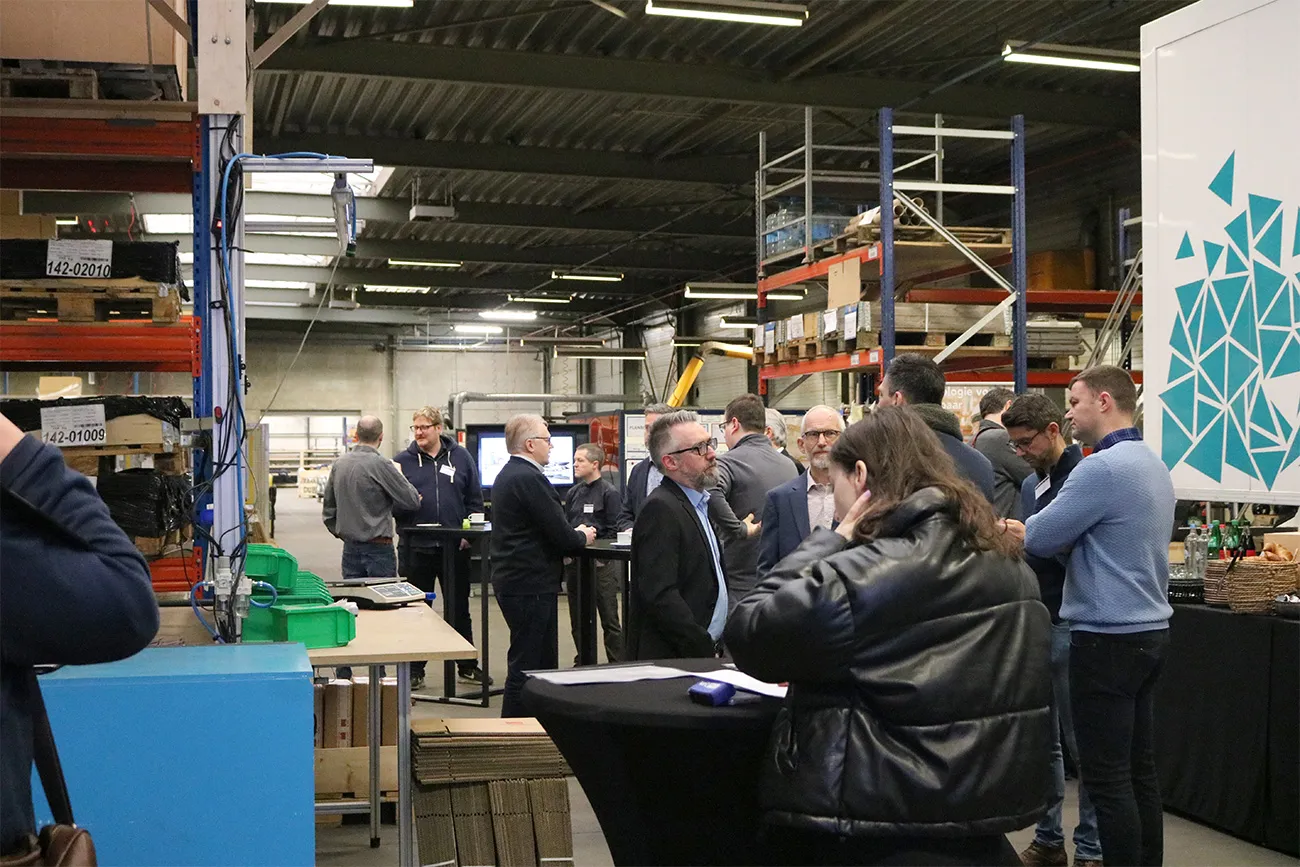
These days, making a job sustainable and, above all, keeping it that way is largely determined by technological innovation. In particular, the use of vision technology to support manual tasks is proving to be a decisive factor in the long term. On 6 February, VLAIO organised a pilot project, “Innovative Technology for Sustainable Work”, showcasing several highly practical technological solutions to the public at demonstration stands.
Open Atelier in Pelt hosted this Industry 4.0 pilot project, welcoming the invited press and around 7 technology stands. The project was the result of close collaboration between Flanders Make, its core labs UHasselt (EDM) and VUB (R&MM), Sirris, imec-IDLab-UGent, imec-SMIT-VUB, and HIVA, the Research Institute for Work and Society at KU Leuven.
The demonstrations presented realistic work situations in which high-end AR, Mixed Reality, VR and other vision technologies were used to actively guide users and support them in terms of quality, physical effort and cognitive workload.
Several of these high-end projects have now moved beyond the pilot phase and are being implemented as industrial applications.
The pilot project in a nutshell:
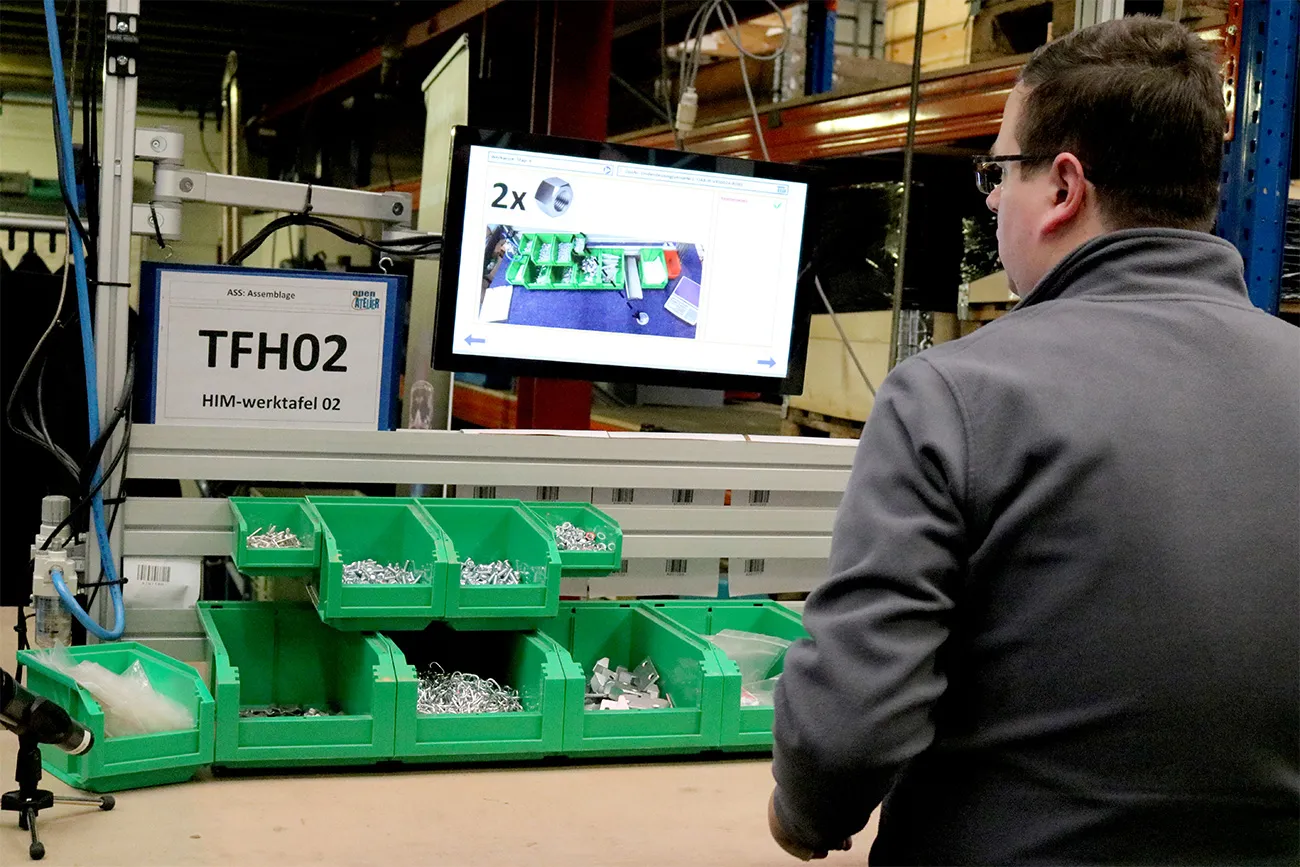
1. Picking aid (Open Atelier Pelt).
The human interface guides the operator through the entire picking process using a screen and projector combination. Clear, step-by-step instructions show which components to pick next. These are often parts for kits shipped around the world, where ensuring that the kit conforms to the bill of materials is crucial to quality. Specifically, a digital work instruction is displayed on screen, identifying the packaging and the container from which the components must be picked.
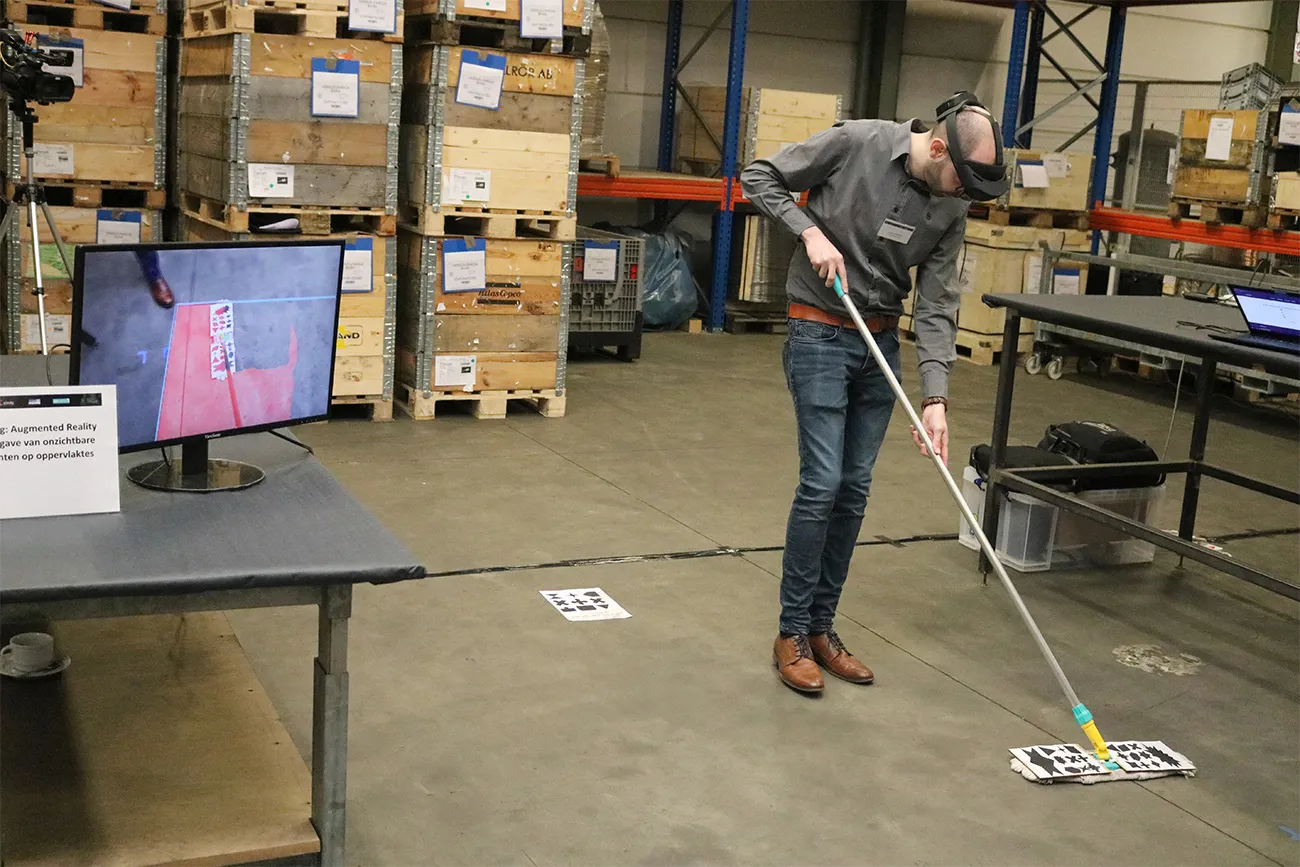
2. AR Cleaning (Flanders Make@UHasselt):
Augmented Reality supports quality monitoring during cleaning processes. The system is designed for clean rooms that must be cleaned or disinfected according to a standardised, often regulated, method. The AR solution is built around Microsoft HoloLens 2, allowing the results of a cleaning procedure to be visualised in real time through the headset. The entire clean room is scanned beforehand using the headset. Tracking the cleaning tool, a mop in the demonstration, then makes it possible to distinguish cleaned areas from those that have not been cleaned in great detail.
This technology therefore takes the process beyond the subjectivity inherent in purely visual observation or inspection. Areas are often missed or even cleaned more than once. The tool also provides an excellent basis for training cleaning staff, as parameters such as movement speed and overlap can be monitored accurately, allowing systematic errors to be anticipated.
3. VR training for assembly (Flanders Make@UHasselt):
A true “full” VR application in which the user is completely cut off from reality. The tool is designed to train operators and fitters in complex mechanical assembly using VR. The entire assembly sequence can be carried out virtually, making the process far more efficient, faster and, above all, less wasteful than real on-the-job training. The training is also 100% safe.
4. XR welding simulation (Flanders Make@UHasselt):
Extended Reality welding training that uses no materials. The application simulates the welding process at a 1:1 scale in an immersive and exceptionally realistic way. The simulation provides a safe environment in which to learn new welding techniques without using materials.
5. Supporting operators in decision-making (Sirris)
The dashboard-based system collects and visualises information for the operator from numerous different sources, often using different electronic languages. This may include visual, auditory or sensor data, which less experienced operators may not immediately know how to act on. Sirris uses highly intuitive data visualisation to eliminate misunderstandings and make it easier for operators to interpret the information correctly.
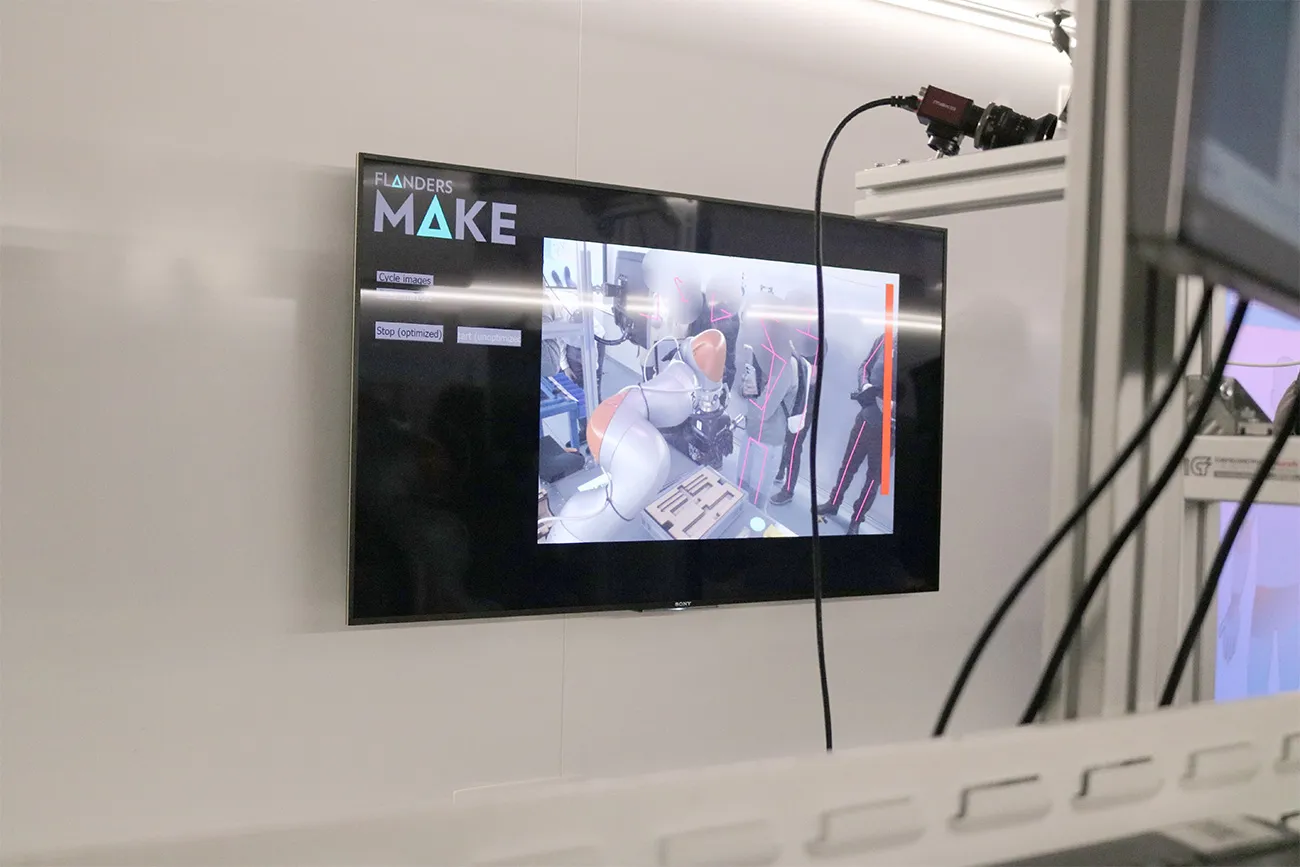
6. Real-time ergonomics assessment of operators (Flanders Make)
A camera system captures and then digitises an operator’s position and posture in real time. Based on an “ideal” standard, the system uses colour coding to show whether the posture is ergonomically sound, helping to anticipate physical complaints such as joint or muscle pain and recognised occupational illnesses, including back problems. The system is portable, allowing a large number of employees to be screened in a short time and their ergonomic conditions while performing their tasks to be assessed.
7. Cognitive support for operators performing assembly tasks (Flanders Make)
The aim is to help operators learn new assembly tasks faster while reducing the margin for error. The framework generates digital work instructions that support operators, mainly with assembly tasks, through Mixed Reality. It is based on a desktop application that generates work instructions directly from a CAD model and product specifications. A smart HoloLens 2 app then presents those instructions to the operator using holographic indicators. These can range from previews to pick-to-light indicators. The preview is projected precisely onto the physical location of the assembly.
Question about this story? Ask your question
Companies in this story
Keep following this
Get an email when a new story is published. No account needed.
- ThemeProcess measurement and control
- SubjectNews
- CompanySirris







