Pick-to-light dramatically reduces assembly errors
Text and images Valérie Couplez
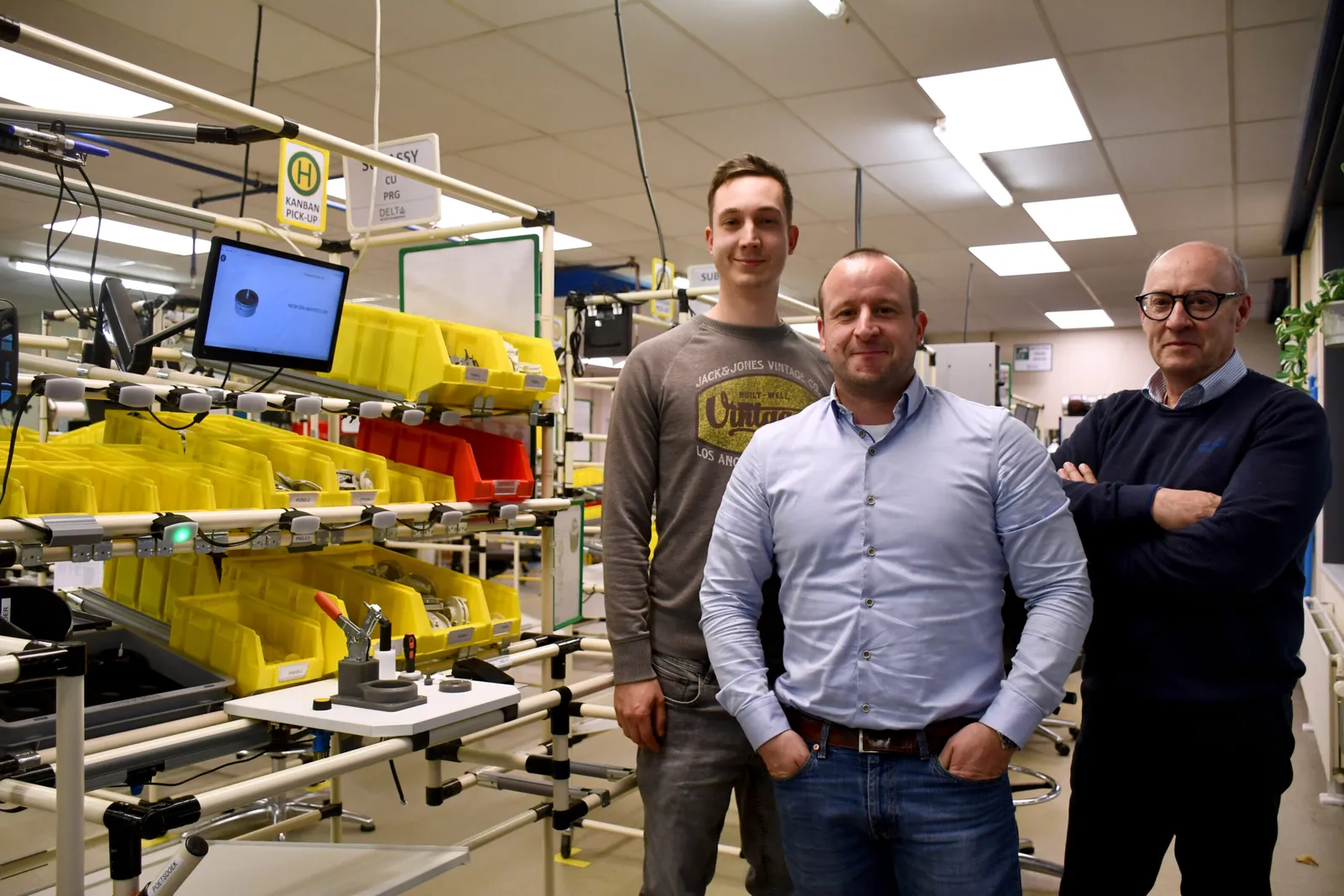
Ergonomics in production still does not get the attention it deserves. After all, the goal is not just to make work manageable, but also to improve efficiency. This fits perfectly with the lean philosophy adopted by Delta Water Engineering in the production of its water softeners. That is why it has opted decisively for the SETAGO pick-to-light system, supplied by Phoenix Mecano, which guides its employees through even the most complex assembly tasks using digital work instructions and illuminated sensors, helping to achieve a high first-time-right rate.
The company Delta Water Engineering was founded by engineers, as is clear not only from its name. The innovative nature of its water softeners is another giveaway. Peter De Ceuster, operations manager at Delta Water Engineering: “The idea was to develop a water softener that did not run on electricity, but was hydraulically controlled by volume. By giving the unit intelligence, it did not have to operate at fixed times: only when water was drawn, and according to the hardness of the incoming water, to regenerate correctly and operate as economically as possible.” They drew up the first prototypes in an apartment they rented on Linkeroever. Two years later, they were ready for production.
A win-win
To get production under way, Delta Water Engineering partnered with sheltered workshop De Brug and set up on its site. “In return for providing employment, they also invested in the machines and moulds needed to start production. It gave us a flying start,” says De Ceuster. More than twenty years later, Delta Water Engineering is still based there, and De Brug’s employees are still responsible for building the units, even though the original investment was paid back long ago. “That happened when we became part of Pollet Water Group in 2007. This gave us access to established distribution channels and everything quickly gathered pace. But our partnership with De Brug remains a win-win, because it allows us to respond easily to peaks and troughs in production.”
Paper instructions too cumbersome
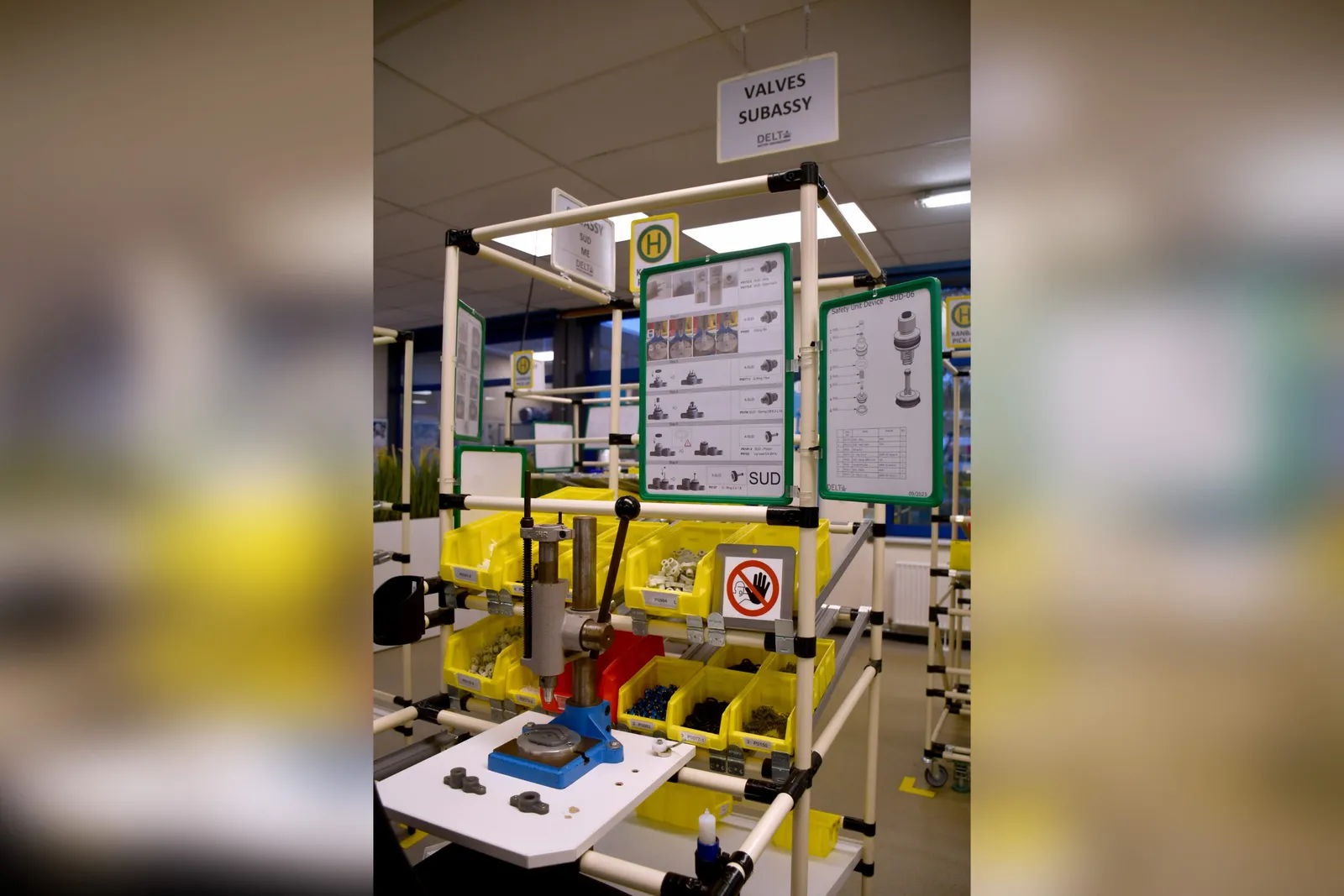
Every year, De Brug’s employees build several thousand units for Delta Water Engineering. The work is divided into several ‘subassemblies’, which are then brought together in the valve’s final assembly. The valves then go through the test area, where the valve and resin vessel are joined and the complete assembly is thoroughly inspected. The final station, system assembly, involves configuring the vessel, valve and brine tank, along with accessories, documentation and labels. “Each station came with detailed paper work instructions to guide the employees through the various steps. These consisted of a technical drawing listing all the points to note. Over time, there was too much information to take in. We were looking for a way to digitise and simplify it, so that we could reduce the risk of errors,” explains production manager Kevin van den Elshout.
Ease of use wins them over
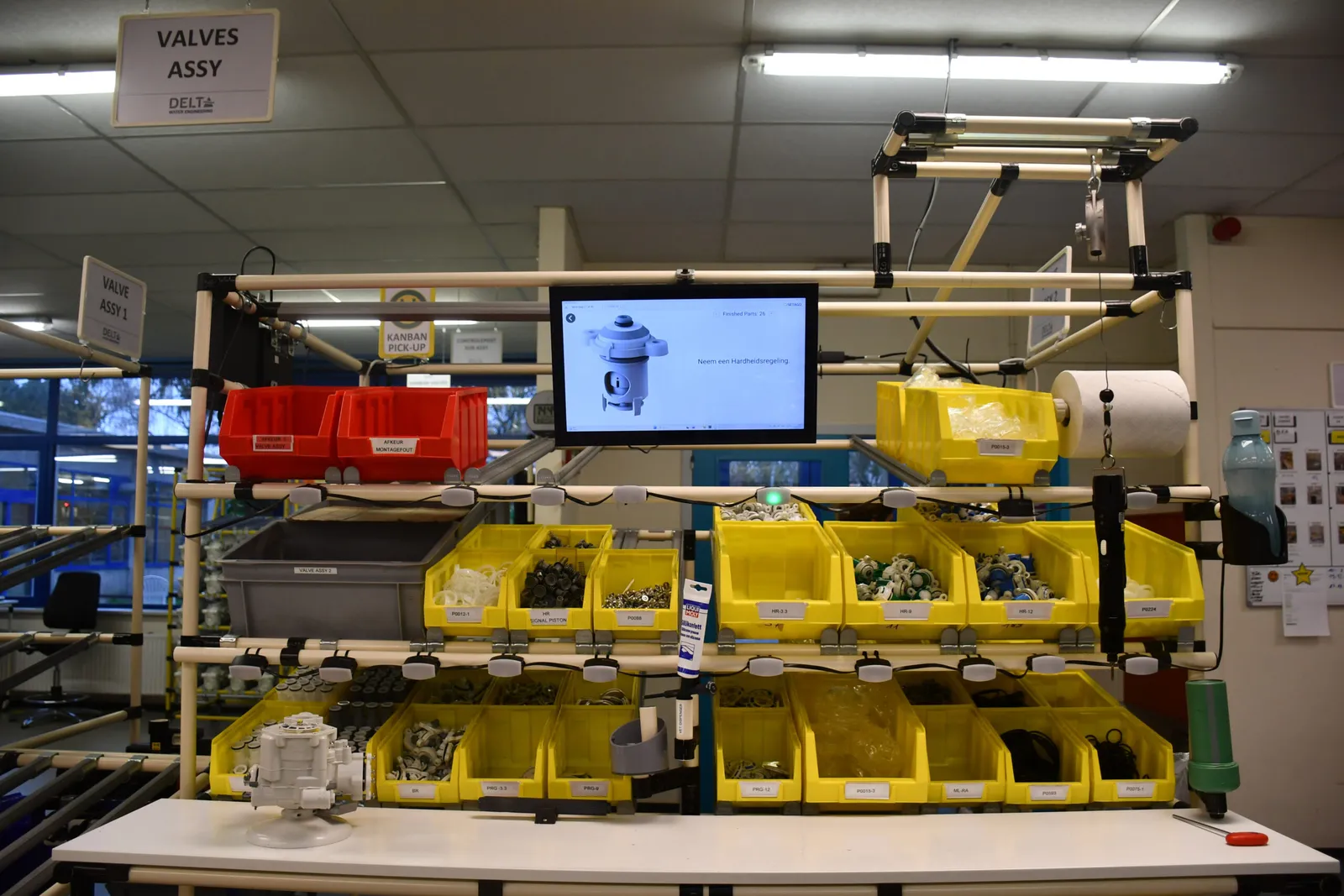
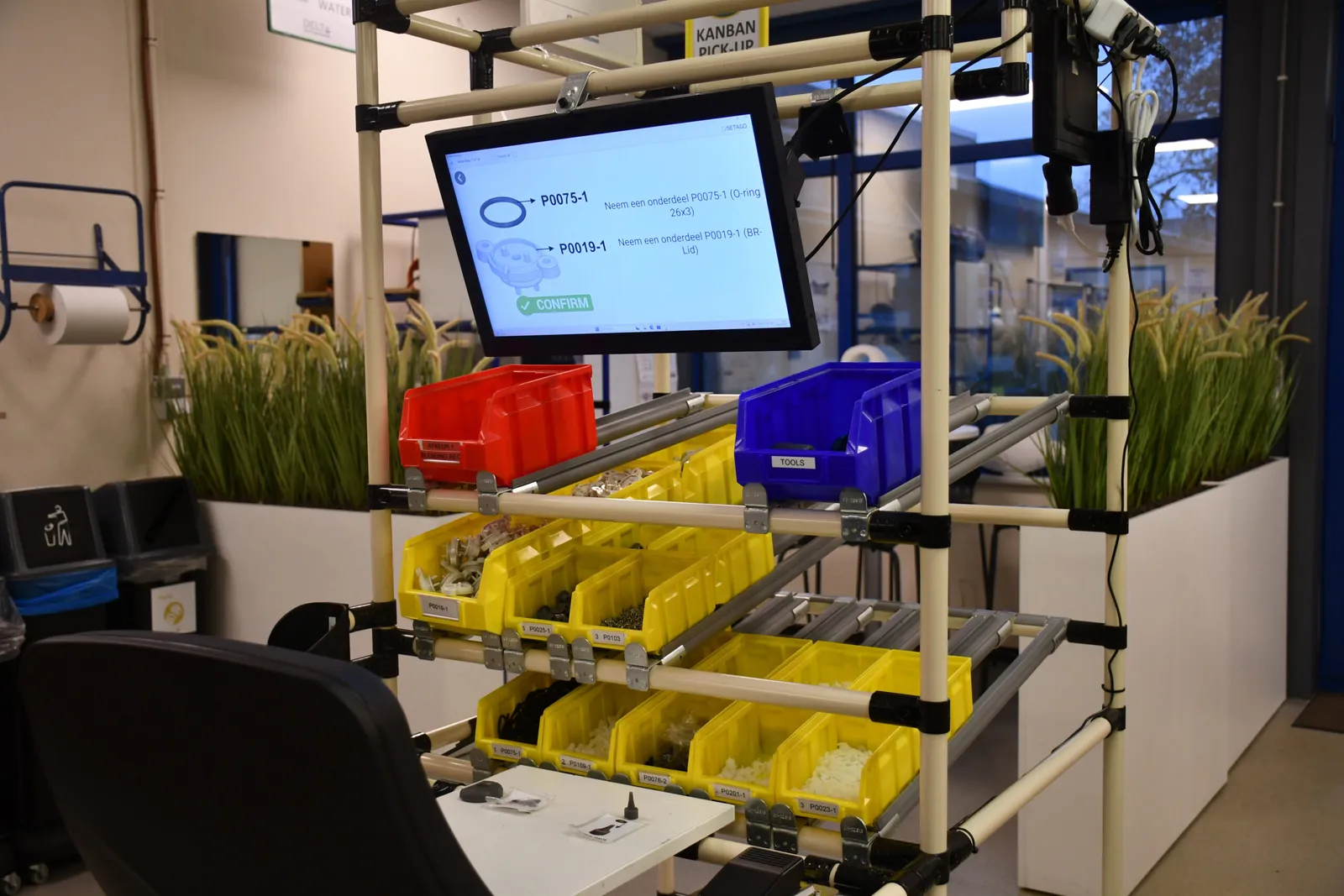
This led to a call to Phoenix Mecano in 2022 to ask whether SETAGO’s pick-to-light systems could help. De Ceuster was convinced after a demo. “It was the simplicity of the system. You can have a comprehensive work instruction ready in an hour. We try to apply lean principles as much as possible on the shop floor. Because the system is so easy to use, we can act quickly on feedback from the employees. You can also set different levels for them (beginner, advanced, expert) according to their experience, giving them more or less time.” Phoenix Mecano supplied a starter kit for the first cell, the control unit assembly. “It turned out to be where most of the errors occurred,” adds van den Elshout. A screen now showed the complete picture at every stage of assembly. A sensor also lit up next to the component they needed for that step. Once they have finished, they press the button and the next instruction appears.
Rolled out across production
The first-time-right rate rose dramatically straight away. Onboarding new employees also became much smoother. “The instructions are clear and easy to follow. We try to make them as visual as possible, so it does not matter what language the employee speaks. They now know better where to reach and what to do,” says De Ceuster, summarising the benefits. Since then, Delta Water Engineering has been rolling out SETAGO’s solution across production. There are now nine workstations equipped with the technology, with three more to follow next year. Some stations have digital work instructions only, while others are also fitted with sensors. “We assess this based on the complexity of the work and the risk of errors. We are aiming for a 100% error-free production environment and are already achieving good results. If we do need to expand the system, it is also very easy to add a sensor or an I/O module,” says van den Elshout.
Standardisation across the group
The success did not go unnoticed within Pollet Water Group. A second manufacturing company in the group, Cappers in France, has also recently started using a SETAGO pick-to-light system. “We carried out an extensive assessment of technologies from different manufacturers to identify a standard solution for the group. SETAGO’s ease of use really made the difference. In future, we want to explore further how we can make even better use of the technology in our production. For example, how we could also integrate a vision system for more extensive quality control. There are certainly further opportunities,” concludes De Ceuster.
Phoenix Mecano: Stand 130
Een zakelijke vraag aan Phoenix Mecano? Get in touch
Companies in this story
Keep following this
Get an email when a new story is published. No account needed.
- ThemeFrom design to flexible machine
- SubjectINDUMATION 2026
- CompanyPhoenix Mecano