












How can we get back to work safely?
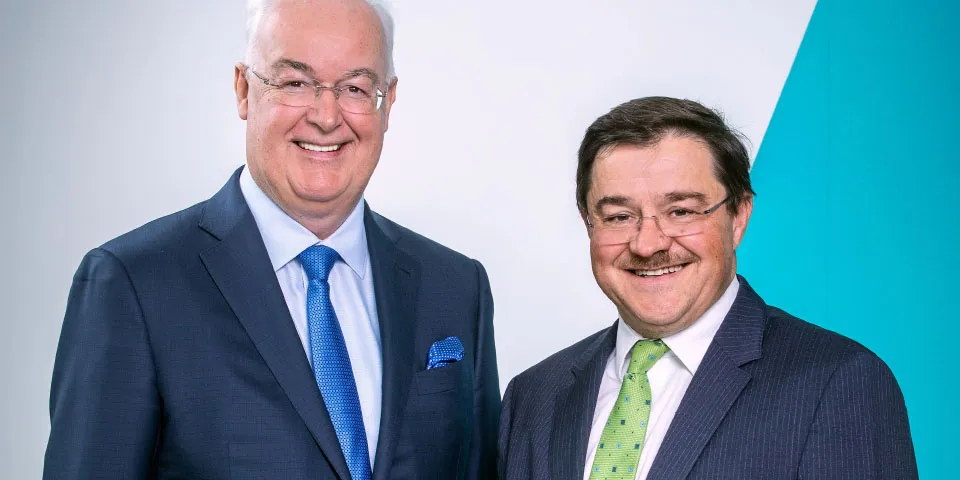
The coronavirus has brought much of Belgian industry to a standstill. Now that the figures are moving in the right direction again, many businesses are considering restarting operations. Research centre Flanders Make is presenting three new technological solutions to protect employees and visitors from Covid-19 infection. Weaving machine manufacturer Picanol was involved from an early stage and tested one of the social distancing systems at its factory in Ieper.
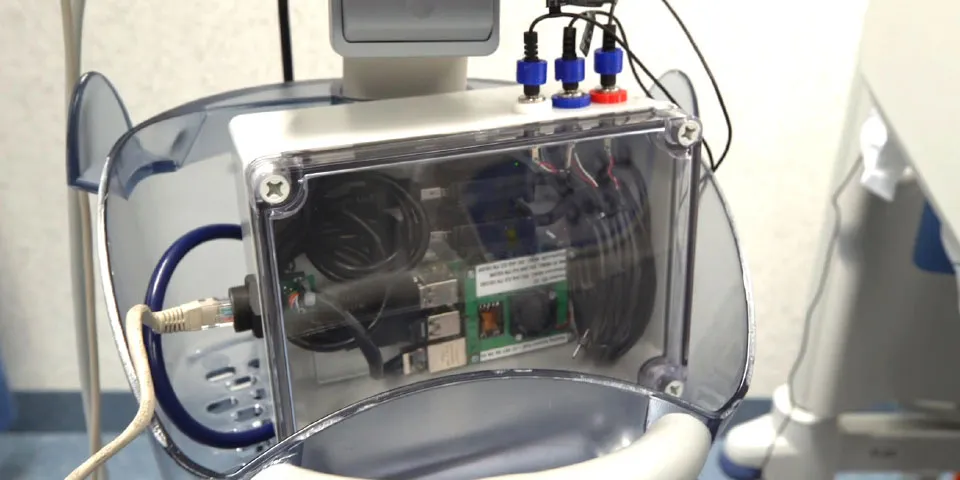
A team of fifteen Flanders Make engineers set to work supporting the VUB-FabLab with the development and improvement of a ventilator, and with preparations for potential production.
Flanders Make has been hard at work over the past weeks and months. Behind the scenes, it has been developing technological solutions. Flanders Make chairman Ubrain Vandeurzen explains: “Following distressing reports of acute shortages of life-saving ventilators in Italy, we immediately decided to deploy our top engineers on a number of urgent projects to prevent such dramatic scenarios here. A team of 15 Flanders Make engineers set to work supporting the VUB-FabLab with the development and improvement of a ventilator, and with preparations for potential production. Audi Brussels then produced the first fifty pre-production units, which the VUB-FabLab is now testing and completing. We want to ensure our people can breathe, both literally and figuratively, and we are very pleased with the support we have received from manufacturing companies in Flanders, such as Audi Brussels.”
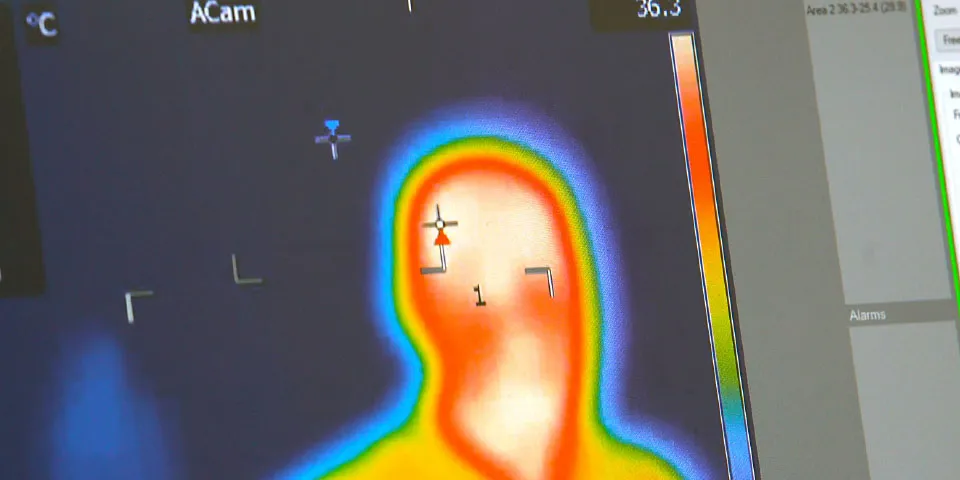
First, everyone entering the premises is immediately screened for body temperature using a system based on infrared measurements.
Fast, simple screening
With many businesses now considering restarting operations, Flanders Make is also providing the necessary support in this area. Specifically, this involves one device that screens body temperature and two systems that help people maintain a distance of at least 1.5 m. These solutions can be used together or separately, depending on the needs of the business. Flanders Make has been using them itself for some time and is now offering them to businesses too. Flanders Make CEO Dirk Torfs says: “First, everyone entering the premises is immediately screened for body temperature using our system based on infrared measurements. If there is any doubt, you use a thermometer and only allow those with a healthy body temperature to enter. This makes it possible to screen large groups quickly while respecting social distancing. It reduces the likelihood of sick people being present at your business.
Focus on social distancing
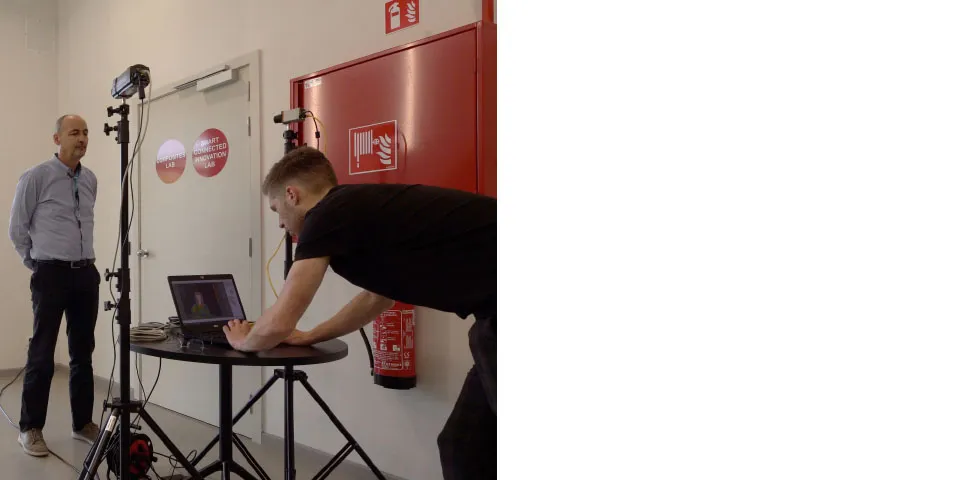
Once inside, every employee whose job requires close attention to social distancing wears a small device around their neck. It emits an audible signal as soon as someone gets too close. “This new device is therefore close to the mouth, making it the ideal starting point for measuring distance. This also allows production operators to work safely. The device helps employees correct their behaviour immediately and remain alert. In places where many people gather, such as an entrance hall or canteen, you can install our camera-based system, which also generates an audible signal when people get too close to one another. The camera footage is not recorded and people cannot be identified in the images, so privacy legislation is fully respected. The system can therefore also be used more widely, for example in the hospitality sector.”
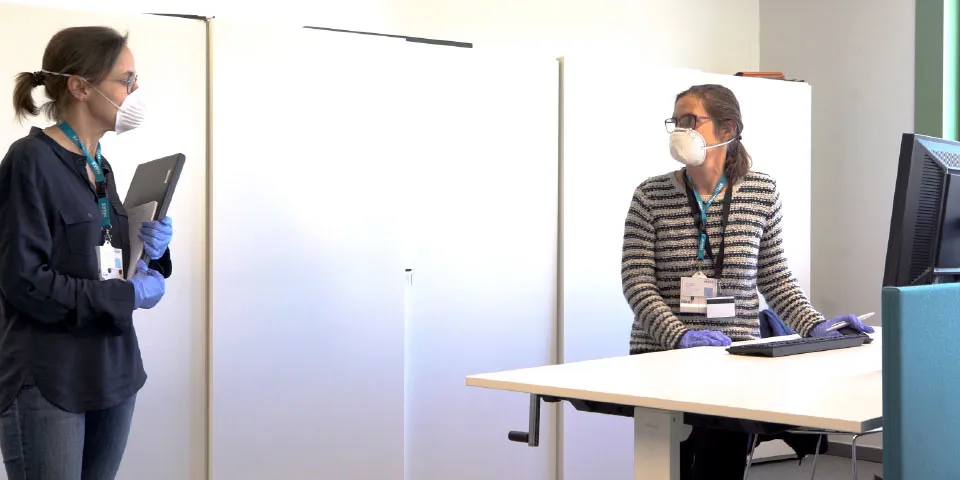
Once inside, every employee whose job requires close attention to social distancing wears a small device around their neck. It emits an audible signal as soon as someone gets too close.
Successful initial tests on the production floor at Picanol
Geert Ostyn, VP Weaving Machines at Picanol and vice-chairman of Flanders Make, says: “Picanol was involved at an early stage in developing the social distancing devices and evaluating the technology on the shop floor. We first tested the system in Ieper with eight operators wearing the device around their necks. If they get too close to one another, they immediately hear a signal telling them to move apart. It has since been extended to eighty employees. The system is easy to install, requires no fixed infrastructure, operates entirely locally and respects employee privacy. This is a fine example of a research centre rapidly developing a solution that businesses can deploy at short notice.” Flanders Make is currently mapping the specific needs of interested businesses and consulting potential manufacturers of the various systems. The aim is to introduce the solutions and support our industry as quickly as possible.
Question about this story? Ask your question
Keep following this
Get an email when a new story is published. No account needed.
- SubjectNews







