












Hannover Messe 2024: powerhouse for a promising industrial recovery
Text Valérie CouplezImage Hannover Messe
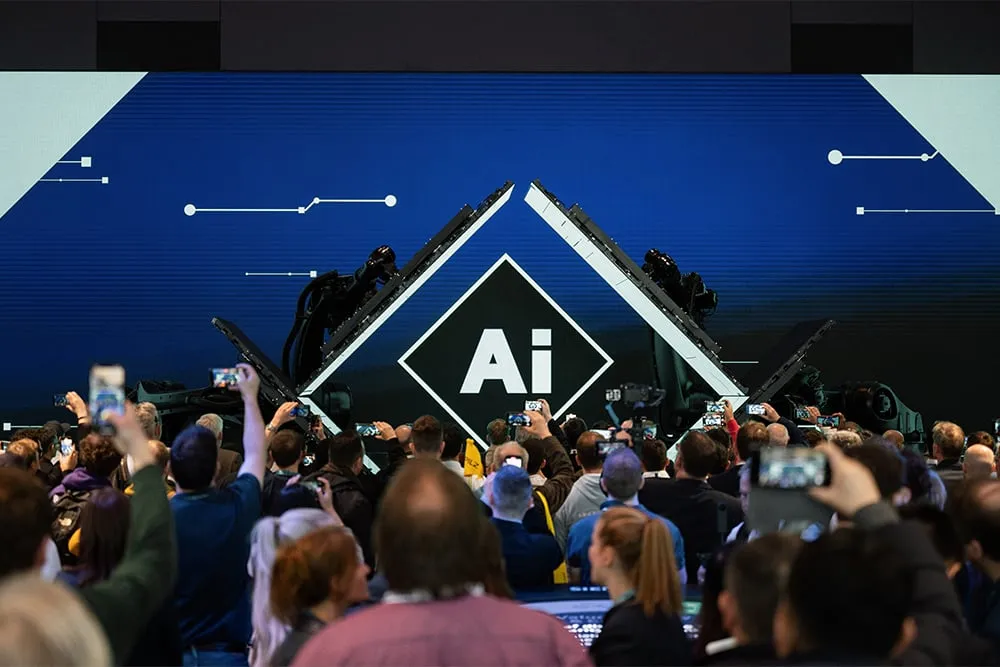
With more than 130,000 visitors from 150 countries, 4,000 exhibiting companies, 300 start-ups and more than 300 economic and political delegations from around the world, Hannover Messe has impressively demonstrated its ability to bring together the best of technological innovation, business trade fairs and economic and political agenda-setting on an international stage. In other words, a true “powerhouse for a promising recovery” in Germany and Europe, as German Minister for Economic Affairs Robert Habeck called the fair.
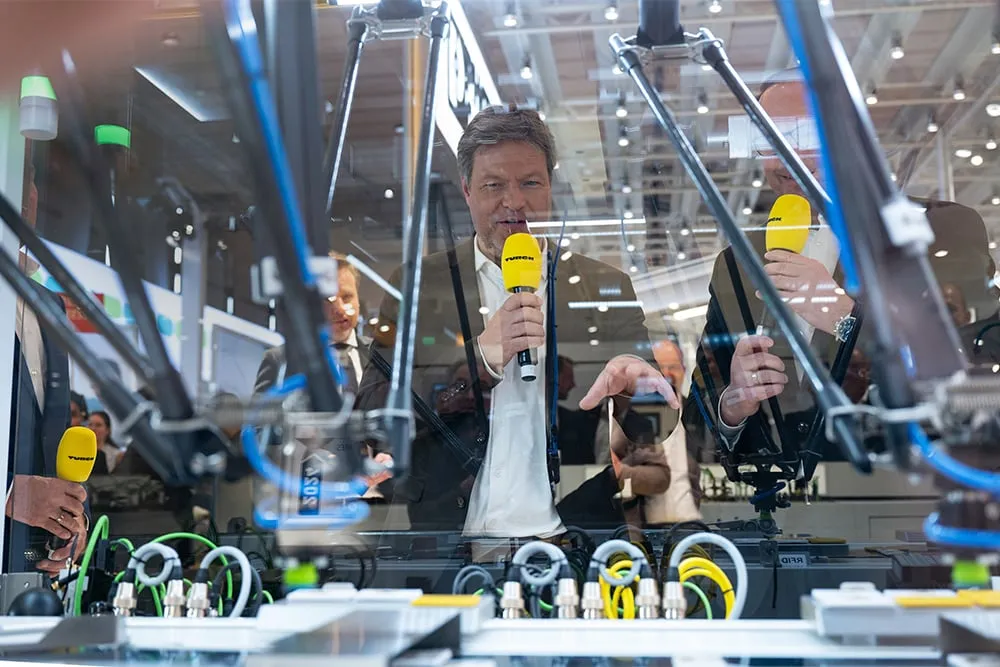
“Hannover Messe was both an industrial powerhouse and a technology fair for the future,” noted Dr Jochen Köckler, Chairman of the Executive Board of Deutsche Messe, at the closing press conference. “It was an industrial powerhouse because visitors found answers to how they can profitably benefit from automation, artificial intelligence, hydrogen and many other high-tech solutions in their factories, making them fit for the future. And it was a forward-looking technology fair because it showcased innovations that drive industrial competitiveness and sustainability.”
Visitor target achieved
More than 130,000 visitors from 150 countries exchanged ideas with around 4,000 exhibiting companies on ways to digitalise their value chains and make them more resilient. “This means we have achieved our ambitious visitor target in a year when Hannover Messe was smaller because of the biennial rotation of some of its constituent events,” said Köckler. More than 40% of visitors came from abroad. Alongside host country Germany, the leading visitor countries were China, the Netherlands, South Korea, the United States and Japan.
A morale boost
Dr Gunther Kegel, President of the ZVEI association and Chairman of the Hannover Messe Exhibitors’ Advisory Board, said: “In the current difficult economic climate, this is an important morale boost. Companies from the electrical and digital industries have impressively demonstrated how innovation, particularly the use of artificial intelligence, offers new opportunities for greater climate protection and greater efficiency in energy consumption and resource use.
“But it also gives us reason to be more optimistic. We can confidently tackle major societal challenges such as curbing global warming if we take the right measures and consistently continue along the path towards electrification, digitalisation and automation. Hannover Messe has once again made the innovative strength of our companies visible, thereby making an important contribution to strengthening Germany as an industrial location,” he concluded.
The best place for innovation
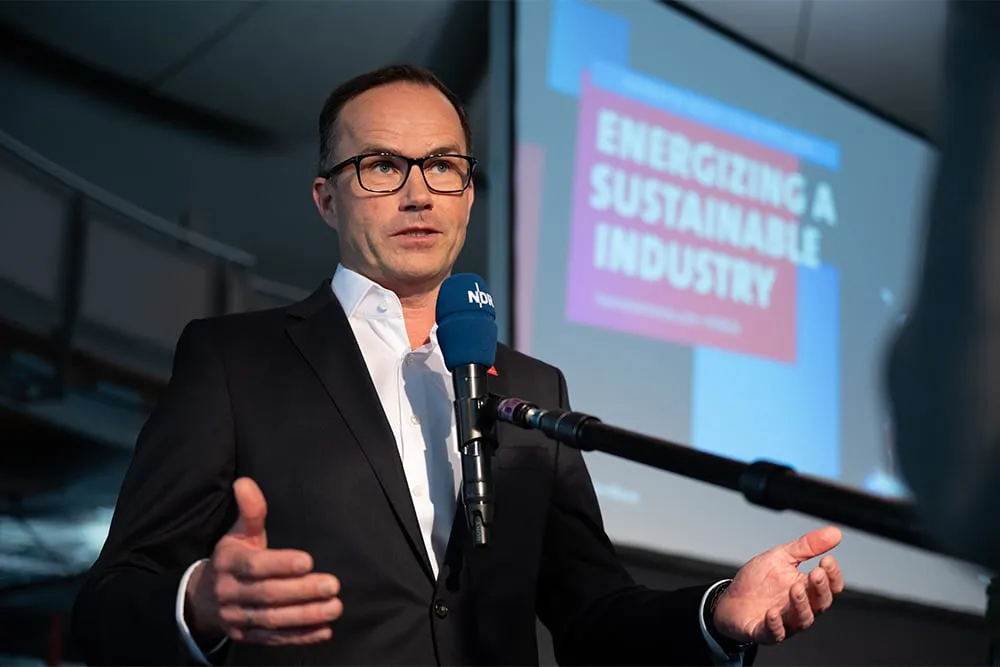
Thilo Brodtmann, Managing Director of the VDMA, added: “Thinking well beyond day-to-day business and developing solutions for digital and climate-neutral production: that is the goal of innovative mechanical engineering companies. At this year’s fair, they showed how factories can be controlled more intelligently, how modern production equipment can accelerate climate protection, and how autonomous systems can make production safer and more efficient on many levels. Biology and its processes will also find their way into production, and the first steps have already been taken. Hannover Messe remains the best place for all these innovations and for a genuine spirit of optimism, because more manufacturers, customers, political decision-makers and media representatives come together here than anywhere else.”
The ‘biologisation’ of the economy
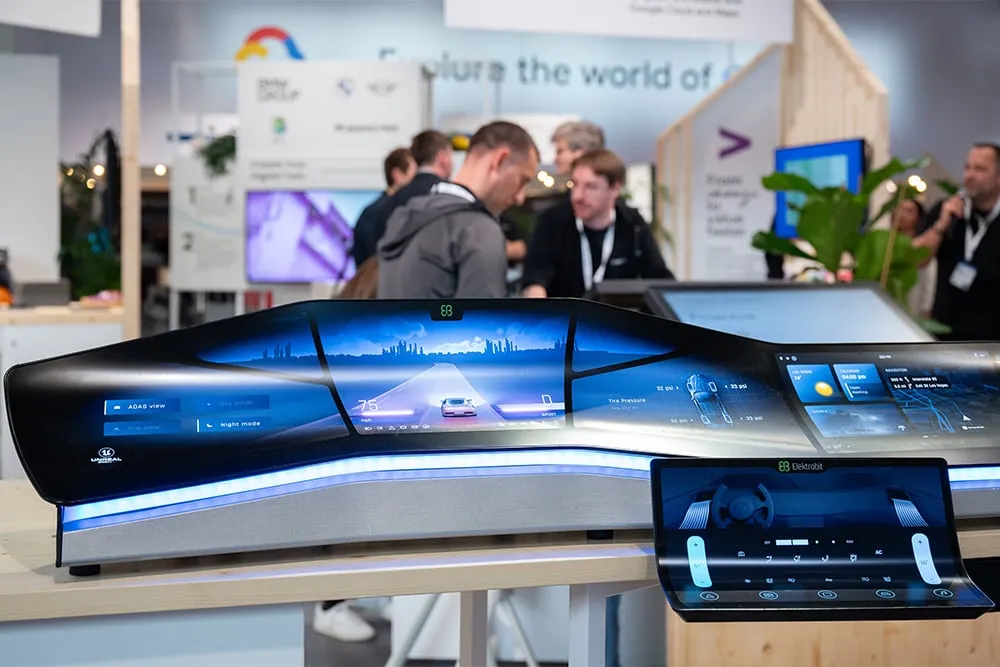
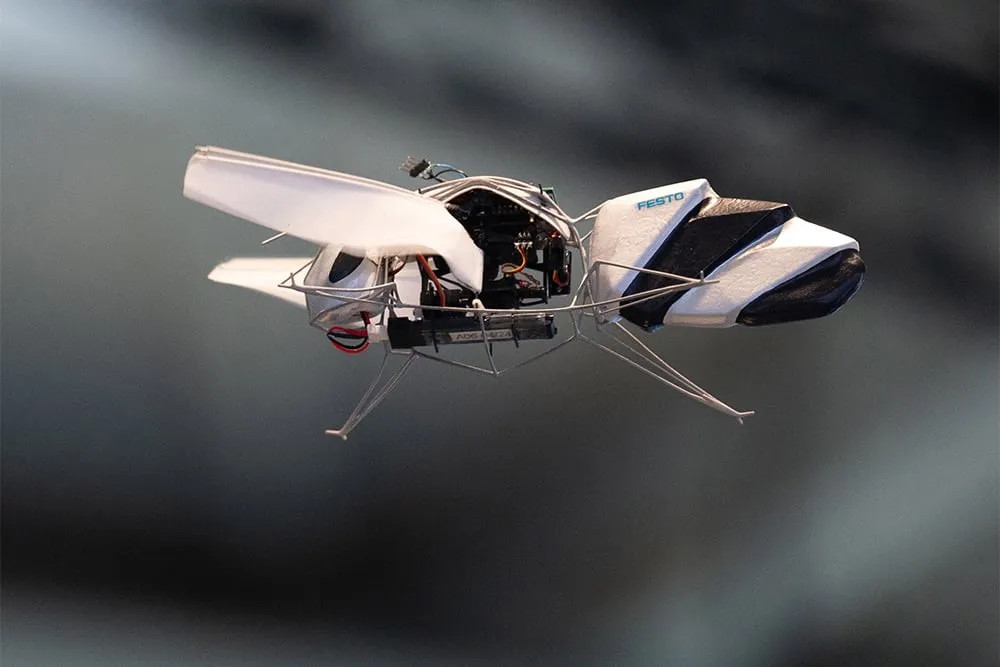
From solutions such as automating entire production plants, voice control of machines using AI and the efficient use of hydrogen in industry, to using software to measure and reduce environmental footprints, Hannover Messe offered a comprehensive picture of the technological possibilities for industry today and tomorrow. New areas such as the ‘biologisation’ of the economy and carbon management were also highlighted. And the initiative to create sovereign data spaces for small and medium-sized industrial enterprises under the ‘Manufacturing X’ label is also gaining momentum.
A platform for start-ups
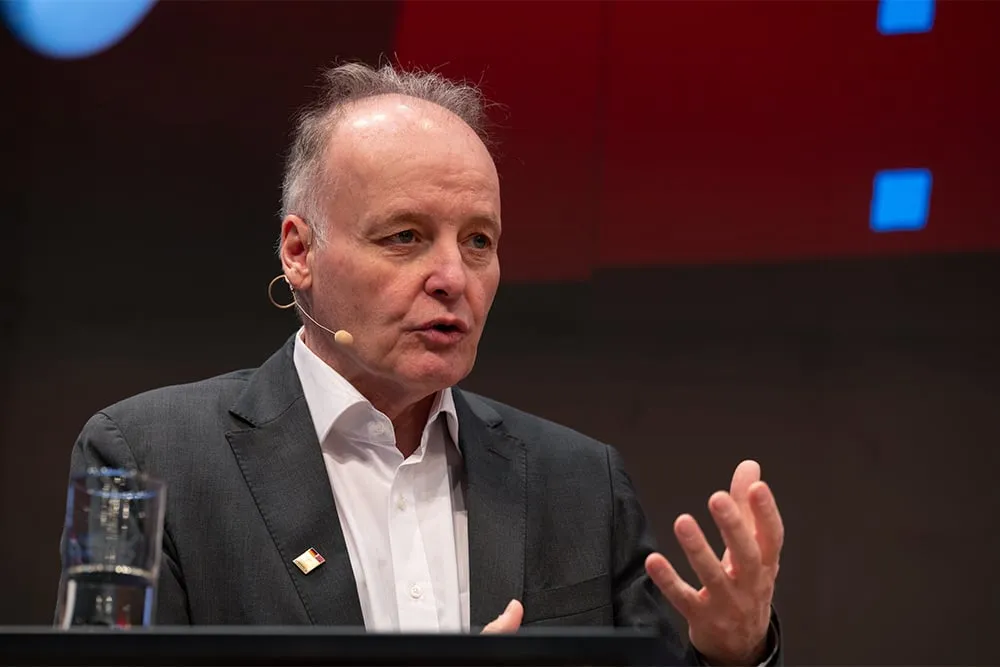
This year, Hannover Messe also provided an ideal platform for start-ups looking to make their solutions known in industry. More than 300 young companies used the fair to network with industry representatives. The fair supported this with targeted networking opportunities and masterclasses. According to Köckler, his company’s efforts to promote young businesses are paying off: “The exchange between start-ups, investors and industrial companies was much more intensive than in previous years, which encourages us to give this topic even more space next year,” he said.
A pillar of economic policy
He also saw this year’s fair as a pillar of economic policy agenda-setting. “Hannover Messe made technological progress tangible for politicians,” Köckler reported. “The potential of the technologies showcased here is enormous. However, it can only be realised if the overall political framework is right.” Competitive energy costs, the expansion of digital infrastructure, fast approval procedures, a reduction in unnecessary bureaucracy and the availability of skilled workers were at the top of the agenda for the more than 300 economic policy delegations visiting the fair. As Köckler said: “There is reason for optimism here, too. The discussions showed that Europe has the will and the ability to fight for its competitiveness and maintain it.”
Hydrogen partnerships
This year’s partner country, Norway, was an outstanding example of pan-European cooperation. On Tuesday at the fair, Robert Habeck, Minister for Economic Affairs of the Federal Republic of Germany, and Terje Aasland, Norway’s Minister of Energy, presented the roadmap for cooperation on hydrogen. Germany and Norway plan to work closely together to enable the import of large quantities of hydrogen from Norway to Germany and to create the necessary hydrogen infrastructure by 2030. At the fair, companies from Norway and Germany signed contracts for the transport of hydrogen and the storage of CO2, known as carbon capture and storage (CCS).
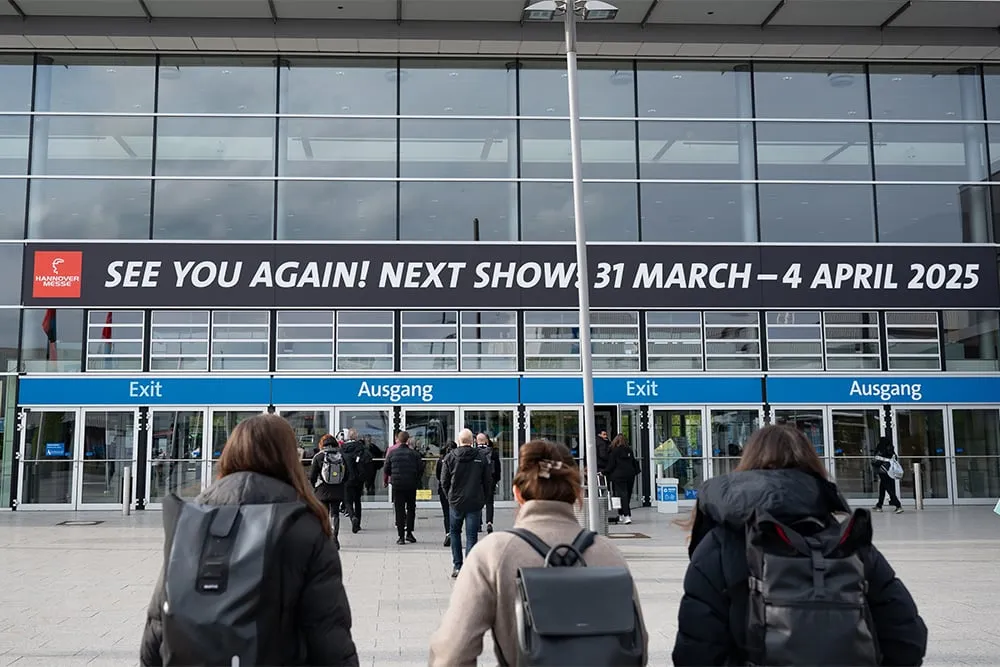
Hannover Messe 2025 will take place from 31 March to 4 April. Canada will be the partner country.
Hermes Award for Schunk
This year, German company Schunk was presented with the Hermes Award at the ceremonial opening of Hannover Messe on 21 April. Schunk received the award in recognition of an innovative AI-based project. Bettina Stark-Watzinger, Germany’s Minister of Education and Research, presented the award in the presence of Chancellor Olaf Scholz and Norwegian Prime Minister Jonas Gahr Støre. A high-calibre jury chaired by Prof. Dr.-Ing. Holger Hanselka, President of the Fraunhofer-Gesellschaft, selected Schunk’s 2D gripper kit project for the award.
This application kit consists of a camera with a lens, an industrial PC, AI software and an application-specific gripper. The project’s innovative aspect lies in the generic, AI-based modelling of component variants and the transfer to a smaller training dataset, which shortens recognition training times. Even under changing lighting, colour or background conditions, the intuitive user interface enables reliable picking and handling of randomly arranged and unpositioned parts from a conveyor belt, tray or preparation table. This makes it possible to automate repetitive sorting or logistics tasks at low cost.
“Automation is the key to the future of supplying people and industry in our country. Only through sustainable innovation, particularly in production and logistics, can we successfully meet tomorrow’s economic and social challenges,” said Hanselka. “Alongside ease of use, the robustness of the development was a decisive factor in our decision, given the many emerging automation solutions.”
Een zakelijke vraag aan HANNOVER MESSE? Get in touch
Companies in this story
Keep following this
Get an email when a new story is published. No account needed.
- SubjectNews
- CompanyHANNOVER MESSE







