












Growing biomass on an industrial scale
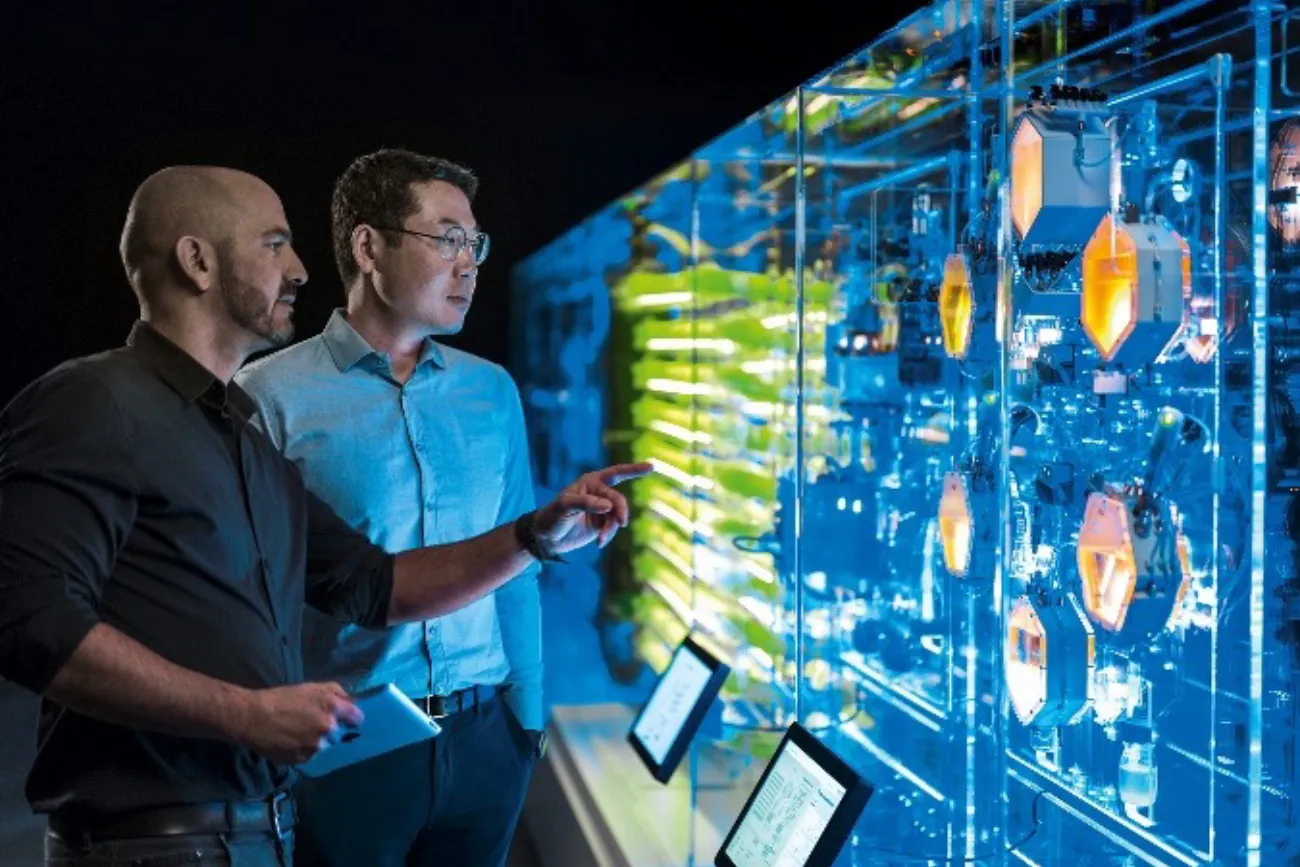
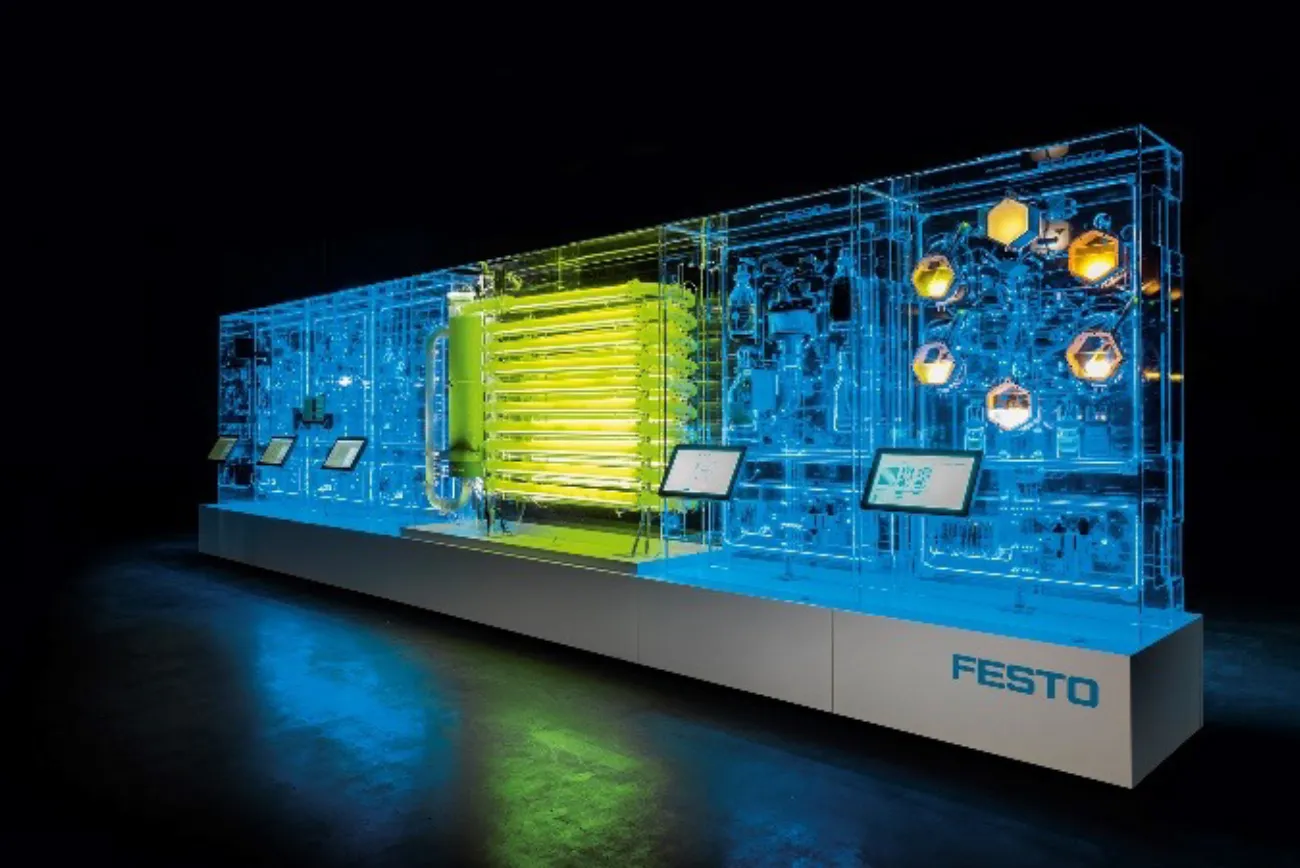
Festo presents the BionicCellFactory as a tool for the biological transformation towards a circular economy
At Hannover Messe 2023, Festo is presenting the next step towards the industrialisation of biological transformation: the BionicCellFactory. Festo automation technology enables biomass to be cultivated on a large scale with high efficiency and low resource consumption. Everything we currently produce from crude oil, generating huge amounts of CO2 emissions, can also be sustainably sourced from algae. The BionicCellFactory demonstrates a holistic bioprocess, from optimised algae cultivation with continuous monitoring and analysis through to harvesting, further processing and refining the various components. The resulting biomass can be used in the chemical, food and pharmaceutical industries.
Climate and resource protection are two of the major challenges of our time. How can we remove CO2 from the atmosphere and actively contribute to climate protection? How can we reduce our consumption of materials, recycle more materials and gain access to alternative raw materials at the same time? At Festo, we have been exploring these questions for some time and are taking a new approach: “We are applying our expertise in automation technology to biological processes. Here, too, nature is our great example. It teaches us how to use resources efficiently, because there is no waste in nature. By bringing biological and technical processes together, we scale up and accelerate solutions developed in the laboratory and bring them into industrial use,” explains Dr. Elias Knubben, Vice President Corporate Research and Innovation.
The cell as a factory
Living cells are the smallest factories in the world. The chloroplasts in algae carry out photosynthesis, converting sunlight, carbon dioxide and water into oxygen and chemical energy sources, or valuable organic substances.
Optimised growth conditions through automation
Our automation technology enables biomass to be cultivated in a closed loop, on a large scale and with high efficiency and low resource consumption. Everything we currently produce from crude oil, generating huge amounts of CO2 emissions, can also be sustainably sourced from algae. Algae are small planetary protectors because they absorb ten times more CO2 than land plants. Automated cultivation in bioreactors can increase this figure by a factor of ten. The resulting biomass can be used in the chemical, food and pharmaceutical industries.
A holistic process, through to harvesting and refinement
With the PhotoBionicCell project, Festo presented its first bioreactor for the automated cultivation of algae in 2022. This year, the interdisciplinary bionic team is taking things a step further. The BionicCellFactory demonstrates a holistic bioprocess, from optimised algae cultivation on a large scale with continuous monitoring and analysis through to harvesting, further processing and refining the various components. Unlike chemical processes, it requires no high temperatures, high pressures or toxic substances.
Production systems of the future
As a model factory, the BionicCellFactory provides a universal blueprint for the holistic production systems of the future. Festo automation technology makes it possible to scale the plant to any size. Bioreactors with capacities of several thousand litres will be needed to meet future demand for renewable raw materials. Expertise in process automation is essential to ensure that plants can reliably produce the required quantities of biomass.
Biological transformation portfolio
Together with its customers, Festo is developing intelligent control cabinet solutions for bioreactors and further expanding its portfolio. The automation specialist ensures stable and precise process control with maximum productivity. This includes optimised gassing and feeding strategies, control algorithms, soft sensors for real-time biomass measurement and system concepts for bio-based production processes.
Festo will also support plant operators with remote diagnostics, maintenance and cloud-based monitoring. Robust value-creation processes and easy operation of the system modules are essential if large numbers of modular production units for raw material recovery and carbon capture are to be built and operated worldwide in the future.
New occupational profiles for new technologies
However, highly qualified technical staff and biotechnologists are not available everywhere. Festo Didactic is therefore already analysing the new knowledge requirements in order to define interdisciplinary links and develop innovative internships, training programmes and additional qualifications in biomechatronics, bio-intelligence and sustainability.
The BionicCellFactory plant is divided into five modules in which nature and technology come together in different ways. This makes the cell factory a tool for biological transformation on the way to an environmentally friendly circular economy.
Module 1: CO2 capture: binding CO2 from the air
Module 2: Analysis: monitoring cells using quantum sensors and AI
Module 3: Cultivation: controlled growth through automation
Module 4: Harvesting: harvesting the algae using a centrifuge
Module 5: Enzymatic transformation: extracting and further processing cell components
Control architecture: each module is controlled by a Festo CPX-E controller. This means that the five process steps can be operated together or individually and can be easily replaced when production changes. Experts can monitor and change the individual parameters for each process step via dashboards on the corresponding control panel. Data is exchanged between the modules via OPC UA, enabling efficient control of the entire BionicCellFactory.
A business enquiry for Festo? Get in touch
Companies in this story


Keep following this
Get an email when a new story is published. No account needed.
- SubjectNews
- CompanyFesto
- CompanyHANNOVER MESSE







