












Flexible transport system paves the way for mass production of personalised products
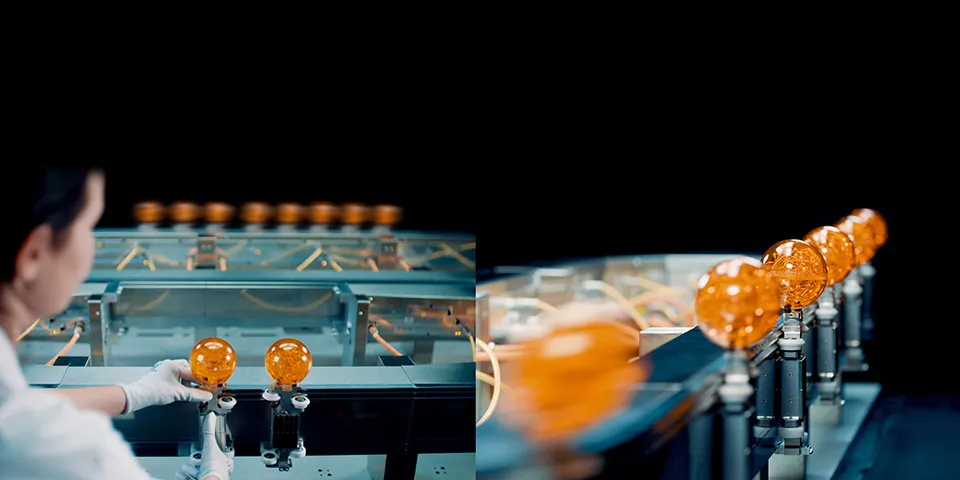
Automation and integration go hand in hand today. After all, more can be gained by optimally coordinating all the components than simply by buying a faster machine. At the recent Indumation.be, B&R showed how it continues to expand its portfolio of automation solutions by integrating vision for precise synchronisation between cameras and machine functions. And by integrating five safety functions into the flexible ACOPOStrak transport system, it is taking the next step towards human-track collaboration.
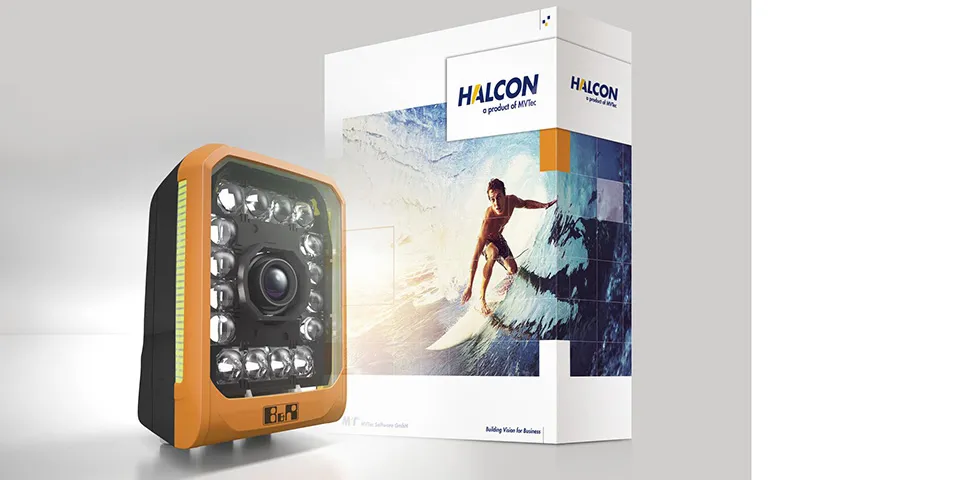
B&R’s machine vision solution is based on one clear principle: fully integrating the hardware into the automation system.
B&R’s new solutions attracted plenty of attention at SPS IPC Drives, and Indumation.be was no different. The flexible, intelligent ACOPOStrak transport system offers a way to move towards mass production of personalised products. With this solution, product flows can be separated or merged again easily and at full speed. By adding a pit lane where shuttles that have completed their task are diverted, or where new shuttles are prepared, products and batches can be switched without stopping production. The next step is to integrate operators along the line. B&R has done its homework here too, integrating five safety functions. These limit shuttle speed and power as they pass manual workstations. Thanks to this intelligent safety technology, operators can work safely at their workstations without the need for safety fencing: human-track collaboration. The system’s flexibility is striking. Limit values for safe speed and force are calculated by the safety application during operation and can be activated and deactivated as required.
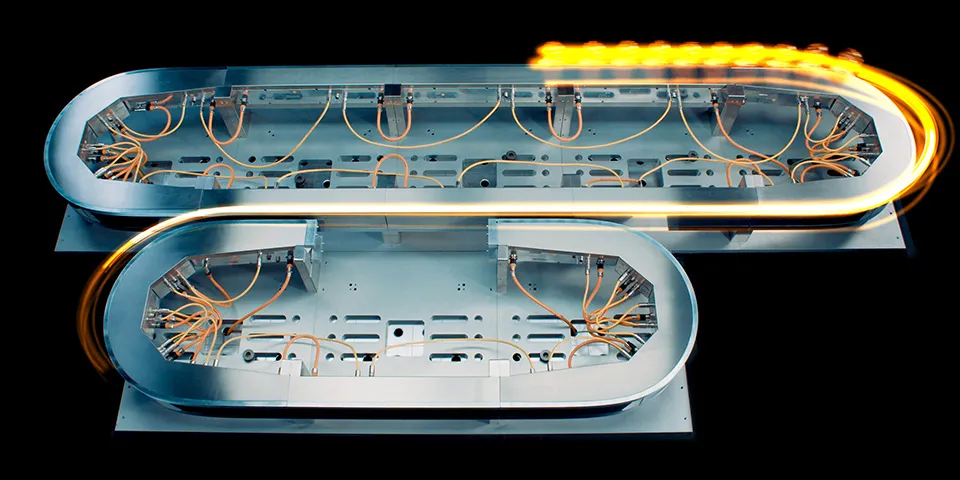
With this solution, product flows can be separated and merged again easily and at full speed.
Synchronised to the microsecond
A second major innovation showcased by B&R at Indumation.be was its first-ever machine vision solution. It is based on one clear principle: fully integrating the hardware into the automation system. This means cameras and machine functions can be synchronised with microsecond precision. Two variants are available: the Smart Sensor and the Smart Camera. The Smart Sensor is used to implement a single vision function, such as position detection or QR code reading. Users simply configure the function in Automation Studio. In other words, a wide range of applications can be implemented with a single camera type. Where more than one function is required, the powerful Smart Camera comes into play. Existing application software, parameters and models remain unchanged. The camera simply needs to be added to the network, after which all settings are generated automatically from the controller. Both cameras are available with a choice of three image sensors (1.3 to 5 megapixels).
Question about this story? Ask your question
Keep following this
Get an email when a new story is published. No account needed.
- SubjectNews







