












Flanders Make Symposium 2024 makes the case for broader development
Text and images Piet Debisschop
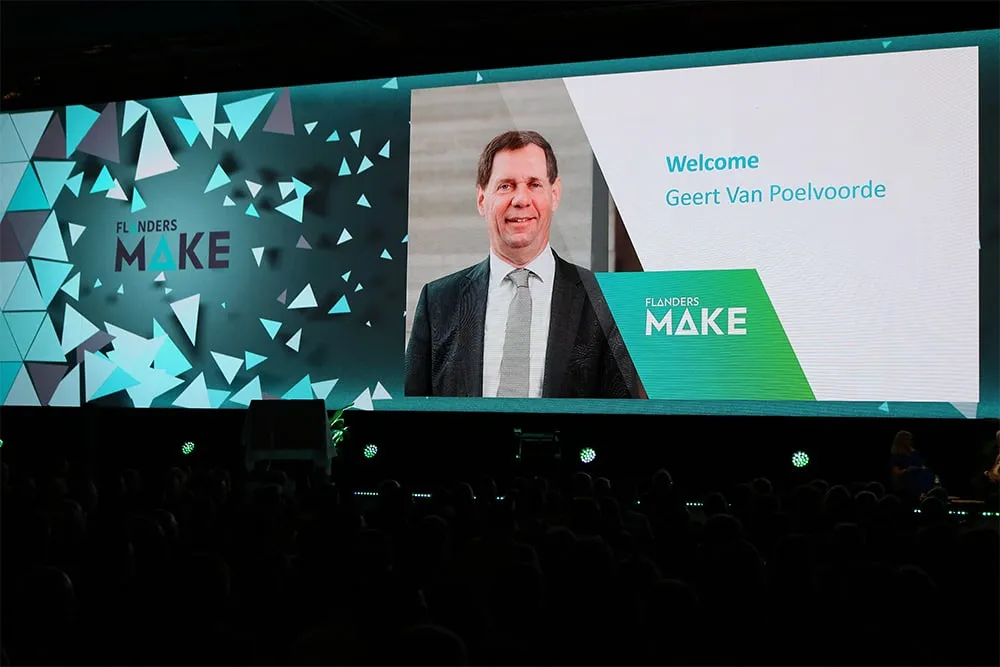
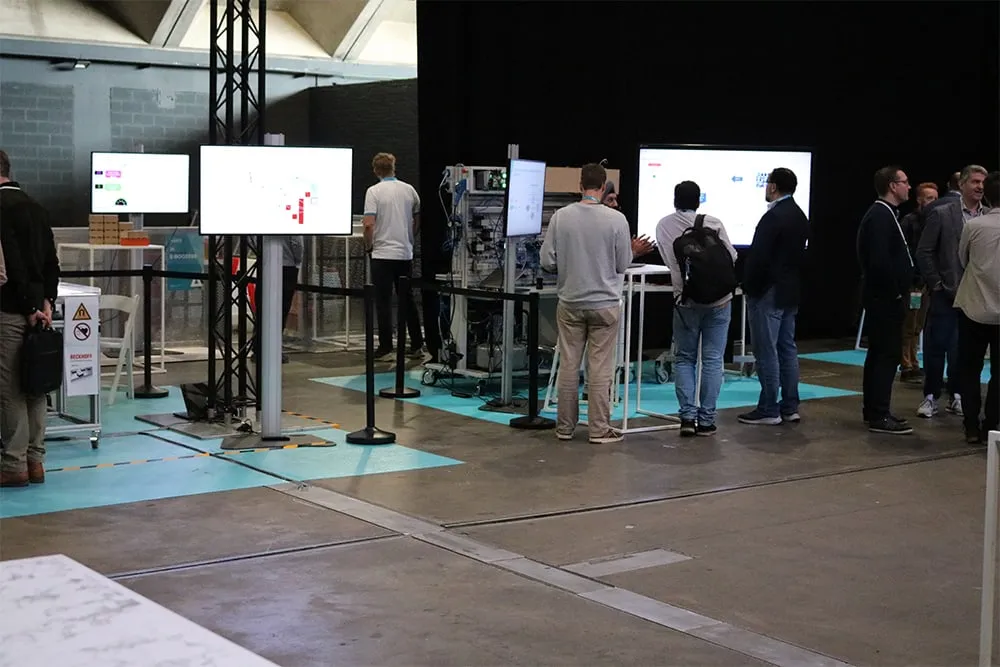
Every major event deserves an impressive venue. For the 2024 edition of the Flanders Make symposium on 22 October, the Nekkerhal in Mechelen had the honour of hosting it. The imposing building was filled with an impressive giant screen, no fewer than 24 demo stands and a veritable army of enthusiastic visitors. We were there too.
PASSING THE BATON
Featuring a line-up of engaging speakers, the symposium was once again a memorable event, highlighting technological leadership through robotics, AI and digital twin implementation, alongside an unmistakable call for renewed industrial autonomy. The event also marked a change at the helm, as Urbain Vandeurzen stepped aside as chairman of Flanders Make and passed the baton to Geert Van Poelvoorde, signalling a clear determination to further embed the organisation in Flanders’ technology landscape.
INNOVATION IN FLANDERS
A message that did not go unnoticed by the Flemish Government: newly appointed Minister-President Matthias Diependaele, who delivered the symposium’s opening address, pledged the resources needed to continue supporting the reindustrialisation of Flanders through innovation and technological development.
INNOVATION AS A KEY DRIVER
The keynote speakers each offered their own perspective, but above all highlighted the challenges that the next horizon, Industry 5.0 and, very soon, even 6.0, will bring, calling for innovative solutions from industry in Flanders. They explored how sustainability and the circular economy will make a difference, and how AR and VR will play a decisive role in staff training. All of this will be underpinned by the implementation of digital twin technology and AI.
THE DEMO STANDS
And yes, we counted them carefully: there were 24. Each one a technological gem, either in full development or already being implemented. A selection of the leading demonstrators from projects run by the core labs that form part of Flanders Make’s co-creation centres in Leuven, Kortrijk and Lommel, and by the Flanders Make core labs at the 5 Flemish universities. It was a pleasure to see these flourishing partnerships in action. Above all, they show just how effectively and purposefully this work can be carried out under the Flanders Make umbrella. As mentioned, there were 24 demo stands, far too many to cover in full in a single report. So we picked out a few projects that we found particularly noteworthy:
THE DIGITAL TWIN AS STANDARD
Innovation, the creation of digital twins and 3D visualisation were recurring themes throughout the demo area:
Fast, low-cost 3D scanning (Tom Mertens and Lode Jorissen, Flanders Make@UHasselt)
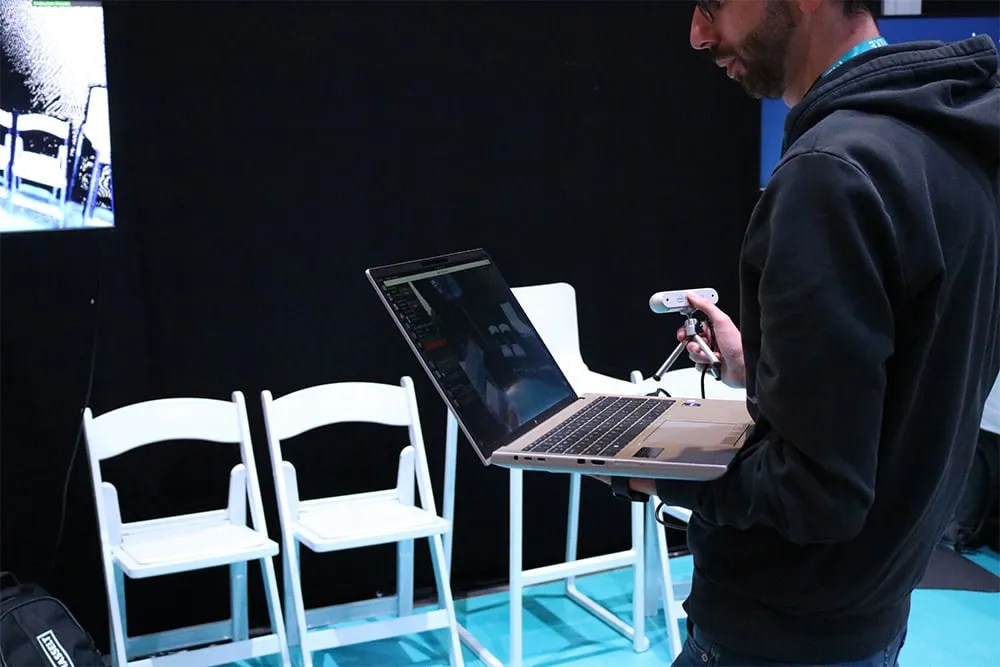
One project that stood out was an initiative by Flanders Make at UHasselt, which enables fast, low-cost 3D scanning of industrial spaces. Combining handheld devices with powerful software allows real-time corrections, filtering out incidental elements from the final scan, such as staff walking through the frame or objects moved between 2 scans. It is an excellent simulation tool for time and space studies, with a range of applications including AR and VR training and virtual research into production spaces.
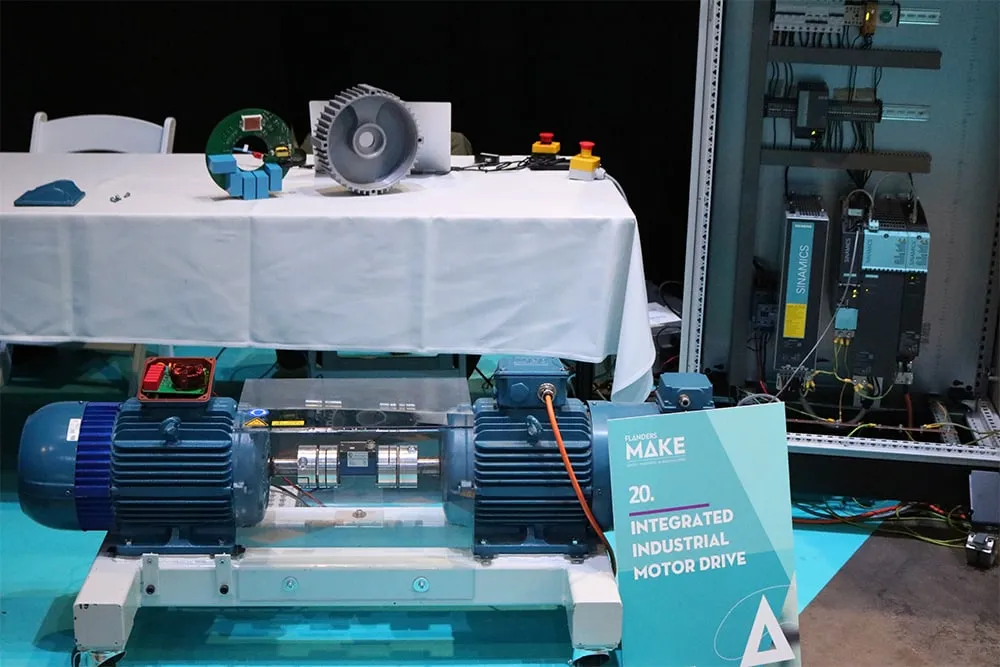
Integrated motor control. (Yentl Joos, Flanders Make@UGent)
This is an example of advanced motor innovation that can be deployed either as a plug-and-play solution or as a retrofit. Yentl Joos’s project integrates a variable frequency drive directly into the motor housing. No more heavy control cabinets requiring specialist attention and, above all, taking up valuable installation space. The principle also eliminates the otherwise delicate process of “matching” the drive and motor, as this will soon become part of motor manufacturing. Here we can see the beginnings of a new standard.
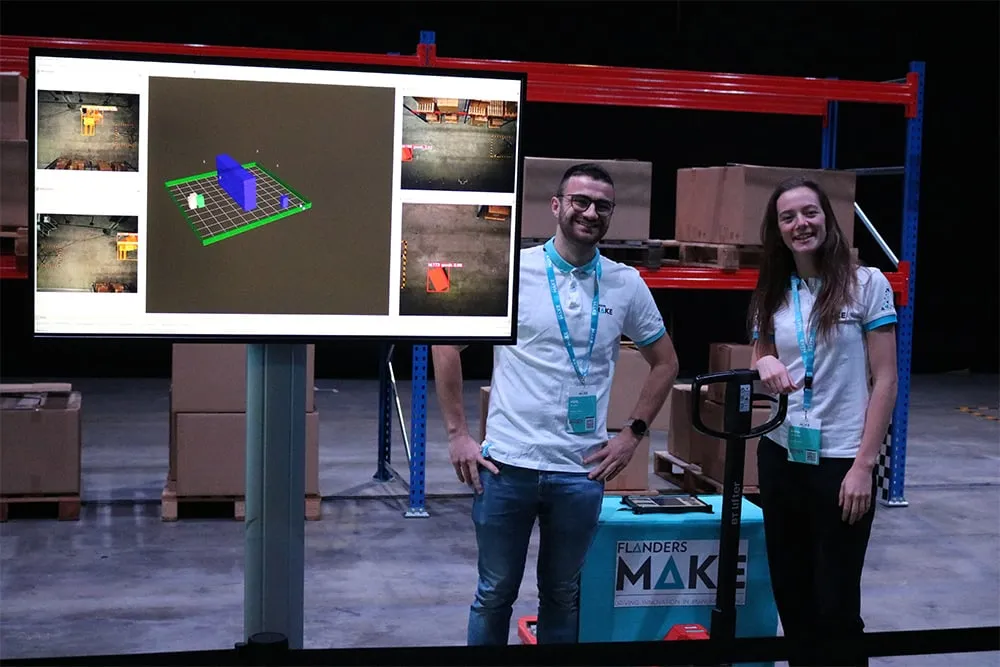
Intelligent, proactive vision system for warehouses (Emma Van Doren and Neel Broeckx, Flanders Make)
The vision system generates a highly detailed digital twin of warehouse spaces in real time, regardless of their size. In addition to obvious applications such as warehouse management and optimisation (the system naturally detects hazardous areas and wasted space), it also enables autonomous operation. The concept uses “smart” forklifts, each equipped with camera systems. This enables autonomous “smart warehousing”, with forklifts that scan product codes themselves, detect empty spaces in stock and feed their data into inventory management. The powerful real-time capabilities of the generated digital twin are undoubtedly a key strength.
Question about this story? Ask your question
Keep following this
Get an email when a new story is published. No account needed.
- SubjectNews







