












Flanders Make launches three co-creation hubs where companies and researchers join forces to take on competition from China
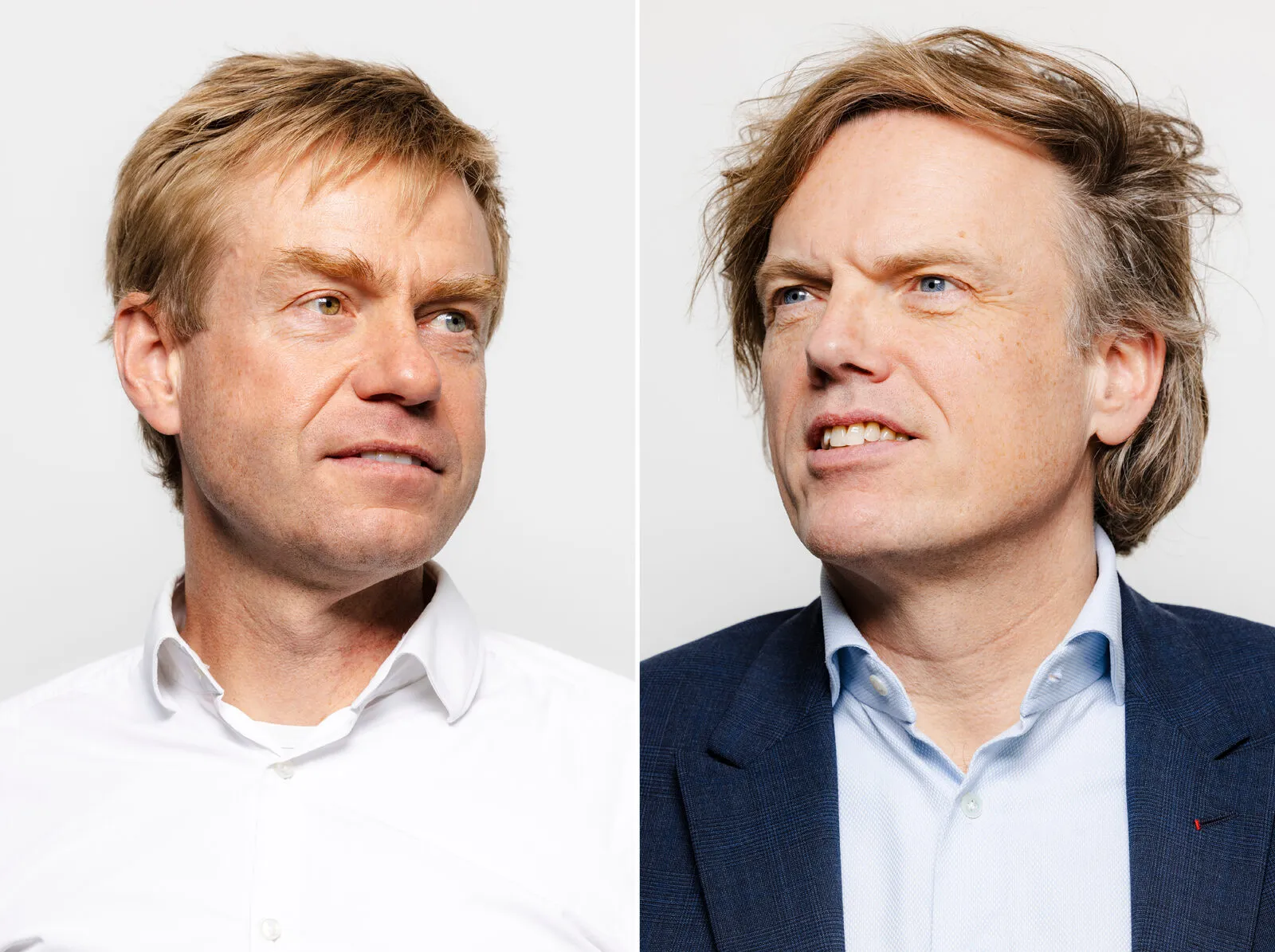
Grisja Lobbestael: "With Physical AI, we can accelerate innovation in manufacturing by up to 100 times"
Flanders Make, the research centre for industrial innovation, is today launching an action plan to speed up innovation in Flemish manufacturing. Physical AI is a key lever in this: artificial intelligence that enables machines to perceive their environment, make decisions and act autonomously. At the same time, Flanders Make is positioning its labs in Kortrijk, Leuven and Lommel as co-creation hubs.
Geopolitical uncertainty, vulnerable supply chains, high energy costs and a shortage of talent are no longer temporary challenges but a structural reality for manufacturing. "Many business leaders tell me: I know we have to innovate, but I don't really know what the future will demand of my company. Or what that future will mean for my children," says Grisja Lobbestael, CEO of Flanders Make. "We cannot take that uncertainty away. But we can make choices. The future is partly in our own hands. Flanders Make wants to ensure that the next industrial revolution also takes shape in Flanders."
"A strong manufacturing industry is indispensable for that. Research and development must stay connected to production. On the shop floor, you discover what works and what doesn't. That is where you can test, adjust and improve new concepts and machines. If production disappears from a region, that region also loses an important part of its capacity to learn and innovate."
Eight trends are redrawing industry
Together with consultancy Roland Berger, Flanders Make mapped out eight megatrends in the study Towards Industry 2035 that will fundamentally change industry in the coming years.
Three trends are already weighing heavily on Flemish manufacturers. Experienced employees are retiring, putting valuable practical knowledge at risk of being lost. Geopolitical tensions are making supply chains vulnerable. And technological developments follow one another so quickly that companies struggle to judge which ones are relevant to them.
Flanders Make therefore wants to make companies more agile: so that they recognise change faster, respond to it in a targeted way and keep learning continuously.
Deciding fast, with people at the centre
"Tomorrow's winners are not necessarily the companies that are the most automated, but the companies that can make fast, targeted decisions 24 hours a day," says Koen Maertens, CTO of Flanders Make. The research centre therefore sees a future in autonomous systems that detect and interpret change and adjust independently within agreed limits, under human supervision.
"The main reason to integrate Physical AI is not to make machines smarter, but to sharpen the skills of employees. Their unique knowledge is what sets a company apart, especially in a world where everyone uses AI. Technology must therefore reinforce that specific expertise and help people to keep evolving."
Co-creation hubs: innovating on a real shop floor
To put that vision into practice, Flanders Make will work in a fundamentally different way at its centres in Kortrijk, Leuven and Lommel from 2027. These will become co-creation hubs where companies, researchers and technology integrators tackle concrete industrial challenges together and test solutions in a real production environment.
"Technology is evolving so fast today that it can be outdated after six months," says Maertens. "That is why co-creation has to move quickly, with short decision lines between all the parties involved. In short cycles, we develop, test and improve both machines and software solutions together, so that promising innovations reach the shop floor faster."
"Each hub has its own focus. In Kortrijk, the emphasis is on the transition to autonomous factories, in Leuven on the control and management of mobile robot teams, and in Lommel on sustainable technology for transport and logistics."
A call to companies: start today! Flanders Make urges companies to stop waiting and take the initiative themselves.
"Innovation must come from companies in the first place: get started, be open to learning, and dare to take risks and sometimes fail. China, the United States and Japan are moving much faster," says Lobbestael.
Smaller companies in particular often find innovation too complex, too expensive and too slow. "That is precisely why Flanders Make is their partner. We have the vision, the knowledge and the co-creation hubs, and we connect companies with the right partners. Our ambition is to bring products from design to market 100 times faster and to make small series of customer-specific products possible at the cost price of mass production."
With the innovative strength of our companies and the 1,000 researchers at Flanders Make, we have everything we need to make that happen. But we do have to get moving together.
-----------
Photos of Grisja Lobbestael and Koen Maertens are included below.
If you are interested in an interview or further information, please reply by return email or call me on 0491 27 17 70.
Question about this story? Ask your question
Keep following this
Get an email when a new story is published. No account needed.
- SubjectNews







